The Miracle Of Muhammad
Said Nursi
SÖZLER NEŞRİYAT A.Ş.
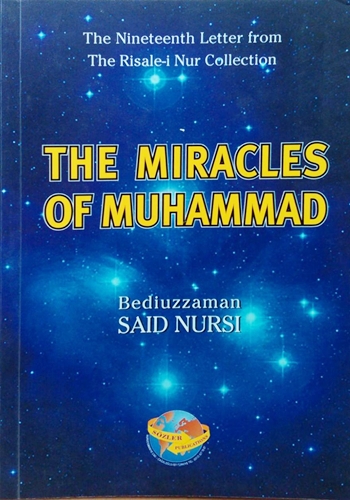
This treatise sets forth more than three hundred miracles. Just as it expounds the miracle of the Messengership of Ahmad (peace and blessings be upon him), it is itself also a karāmah of that very miracle. It is extraordinary in three or four respects:
First: Although it is based on transmitted reports and narrations, despite exceeding one hundred pages, it was composed entirely from memory, without consulting any books, in secluded corners of mountains and vineyards, over the course of three or four days, working only two or three hours each day, amounting to a total of twelve hours. This is indeed an extraordinary occurrence.
Second: Despite its length, neither does copying this treatise become wearisome, nor does reading it lose its sweetness. It inspired even the most indolent men of the pen with such zeal and diligence that, in these difficult and wearisome times, nearly seventy copies were transcribed in this locality within the space of a single year. This convinced all who became aware of it that it was a karāmah of that miracle of the Messengership.
Third: Before the phenomenon of tawāfuq (meaningful correspondence) had even become apparent to us, a novice copyist—who knew nothing of tawāfuq—together with eight other copyists, produced their manuscripts independently, without seeing one another's copies. It was then observed that throughout the entire treatise the expression Resul-i Ekrem (God's Most Noble Messenger, peace and blessings be upon him), and the word Qur'an in its Fifth Part, coincided in such a remarkable pattern of correspondence that anyone possessing even an atom of fairness could not attribute it to mere chance. Whoever has seen it has judged with certainty that this is a mystery of the Unseen and a karāmah of the miracle of Ahmad (peace and blessings be upon him).
The principles set forth at the beginning of this treatise are of great importance. Moreover, the hadiths contained herein are, almost without exception, accepted as authentic and sound by the leading authorities of hadith, and they relate the most definitive events concerning the Messengership. Were it necessary to describe the merits and excellences of this treatise, it would require writing another work equal to it in length. We therefore refer those who desire to know its virtues to the treatise itself, recommending that they read it at least once.
A REMINDER: In this work, I have related many Hadiths, despite having no
books to refer to.
İHTAR: Şu risalede çok ehadîs-i şerife nakletmişim. Yanımda kütüb-ü hadîsiye
bulunmuyor.
Should there be any errors in their wording, I request that they either be
corrected, or be considered as paraphrases.
Yazdığım hadîslerin lafzında yanlışım varsa; ya tashih edilsin veyahud "hadîs-i
bilmana"dır denilsin.
For, according to the prevailing opinion, “To relate the meanings of Hadiths is
permissible,” in which case the narrator puts the meaning of the Hadith into his
own words.
Çünki kavl-i racih odur ki: "Nakl-i hadîs-i bilmana caizdir." Yani: Hadîsin
yalnız manasını alıp, lafzını kendi zikreder.
This being the case, Hadiths with possible errors of wording should be regarded
as paraphrases.
The Miracles Of Muhammad (UWBP)
بِاسْمِهِ سُبْحَانَهُ
And there is nothing but it glorifies Him with praise.
وَاِنْ مِنْ شَيْءٍ اِلاَّ يُسَبِّحُ بِحَمْدِهِ
In the Name of God, the Merciful, the Compassionate.
بِسْمِ اللّٰهِ الرَّحْمٰنِ الرَّحِيمِ
He it is Who has sent His Messenger with guidance and the religion of truth to
make it supreme over all religion: and sufficient is God as a Witness. *
Muhammad is the Messenger of God... [to the end of the verse](Qur'an, 48:28-9)
هُوَ الَّذِى اَرْسَلَ رَسُولَهُ بِالْهُدَى وَدِينِ الْحَقِّ لِيُظْهِرَهُ عَلَى
الدِّينِ كُلِّهِ وَ كَفَى بِاللّٰهِ شَهِيدًا مُحَمَّدٌ رَسُولُ اللّٰهِ
[Since the Nineteenth and Thirty-First Words concerning the messengership of
Muhammad (Upon whom be blessings and peace) prove it with decisive evidence, we
assign the verification of that side of the subject to those Words. As a
supplement to them we will merely show here, in nineteen ‘Signs,’ some of the
flashes of that great truth.]
[Risalet-i Ahmediye'ye (A.S.M.) dair Ondokuzuncu Söz'le Otuzbirinci Söz,
nübüvvet-i Muhammediyeyi (A.S.M.) delail-i kat'iyye ile isbat ettiklerinden,
isbat cihetini onlara havale edip, yalnız onlara bir tetimme olarak ondokuz
nükteli işaretlerle, o büyük hakikatın bazı lem'alarını göstereceğiz]
First Sign
Birinci Nükteli İşaret
The Possessor and Master of the universe surely does everything with knowledge,
disposes every affair with wisdom, directs everything all-seeingly, treats
everything all-knowingly, and arranges everything willing the instances of
wisdom, purposes, and benefits that are apparent in them..
Şu kâinatın sahib ve mutasarrıfı elbette bilerek yapıyor ve hikmetle tasarruf
ediyor ve her tarafı görerek tedvir ediyor ve her şeyi bilerek, görerek terbiye
ediyor ve her şeyde görünen hikmetleri, gayeleri, faideleri irade ederek tedvir
ediyor.
Since, then, the One who creates knows, surely the One who knows will speak.
Madem yapan bilir; elbette bilen konuşur.
Since He will speak, surely He will speak to those who possess consciousness and
thought, and those who will understand His speech.
Madem konuşacak, elbette zîşuur ve zîfikir ve konuşmasını bilenlerle konuşacak.
Since He will speak to those who possess thought, surely he will speak to
mankind, whose nature and awareness are the most comprehensive of all conscious
beings.
Since He will speak to mankind, surely He will speak to the most perfect of
mankind and those most worthy of address.
Madem insan nev'i ile konuşacak, elbette insanlar içinde kabil-i hitab ve
mükemmel insan olanlarla konuşacak.
Since He will speak to those who are most perfect, most worthy of address,
highest in morality, and who will guide humanity;
Madem en mükemmel ve istidadı en yüksek ve ahlâkı ulvî ve nev'-i beşere mukteda
olacak olanlarla konuşacaktır;
He will certainly speak to Muhammad, who, as friend and foe alike testify, is of
the highest disposition and morality, who is obeyed by one fifth of humanity, to
whose spiritual rule half of the globe has submitted, with the radiance of whose
light the future of mankind has been illumined for thirteen centuries, to whom
the believers, the luminous segment of humanity, renew five times daily the oath
of allegiance, for whose happiness they pray, for whom they call down God’s
blessings and bear admiration and love in their hearts. Certainly, He will speak
to Muhammad (Upon whom be blessings and peace) and indeed He has done; He will
make him the Prophet, and indeed He has done; He will make him the guide for the
rest of humanity, and indeed He has done.
elbette dost ve düşmanın ittifakıyla, en yüksek istidadda ve en âlî ahlâkta ve
nev'-i beşerin humsu ona iktida etmiş ve nısf-ı Arz onun hükm-ü manevîsi altına
girmiş ve istikbal onun getirdiği nurun ziyasıyla bin üçyüz sene ışıklanmış ve
beşerin nuranî kısmı ve ehl-i imanı, mütemadiyen günde beş defa onunla tecdid-i
biat edip, ona dua-yı rahmet ve saadet edip, ona medh ve muhabbet etmiş olan
Muhammed Aleyhissalâtü Vesselâm ile konuşacak ve konuşmuş ve Resul yapacak ve
yapmış ve sair nev'-i beşere rehber yapacak ve yapmıştır.
Second Sign
İkinci Nükteli İşaret
God's Most Noble Messenger (Upon whom be blessings and peace) declared his
prophethood, and presented to humanity such a decree as the Qur'an of Mighty
Stature and such manifest miracles as number, according to the scholars, one
thousand.
Resul-i Ekrem Aleyhissalâtü Vesselâm iddia-yı nübüvvet etmiş; Kur'an-ı Azîmüşşan
gibi bir fermanı göstermiş ve ehl-i tahkikin yanında bine kadar mu'cizat-ı
bahireyi göstermiştir.
{Al-'Asqalânî, Fath al-Bârî vi, 454; Muslim (Sharh: nawawî)i,2}
The occurrence of those miracles in their entirety is as certain as the fact
that he declared himself prophet.
O mu'cizat, heyet-i mecmuasıyla, dava-yı nübüvvetin vukuu kadar vücudları
kat'îdir.
In fact, as is shown by the words of the most obstinate unbelievers quoted in
various places of the Wise Qur'an, even they could not deny his miracles,
Kur'an-ı Hakîm'in çok yerlerinde en muannid kâfirlerden naklettiği sihir isnad
etmeleri gösteriyor ki; o muannid kâfirler dahi mu'cizatın vücudlarını ve
vukularını inkâr edemiyorlar.
so called them – God forbid! – sorcery, in order to satisfy themselves or to
deceive their followers.
Yalnız, kendilerini aldatmak veya etba'larını kandırmak için, -hâşâ- sihir
demişler.
The miracles of Muhammad (UWBP) have the certainty of confirmation by consensus
to the hundredth degree.
Evet mu'cizat-ı Ahmediye'nin (A.S.M.) yüz tevatür kuvvetinde bir kat'iyyeti
vardır.
The miracle is the confirmation by the Creator of the cosmos of his declaration
of prophethood; it has the effect of the words, "You have spoken truly!"
Mu'cize ise; Hâlık-ı Kâinat tarafından onun davasına bir tasdiktir, "Sadakte"
hükmüne geçer.
Suppose that you said in the assembly of a ruler, while being observed by him,
“The ruler has appointed me to such-and-such a position.” Should you be asked
for a proof of your claim, the word “Yes” uttered by the ruler would be
sufficient to support you.
Nasılki sen bir padişahın meclisinde ve daire-i nazarında desen ki: "Padişah
beni filan işe memur etmiş." Senden o davaya bir delil istenilse; padişah "Evet"
dese, nasıl seni tasdik eder.
Or, if the ruler changed his usual practice and attitude at your request, this
would confirm your claim even more soundly and more definitely than would the
word "Yes."
Öyle de, âdetini ve vaziyetini senin iltimasınla değiştirirse; "Evet" sözünden
daha kat'î daha sağlam, senin davanı tasdik eder.
In the same way, the Noble Messenger (Upon whom be blessings and peace) claimed:
"I am the envoy of the Creator of the universe. My proof is that He will change
His unbroken order at my request and my prayer.
Now look at my fingers: He causes them to run like a fountain with five spigots.
İşte parmaklarıma bakınız, beş musluklu bir çeşme gibi akıttırıyor.
Look at the moon: by a gesture of my finger, He splits it in two.
Kamer'e bakınız, bir parmağımın işaretiyle iki parça ediyor.
Look at that tree: to affirm me and to bear witness to me, it moves and comes
near to me.
Şu ağaca bakınız; beni tasdik için yanıma geliyor, şehadet ediyor.
Look at this food: although it is barely enough for two or three men, it
satisfies two or three hundred." He demonstrated too hundreds of similar
miracles.
Şu bir parça taama bakınız; iki-üç adama ancak kâfi geldiği halde, işte ikiyüz-üçyüz
adamı tok ediyor." Ve hâkeza.. yüzer mu'cizatı böyle göstermiştir.
However, the evidences of this person’s veracity and the proofs of his
prophethood are not restricted to his miracles.
Şimdi, şu zâtın delail-i sıdkı ve berahin-i nübüvveti yalnız mu'cizatına
münhasır değildir.
All his deeds and acts, his words and behaviour, his moral conduct and manners,
his character and appearance prove to the attentive his truthfulness and
seriousness.
Belki ehl-i dikkat için, hemen umum harekâtı ve ef'ali, ahval ve akvali, ahlâk
ve etvarı,sîret ve sureti, sıdkını ve ciddiyetini isbat eder.
Indeed, many people such as 'Abd Allah b. Salam, the famous scholar of the
Children of Israel, came to believe merely by seeing him, and said, "No lie can
hide in this face, nor fraud be found in it!"
Hattâ meşhur ülema-i Benî İsrailiyeden Abdullah İbn-i Selâm gibi pek çok zâtlar,
yalnız o Zât-ı Ekrem Aleyhissalâtü Vesselâm'ın sîmasını görmekle, "Şu sîmada
yalan yok, şu yüzde hile olamaz!" diyerek imana gelmişler.
{Tirmidhî, Qiyâma 42; Ibn Mâja, Iqâma 174; At'ima 1; Dârimî, Salât 156;
Isti'dhân 4; Musnad v, 451.}
Although many scholars who have researched the matter have concluded that the
proofs of the prophethood of Muhammad (UWBP) and his miracles number about one
thousand, there are thousands, perhaps hundreds of thousands, of proofs of his
prophethood.
Çendan muhakkikîn-i ülema, delail-i nübüvveti ve mu'cizatı bin kadar demişler;
fakat binler, belki yüzbinler delail-i nübüvvet vardır.
And hundreds of thousands of men with varying opinions have affirmed it in an
equal number of ways.
Ve yüzbinler yol ile yüzbinler muhtelif fikirli adamlar, o zâtın nübüvvetini
tasdik etmişler.
The Wise Qur’an alone demonstrates a thousand of the proofs of his prophethood,
in addition to its own forty aspects of miraculousness.
Yalnız Kur'an-ı Hakîm'de kırk vech-i i'cazdan başka, nübüvvet-i Ahmediyenin
(A.S.M.) bin bürhanını gösteriyor.
Since prophethood is a phenomenon of humanity, and hundreds of thousands of
individuals who claimed prophethood and performed miracles have lived and passed
away,* of a certainty Muhammad’s (UWBP) prophethood is superior to all the
others.
Hem madem nev'-i beşerde nübüvvet vardır. Ve yüzbinler zât, nübüvvet dava edip
mu'cize gösterenler, gelip geçmişler. Elbette umumun fevkinde bir kat'iyyet ile,
nübüvvet-i Ahmediye (A.S.M.) sabittir.
*{Musnad v, 266; Valîyyuddîn Tabrîzî, Mishkât al-Masâbîh iii, 122; Ibn al-Qayyimal-Jawzî,
Zâd al-Ma'âd(Tahqîq: al-Arnacûd)i, 43-44.}
For whatever evidences, qualities, and attributes made prophets such as Jesus
and Moses (Upon whom be peace) be known as prophets and were the means of their
messengership, they were all possessed in a more perfect and comprehensive
fashion by Muhammad (Upon whom be blessings and peace).
Çünki İsa Aleyhisselâm ve Musa Aleyhisselâm gibi umum resullere nebi dedirten ve
risaletlerine medar olan delail ve evsaf ve vaziyetler ve ümmetlerine karşı
muameleler; Resul-i Ekrem Aleyhissalâtü Vesselâm'da daha ekmel, daha câmi' bir
surette mevcuddur.
And since the causes and means of prophetic authority were more perfectly
present in the person of Muhammad (UWBP), this authority was to be found in him
with more certainty than in all the others.
Madem hükm-ü nübüvvetin illeti ve sebebi, Zât-ı Ahmedî'de (A.S.M.) daha mükemmel
mevcuddur. Elbette hükm-ü nübüvvet, umum enbiyadan daha vâzıh bir kat'iyyet ile
ona sabittir.
Third Sign
Üçüncü Nükteli İşaret
The miracles of the Most Noble Messenger (Upon whom be blessings and peace) were
extremely varied. Since his messengership was universal, he was distinguished by
miracles that related to almost all species of creation.
Resul-i Ekrem Aleyhissalâtü Vesselâm'ın mu'cizatı çok mütenevvidir. Risaleti
umumî olduğu için, hemen ekser enva'-ı kâinattan birer mu'cizeye mazhardır.
Just as the supreme lieutenant of a renowned ruler, arriving with many gifts in
a city where various peoples live, will be welcomed by a representative of each
people, who acclaims him and bids him welcome in his own language;
Güya nasılki bir padişah-ı zîşanın bir yaver-i ekremi mütenevvi hediyelerle
muhtelif akvamın mecmaı olan bir şehre geldiği vakit, her taife onun istikbaline
bir mümessil gönderir; kendi taifesi lisanıyla ona "hoş-âmedî" eder, onu
alkışlar.
so too when the supreme Lieutenant of the Monarch of Pre-Eternity and Post-Eternity
honoured the universe by coming as an envoy to the inhabitants of the earth,
Öyle de: Sultan-ı Ezel ve Ebed'in en büyük yaveri olan Resul-i Ekrem
Aleyhissalâtü Vesselâm, âleme teşrif edip ve küre-i arzın ahalisi olan nev'-i
beşere meb'us olarak geldiği
and brought with him the light of truth and spiritual gifts sent by the Creator
of the universe, which were connected to the truths of the whole universe,
ve umum kâinatın Hâlıkı tarafından umum kâinatın hakaikına karşı alâkadar olan
envâr-ı hakikat ve hedaya-yı maneviyeyi getirdiği zaman;
each species of creation – from water, rocks, trees, animals and human beings to
the moon, the sun and the stars – each welcomed him and acclaimed his
prophethood, each in its own language and each bearing one of his miracles.
taştan, sudan, ağaçtan, hayvandan, insandan tut tâ Ay'dan, Güneş'ten, yıldızlara
kadar her taife, kendi lisan-ı mahsusuyla ve ellerinde birer mu'cizesini
taşımasıyla, onun nübüvvetini alkışlamış ve hoş-âmedî demiş.
Now it would require a voluminous work to mention all his miracles.
Şimdi o mu'cizatın umumunu bahsetmek için, cildlerle yazı yazmak lâzım gelir.
As punctilious, investigating scholars have written many volumes concerning the
proofs of his prophethood, here we will briefly point out only the general
categories into which fall miracles about which there are unanimous reports,
both definite and in meaning (kat’î ve manevî mütevatir).
Muhakkikîn-i asfiya, delail-i nübüvvetin tafsilâtına dair çok cildler yazmışlar.
Biz yalnız icmalî işaretler nev'inden, o mu'cizatın kat'î ve manevî mütevatir
olan küllî enva'ına işaret ederiz.
The evidences of Muhammad’s (Upon whom be blessings and peace) prophethood fall
into two main categories:
İşte nübüvvet-i Ahmediyenin (A.S.M.) delaili, evvelâ iki kısımdır:
The First is called irhasat and includes the paranormal events that happened at
the time of his birth, or before his prophetic mission.
Birisi: "İrhasat" denilen nübüvvetten evvel ve veladeti vaktinde zuhur eden
hârikulâde hallerdir.
The Second group pertains to all the remaining evidences of his prophethood, and
contains two subdivisions:
İkinci kısım: Sair delail-i nübüvvettir. İkinci kısım da iki kısımdır:
The first are those wonders that were manifested after his departure from this
world in order to confirm his prophethood, and
Biri: Nübüvvetinden sonra, fakat nübüvvetini tasdikan zuhura gelen hârikalardır.
the second, those that he exhibited during the era of his prophethood. The
latter has also two parts:
İkincisi: Asr-ı Saadetinde mazhar olduğu hârikalardır. Şu ikinci kısım dahi iki
kısımdır:
The first, the evidences of his prophethood that became manifest in his own
personality, his inner and outer being, his moral conduct and perfections,
Biri: Zâtında, sîretinde, suretinde, ahlâkında, kemalinde zahir olan delail-i
nübüvvettir.
and the second, the miracles manifested in the outer world. The last part again
has two branches:
İkincisi: Âfâkî, haricî şeylerde mazhar olduğu mu'cizattır. Şu ikinci kısım dahi
iki kısımdır:
One, those concerning the Qur'an and spirituality,
Biri: Manevî ve Kur'anîdir.
and the other, those relating to materiality and the universe. This last branch
is again divided into two categories:
Diğeri: Maddî ve ekvanîdir. Şu ikinci kısım dahi iki kısımdır:
The first involves the paranormal happenings that occurred during his mission
either to break the stubbornness of the unbelievers, or to augment the faith of
the believers.
Biri: Dava-yı nübüvvet vaktinde, ehl-i küfrün inadını kırmak veyahut ehl-i
imanın kuvvet-i imanını ziyadeleştirmek için zuhura gelen hârikulâde
mu'cizattır.
This category has twenty different sorts, such as the splitting of the moon, the
flowing of water from his fingers, the satisfying of large numbers with a little
food, and the speaking of trees, rocks and animals. Each of these sorts also has
many instances, and thus has, in meaning, the strength of confirmation by
consensus (manevî tevatür).
Şakk-ı Kamer ve parmağından suyun akması ve az taamla çokları doyurması ve
hayvan ve ağaç ve taşın konuşması gibi yirmi nev' ve herbir nev'i manevî tevatür
derecesinde ve herbir nev'in de çok mükerrer efradı vardır.
As for the second category, this includes events lying in the future that
occurred as he had predicted upon God's instructions. Now, starting from the
last category, we will summarize a list of them.
İkinci kısım: İstikbalde ihbar ettiği hâdiselerdir ki; Cenab-ı Hakk'ın talimiyle
o da haber vermiş, haber verdiği gibi doğru çıkmıştır. İşte biz de şu âhirki
kısımdan başlayıp icmalî bir fihriste göstereceğiz.
{Unfortunately, I could not write as I had intended. Without choice, I wrote as
my heart dictated, and I could not completely conform to the order of this
classification.}
{Haşiye): Maatteessüf niyet ettiğim gibi yazamadım. İhtiyarsız olarak nasıl
kalbe geldi; öyle yazıldı. Şu taksimattaki tertibi tamamıyla müraat edemedim.}
Fourth Sign
Dördüncü Nükteli İşaret
There is no limit to the reports God's Most Noble Messenger (Upon whom be
blessings and peace) gave concerning the Unseen through the instruction of the
One All-Knowing of the Unseen.
Resul-i Ekrem Aleyhissalâtü Vesselâm'ın, Allâm-ül Guyub'un talimiyle haber
verdiği umûr-u gaybiye, hadd ü hesaba gelmez.
As we have mentioned the types of these reports in the Twenty-Fifth Word, which
is about the miraculousness of the Qur’an, and to a degree explained and proved
them, we now refer to that Word the explanation of the information he gave
concerning the Unseen about past times and prophets, as well as truths
concerning the Godhead, the universe, and the hereafter,
İ'caz-ı Kur'ana dair olan Yirmibeşinci Söz'de enva'ına işaret ve bir derece izah
ve isbat ettiğimizden, geçmiş zamana dair ve enbiya-yı sâbıkaya dair ve hakaik-i
İlahiyeye ve hakaik-i kevniyeye ve hakaik-i uhreviyeye dair ihbarat-ı
gaybiyelerini Yirmibeşinci Söz'e havale edip, şimdilik bahsetmeyeceğiz.
and will point out a few of his many correct predictions about his Companions,
his Family and his community.
Yalnız, kendinden sonra Sahabe ve Âl-i Beyt'in başına gelen ve ümmetin ileride
mazhar olacağı hâdisata dair pek çok ihbarat-ı sadıka-i gaybiyesi kısmından
cüz'î birkaç misaline işaret edeceğiz.
But first, for a complete understanding of the subject, we will state Six
Principles by way of an introduction.
Ve şu hakikat tamamıyla anlaşılmak için, altı esas mukaddime olarak beyan
edeceğiz:
First Principle
Birinci Esas
All the states and acts of the Noble Messenger (Upon whom be blessings and
peace) testified to his veracity and prophethood, but not all of them had to be
miraculous.
Resul-i Ekrem Aleyhissalâtü Vesselâm'ın çendan her hali ve her tavrı, sıdkına ve
nübüvvetine şahid olabilir; fakat her hali, her tavrı hârikulâde olmak lâzım
değildir.
For God Almighty sent him in the form of a human being so that he might be a
guide and leader to human beings in their social affairs, and in the acts and
deeds by means of which they attain happiness in this world and the next;
Çünki Cenab-ı Hak onu beşer suretinde göndermiş, tâ insanın ahval-i
içtimaiyelerinde ve dünyevî, uhrevî saadetlerini kazandıracak a'mal ve
harekâtlarında rehber olsun ve imam olsun
and so that he might disclose to human beings the wonders of His art and His
disposive power that underlie all occurrences and are in appearance customary,
but in reality are miracles of Divine power.
ve herbiri birer mu'cizat-ı kudret-i İlahiye olan âdiyat içindeki hârikulâde
olan san'at-ı Rabbaniyeyi ve tasarruf-u kudret-i İlahiyeyi göstersin.
If, then, he had abandoned the human state in his acts and become extra-ordinary
in all aspects, he could not have been a leader, or have instructed human beings
with his acts, states, and conduct.
Eğer ef'alinde beşeriyetten çıkıp hârikulâde olsaydı, bizzât imam olamazdı;
ef'aliyle, ahvaliyle, etvarıyla ders veremezdi.
He was, indeed, honoured with paranormal phenomena in order to prove his
prophethood to obstinate unbelievers, and from time to time performed miracles
as the need arose.
Fakat yalnız nübüvvetini muannidlere karşı isbat etmek için hârikulâde işlere
mazhar olur ve indelhace arasıra mu'cizatı gösterirdi.
But as required by the examinations and trials that man is set, his miracles
never occurred so obviously as to compel everyone to believe, whether willingly
or unwillingly.
Fakat sırr-ı teklif olan imtihan ve tecrübe muktezasıyla, elbette bedahet
derecesinde ve ister istemez tasdike mecbur kalacak derecede mu'cize olmazdı.
For the wisdom in man’s trial and accountability necessitates that the way be
shown to him without depriving him of his will; the door has to be opened to his
intelligence without snatching its freedom from its hand.
Çünki sırr-ı imtihan ve hikmet-i teklif iktiza eder ki, akla kapı açılsın ve
aklın ihtiyarı elinden alınmasın.
If the Messenger’s (UWBP) miracles had occurred in so apparent a way,
intelligence would have had no choice; Abu Jahl would have believed as did Abu
Bakr; coal would have had the value of diamonds, and no purpose would have
remained for testing and accountability.
Eğer gayet bedihî bir surette olsa, o vakit aklın ihtiyarı kalmaz. Ebu Cehil de,
Ebu Bekir gibi tasdik eder. İmtihan ve teklifin faidesi kalmaz. Kömür ile elmas
bir seviyede kalırdı.
It is a source of amazement that while thousands of men of different character
came to believe through observing a single of his miracles, a single proof of
his prophethood, or a word of his, or through merely seeing his face, some
wretches are nowadays going astray, as if those thousands of proofs of his
prophethood were not sufficient evidence, although they have come down to us
through authentic transmission and with certain proofs, and have caused many
thousands of exacting scholars and thinkers and different men to accept faith.
Cây-ı hayrettir ki: Resul-i Ekrem Aleyhissalâtü Vesselâm'ın mübalağasız binler
vecihte binler çeşit insan, herbiri birtek mu'cizesiyle veya bir delil-i
nübüvvet ile veya bir kelâmı ile veya yüzünü görmesiyle ve hâkeza birer
alâmetiyle iman getirdikleri halde, bütün bu binler ayrı ayrı insanları ve
müdakkik mütefekkirleri imana getiren bütün o binler delail-i nübüvveti, nakl-i
sahih ile ve âsâr-ı kat'iyye ile şimdiki bedbaht bir kısım insanlara kâfi
gelmiyor gibi, dalalete sapıyorlar.
Second Principle
İkinci Esas
God's Most Noble Messenger (Upon whom be blessings and peace) was a human being;
hence he acted like a human being. He was also a messenger and prophet, and with
regard to his messengership, he was an interpreter and an envoy of Almighty God.
His messengership was based upon Revelation, which is of two kinds:
Resul-i Ekrem Aleyhissalâtü Vesselâm hem beşerdir, beşeriyet itibariyle beşer
gibi muamele eder; hem Resuldür, risalet itibariyle Cenab-ı Hakk'ın
tercümanıdır, elçisidir. Risaleti, vahye istinad eder. Vahiy iki kısımdır:
The First is explicit Revelation. In this case, the Noble Messenger is merely an
interpreter and announcer, with no share in the content. The Qur'an and some
Sacred Hadith are included in this kind of Revelation.
Biri: "Vahy-i sarihî"dir ki, Resul-i Ekrem Aleyhissalâtü Vesselâm onda sırf bir
tercümandır, mübelliğdir, müdahalesi yoktur. Kur'an ve bazı ehadîs-i kudsiye
gibi...
The Second is implicit revelation. The essence and gist of this is also based on
Revelation or inspiration, but its explanation and description were left to the
Messenger (UWBP).
İkinci Kısım: "Vahy-i zımnî"dir. Şu kısmın mücmel ve hülâsası, vahye ve ilhama
istinad eder; fakat tafsilâtı ve tasviratı, Resul-i Ekrem Aleyhissalâtü
Vesselâm'a aittir.
When he explained and described such Revelation, sometimes he again relied on
Revelation, or on inspiration, or sometimes he spoke in terms of his own
insight.
O vahiyden gelen mücmel hâdiseyi tafsil ve tasvirde, Zât-ı Ahmediye
Aleyhissalâtü Vesselâm bazan yine ilhama, ya vahye istinad edip beyan eder
veyahut kendi ferasetiyle beyan eder.
When he resorted to his own interpretation, he either relied on the perceptive
power given him on account of his prophetic mission, or he spoke as a human
being and conformably to usage, custom and the level of common comprehension.
Ve kendi içtihadıyla yaptığı tafsilât ve tasviratı, ya vazife-i risalet
noktasında ulvî kuvve-i kudsiye ile beyan eder veyahut örf ve âdet ve efkâr-ı
âmme seviyesine göre, beşeriyeti noktasında beyan eder.
Thus, all the details of every Hadith are not necessarily derived from pure
revelation, nor should the lofty marks of messengership be sought in such
thoughts and transactions of his as are required by his participation in the
human state.
İşte her hadîste bütün tafsilâtına, vahy-i mahz noktasıyla bakılmaz. Beşeriyetin
muktezası olan efkâr ve muamelâtında, risaletin ulvî âsârı aranılmaz.
Since some truths were revealed to him in a brief and abstract form, and he
himself described them in the light of his insight and according to common
comprehension,
Madem bazı hâdiseler mücmel olarak mutlak bir surette ona vahyen gelir, o da
kendi ferasetiyle ve tearüf-ü umumî cihetiyle tasvir eder.
the metaphors and allusions in his descriptions sometimes may need explanation,
or even interpretation.
Şu tasvirdeki müteşabihata ve müşkilâta bazan tefsir lâzım geliyor, hattâ tabir
lâzım geliyor.
There are, indeed, some truths that the human mind can grasp only by way of
comparison.
Çünki bazı hakikatlar var ki, temsil ile fehme takrib edilir.
For example, once in the presence of the Prophet (UWBP), a loud noise was heard.
The Prophet (UWBP) said, "This is the noise of a rock that has been rolling down
for seventy years and has now reached the lowest depths of Hell.”
Nasılki bir vakit huzur-u Nebevîde derince bir gürültü işitildi. Ferman etti ki:
"Şu gürültü, yetmiş senedir yuvarlanıp, şimdi Cehennem'in dibine düşmüş bir
taşın gürültüsüdür."
{Muslim, Janna 31; Musnad iii, 341, 346.}
An hour later the news came that a famous dissembler who had recently turned
seventy years old had died and gone to Hell, thus explaining the event Muhammad
(Upon whom be blessings and peace) had described by means of an eloquent
comparison.
Bir saat sonra cevab geldi ki: "Yetmiş yaşına giren meşhur bir münafık ölüp,
Cehennem'e gitti." Zât-ı Ahmediye Aleyhissalâtü Vesselâm'ın belig bir temsil ile
beyan ettiği hâdisenin tevilini gösterdi.
Third Principle
Üçüncü Esas
If there is a consensus of opinion concerning any related tradition (Turk.
tevatür; Ar. tawātur),* it is indisputable. There are two kinds of this sort of
report:
Naklolunan haberler eğer tevatür* suretinde olsa, kat'îdir. Tevatür iki
kısımdır:
*{Tawatur is the kind of report that is transmitted by numerous authorities and
about which there is no room for doubt, that is, a report concerning which there
is a consensus of opinion. (Tr.)}
*{ Haşiye): Şu risalede "tevatür" lafzı, Türkçe "şâyia" manasındaki tevatür
değil, belki yakîni ifade eden, yalan ihtimali olmayan kuvvetli ihbardır.}
one is those reports about which there is ‘a clear, unambiguous consensus (sarih
tevatür),’ the other is ‘consensus in meaning (manevî tevatür).’
Biri "sarih tevatür", biri "manevî tevatür"dür.
The latter is also of two kinds: the first includes those concerning which the
consensus is implied 'by silence'.
Manevî tevatür de iki kısımdır: Biri sükûtîdir. Yani, sükût ile kabul
gösterilmiş.
For example, if a man in a community relates an incident in front of his people
and the listeners do not contradict him, that is, they respond to him by keeping
silent, this implies their acceptance of the report.
Meselâ: Bir cemaat içinde bir adam, o cemaatin nazarı altında bir hâdiseyi haber
verse, cemaat onu tekzib etmezse, sükût ile mukabele etse, kabul etmiş gibi
olur.
In particular, if that community is such as will not accept any error, will
consider any lie reprehensible, is ready to criticize and, in addition, shows an
interest in the reported incident,
Hususan haber verdiği hâdisede cemaat onunla alâkadar olsa, hem tenkide müheyya
ve hatayı kabul etmez ve yalanı çok çirkin görür bir cemaat olsa,
its silence testifies strongly to the incident having occurred.
elbette onun sükûtu o hâdisenin vukuuna kuvvetli delalet eder.
The second kind of 'consensus in meaning' is that which occurs when different
people relate a particular incident, for example, one okka* of food fed two
hundred people, in different versions - one person describes in one way, another
in another way, and another in yet another way, but all are unanimously agreed
on the occurrence of the incident.
İkinci kısım tevatür-ü manevî şudur ki: Bir hâdisenin vukuuna, meselâ "Bir kıyye
taam, ikiyüz adamı tok etmiş" denilse; fakat onu haber verenler, ayrı ayrı
surette haber veriyor. Biri bir çeşit, biri başka bir surette, diğeri başka bir
şekilde beyan eder.. fakat umumen, aynı hâdisenin vukuuna müttefiktirler.
*{One okka was the equivalent of 2.8 lbs. or 1,300 gr. (Tr.)}
Thus, its certain occurrence is supported by 'consensus in meaning,' and is
definite; its actual occurrence is not harmed by differences in detail.
İşte mutlak hâdisenin vukuu; mütevatir-i bil-manadır, kat'îdir. İhtilaf-ı suret
ise, zarar vermez.
Apart from this, there are times when a report supplied by a single person
expresses the certainty of consensus, under certain conditions. It also
sometimes happens that single report expresses certainity when supported by
other, outside evidences.
Most of the reports concerning the miracles and evidences of the Noble
Messenger’s (Upon whom be blessings and peace) prophethood that have come down
to us are either of the category of ‘clear consensus,’ or ‘consensus in
meaning,’ or ‘consensus implied by silence.’
İşte Resul-i Ekrem Aleyhissalâtü Vesselâm'dan bize naklolunan mu'cizatı ve
delail-i nübüvveti, kısm-ı a'zamı tevatür iledir; ya sarihî, ya manevî, ya
sükûtî.
As for the others, although they are the report of a single person, they also
have the certainty of 'consensus' since they have received the acceptance of the
meticulous authorities on Hadith.
Ve bir kısmı çendan haber-i vâhid iledir. Fakat öyle şerait dâhilinde, nekkad-ı
muhaddisîn nazarında kabule şâyan olduktan sonra, tevatür gibi kat'iyyeti ifade
etmek lâzım gelir.
Of such meticulous authorities were those geniuses who were called al-Hafiz, who
had committed to memory at least 100,000 Hadiths, who offered for fifty years
their morning prayer with the ablution of the night prayer, and who produced the
six accurate books of Hadith headed by those of Bukhari and Muslim . Without
doubt, any report scrutinized and accepted by them cannot fall short of the
certainty of 'consensus'.
Evet muhaddisînin muhakkikîninden "El-Hâfız" tabir ettikleri zâtlar, lâakal
yüzbin hadîsi hıfzına almış binler muhakkik muhaddisler, hem elli sene sabah
namazını işa abdestiyle kılan müttaki muhaddisler ve başta Buharî ve Müslim
olarak Kütüb-ü Sitte-i Hadîsiye sahibleri olan ilm-i hadîs dâhîleri, allâmeleri
tashih ve kabul ettikleri haber-i vâhid, tevatür kat'iyyetinden geri kalmaz.
For they acquired such intimacy with the Noble Messenger’s (Upon whom be
blessings and peace) Hadiths and became so familiar with his exalted style and
manner that they could spot at first sight a single false Hadith among a hundred
reports, and would reject it, saying, "This cannot be a prophetic tradition; it
does not have his wording."
Evet fenn-i hadîsin muhakkikleri, nekkadları o derece hadîs ile hususiyet peyda
etmişler ki, Resul-i Ekrem Aleyhissalâtü Vesselâm'ın tarz-ı ifadesine ve üslûb-u
âlîsine ve suret-i ifadesine ünsiyet edip meleke kesbetmişler ki; yüz hadîs
içinde bir mevzu'u görse, "Mevzu'dur" der. "Bu, hadîs olmaz ve Peygamber'in sözü
değildir" der, reddeder.
Since they were able to recognize the precious quality of the Hadith, like an
expert jeweller, there was no possibility of their confusing any other word with
that of the Messenger (UWBP). Some researchers, however, such as Ibn al-Jawzi,
went to such excesses in their criticism that they regarded many accurate
traditions as false.
Sarraf gibi hadîsin cevherini tanır, başka sözü ona iltibas edemez. Yalnız İbn-i
Cevzî gibi bazı muhakkikler tenkidde ifrat edip, bazı ehadîs-i sahihaya da
mevzu' demişler.
Nevertheless, this does not mean that every false wording is wrong in meaning,
but that the wording itself is not that of the Messenger (UWBP).
Fakat her mevzu' şey'in manası yanlıştır demek değildir; belki "Bu söz hadîs
değildir" demektir.
{'Abd al-Hayy al-Laknawi, al-Ajwibat al-Fadila (Tahqiq: Abu Ghudda) 80, 120,
163, 170.}
Question: What is the use of citing the chain of transmission of a tradition so
that even if it is not called for in the case of a well-known incident they say:
"So-and-so informed so-and-so, etc."?
Sual: An'aneli senedin faidesi nedir ki; lüzumsuz yerde, malûm bir vakıada "an
filan, an filan, an filan" derler?
Answer: Its uses and benefits are many; one is that the citing of the chain
shows the concurrence of the truthful, reliable and exacting scholars of Hadith
and the unanimity of the discerning authorities whose names are included; each
of the scholars and authorities endorses the accuracy of the tradition, and
places his seal and signature on it.
Elcevab: Faideleri çoktur. Ezcümle, bir faidesi şudur: An'ane ile gösteriliyor
ki, an'anede dâhil olan mevsuk ve hüccetli ve sadık ehl-i hadîsin bir nevi
icmaını irae eder ve o senedde dâhil olan ehl-i tahkikin bir nevi ittifakını
gösterir. Güya o senedde, o an'anede dâhil olan herbir imam, herbir allâme; o
hadîsin hükmünü imza ediyor, sıhhatine dair mührünü basıyor.
Question: Why were the miraculous events not transmitted through numerous chains
concerning which there was a consensus of opinion and with as great emphasis as
the basic injunctions of the Sacred Law, the Shari‘a?
Sual: Neden hâdisat-ı i'caziye sair zarurî ahkâm-ı şer'iye gibi tevatür
suretinde, pek çok tarîklerle, çok ehemmiyetli nakledilmemiş?
Answer: Because the majority of the injunctions of the Shari'a are needed by
most people at most times, for they all are applicable to each person, like an
obligation incumbent on all.
Elcevab: Çünki ekser ahkâm-ı şer'iyeye, ekser nâs, ekser evkatta muhtaçtır.
Farz-ı ayn gibi, o ahkâmın her şahsa alâkası var.
But not everyone needs to know of every miracle; even if he does, it suffices
him to hear it only once. It is, in fact, like the kind of obligation the
observance of which by some will absolve the rest; it is quite enough for
miracles to be known only to some.
Amma mu'cizat ise; herkesin herbir mu'cizeye ihtiyacı yok. Eğer ihtiyaç olsa da,
bir defa işitmek kâfi gelir. Âdeta farz-ı kifaye gibi, bir kısım insanlar onları
bilse, yeter.
For this reason, even if the occurrence and reality of a miracle ten times more
certain than that of an injunction of the Shari'a, it will still come to us
through one or two narrators, whereas the injunction is narrated by ten or
twenty persons.
İşte bunun içindir ki; bazı olur, bir mu'cizenin vücudu ve tahakkuku, bir hükmün
vücudundan on derece daha kat'î olduğu halde, onun râvisi bir-iki olur; hükmün
râvisi on-yirmi olur.
Fourth Principle
Dördüncü Esas
The future events that the Most Noble Messenger (Upon whom be blessings and
peace) predicted were not isolated incidents; he rather predicted general and
recurring events in a particular way.
Resul-i Ekrem Aleyhissalâtü Vesselâm'ın istikbalden haber verdiği bazı
hâdiseler, cüz'î birer hâdise değil; belki tekerrür eden birer hâdise-i
külliyeyi, cüz'î bir surette haber verir.
Those events, however, had many sides to them and each time he mentioned them,
he explained a different side. Then the narrator of the Hadiths combined all of
those sides and they sometimes appear contrary to reality.
Halbuki o hâdisenin müteaddid vecihleri var. Her defa bir vechini beyan eder.
Sonra râvi-i hadîs o vecihleri birleştirir, hilaf-ı vaki' gibi görünür.
There are, for example, varying narrations concerning the Mahdi, each with
different details and descriptions.
Meselâ: Hazret-i Mehdi'ye dair muhtelif rivayetler var. Tafsilât ve tasvirat,
başka başkadır.
However, as was explained in a section of the Twenty-Fourth Word, the Noble
Messenger (Upon whom be blessings and peace) gave the tidings, relying on
Revelation, of a Mahdi who would come in every century to preserve the morale of
the believers, help them not to fall into despair in the face of disasters, and
link the hearts of the believers with the people of the Prophet’s (UWBP) Family,
who constitute a luminous chain in the world of Islam.
Halbuki Yirmidördüncü Söz'ün bir dalında isbat edildiği gibi; Resul-i Ekrem
Aleyhissalâtü Vesselâm, vahye istinaden, her bir asırda kuvve-i maneviye-i ehl-i
imanı muhafaza etmek için, hem dehşetli hâdiselerde ye'se düşmemek için, hem
âlem-i İslâmiyetin bir silsile-i nuraniyesi olan Âl-i Beytine ehl-i imanı manevî
rabtetmek için, Mehdi'yi haber vermiş.
Every century has seen a Mahdi from the Prophet’s (UWBP) Family, or several,
similar to the Great Mahdi who is promised to come at the end of time. One of
the ‘Abbasid Caliphs even, who were said to be descendants of the Prophet’s
(UWBP) Family, was a Mahdi who possessed many of the Great Mahdi’s
characteristics.
Âhirzamanda gelen Mehdi gibi, herbir asır Âl-i Beytten bir nevi Mehdi, belki
Mehdiler bulmuş. Hattâ Âl-i Beytten ma'dud olan Abbasiye Hulefasından, Büyük
Mehdi'nin çok evsafına câmi' bir Mehdi bulmuş.
In this way the attributes of the Mahdi's deputies and of the spiritual poles
who were Mahdis who were to precede the Great Mahdi and were samples and
forerunners of him, were confused with the attributes of the Great Mahdi
himself, and the narrations concerning him were seen to conflict with one
another.
İşte Büyük Mehdi'den evvel gelen emsalleri, nümuneleri olan Hulefa-yı Mehdiyyîn
ve Aktab-ı Mehdiyyîn evsafları, asıl Mehdi'nin evsafına karışmış ve ondan
rivayetler ihtilafa düşmüş.
Fifth Principle
Beşinci Esas
Since “None knows the Unseen save God”*, the Noble Messenger (Upon whom be
blessings and peace) could not know it himself. God Almighty communicated to him
the tidings of the Unseen, and he made them known.
Resul-i Ekrem Aleyhissalâtü Vesselâm,
لاَ يَعْلَمُ الْغَيْبَ اِلاَّ اللّٰهُ sırrınca kendi kendine gaybı bilmezdi;
belki Cenab-ı Hak ona bildirirdi, o da bildirirdi.
*{Qur’an, 27:65. See also, Tirmidhī, Thawāb al-Qur’ān, 7; Dārimī, Faḍā’il
al-Qur’ān, 21}.
And since God Almighty is All-Wise and Compassionate, His wisdom and mercy
require that most of the matters of the Unseen be veiled or obscure. For in this
world events disagreeable to human beings are numerous; prior knowledge of their
happening would be painful.
Cenab-ı Hak hem Hakîm'dir, hem Rahîm'dir. Hikmet ve rahmeti ise, umûr-u
gaybiyeden çoğunun setrini iktiza ediyor, mübhem kalmasını istiyor. Çünki şu
dünyada insanın hoşuna gitmeyen şeyler daha çoktur. Vukuundan evvel onları
bilmek elîmdir.
It is for this reason that death and the appointed hour of death are left
obscure, and the calamities that are to befall human beings remain behind the
veil of the Unseen.
İşte bu sır içindir ki: Ölüm ve ecel mübhem bırakılmış ve insanın başına gelecek
musibetler dahi, perde-i gaybda kalmış.
Again, as a result of His wisdom and mercy, God Almighty did not entirely or in
detail inform His Messenger (Upon whom be blessings and peace) about the
dreadful events that would befall his Family and Companions after his demise, in
order not to hurt his extremely tender compassion for his community and his firm
affection for his Family.
İşte hikmet-i Rabbaniye ve rahmet-i İlahiye böyle iktiza ettiği için Resul-i
Ekrem Aleyhissalâtü Vesselâm'ın ümmetine karşı ziyade hassas merhametini ziyade
rencide etmemek ve âl ü ashabına karşı şedid şefkatini fazla incitmemek için,
vefat-ı Nebevî'den sonra, âl ü ashabının ve ümmetinin başlarına gelen müdhiş
hâdisatı, umumiyetle ve tafsilatıyla göstermemek mukteza-yı hikmet ve rahmettir.
{For example, he was not made to know about 'A'isha's taking part in the Battle
of the Camel so that his deep love and affection toward her (May God be pleased
with her) would not be hurt. He said, in fact, to his wives: "I wish I knew
which one of you will be involved in that incident." Later he was apparently
made aware of it to a slightly greater extent, as he once said to 'Ali (May God
be pleased with him): "Some event will take place between you and 'A'isha."
[Musnad vi, 393; Bayhaqi, Dala'il al-Nubuwwa vi, 410; al-Haythami, Majma'
al-Zawa'id vii, 234.]}
{(Haşiye): Zât-ı Ahmediye Aleyhissalâtü Vesselâm'a Âişe-i Sıddıka'ya karşı
ziyade muhabbet ve şefkatini rencide etmemek için, Vak'a-i Cemel hâdisesinde o
bulunacağı kat'î gösterilmediğine delil ise, Ezvac-ı Tahirata ferman etmiş ki:
"Keşki bilseydim hanginiz o vak'ada bulunacak?" Fakat sonra, hafif bir surette
bildirilmiş ki, Hazret-i Ali'ye (R.A.) ferman etmiş: "Senin ile Âişe beyninde
bir hâdise olsa,
فَارْفَقْ وَ بَلِّغْهَا مَاْمَنَهَا }
For certain Divine purposes, He made some of these significant events known to
him, but not in all their awesomeness.
Fakat yine bazı hikmetler için mühim hâdisatı, -fakat dehşetli bir surette
değil- ona talim etmiş. O da ihbar etmiş.
As for pleasant events, He communicated them to the Messenger (UWBP) sometimes
in outline and sometimes in detail, and the Messenger (UWBP) in turn made them
known to his Companions.
Hem güzel hâdiseleri kısmen mücmel, kısmen tafsil ile bildirmiş. O da haber
vermiş.
Thus those tidings were accurately transmitted to us by the scholars of Hadith
who were at the height of piety, justice, and truthfulness, and who feared very
much the warning of the Hadith,
Whoever knowingly tells a lie concerning me should prepare for a seat in Hell,*
and that of the Qur'anic verse,
Who, then does more wrong than the one who utters lie concerning God? (Qur'an,
39:32.)
Onun haberlerini de en yüksek bir derece-i takvada ve adlde ve sıdkta çalışan ve
وَمَنْ كَذَبَ عَلَىَّ مُتَعَمِّدًا فَلْيَتَبَوَّاْ مَقْعَدَهُ مِنَ النَّارِ
hadîsindeki tehdidden şiddetle korkan ve
فَمَنْ اَظْلَمُ مِمَّنْ كَذَبَ عَلَى اللّٰهِ
âyetindeki şiddetli tehdidden şiddetle kaçan muhaddisîn-i kâmilîn, bize sahih
bir surette o haberleri nakletmişler.
*{Bukhari, 'Ilm 38; Jana'iz 33; Anbiya' 50; Adab 109; Muslim, Zuhd 72; Abu
Da'ud, 'Ilm 4; Tirmidhi, Fitan 70; 'Ilm 8, 13; Tafsir 1; Manaqib 19; Ibn Maja,
Muqaddima 4; Darimi, Muqaddima 25, 46; Musnad i, 70, 78; ii, 159, 171; iii, 13,
44; iv, 47, 100; v, 292.}
Sixth Principle
Altıncı Esas
Although some qualities and aspects of the Most Noble Messenger (UWBP) have been
described in books of history and biography, most of those qualities relate to
his humanness.
Resul-i Ekrem Aleyhissalâtü Vesselâm'ın ahval ve evsafı, Siyer ve Tarih
suretiyle beyan edilmiş. Fakat o evsaf ve ahval-i galibi, beşeriyetine bakar.
But in reality, the spiritual personality and the sacred nature of this blessed
being are so exalted and luminous that the qualities described in books fall
short of his high stature.
Halbuki o Zât-ı Mübarek'in şahs-ı manevîsi ve mahiyet-i kudsiyesi o derece
yüksek ve nuranîdir ki; Siyer ve Tarihte beyan olunan evsaf, o bâlâ kamete uygun
gelmiyor, o yüksek kıymete muvafık düşmüyor.
For according to the rule, "The cause is like the doer," everyday, even at this
moment, the amount of the worship performed by all his community is being added
to the record of his perfections.
Çünki
اَلسَّبَبُ كَالْفَاعِلِ
sırrınca, her gün, hattâ şimdi de, bütün ümmetinin ibadetleri kadar bir azîm
ibadet sahife-i kemalâtına ilâve oluyor.
He is also everyday the object of the countless supplications of his vast
community, in addition to being the object of infinite Divine mercy in an
infinite fashion and with an infinite capacity to receive.
Nihayetsiz rahmet-i İlahiyeye, nihayetsiz bir surette, nihayetsiz bir istidad
ile mazhar olduğu gibi, her gün hadsiz ümmetinin hadsiz duasına mazhar oluyor.
He was, indeed, the result and the most perfect fruit of the universe, the
interpreter and the beloved of the Creator of the cosmos. Hence his true nature
in its entirety, and the truth of all his perfections, cannot be contained in
the human qualities recorded in books of history and biography.
Ve şu kâinatın neticesi ve en mükemmel meyvesi ve Hâlık-ı Kâinat'ın tercümanı ve
sevgilisi olan o Zât-ı Mübarek'in tamam-ı mahiyeti ve hakikat-ı kemalâtı, Siyer
ve Tarihe geçen beşerî ahval ve etvara sığışmaz.
Certainly, the stature of a blessed person with the Archangels Gabriel and
Michael as two aides-de-camp at his side in the Battle of Badr,* is not to be
found in the form of a person bargaining with a beduin in the marketplace over
the price of a horse, bringing forth Khuzayma as his sole witness**.
Meselâ: Hazret-i Cebrail ve Mikâil, iki muhafız yaver hükmünde Gazve-i Bedir'de
yanında bulunan bir Zât-ı Mübarek; çarşı içinde, bedevi bir arabla at
mübayaasında münazaa etmek, bir tek şahid olan Huzeyfe'yi şahid göstermekle
görünen etvarı içinde sığışmaz.
*{Bukhari, Maghazi 11; Ahmad al-Banna al-Sa'ati, al-Fath al-Rabbani xxi, 26.}
**{Abu Da'ud, 'Aqdiyya 20; Musnad v, 215.}
In order not to proceed in error, one should raise his head beyond the ordinary
qualities of the Prophet (UWBP) that pertain to his participation in the human
state, and behold instead his true nature and luminous stature that pertain to
the rank of messengership.
İşte yanlış gitmemek için; her vakit mahiyet-i beşeriyeti itibariyle işitilen
evsaf-ı âdiye içinde başını kaldırıp, hakikî mahiyetine ve mertebe-i risalette
durmuş nuranî şahsiyet-i maneviyesine bakmak lâzımdır.
Otherwise, one will either show him irreverence, or instil doubts in oneself.
Listen to the following comparison for an understanding of this mystery.
Yoksa, ya hürmetsizlik eder veya şübheye düşer. Şu sırrı izah için şu temsili
dinle:
Suppose that a date seed was planted in the earth, has sprouted and become a
large, fruit-bearing tree, and is still continuing to grow taller and broader
Meselâ bir hurma çekirdeği var. O hurma çekirdeği toprak altına konup, açılarak
koca meyvedar bir ağaç oldu. Hem gittikçe tevessü' eder, büyür.
Or that a peahen’s egg was incubated, a chick was hatched from it and became a
beautifully adorned peacock gilded all over with the imprint of power, and is
still growing bigger and more beautiful.
Veya tavus kuşunun bir yumurtası vardı. O yumurtaya hararet verildi, bir tavus
civcivi çıktı. Sonra tam mükemmel, her tarafı kudretten yazılı ve yaldızlı bir
tavus kuşu oldu. Hem gittikçe daha büyür ve güzelleşir.
Now, there exist qualities, properties and precisely balanced elements that
belong to the seed and the egg, but are not as great and significant as those of
the tree and the bird that emerge from them.
Şimdi o çekirdek ve o yumurtaya ait sıfatlar, haller var. İçinde incecik
maddeler var. Hem ondan hasıl olan ağaç ve kuşun da, o çekirdek ve yumurtanın
âdi küçük keyfiyet ve vaziyetlerine nisbeten, büyük ve âlî sıfatları ve
keyfiyetleri var.
So, while describing the qualities of the tree and the bird together with those
of the seed and the egg, one should turn one's attention from the seed to the
tree, and from the egg to the bird, so that one's reason may find the
description acceptable.
Şimdi o çekirdek ve o yumurtanın evsafını, ağaç ve kuşun evsafıyla rabtedip
bahsetmekte lâzım gelir ki; her vakit akl-ı beşer, başını çekirdekten ağaca
kaldırıp baksın ve yumurtadan kuşa gözünü tevcih edip dikkat etsin. Tâ işittiği
evsafı onun aklı kabul edebilsin.
Otherwise, if you claim: "I have obtained thousands of dates from a seed," or,
"This egg is the king of all birds," you will invite others to contradict and
deny your words.
Yoksa "Bir dirhem çekirdekten bin batman hurma aldım." ve "Şu yumurta, cevv-i
âsumanda kuşların sultanıdır." dese, tekzib ve inkâra sapacak.
The humanness of God's Messenger (Upon whom be blessings and peace) may be
likened to the seed or egg, and his essential nature, illumined with the
function of messengership, to the Tuba-tree of Paradise, or to the birds of
Paradise. His essential nature is, moreover, continually moving to greater
perfection.
İşte bunun gibi Resul-i Ekrem Aleyhissalâtü Vesselâm'ın beşeriyeti; o çekirdeğe,
o yumurtaya benzer. Ve vazife-i risaletle parlayan mahiyeti ise, Şecere-i Tûbâ
gibi ve Cennet'in tayr-ı hümayunu gibidir. Hem daima tekemmüldedir.
That is why, when you think of the man who disputed in the market with a beduin,
you should also turn the eye of imagination to that luminous being who, riding
the Rafraf, leaving Gabriel behind, reached the Distance of Two Bowstrings.{See:
Qur'an, 53:9.}
Onun için çarşı içinde bir bedevi ile niza eden o zâtı düşündüğü vakit; Refref'e
binip, Cebrail'i arkada bırakıp, Kab-ı Kavseyn'e koşup giden Zât-ı Nuranîsine,
hayal gözünü kaldırıp bakmak lâzım gelir.
Otherwise you will either be disrespectful toward him, or fail to convince the
evil-commanding soul.
Yoksa ya hürmetsizlik edecek veya nefs-i emmaresi inanmayacak.
Fifth Sign
Beşinci Nükteli İşaret
We will cite in this Sign a few examples of Hadiths concerning the matters of
the Unseen.
Umûr-u gaybiyeye dair hadîslerin birkaç misalini zikrederiz:
It has come down to us through a chain of transmission the authenticity of which
is agreed upon (tevatür) that the Noble Messenger (Upon whom be blessings and
peace) declared from the pulpit in the presence of his Companions: “This my
grandson Hasan is a master of men by means of whom God will reconcile two great
groups.”
Resul-i Ekrem Aleyhissalâtü Vesselâm, nakl-i sahih ile ve mütevatir bir derecede
bize vâsıl olmuş ki; minber üstünde, cemaat-ı Sahabe içinde ferman etmiş ki:
اِبْنِى حَسَنٌ هذَا سَيِّدٌ سَيُصْلِحُ اللّٰهُ بِهِ بَيْنَ فِئَتَيْنِ
عَظِيمَتَيْنِ
{Bukhari, Fitan 20; Sulh, 9; Fada'il Ashab al-Nabi 22; Manaqib 25; Darimi, Sunna
12; Tirmidhi, Manaqib 25; Nasa'i, Jum'a 27; Musnad v, 38, 44, 49, 51; 'Abd Allah
Kattani, Nazm al-Mutanathir 125.}
Forty years later, when the two largest armies of Islam met each other, Hasan
made peace with Mu'awiya, and thus proved the prophecy of his noble grandfather
(UWBP).
İşte kırk sene sonra İslâmın en büyük iki ordusu karşı karşıya geldiği vakit,
Hazret-i Hasan Radıyallahü Anh, Hazret-i Muaviye (R.A.) ile musalaha edip,
cedd-i emcedinin mu'cize-i gaybiyesini tasdik etmiştir.
According to another authentic narration, the Prophet (UWBP) said to 'Ali: "You
will fight the perfidious, the just, and the deviator ,"* thus predicting the
battles of the Camel and Siffin, and that fought against the Kharijites.
İkincisi: Nakl-i sahih ile Hazret-i Ali'ye demiş:
سَتُقَاتِلُ النَّاكِثِينَ وَالْقَاسِطِينَ وَالْمَارِقِينَ
Hem Vak'a-i Cemel, hem Vak'a-i Sıffîn, hem Vak'a-i Havariç hâdiselerini haber
vermiş.
*{al-Hakim, al-Mustadrak, iii, 139, 140; al-Haythami, Majma' al-Zawa'id vii,
138; Bayhaqi, Dala'il al-Nubuwwa vi, 414.}
He again said to 'Ali, when he was displaying love for Zubayr: "He will fight
against you, but will be in the wrong."
Hem Hazret-i Ali (R.A.) Hazret-i Zübeyr ile seviştiği bir zaman dedi: "Bu sana
karşı muharebe edecek, fakat haksızdır."
{Ibn Kathir, al-Bidaya wa'l-Nihaya vi, 213; al-Hakim, al-Mustadrak iii, 366,
367; 'Ali al-Qari, Sharh al-Shifa' i, 686, 687.}
He also said to his wives: "One among you will take charge of a rebellion; many
around her will be killed."
{al-'Asqalani, Fath al-Bari xiii, 45.}
Hem Ezvac-ı Tahiratına demiş: "İçinizde birisi, mühim bir fitnenin başına
geçecek ve etrafında çoklar katledilecek."
"and the dogs will bark all around her."
وَتَنْبَحُ عَلَيْهَا كِلاَبُ الْحَوْئَبِ
{Musnad vi, 52, 97; Ibn Hibban, Sahih, viii, 258 no: 6697; al-Hakim,
al-Mustadrak iii, 120.}
All these certain and authentic traditions are the proven predictions of the
struggles of 'Ali against 'A'isha, Zubayr and Talha during the Battle of the
Camel, against Mu'awiya at Siffin, and against the Kharijites at Harawra' and
Nahrawan.
İşte şu sahih, kat'î hadîsler; otuz sene sonra Hazret-i Ali'nin Hazret-i Âişe ve
Zübeyr ve Talha'ya karşı Vak'a-i Cemel'de.. ve Muaviye'ye karşı Sıffîn'de.. ve
Havaric'e karşı Harevra'da ve Nehrüvan'da muharebesi, o ihbar-ı gaybiyenin bir
tasdik-i fiilîsidir.
The Messenger (UWBP) also informed 'Ali about a man who would stain 'Ali's beard
with the blood of his own head.* 'Ali knew the man; it was 'Abd al-Rahman b.
Muljam the Kharijite.
Hem Hazret-i Ali'ye: "Senin sakalını senin başının kanıyla ıslattıracak bir
adamı" ihbar etmiş. Hazret-i Ali o adamı tanırmış; o da Abdurrahman İbn-i
Mülcem-ül Haricî'dir.
*{al-Hakim, al-Mustadrak iii, 113; Musnad i, 102, 103, 148, 156.}
He also mentioned a man marked with a peculiar sign, Dhu'l-Thudia. When the man
was found among the dead of the Kharijites, 'Ali showed him as a proof of the
rightness of his cause, declaring at the same time the miracle of the Prophet.
Hem Haricîlerin içinde Züssedye denilen bir adamı, garib bir nişanla alâmet
olarak haber vermiştir ki; Havariçlerin maktulleri içinde o adam bulunmuş;
Hazret-i Ali, onu hakkaniyetine hüccet göstermiş. Hem mu'cize-i Nebeviyeyi ilân
etmiş.
{Bukhari, Manaqib 25; Adab 95; Istitaba 7; Muslim, Zakat, 148, 156, 157; Abu
Da'ud, Sunna 28; Musnad iii, 56, 65.}
According to another authentic tradition related by Umm Salama and others, the
Noble Prophet (UWBP) also predicted that Husain would be killed at Taff
(Karbala).* Fifty years later the painful event took place as predicted.
Hem Resul-i Ekrem Aleyhissalâtü Vesselâm; Ümm-ü Seleme'nin, daha diğerlerin
rivayet-i sahihi ile haber vermiş ki: "Hazret-i Hüseyin, Taff yani Kerbelâ'da
katledilecektir." Elli sene sonra, aynı vak'a-i ciğersûz vukua gelip, o ihbar-ı
gaybîyi tasdik etmiş.
*{Imam Ahmad, Fada'il al-Sahaba 1357; Musnad i, 85; iii, 242, 256; vi, 294; 'Ali
al-Qari, Sharh al-Shifa' i, 702.}
He also repeatedly predicted that after his demise, his Family would face death,
calamities, and exile, and gave some details.* What he had predicted later came
true exactly.
*{Ibn Maja, Fitan 34.}
Hem mükerreren ihbar etmiş ki: "Benim Âl-i Beytim, benden sonra
يَلْقَوْنَ قَتْلاً وَ تَشْرِيدًا
yani; katle ve belaya ve nefye maruz kalacaklar." Ve bir derece izah etmiş,
aynen öyle çıkmıştır.
In this connection, a question may be asked: although 'Ali, with his
extraordinary bravery and profound knowledge in addition to his kinship to God's
Messenger (UWBP), greatly deserved to be Caliph, why did he not precede others
in holding the Caliphate, and why did Islam experience such disorder during his
Caliphate?
Şu makamda bir mühim sual vardır ki; denilir ki: "Hazret-i Ali, o derece
hilafete liyakatı olduğu ve Resul-i Ekrem Aleyhissalâtü Vesselâm'a karabeti ve
hârikulâde cesaret ve ilmi ile beraber, neden hilafette tekaddüm ettirilmedi ve
neden onun hilafeti zamanında İslâm çok keşmekeşe mazhar oldu?.."
Answer: A supreme spiritual pole from the Prophet’s (UWBP) Family is reported as
having said: “The Noble Messenger (Upon whom be blessings and peace) had desired
that ‘Ali be Caliph, but it was made known to him from the Unseen that the will
of God Almighty was different. He then abandoned his desire, submitting himself
to God’s will.”*
*{Daylamī, Musnad al-Firdaws, v, 316; Suyūṭī, Tārīkh al-Khulafā’, 64.}
Elcevab: Âl-i Beyt'ten bir kutb-u a'zam demiş ki: "Resul-i Ekrem Aleyhissalâtü
Vesselâm, Hazret-i Ali'nin (R.A.) hilafetini arzu etmiş, fakat gaibden ona
bildirilmiş ki: Murad-ı İlahî başkadır. O da, arzusunu bırakıp, murad-ı İlahîye
tâbi' olmuş."
One of the reasons God's will was different could have been that after the
Prophet’s (UWBP) demise when the Companions were more than ever in need of
alliance and unity, if 'Ali had taken the leadership, this would most probably
have aroused in many persons and tribes a tendency to compete, because of his
uncompromising nature, and fearless, ascetic, heroic, and independent character,
and widely known courage -as was the case during his Caliphate- and divisions
among the believers would have resulted.
Murad-ı İlahînin hikmetlerinden birisi şu olmak gerektir ki: Vefat-ı Nebevî'den
sonra, en ziyade ittifak ve ittihada gelmeye muhtaç olan Sahabeler; eğer
Hazret-i Ali başa geçseydi, Hazret-i Ali'nin hilafeti zamanında zuhura gelen
hâdisatın şehadetiyle ve Hazret-i Ali'nin mümaşatsız, pervasız, zâhidane,
kahramanane, müstağniyane tavrı ve şöhretgir-i âlem şecaatı itibariyle, çok
zâtlarda ve kabîlelerde rekabet damarını harekete getirip, tefrikaya sebeb olmak
kaviyyen muhtemeldi.
Another reason for the delay of 'Ali's Caliphate was the following: at the time
of his Caliphate, the Muslim community, which had expanded rapidly through the
intermingling of many tribes and peoples, possessed such traits as reflected the
opinions of the seventy-three sects that the Noble Prophet (UWBP) had predicted
would evolve in due time. Therefore, in the face of such disturbances, someone
was needed with the wondrous strength, courage, respectability and sagacity of
‘Ali, who had behind him the force of the respected Hashimites and the Prophet’s
(UWBP) Family, so that he could resist the sedition.
Hem Hazret-i Ali'nin hilafetinin teehhür etmesinin bir sırrı da şudur ki: Gayet
muhtelif akvamın birbirine karışmasıyla, Peygamber Aleyhissalâtü Vesselâm'ın
haber verdiği gibi, sonra inkişaf eden yetmişüç fırka efkârının esaslarını
taşıyan o akvam içinde, fitne-engiz hâdisatın zuhuru zamanında, Hazret-i Ali
gibi hârikulâde bir cesaret ve feraset sahibi, Hâşimî ve Âl-i Beyt gibi
kuvvetli, hürmetli bir kuvvet lâzım idi ki, dayanabilsin. Evet dayandı...
And indeed he did so, in a fashion conformable to the prediction of the Prophet,
who had said to him: "I have fought for the revelation of the Qur'an; you will
fight for its interpretation."
Resul-i Ekrem Aleyhissalâtü Vesselâm'ın haber verdiği gibi: "Ben Kur'anın
tenzili için harbettim, sen de tevili için harbedeceksin!"
{al-Haythami, Majma' al-Zawa'id vi, 244; Musnad iii, 31, 33, 82; Ibn Hibban,
Sahih ix, 46 no: 6898.}
A further reason for this delay was that without 'Ali, worldly rule would most
probably have caused the Umayyad kings to go completely astray.
Hem eğer Hazret-i Ali olmasaydı, dünya saltanatı, mülûk-u Emeviyeyi bütün bütün
yoldan çıkarmak muhtemeldi.
However, being confronted with 'Ali and the Prophet’s (UWBP) Family, and having
to appear equal to them and to preserve their prestige before the Muslims, all
the leaders of the Umayyad dynasty, even if not they themselves, in any event
due to their encouragement and recommendations, their followers and supporters,
worked with all their strength to preserve and disseminate the truths of Islam
and belief and the Qur'anic decrees.
Halbuki karşılarında Hazret-i Ali ve Âl-i Beyt'i gördükleri için, onlara karşı
müvazeneye gelmek ve ehl-i İslâm nazarında mevkilerini muhafaza etmek için ister
istemez Emeviye Devleti reislerinin umumu, kendileri olmasa da, herhalde teşvik
ve tasvibleriyle etbaları ve taraftarları, bütün kuvvetleriyle hakaik-i
İslâmiyeyi ve hakaik-i imaniyeyi ve ahkâm-ı Kur'aniyeyi muhafazaya ve neşre
çalıştılar.
Thus, they produced thousands of punctilious interpreters of the Law, and
authorities on Hadith, and saints and purified scholars.
Yüzbinlerle müçtehidîn-i muhakkikîn ve muhaddisîn-i kâmilîn ve evliyalar ve
asfiyalar yetiştirdiler.
Had they not been faced by the strong religiosity, sainthood, and virtuousness
of 'Ali and of the Prophet’s (UWBP) Family, it is possible that the Umayyads
would have gone completely astray as happened at the end of their rule, and as
did the ‘Abbasids.
Eğer karşılarında Âl-i Beyt'in gayet kuvvetli velayet ve diyanet ve kemalâtı
olmasaydı, Abbasîlerin ve Emevîlerin âhirlerindeki gibi, bütün bütün çığırdan
çıkmak kaviyyen muhtemeldi.
It might also be asked: "Why did the Islamic Caliphate not remain in the
Prophet’s (UWBP) Family, since they were the most deserving and fitted for it?"
Eğer denilse: Neden hilafet-i İslâmiye Âl-i Beyt-i Nebevî'de takarrur etmedi?
Halbuki en ziyade lâyık ve müstehak onlardı?"
The Answer: Worldly rule is deceptive, and the Prophet’s (UWBP) Family had been
appointed to preserve the decrees of the Qur'an and the truths of Islam.
Elcevab: Saltanat-ı dünyeviye aldatıcıdır. Âl-i Beyt ise, hakaik-i İslâmiyeyi ve
ahkâm-ı Kur'aniyeyi muhafazaya memur idiler.
Not to be deceived by power, the one who was to hold it and the Caliphate had to
be as sinless as a prophet, or as purehearted and unworldly as the Four-Rightly
Guided Caliphs, 'Umar b. 'Abd al-'Aziz or the Mahdi of the 'Abbasids.
Hilafet ve saltanata geçen, ya Nebi gibi masum olmalı, veyahut Hulefa-yı Raşidîn
ve Ömer İbn-i Abdülaziz-i Emevî ve Mehdi-i Abbasî gibi hârikulâde bir zühd-ü
kalbi olmalı ki aldanmasın.
In fact, the Caliphate of the Fatimid dynasty which was founded in the name of
the Prophet’s (UWBP) Family in Egypt, and the rule of the Almohads in Africa,
and the Safavid dynasty in Iran showed that worldly rule was not suitable for
the Prophet’s (UWBP) Family, for it caused them to neglect their primary duty,
the protection of religion and the service of Islam.
Halbuki Mısır'da Âl-i Beyt namına teşekkül eden Devlet-i Fatımiye Hilafeti ve
Afrika'da Muvahhidîn Hükûmeti ve İran'da Safevîler Devleti gösteriyor ki;
saltanat-ı dünyeviye Âl-i Beyte yaramaz, vazife-i asliyesi olan hıfz-ı dini ve
hizmet-i İslâmiyeti onlara unutturur.
When, on the other hand, they gave up worldly rule, they served Islam and the
Qur’an brilliantly and successfully.
Halbuki saltanatı terk ettikleri zaman, parlak ve yüksek bir surette İslâmiyete
ve Kur'ana hizmet etmişler.
Now see: of the poles of sainthood descended from Hasan, especially the Four
Poles* and above all 'Abd al-Qadir Gilani, and the Imams of Husain's line,
especially Zayn al-'Abidin and Ja'far al-Sadiq, each became like a spiritual
Mahdi, dispelled wrongdoing and spiritual darkness, and spread the light of the
Qur'an and the truths of belief. In so doing each showed he was a true heir of
his noble forefather.
İşte bak! Hazret-i Hasan'ın neslinden gelen aktablar, hususan Aktab-ı Erbaa ve
bilhâssa Gavs-ı A'zam olan Şeyh Abdülkadir-i Geylanî ve Hazret-i Hüseyin'in
neslinden gelen imamlar, hususan Zeynelâbidîn ve Cafer-i Sadık ki, herbiri birer
manevî mehdi hükmüne geçmiş, manevî zulmü ve zulümatı dağıtıp, envâr-ı
Kur'aniyeyi ve hakaik-i imaniyeyi neşretmişler. Cedd-i emcedlerinin birer vârisi
olduklarını göstermişler.
*{ The Four Poles of sainthood, namely, 'Abd al-Qadir Gilani, Ahmad Rufa'i,
Ahmad Badawi, and Ibrahim Dasuqi. (Tr.)}
It may then be asked: "What was the wisdom in the awesome and bloody dissension
that was visited on blessed Islam and the luminous Age of Bliss, and what aspect
of mercy was there in it, for they did not deserve such distress?
Eğer denilse: Mübarek İslâmiyet ve nuranî Asr-ı Saadetin başına gelen o dehşetli
kanlı fitnenin hikmeti ve vech-i rahmeti nedir? Çünki onlar, kahra lâyık değil
idiler?
The Answer: Just as a heavy spring rainstorm stirs into action the
potentialities of all the varieties of plants, seeds, and trees, and causes them
to develop, so each blossoms in its particular way and performs the duties
inherent in its nature,
Elcevab: Nasılki baharda dehşetli yağmurlu bir fırtına, her taife-i nebatatın,
tohumların, ağaçların istidadlarını tahrik eder, inkişaf ettirir; herbiri
kendine mahsus çiçek açar; fıtrî birer vazife başına geçer.
so too, the dissension visited on the Companions and their successors stirred
their potentialities into action, which were all different and like seeds; it
spurred them on. Exclaiming, "Islam is in danger! Fire! Fire!", it put fear into
all the groups and made them hasten to protect Islam.
Öyle de: Sahabe ve Tâbiînin başına gelen fitne dahi, çekirdekler hükmündeki
muhtelif ayrı ayrı istidadları tahrik edip kamçıladı; "İslâmiyet tehlikededir,
yangın var!" diye her taifeyi korkuttu, İslâmiyetin hıfzına koşturdu.
According to its abilities, each of the groups shouldered one of the numerous
different duties of the Islamic community and strove in utmost earnestness.
Herbiri, kendi istidadına göre câmia-i İslâmiyetin kesretli ve muhtelif
vazifelerinden bir vazifeyi omuzuna aldı, kemal-i ciddiyetle çalıştı.
Some working for the preservation of the prophetic Hadiths, some for the
preservation of the Shari'a, some for the preservation of the truths of belief,
some for the preservation of the Qur'an, and so on; each group undertook a
particular duty.
Bir kısmı hadîslerin muhafazasına, bir kısmı şeriatın muhafazasına, bir kısmı
hakaik-i imaniyenin muhafazasına, bir kısmı Kur'anın muhafazasına çalıştı ve
hâkeza.. Herbir taife bir hizmete girdi.
They strove to perform the duties of Islam. Numerous multicoloured flowers
opened. Through the storm, seeds were cast to all the corners of the extensive
world of Islam; half the earth was transformed into a rose-garden. But sadly,
together with the roses, the thorns of the deviant sects appeared in the garden.
Vezaif-i İslâmiyette hummalı bir surette sa'yettiler. Muhtelif renklerde çok
çiçekler açıldı. Pek geniş olan âlem-i İslâmiyetin aktarına, o fırtına ile
tohumlar atıldı; yarı yeri gülistana çevirdi. Fakat maatteessüf o güller ve
gülistan içinde ehl-i bid'a fırkalarının dikenleri dahi çıktı.
It was as if the Hand of Power had shaken that era in wrath, rotated it with
intense vigour, and electrified the men of zeal. Through the centrifugal force
of that movement, a great many enlightened interpreters of the Law, luminous
scholars of Hadith, holy memorizers of the Qur'an, gifted scholars, men of
purity, and poles of sainthood were flung off and caused to emigrate to the
remote corners of the world of Islam.
Güya dest-i kudret, celal ile o asrı çalkaladı, şiddetle tahrik edip çevirdi,
ehl-i himmeti gayrete getirip elektriklendirdi. O hareketten gelen bir kuvve-i
anilmerkeziye ile pek çok münevver müçtehidleri ve nuranî muhaddisleri, kudsî
hâfızları, asfiyaları, aktabları âlem-i İslâmın aktarına uçurdu, hicret ettirdi.
It fired with enthusiasm all the people of Islam from East to West and awakened
them to the treasures of the Qur'an.. Now we return to our subject.
Şarktan garba kadar ehl-i İslâmı heyecana getirip, Kur'anın hazinelerinden
istifade için gözlerini açtırdı... Şimdi sadede geliyoruz.
There are thousands of events that God's Noble Messenger (Upon whom be blessings
and peace) predicted and that happened as he foretold. Here we shall mention a
few of them:
Resul-i Ekrem Aleyhissalâtü Vesselâmın, umûr-u gaybiyeden haber verdiği gibi
doğru vukua gelen işler binlerdir, pek çoktur. Biz yalnız cüz'î birkaç misaline
işaret edeceğiz:
The majority of those we will cite are agreed upon by the six well-known, most
authentic books of Hadith, particularly Bukhari and Muslim. There is a
‘consensus in meaning’ concerning the reports, while others, on account of being
verified by meticulous researchers, may also be considered to have this
certainty.
İşte başta Buharî ve Müslim, sıhhatle meşhur Kütüb-ü Sitte-i Hadîsiye sahibleri,
beyan edeceğimiz haberlerin çoğunda müttefik ve o haberlerin çoğu manen
mütevatir ve bir kısmı dahi, ehl-i tahkik onların sıhhatine ittifak etmesiyle,
mütevatir gibi kat'î denilebilir.
According to an authentic and certain narration, the Noble Messenger (Upon whom
be blessings and peace) said to his Companions: "You will be victorious over all
your enemies, will succeed in the conquest of Mecca *1, Khaybar *2, Damascus and
Iraq *3, Persia, and Jerusalem *4 and will share among yourselves the treasures
of the rulers of the greatest empires, the Byzantines and the Persians.”*5
İşte -nakl-i sahih-i kat'î ile- ashabına haber vermiş ki: "Siz umum
düşmanlarınıza galebe edeceksiniz; hem Feth-i Mekke, hem Feth-i Hayber, hem
Feth-i Şam, hem Feth-i Irak, hem Feth-i İran, hem Feth-i Beyt-ül Makdis'e
muvaffak olacaksınız. Hem o zamanın en büyük devletleri olan İran ve Rum
padişahlarının hazinelerini beyninizde taksim edeceksiniz!.."
*1.{'Ali al-Qari, Sharh al-Bukhari i, 678, 679. See, Concordance.}
*2.{'Ali al-Qari, Sharh al-Shifa' i, 679. See, Concordance.}
*3.{'Ali al-Qari, Sharh al-Shifa' i, 678. See, Concordance.}
*4.{'Ali al-Qari, Sharh al-Shifa' i, 678, 679. See, Concordance.}
*5.{Bukhari, Jihad 15; Manaqib 25; Iman 3; Muslim, Fitan 75, 76; Tirmidhi, Fitan
41.}
He did not say this as a matter of conjecture or personal opinion; he said it as
if he had seen it, and what he said came true as predicted. This was despite the
fact that at the time he foretold this he had to migrate to Madinah with a
handful of followers, with the rest of the world, including the environs of
Madinah, hostile to him!
Haber vermiş, hem "Tahminim böyle veya zannederim" dememiş. Belki görür gibi
kat'î ihbar etmiş, haber verdiği gibi çıkmış. Halbuki haber verdiği vakit,
hicrete mecbur olmuş. Sahabeleri az, Medine etrafı ve bütün dünya düşmandı.
He also repeatedly declared, according to authentic and certain narrations, that
Abu Bakr and 'Umar would outlive him and be his Caliphs, that they would act for
God's sake and within the bounds of God’s pleasure and that of the Prophet
(UWBP), that Abu Bakr's rule would be short, and that 'Umar would remain a long
time to succeed in many conquests. Thus he said: "Incumbent upon you is
following the path of those who come after me, Abu Bakr and 'Umar.”
Hem -nakl-i sahih-i kat'î ile- çok defa ferman etmiş:
عَلَيْكُمْ بِسِيرَةِ الَّذَيْنِ مِنْ بَعْدِى اَبِى بَكْرٍ وَ عُمَرَ
deyip, Ebu Bekir ve Ömer kendinden sonraya kalacaklar, hem halife olacaklar, hem
mükemmel bir surette ve rıza-i İlahî ve marzî-i Nebevî dairesinde hareket
edecekler. Hem Ebu Bekir az kalacak, Ömer çok kalacak ve pek çok fütuhat
yapacak.
{Tirmidhi, Manaqib 16, 37; Ibn Maja, Muqaddima 11; Musnad v, 382, 385, 399,
402.}
He also declared: "The earth was laid out before me, and its eastern and western
extremities were displayed to me; the realm of my community shall extend over
whatever was laid out before me.”* And his words proved to be true.
Hem ferman etmiş ki:
زُوِيَتْ لِىَ اْلاَرْضُ فَاُرِيتُ مَشَارِقَهَا وَمَغَارِبَهَا وَسَيَبْلُغُ
مُلْكُ اُمَّتِى مَا زُوِىَ لِى مِنْهَا
deyip: "Şarktan garba kadar benim ümmetimin eline geçecektir. Hiç bir ümmet, o
kadar mülk zabtetmemiş." Haber verdiği gibi çıkmış.
*{ Muslim, Fitan 19, 20; Abu Da'ud, Fitan 1; Tirmidhi, Fitan 14; Ibn Maja, Fitan
9; Musnad iv, 123, 278, 284.}
According to an authentic and certain narration, before the Battle of Badr, he
pointed out one by one the places where the leaders of the Quraysh would be
killed, saying: "Abu Jahl will be killed here, 'Utba here, Umayya here, etc .,"
Hem -nakl-i sahih-i kat'î ile- Gazâ-i Bedir'den evvel ferman etmiş:
هذَا مَصْرَعُ اَبِى جَهْلٍ، هذَا مَصْرَعُ عُتْبَةَ، هذَا مَصْرَعُ اُمَيَّةَ،
هذَا مَصْرَعُ فُلاَنٍ وَ فُلاَنٍ
deyip, müşrik Kureyş reislerinin herbiri nerede katledileceğini göstermiş
{Muslim, Jihad 83; Janna 76; Abu Da'ud, Jihad 115; Nasa'i, Jana'iz 117; Musnad
i, 26; iii, 219, 258.}
and added, "I shall kill 'Ubayy b. Khalaf with my own hands.”* His predictions
all proved to be true.
*{ al-Hakim, al-Mustadrak ii, 327.}
ve demiş: "Ben kendi elimle Übeyy İbn-i Halef'i öldüreceğim." Haber verdiği gibi
çıkmış.
Again, according to an authentic and certain narration, he informed his
Companions about what was happening in the celebrated Battle of Mu’ta, near
Damascus – at a distance of one month’s journey from where he was – as if he
were seeing his Companions fighting in the battle, and said: "Zayd has taken the
banner and been struck; now Ibn Rawaha has taken the banner and been struck; now
Ja‘far has taken the banner and been struck; now one of God’s swords [i.e.
Khalid] has taken it."
Hem -nakl-i sahih-i kat'î ile- bir ay uzak mesafede Şam etrafında, Mûte nam
mevkideki gazve-i meşhurede muharebe eden sahabelerini görür gibi ferman etmiş:
اَخَذَ الرَّايَةَ زَيْدٌ فَاُصِيبَ، ثُمَّ اَخَذَهَا اِبْنُ رَوَاحَةَ فَاُصِيبَ،
ثُمَّ اَخَذَهَا جَعْفَرُ فَاُصِيبَ، ثُمَّ اَخَذَهَا سَيْفٌ مِنْ سُيُوفِ اللّٰهِ
deyip, birer birer hâdisatı ashabına haber vermiş.
{al-Hakim, al-Mustadrak iii, 298; Bukhari, Maghazi 44.}
Two to three weeks later Ya'la b. Munabbih returned from the battlefront. In his
presence, the Noble Prophet (UWBP) described the details of the battle, and
Ya'la swore by God that what had taken place at the battle was exactly the same
as the Prophet (UWBP) had described.
İki-üç hafta sonra Ya'lâ İbn-i Münebbih meydan-ı harbden geldi; daha söylemeden
Muhbir-i Sadık (A.S.M.) harbin tafsilâtını beyan etti. Ya'lâ kasem etti:
"Dediğin gibi aynen öyle oldu."
{al-Khafaji, Sharh al-Shifa' iii, 210; Ibn al-Qayyim al-Jawzi, Zad al-Ma'ad
(Tahqiq: Arnavud) iii, 385.}
According to an authentic and certain narration, the Noble Messenger (Upon whom
be blessings and peace) said: "After me, the Caliphate will last thirty years;
then it will be rapacious monarchy."
{Musnad v, 220, 221.}
Hem -nakl-i sahih-i kat'î ile- ferman etmiş:
اِنَّ الْخِلاَفَةَ بَعْدِى ثَلاَثُونَ سَنَةً ثُمَّ تَكُونُ مُلْكًا عَضُوضًا
وَاِنَّ هذَا اْلاَمْرَ بَدَاَ نُبُوَّةً وَرَحْمَةً
"The beginning of this affair is prophethood and mercy; then it will be mercy
and Caliphate; then it will be rapacious monarchy; then it will be arrogance and
tyranny."
{Qadi Iyad, al-Shifa' i, 340; Musnad iv, 273.}
ثُمَّ يَكُونُ رَحْمَةً وَخِلاَفَةً ثُمَّ يَكُونُ مُلْكًا عَضُوضًا ثُمَّ يَكُونُ
عُتُوًّا وَ جَبَرُوتًا
He thus predicted the six-month-long caliphate of Hasan and the period of the
four Rightly-Guided Caliphs, and, following that, the transition from caliphate
to monarchy and monarchy’s being plagued by intrigues and tyranny. This is
exactly what later occurred.
deyip, Hazret-i Hasan'ın altı ay hilafetiyle; Cihar-ı Yâr-ı Güzin'in (Hulefa-yı
Raşidîn'in) zaman-ı hilafetlerini ve onlardan sonra saltanat şekline girmesini,
sonra o saltanattan ceberut ve fesad-ı ümmet olacağını haber vermiş. Haber
verdiği gibi çıkmış.
Again, according to an authentic narration, he declared:"'Uthman will be killed
while reading the Qur'an.”
{ al-Hakim, al-Mustadrak iii, 103.}
"And it may be that God will cause him to be dressed in a shirt at that time.
His deposal may also be sought.”* These events, too, all took place exactly as
predicted.
*{See, al-Hakim, al-Mustadrak iii, 100.}
Hem -nakl-i sahih-i kat'î ile- ferman etmiş:
يُقْتَلُ عُثْمَانُ وَهُوَ يَقْرَاُ الْمُصْحَفَ وَاِنَّ اللّهَ عَسَى اَنْ
يُلْبِسَهُ قَمِيصًا وَاِنَّهُمْ يُرِيدُونَ خَلْعَهُ
deyip, Hazret-i Osman halife olacağını ve hal'i istenileceğini ve mazlum olarak
Kur'an okurken katledileceğini haber vermiş. Haber verdiği gibi çıkmış.
Also according to an authentic narration, while cupping the Prophet (Upon whom
be blessings and peace), ‘Abdullah b. Zubayr tasted his blessed blood. Then the
Prophet (UWBP) said: “Woe unto the people for what shall befall them at your
hands, and woe unto you for what shall befall you at their hands,”* predicting
that ‘Abdullah would lead the Muslims with extraordinary bravery, would face
terrible attacks, and that because of him fearsome events would befall people.
Hem -nakl-i sahih-i kat'î ile- hacamat edip mübarek kanını Abdullah İbn-i Zübeyr
teberrüken şerbet gibi içtiği zaman ferman etmiş:
وَيْلٌ لِلنَّاسِ مِنْكَ وَ وَيْلٌ لَكَ مِنَ النَّاسِ
deyip, hârika bir şecaatle ümmetin başına geçeceğini ve müdhiş hücumlara maruz
kalacaklarını ve insanlar onun yüzünden dehşetli hâdiselere giriftar
olacaklarını haber vermiş.
*{al-'Asqalani, al-Matalib al-'Aliya iv, 21; al-Haythami, Majma' al-Zawa'id no:
2708; al-Hakim, al-Mustadrak iii, 554.}
What he foretold came about exactly: during Umayyad rule, ‘Abdullah b. Zubayr
declared his caliphate in Mecca, heroically fought in many battles, until
finally Hajjaj the Tyrant attacked him with a large force, and following a
fierce battle the illustrious hero was martyred.
Again, according to an authentic narration, he foretold the emergence of the
Umayyad dynasty*1 and the tyrannical rule of many of its monarchs, including
Yazid and Walid,*2 and Mu'awiya's assuming the leadership of the Muslims. He
advised justice and gentleness, and said: "When ruling, act with
forebearance.”*3
Hem -nakl-i sahih-i kat'î ile- Emeviye Devleti'nin zuhurunu ve onların
padişahlarının çoğu zalim olacağını ve içlerinde Yezid ve Velid bulunacağını ve
Hazret-i Muaviye ümmetin başına geçeceğini,
وَاِذَا مَلَكْتَ فَاَسْجِحْ
fermanıyla, rıfk ve adaleti tavsiye etmiş.
*1.{Qadi Iyad, al-Shifa' i, 338; 'Ali al-Qari, i, 683; al-Khafaji, Sharh
al-Shifa' i, 179.}
*2.{al-Albani, Sahih al-Jami' al-Saghir no: 2579; al-Albani, Silsilat al-Ahadith
al-Sahiha no: 1749; al-'Asqalani, al-Matalib al-'Aliya no: 4528.}
*3.{al-Haythami, Majma' al-Zawa'id v, 186; Ibn Hajar, al-Matalib al-'Aliya
(Tahqiq: 'Abd al-Rahman al-A'zami) no: 4085.}
He predicted that the 'Abbasid dynasty would emerge after the Umayyads to remain
in power for a long time, and said: "The 'Abbasids will come forth with black
banners and rule for much longer than they [the Umayyads] rule."* All these
predictions proved to be true.
Ve Emeviye'den sonra
يَخْرُجُ وَلَدُ الْعَبَّاسِ بِالرَّايَاتِ السُّودِ وَ يَمْلِكُونَ اَضْعَافَ مَا
مَلَكُوا deyip, Devlet-i Abbasiye'nin zuhurunu ve uzun müddet devam edeceğini
haber vermiş. Haber verdiği gibi çıkmış.
*{Qadi Iyad, al-Shifa' i, 338; Musnad iii, 216-218; al-Hakim, al-Mustadrak iii,
326.}
According to an authentic narration, the Noble Messenger (UWBP) also said: "Woe
to the Arabs for the evil that has drawn near"* suggesting the dreadful
disorders to be caused by Jenghiz and Hulagu, and their destruction of the
'Abbasid state. All this proved to be true.
Hem -nakl-i sahih-i kat'î ile- ferman etmiş:
وَيْلٌ لِلْعَرَبِ مِن شَرٍّ قَدِ اقْتَرَبَ
deyip, Cengiz ve Hülâgu'nun dehşetli fitnelerini ve Arab Devlet-i Abbasiyesini
mahvedeceklerini haber vermiş. Haber verdiği gibi çıkmış.
*{Bukhari, Fitan 4, 28; Muslim, Fitan 1; Abu Da'ud, Fitan 1; Tirmidhi, Fitan 23;
Ibn Maja, Fitan 9; Musnad ii, 390, 399; al-Hakim, al-Mustadrak i, 108; iv, 439,
483.}
According to an authentic narration, when Sa‘d b. Abi Waqqas was gravely ill,
the Prophet (UWBP) said to him: “It may be that you will be spared so that some
may benefit by you, and others harmed by you,”* thus predicting that he would be
a great commander winning many victories, and many peoples would benefit from
him entering the fold of Islam, while others would be destroyed by him.
Hem -nakl-i sahih-i kat'î ile- Sa'd İbn-i Ebî Vakkas gayet ağır hasta iken ona
ferman etmiş:
لَعَلَّكَ تُخَلَّفُ حَتَّى يَنْتَفِعَ بِكَ اَقْوَامٌ وَيَسْتَضِرَّ بِكَ آخَرُونَ
deyip, ileride büyük bir kumandan olacağını, çok fütuhat yapacağını, çok
milletler ve kavimler ondan menfaat görüp, yani İslâm olup ve çoklar zarar
görecek, yani devletleri onun eliyle harab olacağını haber vermiş.
*{Bukhari, Jana'iz 36; Manaqib al-Ansar, 49; Fara'id, 6; al-Khafaji, Sharh
al-Shifa' iii, 209; Ali al-Qari, Sharh al-Shifa' i, 699; Abu Na'im, Hilyat
al-Awliya' i, 94.}
His words proved to be true; Sa'd led the Muslim armies, wiped out the Persian
Empire, and caused many peoples to reach guidance, the path of Islam.
Haber verdiği gibi çıkmış. Hazret-i Sa'd ordu-yu İslâm başına geçti, Devlet-i
İraniye'yi zîr ü zeber etti; çok kavimlerin daire-i İslâma ve hidayete
girmelerine sebeb oldu.
Also according to an authentic narration, when the Negus, the Abyssinian ruler,
who had accepted faith earlier, died in the seventh year of the Hijra, God's
Prophet (Upon whom be blessings and peace) informed his Companions about it; he
even performed funeral prayers for him.* One week later came the news confirming
the death of the Negus on the very same day as the Prophet (UWBP) had said.
Hem -nakl-i sahih-i kat'î ile- imana gelen Habeş Meliki olan Necaşî, Hicretin
yedinci senesinde vefat ettiği gün ashabına haber vermiş, hattâ cenaze namazını
kılmış. Bir hafta sonra cevab geldi ki, aynı günde vefat etmiş.
*{Bukhari, Jana'iz 57; Manaqib al-Ansar 38; Muslim, Fara'id 14; Abu Da'ud, Jihad
133; Buyu' 9; Tirmidhi, Jana'iz 69; Nasa'i, Jana'iz 66, 67; Ibn Maja, Sadaqat 9,
13.}
According to an authentic narration, when the Noble Prophet (UWBP) was with his
closest four Companions on the top of Mount Uhud (or Hira), the mountain began
to tremble. He said, "Steady! For on you are a prophet, a veracious one
[siddiq], and a martyr"* and foretold the martyrdom of 'Umar, 'Uthman, and 'Ali.
It too proved true.
Hem -nakl-i sahih-i kat'î ile- Cihar-ı Yâr-ı Güzin ile beraber Uhud veya Hira
Dağı'nın başında iken dağ titredi, zelzelelendi. Dağa ferman etti ki:
اُثْبُتْ فَاِنَّمَا عَلَيْكَ نَبِىٌّ وَ صِدِّيقٌ وَ شَهِيدٌ
deyip, Hazret-i Ömer ve Osman ve Ali'nin şehid olacaklarını haber vermiş. Haber
verdiği gibi çıkmış.
*{Bukhari, Fada'il al-Sahaba 101; Ibn Maja, Jana'iz 64; Musnad iv, 240, 282,
283; Qadi Iyad, al-Shifa', i, 340.}
Now, O unfortunate, wretched man without heart who says that Muhammad (UWBP) was
only a clever person and then closes his eyes to that Sun of Truth!
Şimdi ey bedbaht, kalbsiz, bîçare adam! Muhammed-i Arabî akıllı bir adam idi
diye o Şems-i Hakikat'a karşı gözünü yuman bîçare insan!
Of all his fifteen different kinds of miracle, you have thus far heard only the
hundredth part of one kind, that relating to his predictions which have the
certainty of 'consensus in meaning'.
Onbeş enva'-ı külliye-i mu'cizatından birtek nev'i olan umûr-u gaybiyeden onbeş
ve belki yüz kısmından bir kısmını işittin. Manevî tevatür derecesinde kat'î bir
kısmını duydun.
To discover future events through one’s own perspicacity and thus succeed in
even one hundredth part of the Prophet’s (UWBP) predictions, one would have to
be of the highest genius.
Şu ihbar-ı gayb kısmının yüzden birisini akıl gözüyle gören bir zâta "dâhî-i
a'zam" denilir ki, ferasetiyle istikbali keşfediyor.
Even if we merely called him a genius as you call him, could such a man have
ever seen anything wrongly? Or could he have ever stooped to reporting it
wrongly
Binaenaleyh senin gibi haydi deha desek; yüz dâhî-i a'zam derecesinde bir
deha-yı kudsiyeyi taşıyan bir adam yanlış görür mü? Yanlış haber vermeye
tenezzül eder mi?
Not to heed the word of such a hundredfold genius concerning happiness in both
worlds and the next is therefore the sign of a hundredfold madness!
Böyle yüz derece bir deha-yı a'zam sahibinin saadet-i dâreyne dair sözlerini
dinlememek, elbette yüz derece divaneliğin alâmetidir.
Sixth Sign
Altıncı Nükteli İşaret
According to an authentic narration, the Noble Messenger (Upon whom be blessings
and peace) said to Fatima: "You will be the first of my Family to join me [after
my death]."* Six months later, what he said took place.
-Nakl-i sahih-i kat'î ile- Hazret-i Fatıma'ya (R.A.) ferman etmiş ki:
اَنْتِ اَوَّلُ اَهْلِ بَيْتِى لُحُوقًا بِى
deyip, "Âl-i Beytimden herkesten evvel vefat edip, bana iltihak edeceksin." diye
söylemiş. Altı ay sonra, haber verdiği gibi aynen zuhur etmiş.
*{Bukhari, Manaqib 25; Muslim, Fada'il al-Sahaba 101; Ibn Maja, Jana'iz 64;
Musnad vi, 240, 282, 283; Qadi Iyad, al-Shifa' i, 340.}
He also told Abu Dharr:"You will be expelled from here [Madina], will live
alone, and will die alone."* All this came true twenty years later.
Hem Eba Zer'e ferman etmiş:
سَتُخْرَجُ مِنْ هُنَا وَتَعِيشُ وَحْدَكَ وَتَمُوتُ وَحْدَكَ
deyip, Medine'den nefyedilip, yalnız hayat geçirip, yalnız bir sahrada vefat
edeceğini haber vermiş. Yirmi sene sonra haber verdiği gibi çıkmış.
*{al-Hakim, al-Mustadrak iii, 345; Qadi Iyad, al-Shifa' i, 343; 'Ali al-Qari,
Sharh al-Shifa' i, 700; al-Asqalani, al-Matalib al-'Aliya iv, 116 no: 4109; Ibn
Kathir, al-Bidaya wa'l-Nihaya v, 8-9; al-'Asqalani, al-Isaba iv, 64.}
Once, as he awakened in the house of Anas b. Malik’s aunt, Umm Haram, he
smilingly said: "I saw my community waging war on the seas like kings sitting on
thrones."* Umm Haram requested: “Pray that I too will be with them.” He said:
“You shall be.” Forty years later she accompanied her husband, ‘Ubada b. Samit,
on the conquest of Cyprus. She died there, and her grave has ever since been
visited by the believers. Thus, what the Messenger (UWBP) foretold proved to be
true.
Hem Enes İbn-i Mâlik'in halası olan Ümm-ü Haram'ın hanesinde uykudan kalkmış,
tebessüm edip ferman etmiş:
رَاَيْتُ اُمَّتِى يَغْزُونَ فِى الْبَحْرِ كَالْمُلُوكِ عَلَى اْلاَسِرَّةِ
Ümm-ü Haram niyaz etmiş: "Dua ediniz, ben de onlarla beraber olayım." Ferman
etmiş: "Beraber olacaksın." Kırk sene sonra, zevci olan Ubade İbn-i Sâmit
refakatıyla Kıbrıs'ın fethine gitmiş; Kıbrıs'ta vefat edip, mezarı ziyaretgâh
olmuş. Haber verdiği gibi aynen zuhur etmiş.
{Bukhari, Ta'bir 12; Jihad 3, 8, 63, 75; Isti'dhan 41; Muslim, 'Imara 160, 160;
Abu Da'ud, Jihad 9; Tirmidhi, Fada'il al-Jihad 15; Nasa'i, Jihad 40; Ibn Maja,
Jihad 10; Darimi, Jihad 28; Muwatta', Jihad 39; Musnad iii, 240, 264; al-Albani,
Sahih al-Jami' al-Saghir vi, 24 no: 6620; al-Hakim, al-Mustadrak iv, 556.}
Also according to an authentic narration, he declared: "From the tribe of
Thaqif, a liar will claim prophethood, and a bloodthirsty tyrant will appear."*
With this, he gave tidings of the infamous Mukhtar, who claimed prophethood, and
of the barbarous Hajjaj, who killed a hundred thousand people.
Hem -nakl-i sahih-i kat'î ile- ferman etmiş ki:
يَخْرُجُ مِنْ ثَقِيفَ كَذَّابٌ وَ مُبِيرٌ
yani: "Sakif Kabilesinden biri dava-yı nübüvvet edecek; ve bir de hunhar, zalim
zuhur edecek." deyip, nübüvvet dava eden meşhur Muhtar'ı ve yüzbin adam öldüren
Haccac-ı Zalim'i haber vermiş.
*{Muslim, Fada'il al-Sahaba 229; Tirmidhi, Fitan 44; Manaqib 73; al-Hakim,
al-Mustadrak iii, 450; iv, 254.}
According to an authentic narration, he said: "Istanbul will be conquered, and
blessed are the ruler and the toops that will conquer it.”* He thus gave tidings
that Istanbul would be conquered by Muslim hands, and that Mehmed the Conqueror
would attain a high spiritual rank. His prediction again proved to be true.
Hem -nakl-i sahih-i kat'î ile-
سَتُفْتَحُ الْقُسْطَنْطِينِيَّةُ فَنِعْمَ اْلاَمِيرُ اَمِيرُهَا وَنِعْمَ
الْجَيْشُ جَيْشُهَا
deyip, İstanbul'un İslâm eliyle fetholacağını ve Hazret-i Sultan Mehmed Fatih'in
yüksek bir mertebe sahibi olduğunu haber vermiş. Haber verdiği gibi zuhur etmiş.
*{al-Hakim, al-Mustadrak iv, 422; Bukhari, Ta'rikh al-Saghir, no: 139; Musnad
iv, 335; al-Haythami, Majma' al-Zawa'id vi, 218.}
He also said, according to an authentic narration: "Were religion to be hung on
the Pleiades, men from Persia would reach up and lay hold of it."* indicating
that matchless scholars and saints like Abu Hanifa would emerge from Iran.
*{Bukhari, al-Tafsir 62; Tirmidhi, 47; Tafsir Sura 3.}
Hem -nakl-i sahih-i kat'î ile- ferman etmiş ki:
اِنَّ الدِّينَ لَوْ كَانَ مَنُوطًا بِالثُّرَيَّا لَنَا لَهُ رِجَالٌ مِنْ
اَبْنَاءِ فَارِسَ
deyip, başta Ebu Hanife olarak İran'ın emsalsiz bir surette yetiştirdiği ülema
ve evliyaya işaret ediyor, haber veriyor.
In addition, he foretold Imam Shafi'i, saying: "A scholar from Quraysh who will
fill all regions of the earth with learning.”
{al-'Ajluni, Kashf al-Khafa' ii, 52, 54.}
Hem ferman etmiş ki:
عَالِمُ قُرَيْشٍ يَمْلَءُ طِبَاقَ اْلاَرْضِ عِلْمًا
deyip, İmam-ı Şafiî'ye işaret edip haber veriyor.
According to an authentic narration, he said: "My community will be divided into
seventy-three sects, and only one among them will attain salvation.” He was
asked: "Who are they?" He replied: "Those who follow me and my Companions ,"*
meaning the Sunnis or Ahl al-Sunna wa'l-Jama'a.
Hem -nakl-i sahih-i kat'î ile- ferman etmiş ki:
سَتَفْتَرِقُ اُمَّتِى ثَلاَثًا وَسَبْعِينَ فِرْقَةً اَلنَّاجِيَةُ وَاحِدَةٌ
مِنْهَا. قِيلَ مَنْهُمْ؟ قَالَ مَا اَنَا عَلَيْهِ وَ اَصْحَابِى
deyip, ümmeti yetmişüç fırkaya inkısam edeceğini ve içinde fırka-i naciye-i
kâmile, Ehl-i Sünnet ve Cemaat olduğunu haber veriyor.
*{Abu Da'ud, Sunna 1; Ibn Maja, Fitan 17; Tirmidhi, Iman 18; Musnad ii, 232;
iii, 120, 148; 'Ali al-Qari, Sharh al-Shifa' i, 679.}
He also declared: "The Qadariyya are the Magians of this community,"*
foretelling the emergence of the Predestinationist (Qadariyya) sect, which would
be divided into different branches and reject Divine Determining or Destiny. He
also foretold the Defectors (Rāfiḍa), who would produce various offshoots.
Hem ferman etmiş ki:
اَلْقَدَرِيَّةُ مَجُوسُ هذِهِ اْلاُمَّةِ
deyip, çok şubelere inkısam eden ve kaderi inkâr eden Kaderiye taifesini haber
vermiş. Hem çok şubelere inkısam eden Râfızîleri haber vermiş.
*{al-Albani, Sahih Jami' al-Saghir iv, 150; al-Hakim, al-Mustadrak i, 185; Abu
Da'ud, Sunna 5; Suyuti, al-Fath al-Kabir iii, 23; Musnad ii, 86, 125; v, 406.}
Again according to an authentic narration, he said to 'Ali: "As was true of
Jesus, two groups of people will perish on your account: one because of
excessive love, the other because of excessive enmity .*1
Hem -nakl-i sahih-i kat'î ile- İmam-ı Ali'ye (R.A.) demiş: Sende Hazret-i İsa
(A.S.) gibi iki kısım insan helâkete gider. Birisi, ifrat-ı muhabbet; diğeri,
ifrat-ı adavetle.
Christians, on account of the deep love for Jesus, transgressed the limits and
called him -God forbid!- "the son of God"; while the Jews, because of their
hostility, went to another extreme by denying his message and virtue. Similarly,
some will also incur loss through their exaggerated affection toward you.
Christians, on account of the deep love for Jesus, transgressed the limits and
called him – God forbid! – ‘the son of God,’ while the Jews, because of their
hostility, went to the other extreme by denying his message and virtue.
Similarly, some will incur loss due to their exaggerated affection toward you.
Hazret-i İsa'ya Nasrani muhabbetinden hadd-i meşru'dan tecavüz ile hâşâ
"İbnullah" dediler. Yahudi, adavetinden çok tecavüz ettiler, nübüvvetini ve
kemalini inkâr ettiler. Senin hakkında da bir kısım, hadd-i meşru'dan tecavüz
edecek, muhabbetinden helâkete gidecektir.
For them is the insulting name of Rafida.*2 And certain others will be
excessively hostile to you. They are the Kharijites and the extremist partisans
of the Umayyads, who will be called Nasiba."
لَهُمْ نَبْزٌ يُقَالُ لَهُمُ الرَّافِضِيَّةُ
demiş. Bir kısmı, senin adavetinden çok ileri gidecekler, onlar da Havariç'tir
ve Emevîlerin müfrit bir kısım tarafdarlarıdır ki, onlara Nâsibe denilir.
*1.{al-Sa'ati, al-Fath al-Rabbani xxiii, 134; Ahmad b. Hanbal, Fada'il al-Sahaba
(Tahqiq: Vasiyyullah) ii, 565; al-Hakim, al-Mustadrak iii, 123.}
*2.{al-Haythami, Majma' al-Zawa'id x, 22; al-Sa'ati, al-Fath al-Rabbani xxiv,
20-1.}
It may be asked here: Love for the Prophet’s (UWBP) Family is a command of the
Qur’an and was greatly encouraged by him. The affection of the Shi‘a may
therefore serve as an excuse for them, since deep affection may be likened to
intoxication. Why, then, can the Shi‘a, especially the Rafida, not benefit from
their love, and why is their love described by the Prophet (UWBP) as
transgression?
Eğer denilse: Âl-i Beyt'e muhabbeti, Kur'an emrediyor. Hazret-i Peygamber
Aleyhissalâtü Vesselâm çok teşvik etmiş. O muhabbet, Şîalar için belki bir özür
teşkil eder. Çünki ehl-i muhabbet, bir derece ehl-i sekirdir. Ne için Şîalar
hususan Râfızîler, o muhabbetten istifade etmiyorlar; belki işaret-i Nebeviye
ile o fart-ı muhabbetten mahkûmdurlar?
The Answer: Love is of two kinds:
Elcevab: Muhabbet iki kısımdır:
The First is to love something or someone for the meaning it or he signifies.
This means to love 'Ali, Hasan, Husain, and the Prophet’s (UWBP) Family in the
name of God and of His Messenger (Upon whom be blessings and peace).
Biri: Mana-yı harfiyle, yani: Resul-i Ekrem Aleyhissalâtü Vesselâm hesabına,
Cenab-ı Hak namına, Hazret-i Ali ile Hasan ve Hüseyin ve Âl-i Beyt'i sevmektir.
This kind of love augments love of the Messenger (UWBP) and becomes a means to
love God Almighty. Thus, it is permissible, and its excess is not harmful or
aggressive, nor does it call for reproach and hostility towards others.
Şu muhabbet Resul-i Ekrem Aleyhissalâtü Vesselâm'ın muhabbetini ziyadeleştirir.
Cenab-ı Hakk'ın muhabbetine vesile olur. Şu muhabbet meşrudur, ifratı zarar
vermez, tecavüz etmez, başkalarının zemmini ve adavetini iktiza etmez.
The Second Kind of love takes the means as the object, it is to love something
or someone for itself or himself. In it, one does not think of the Messenger
(UWBP), but devotes one’s love to ‘Ali on account of his bravery, and to Hasan
and Husain on account of their greatness and lofty qualities, no matter if one
knows the Messenger (UWBP) or recognizes God.
İkincisi: Mana-yı ismiyle muhabbettir. Yani bizzât onları sever. Hazret-i
Peygamber Aleyhissalâtü Vesselâm'ı düşünmeden Hazret-i Ali'nin kahramanlıklarını
ve kemalini ve Hazret-i Hasan ve Hüseyin'in yüksek faziletlerini düşünüp sever.
Hattâ Allah'ı bilmese de, Peygamber'i tanımasa da yine onları sever.
This love does not lead to love for God and His Messenger (UWBP); besides, when
excessive, it results in censure of others and enmity towards them. It was on
account of this kind of love that such people held aloof from Abu Bakr and
‘Umar, and fell into loss. Their negative love, indeed, is the source of
misfortune.
Bu sevmek, Resul-i Ekrem Aleyhissalâtü Vesselâm'ın muhabbetine ve Cenab-ı
Hakk'ın muhabbetine sebebiyet vermez; hem ifrat olsa, başkaların zemmini ve
adavetini iktiza eder. İşte işaret-i Nebeviye ile, Hazret-i Ali hakkında ziyade
muhabbetlerinden, Hazret-i Ebu Bekir-is Sıddık ile Hazret-i Ömer'den teberri
ettiklerinden hasarete düşmüşler. Ve o menfî muhabbet, sebeb-i hasarettir.
According to an authentic narration, God's Most Noble Messenger (Upon whom be
blessings and peace) declared: "When Persian and Roman girls serve you, then
calamity and misfortune will be with you, and your struggles will be between
yourselves, with the wicked preying on the virtuous.”* After thirty years, his
predictions came true.
Hem -nakl-i sahih-i kat'î ile- ferman etmiş ki:
اِذَا مَشَوُا الْمُطَيْطَاءَ وَخَدَمَتْهُمْ بَنَاتُ فَارِسَ وَالرُّومِ، رَدَّ
اللّٰهُ بَاْسَهُمْ بَيْنَهُمْ وَ سَلَّطَ شِرَارَهُمْ عَلَى خِيَارِهِمْ
deyip, "Ne vakit size Fars ve Rum kızları hizmet etti; o vakit belanız, fitneniz
içinize girecek, harbiniz dâhilî olacak; şerirleriniz başa geçip, hayırlılar ve
iyilerinize musallat olacaklar!" haber vermiş. Otuz sene sonra haber verdiği
gibi çıkmış.
*{Tirmidhi (Tahqiq: Ahmad Shakir) no: 2262; al-Albani, Silsilat al-Ahadith
al-Sahiha 954; al-Haythami, Majma' al-Zawa'id x, 232, 237.}
Again, according to an authentic narration, he declared: "The fortress of
Khaybar will be conquered at 'Ali's hand."*1 As a miracle of his prophethood and
beyond all expectation, the following day 'Ali ripped off the gate of the
fortress of Khaybar, used it as a shield, and seized the fortress. When he threw
it aside after the conquest, eight strong men -or according to another version,
forty- tried to lift it, but could not do so.*2
Hem -nakl-i sahih-i kat'î ile- ferman etmiş ki:
وَتُفْتَحُ خَيْبَرُ عَلَى يَدَىْ عَلِىٍّ
deyip, "Hayber Kal'asının fethi, Ali'nin eliyle olacak." Me'mulün pek fevkinde
ikinci gün bir mu'cize-i Nebeviye olarak Hayber Kal'asının kapısını Hazret-i Ali
çekip kalkan gibi istimal ederek, fethe muvaffak olduktan sonra kapıyı yere
atmış; sekiz kuvvetli adam, o kapıyı yerden kaldıramamış; bir rivayette kırk
adam kaldıramamış.
*1.{Bukhari, Jihad 102, 143; al-Maghazi 38; Muslim, Fada'il al-Sahaba 34, 35;
Musnad ii, 484; v, 333; Bayhaqi, Dala'il al-Nubuwwa iv, 205.}
*2.{Suyuti, al-Durar al-Muntathira (Mustafa al-Babi al-Halabi 1960) 118; Ibn
Kathir, al-Bidaya wa'l-Nihaya iv, 189-190; al-'Ajluni, Kashf al-Khafa' i, 365.}
The Noble Messenger (Upon whom be blessings and peace) also predicted the Battle
of Siffin between 'Ali and Mu'awiya, saying: "The hour shall not come until two
parties with a single claim fight each other."
Hem ferman etmiş ki:
لاَ تَقُومُ السَّاعَةُ حَتَّى تَقْتَتِلَ فِئَتَانِ دَعْوَاهُمَا وَاحِدَةٌ
diye, Sıffîn'de Hazret-i Ali ile Muaviye'nin harbini haber vermiş.
{Muslim, Fitan 4; Ibn Hibban, Sahih viii, 259; 'Ali al-Qari, Sharh al-Shifa' i,
704; al-Albani, Sahih Jami' al-Saghir vi, 174 no: 7294.}
He also declared that a group of rebels would kill 'Ammar.* When 'Ammar was
killed at the Battle of Siffin, 'Ali cited this as a proof that Mu'awiya's
followers were rebellious; but Mu'awiya interpreted it differently, and also
'Amr b. al-'As said: "The rebels are murderers, not all of us."
Hem ferman etmiş ki:
اِنَّ عَمَّارًا تَقْتُلُهُ الْفِئَةُ الْبَاغِيَةُ
diye, "Bâgî bir taife, Ammar'ı katledecek." Sonra, Sıffîn Harbi'nde katledildi.
Hazret-i Ali, onu Muaviye'nin taraftarları bâgî olduklarına hüccet gösterdi.
Fakat Muaviye tevil etti. Amr İbn-ül Âs dedi: "Bâgî yalnız onun katilleridir,
umumumuz değiliz."
*{Bukhari, Salat 63; Muslim, Fitan 70, 72, 73; Tirmidhi, Manaqib 34; Kattani,
Nazm al-Mutanathir 126; Ibn Hibban, Sahih viii, 260; al-Hakim, al-Mustadrak ii,
155; iii, 191, 397; Qadi Iyad, al-Shifa' i, 339; al-Sa'ati, al-Fath al-Rabbani
xxiii, 142.}
The Noble Prophet (UWBP) also said: "As long as 'Umar is alive, no sedition will
erupt among you."* And so it happened.
Hem ferman etmiş ki:
اِنَّ الْفِتَنَ لاَ تَظْهَرُ مَا دَامَ عُمَرُ حَيًّا
diye, "Hazret-i Ömer sağ kaldıkça, içinizde fitneler zuhur etmez!" haber vermiş,
öyle de olmuş.
*{Bukhari, Mawaqit 4; Fitan 22; Muslim, Iman 231; Fitan 27; Ibn Maja, Fitan 9;
Musnad v, 401, 405.}
Before accepting faith, Sahl b. 'Amr was once captured in a battle. 'Umar said
to the God's Messenger: "Allow me to pull out his teeth, for he, with his
eloquent speech, incited the idolatrous Quraysh to wage war against us." God's
Messenger replied: "It may be that he will assume a stance pleasing to you, O
'Umar."
Hem Sehl İbn-i Amr daha imana gelmeden esir olmuş. Hazret-i Ömer, Resul-i Ekrem
Aleyhissalâtü Vesselâm'a demiş ki: "İzin ver, ben bunun dişlerini çekeceğim.
Çünki o fesahatıyla küffar-ı Kureyş'i harbimize teşvik ediyordu." Resul-i Ekrem
Aleyhissalâtü Vesselâm ferman etmiş ki:
وَعَسَى اَنْ يَقُومَ مَقَامًا يَسُرُّكَ يَا عُمَرُ
diye,
{'Ali al-Qari, Sharh al-Shifa' i, 704; al-Khafaji, Sharh al-Shifa' iii, 218;
al-'Asqalani, al-Isaba ii, 93-94; al-Hakim, al-Mustadrak iv, 282.}
In fact, at the time of the Prophet’s (UWBP) demise, which caused panic and
agitation, Sahl, with his well-known eloquence, calmed and comforted the
Companions in Mecca with an address; while in Madina Abu Bakr, with his great
firmness, was also giving a very important address to comfort the Companions.
Surprisingly, the two addresses resemble each other in regard to their wording.
Resul-i Ekrem Aleyhissalâtü Vesselâm'ın vefatı hengâmında olan dehşet-engiz ve
sabırsûz hâdisede, Hazret-i Ebu Bekir-is Sıddık nasılki Medine-i Münevvere'de
kemal-i metanetle herkese teselli verip mühim bir hutbe ile sahabeleri teskin
etmiş.. aynen onun gibi: Şu Sehl o hengâmda, Mekke-i Mükerreme'de aynı Ebu
Bekir-is Sıddık gibi sahabeye teskin ve teselli verip, malûm fesahatıyla Ebu
Bekir-is Sıddık'ın aynı hutbesinin mealinde bir nutuk söylemiş. Hattâ iki
hutbenin kelimeleri birbirine benzer.
To Suraqa, the Prophet (UWBP) once said: "You will wear the two bracelets of
Chosroes."*1 Chosroes was wiped out during the Caliphate of 'Umar. When
Chosroes' jewelry arrived, 'Umar put the bracelets on Suraqa, saying, "Praise be
to God Who took these off Chosroes and put them on Suraqa."*2 This confirmed the
report of the Prophet.
Hem Süraka'ya ferman etmiş ki:
كَيْفَ بِكَ اِذَا اُلْبِسْتَ سُوَارَىْ كِسْرَى
diye, "Kisra'nın iki bileziğini giyeceksin!" Hazret-i Ömer zamanında Kisra
mahvedildi, zînetleri ve şahane bilezikleri geldi; Hazret-i Ömer Süraka'ya
giydirdi. Dedi:
اَلْحَمْدُ لِلّٰهِ الَّذِى سَلَبَهُمَا كِسْرَى وَاَلْبَسَهُمَا سُرَاقَةَ
İhbar-ı Nebevîyi tasdik ettirdi.
*1.{'Ali al-Qari, Sharh al-Shifa' i, 703; al-'Asqalani, al-Isaba no: 3115.}
*2.{Qadi Iyad, al-Shifa' i, 344.}
The Noble Messenger (Upon whom be blessings and peace) also declared: "Once
Chosroes the Persian has gone, there will be no other."* So it turned out.
Hem ferman etmiş ki:
اِذَا ذَهَبَ كِسْرَى فَلاَ كِسْرَى بَعْدَهُ
diye, "Kisra-yı Fars gittikten sonra, daha kisra çıkmayacak!" Haber vermiş, hem
öyle olmuş.
*{Bukhari, Iman 31; Muslim, Fitan 76; Tirmidhi, Fitan 41; Musnad ii, 233, 240;
v, 92, 99; Qadi Iyad, al-Shifa' i, 337; al-Mubarakfuri, Tuhfat al-Ahwazi
(Tahqiq: 'Abd al-Wahhab) iv, 462, 663.}
He once said to Chosroes' envoy:"Chosroes has now been killed by his son
Shirviya Parviz.”* Upon investigating and finding out that he had indeed been
murdered at that very time, the envoy accepted Islam. The name of the envoy
occurs in some narrations as Firuz.
Hem Kisra elçisine demiş: "Şimdi Kisra'nın oğlu Şirveyh Perviz, Kisra'yı
öldürdü." O elçi tahkik etmiş, aynı vakitte öyle olmuş; o da İslâm olmuş. Bazı
ehadîste, o elçinin adı Firuz'dur.
*{Qadi Iyad, al-Shifa' i, 343; al-Khafaji, Sharh al-Shifa' iii, 211; 'Ali
al-Qari, Sharh al-Shifa' i, 700; al-Albani, Silsilat al-Ahadith al-Sahiha 1427.}
According to an authentic narration, the Noble Messenger (UWBP) once mentioned a
secret letter that Khatib b. Balta‘a had sent to the Quraysh. He sent ‘Ali and
Miqdad to fetch it, saying, “There is a person at such-and-such a location
bearing such-and-such a letter. Take it and bring it here.” They went and
brought exactly the letter he had described from exactly the place. The Prophet
(UWBP) summoned Khatib and asked him why he had done it. Khatib apologized, and
the Prophet (UWBP) pardoned him.
Hem -nakl-i sahih-i kat'î ile- Hâtıb İbn-i Beltea'nın, gizli Kureyş'e gönderdiği
mektubu haber vermiş. Hazret-i Ali ile Mikdad'ı göndermiş. "Filan mevkide bir
şahısta şöyle bir mektub var. Alınız, getiriniz!"
They went and brought exactly the letter he had described from exactly the
place. The Prophet (UWBP) summoned Khatib and asked him why he had done it.
Khatib apologized, and the Prophet (UWBP) pardoned him.
Gittiler, aynı yerden aynı mektubu getirdiler. Hâtıb'ı celbetti. "Neden yaptın?"
demiş; o da özür beyan etmiş, özrünü kabul etmiş.
{Bukhari, Jihad 141; Tafsir 60:1; Maghazi 46; Muslim, Fada'il al-Sahaba, 161;
Abu Da'ud, Jihad 98; Tirmidhi, lx, 1; Musnad i, 79; al-Hakim, al-Mustadrak iii,
301; Qadi Iyad, al-Shifa' i, 342.}
Again, according to an authentic narration concerning 'Utba b. Abi Lahab, God's
Messenger (UWBP) prayed: "May he be eaten by one of the dogs of God! ",*
predicting the terrible fate of 'Utba.
Hem -nakl-i sahih ile- Utbe İbn-i Ebî Leheb hakkında ferman etmiş ki:
يَاْكُلُهُ كَلْبُ اللّٰهِ
diye, Utbe'nin akibet-i feciasını haber vermiş.
For while on his way to the Yemen, 'Utba was devoured by a lion. Both the
malediction and the prediction of the Prophet (UWBP) were thus confirmed.
Sonra Yemen tarafına giderken bir arslan gelip onu yemiş. Peygamber
Aleyhissalâtü Vesselâm'ın hem bedduasını, hem haberini tasdik etmiş.
*{al-Khafaji, Sharh al-Shifa' iii, 139; 'Ali al-Qari, Sharh al-Shifa' i, 664;
Suyuti, Kanz al-'Ummal nos: 438, 439.}
At the conquest of Mecca, as is also related in an authentic narration, Bilal
al-Habashi went up onto the roof of the Ka'ba and made the call to prayer, while
Abu Sufyan, 'Attab b. Asid, and Harith b. Hisham, from among the leaders of the
Quraysh, were sitting together nearby.
Hem -nakl-i sahih ile- Feth-i Mekke vaktinde, Hazret-i Bilâl-i Habeşî, Kâ'be
damına çıkıp ezan okumuş. Rüesa-yı Kureyş'ten Ebî Süfyan, Attab İbn-i Esid ve
Hâris İbn-i Hişam oturup konuştular.
'Attab said: "My father was fortunate enough not to witness this moment."
Attab dedi: "Pederim Esid bahtiyar idi ki, bugünü görmedi."
Harith said contemptuously about Bilal: "Could Muhammad have not found someone
other than this black crow to make the mu'ezzin?"
Haris dedi ki: "Muhammed, bu siyah kargadan başka adam bulmadı mı ki müezzin
yapsın?" Hazret-i Bilâl-i Habeşî'yi tezyif etti.
Abu Sufyan said: "I am afraid to say anything, for he will come to know of
whatever I say. Even if nothing else informs him, the rocks of this Batha
[Mecca] will do so."
Ebî Süfyan dedi: "Ben korkarım, bir şey demeyeceğim; kimse olmasa da şu
Batha'nın taşları, ona haber verecek, o bilecek."
Indeed, a little later the Noble Messenger (Upon whom be blessings and peace)
encountered them and repeated to them their conversation word for word.* That
very moment 'Attab and Harith became Muslims.
Hakikaten bir parça sonra Resul-i Ekrem Aleyhissalâtü Vesselâm onlara rast
geldi, harfiyen konuştuklarını söyledi. O vakit Attab ile Haris şehadet
getirdiler, müslüman oldular.
*{al-Khafaji, Sharh al-Shifa' i, 219, 220; al-'Asqalani, al-Matalib al-'Aliya
no: 4366; Ibn al-Qayyim al-Jawzi, Zad al-Ma'ad (Tahqiq: al-Arnavud) iii,
409-410; Ibn Hisham, Sirat al-Nabi ii, 413.}
See, wretched denier who does not recognize the Messenger (UWBP)! Two stubborn
leaders of the Quraysh came to believe on hearing this single report of his from
the Unseen.
İşte ey bîçare mülhid! Peygamber Aleyhissalâtü Vesselâm'ı tanımayan kalbsiz
adam! Bak, Kureyş'in iki muannid büyükleri, bir tek ihbar-ı gaybî ile imana
geldiler.
How corrupted your heart must be, for you hear about thousands of miracles
having the certainty of 'consensus in meaning' like this one, and still you are
not completely satisfied!.. However, to return to our subject.
Ne kadar kalbin bozulmuş ki; manevî tevatürle, bu ihbar-ı gaybî gibi binler
mu'cizatı işitiyorsun, yine kanaat-ı tâmmen gelmiyor!.. Her ne ise, sadede
dönüyoruz.
According to an authentic narration, 'Abbas was captured by the Companions in
the Battle of Badr. When he was asked for ransom, he said he did not have money.
Hem -nakl-i sahih ile- Gazve-i Bedir'de, Hazret-i Abbas sahabelerin eline esir
düştüğü vakitte, fidye-i necat istenilmiş. O da demiş: "Param yok."
God's Messenger (Upon whom be blessings and peace) said to him: "You and your
wife Umm Fadl hid that much money [he gave the exact amount] in such-and-such a
place.”
Hazret-i Resul-i Ekrem Aleyhissalâtü Vesselâm ferman etmiş ki: "Zevcen Ümm-ü
Fadl yanında bu kadar parayı filan yere bırakmışsın."
{Qadi Iyad, al-Shifa' i, 343; 'Ali al-Qari, Sharh al-Shifa' i, 699; al-Khafaji,
Sharh al-Shifa' iii, 206, 207; al-Haythami, Majma' al-Zawa'id iv, 85.}
'Abbas confirmed this, saying: "This was a secret known by only the two of us,"
and became a Muslim.
Hazret-i Abbas tasdik edip, "İkimizden başka kimsenin bilmediği bir sır idi." O
vakit kemal-i imanı kazanıp İslâm olmuş.
Also according to an authentic narration, a dangerous Jewish sorcerer named
Labid once concocted a strong and effective spell to harass the God's Messenger
(UWBP).
Hem -nakl-i sahih-i kat'î ile- muzır bir sahir olan Lebid-i Yahudi; Resul-i
Ekrem Aleyhissalâtü Vesselâm'ı rencide etmek için acib ve müessir bir sihir
yapmış.
He wrapped hair and thread around a comb, bewitched it, and threw it into a
well.
Bir tarağa saçları sarmış, üstünde sihir yapmış, bir kuyuya atmış.
The Noble Messenger (UWBP) told his Companions including ‘Ali to go and bring
the spell in the well, which they did, finding it exactly as described.
Resul-i Ekrem Aleyhissalâtü Vesselâm, Hazret-i Ali'ye ve sahabelere ferman
etmiş: "Gidiniz, filan kuyuda bu çeşit sihir âletlerini bulup getiriniz!"
Gitmişler, aynen öyle bulup getirmişler.
As they unwrapped the hair, the Messenger’s (UWBP) discomfort lessened.
Her bir ipi açıldıkça, Resul-i Ekrem Aleyhissalâtü Vesselâm dahi
rahatsızlığından hıffet buluyordu.
{Bukhari, Tibb 47, 49, 50; Adab 56; Da'wat 57; Bad al-Khalq 11; Muslim, Salam
43; Ibn Maja, Tibb 45; Musnad vi, 57, 63, 96; 'Ali al-Qari, Sharh al-Shifa' i,
706; Tabrizi, Mishkat al-Masabih (Tahqiq: al-Albani) iii, 174 no: 5893.}
Again, according to an authentic narration, the Noble Messenger (UWBP) once gave
the news of the awesome fate of an apostate to a group that included such
important persons as Abu Hurayra and Hudhayfa, saying: "One of you will enter
the Fire with a tooth bigger than Mount Uhud."
Hem -nakl-i sahih ile- Ebu Hüreyre ve Huzeyfe gibi mühim zâtlar bulunduğu bir
heyette, Resul-i Ekrem Aleyhissalâtü Vesselâm ferman etmiş ki:
ضِرْسُ اَحَدِكُمْ فِى النَّارِ اَعْظَمُ مِنْ اُحُدٍ
diye, birinin irtidadıyla müdhiş akibetini haber vermiş.
{Qadi Iyad, al-Shifa' iv, 342; al-Khafaji, Sharh al-Shifa' iii, 203;
al-Haythami, Majma' al-Zawa'id viii, 289-290; Tabrizi, Mishkat al-Masabih iii,
103.}
Abu Hurayra related: "I was afraid, as later only two remained from that group,
one of which was me. Finally, the other man was killed in the Battle of Yamama
as one of the followers of Musaylima."* The truth of the Prophet’s (UWBP)
prediction was thus confirmed.
Ebu Hüreyre dedi: "O heyetten, ben bir adamla ikimiz kaldık; ben korktum. Sonra
öteki adam, Yemame Harbi'nde Müseylime tarafında bulunup, mürted olarak
katledildi." İhbar-ı Nebevînin hakikatı çıktı.
*{Qadi Iyad, al-Shifa' i, 342; 'Ali al-Qari, Sharh al-Shifa' i, 298.}
It is related through an authentic chain of reports that 'Umayr and Safwan,
before they became Muslims, once decided to kill the Most Noble Messenger (Upon
whom be blessings and peace) for a handsome reward that had been offered them.
Hem -nakl-i sahih ile- Umeyr ve Safvan müslüman olmadan evvel, mühim bir mala
mukabil, Peygamber'in (A.S.M.) katline karar verip;
When ‘Umayr arrived in Medina with this intention, the Messenger (UWBP) summoned
him, and, putting his hand on ‘Umayr’s chest, told him about what he had planned
with Safwan. ‘Umayr answered, "Yes," and became a Muslim.
Umeyr ise Peygamber'in (A.S.M.) katlini niyet ederek Medine'ye gelmiş. Resul-i
Ekrem Aleyhissalâtü Vesselâm Umeyr'i gördü, yanına çağırdı. Dedi: "Safvan ile
maceranız budur!" Elini Umeyr'in göğsüne koydu; Umeyr "Evet" dedi, müslüman
oldu.
{Qadi Iyad, al-Shifa' i, 342, 343; original: al-Haythami, Majma' al-Zawa'id
viii, 286-7; viii, 284-6.}
Like those mentioned above, many predictions which the Noble Messenger (UWBP)
gave concerning the Unseen have been recorded in the six best-known, authentic
books of Hadith, together with the chains of the narrators.
Daha bunlar gibi pek çok sahih ihbarat-ı gaybiye vuku bulmuş. Meşhur Kütüb-ü
Sitte-i Sahiha-i Hadîsiyede zikredilmiştir ve senedleriyle beyan edilmiştir.
As for the occurrences related in this work, they are definite to the degree of
'consensus in meaning,' being related in Bukhari and Muslim -which are accepted
by the scholars as the most authentic sources after the Qur'an-, and in the
other collections like Tirmidhi, Nasa'i, Abu Da'ud, Mustadrak al-Hakim, Musnad
al-Ahmad b. Hanbal, and Dala'il al-Bayhaqi .
Bu risalede beyan edilen vakıatın ekseri, tevatür-ü manevî hükmünde kat'îdir,
yakînîdirler. Başta Buharî ve Müslim -ki Kur'andan sonra en sahih kitab
olduklarını, ehl-i tahkik kabul etmiş- ve sair Sahih-i Tirmizî, Nesaî ve Ebu
Davud ve Müsned-i Hâkim ve Müsned-i Ahmed İbn-i Hanbel ve Delail-i Beyhakî gibi
kitablarda an'anesiyle beyan edilmiştir.
Now, unthinking denier! Do not shrug these off, saying, "Muhammad the Arabian
was clever!"
Şimdi ey mülhid-i bîhuş! "Muhammed-i Arabî (A.S.M.) akıllı bir adam idi" deyip
geçme.
Because the accurate predictions of Muhammad (UWBP) concerning the Unseen cannot
be explained except in either of the following two ways:
Çünki şu umûr-u gaybiyeye dair ihbarat-ı sadıka-i Ahmediye (A.S.M.) iki şıktan
hâlî değil;
you will either suppose that this blessed person had such piercing vision and
expansive genius that he saw and knew the past and the future and all the world;
beheld the East, the West, and the whole universe; and discovered what happened
in the past and what will happen in the future.
ya diyeceksin ki: O Zât-ı Kudsî'de öyle keskin bir nazar ve geniş bir deha var
ki, mazi ve müstakbeli ve umum dünyayı görür, bilir ve etraf-ı âlemi ve şark ve
garbı temaşa eder bir gözü ve geçmiş ve gelecek bütün zamanları keşfeder bir
dehası vardır.
Such a quality is not to be found in a human being, but if it was to be, it
would certainly be a wonder, a gift, bestowed on him by the Creator of the
world, which would itself be the greatest of miracles.
Bu hal ise, beşerde olamaz; eğer olsa, Hâlık-ı Âlem tarafından verilmiş bir
hârika, bir mevhibe olur. Bu ise, tek başıyla bir mu'cize-i a'zamdır.
Or you will believe this blessed person to be an official and a student of One
under Whose disposal and observation everything stands, under Whose command are
all ages and all the species and realms of beings in the cosmos,
Veyahut inanacaksın ki: O Zât-ı Mübarek, öyle bir Zât'ın memuru ve şakirdidir
ki, her şey O'nun nazarında ve tasarrufundadır ve bütün enva'-ı kâinat ve bütün
zamanlar, O'nun taht-ı emrindedir..
in Whose great ledger is recorded everything, so that He may show and
communicate them to his student whenever He wishes. Thus, Muhammad the Arabian
(Upon whom be blessings and peace) instructs others as he himself is instructed
by the Lord of Pre-Eternity.
Defter-i Kebirinde her şey yazılıdır; istediği zaman talebesine bildirir ve
gösterir. Demek Muhammed-i Arabî Aleyhissalâtü Vesselâm, Üstad-ı Ezelîsinden
ders alır, öyle ders verir...
It is related in an authentic narration that when the Prophet (UWBP) appointed
Khalid b. al-Walid to fight against Ukaydir, the head of the Dumat al-Jandal, he
informed Khalid that he would find Ukaydir on a wild ox hunt, and that he would
be captured without resistance. Khalid captured Ukaydir in exactly this way.
Hem -nakl-i sahih ile- Hazret-i Hâlid'i, harb için Düvmet-ül Cendel Reisi olan
Ükeydir'e gönderdiği vakit ferman etmiş ki:
اِنَّكَ تَجِدُهُ يَصِيدُ الْبَقَرَ
diye, bakar-ı vahşi avında bulacağını, kavgasız esir edileceğini ihbar etmiş.
Hazret-i Hâlid gitmiş, aynen öyle bulmuş, esir etmiş getirmiş.
{Qadi Iyad, al-Shifa' iii, 218; 'Ali al-Qari, Sharh al-Shifa' i, 704; Ibn
al-Qayyim, Zad al-Ma'ad v, 538-9; al-Hakim, al-Mustadrak iv, 519; Ibn Kathir,
al-Bidaya wa'l-Nihaya iv, 30.}
According to an authentic narration, when the Quraysh hung up on the wall of the
Ka'ba a leaf on which were written words against the Bani Hashim, the Prophet
(UWBP) said to them: "Worms have eaten the leaf, except the parts bearing the
Names of God.”* They examined the leaf to find it in the same condition as had
been described.
Hem -nakl-i sahih ile- Kureyş, Benî Hâşimî aleyhinde yazdıkları ve Kâ'be'nin
sakfına astıkları sahife hakkında ferman etmiş ki: "Kurtlar yazılarınızı yemiş,
yalnız sahifedeki Esma-i İlahiyeye ilişmemişler!" Haber vermiş. Sonra sahifeye
bakmışlar, aynen öyle olmuş.
*{Qadi Iyad, al-Shifa' i, 345; al-Khafaji, Sharh al-Shifa' iii, 720; 'Ali
al-Qari, Sharh al-Shifa' i, 706; Ibn Kathir, al-Bidaya wa'l-Nihaya iii, 96-7;
Ibn Hisham, Sirat al-Nabi i, 371.}
According to an authentic narration, the Noble Messenger (Upon whom be
blesssings and peace) said: "There will be a big epidemic during the conquest of
Jerusalem." When Jerusalem was conquered during the Caliphate of 'Umar, a
widespread epidemic caused in three days the death of about seventy thousand
people.
Hem -nakl-i sahih ile- "Beyt-ül Makdis'in fethinde büyük bir taun çıkacak."
ferman etmişti. Hazret-i Ömer zamanında Beyt-ül Makdis fetholundu. Ve öyle bir
taun çıktı ki, üç günde yetmiş bin vefiyat oldu.
{Bukhari, Tibb 30; Khiyal 13; Muslim, Salam 98, 100; Muwatta', Madina 22, 24;
Musnad iv, 195-6; Bayhaqi, Dala'il al-Nubuwwa vi, 383; Suyuti, al-Khasa'is
al-Kubra, ii, 477-8.}
Again, according to an authentic narration, the Prophet (UWBP) (Upon whom be
blesssings and peace) predicted that Basra*1 and Baghdad*2 would come into
existence, which at that time had not been founded, that the treasure of the
world would enter Baghdad, and that the Turks and the people living on the
shores of the Caspian Sea would do battle with the Arabs and that the majority
of them would later enter the fold of Islam,*3 and that among the Arabs they
would come to dominate them.
Hem -nakl-i sahih ile- o zamanda vücudu olmayan Basra ve Bağdad'ın vücuda
geleceklerini ve Bağdad'a dünya hazinelerinin gireceğini ve Türkler ve Bahr-i
Hazar etrafındaki milletler ile Arablar muharebe edeceklerini ve sonra onlar
çoklukla İslâmiyete girecek, Arablara Arablar içinde hâkim olacaklarını haber
vermiş.
*1.{al-Albani, Sahih al-Jami al-Saghir vi, 268 no: 7736; Tabrizi, Mishkat
al-Masabih no: 5433.}
*2.{Qadi Iyad, al-Shifa' i, 344; Ali al-Qari, Sharh al-Shifa' i, 703; Ibn
Kathir, al-Bidaya wa'l-Nihaya x, 102; Tabrizi, Mishkat al-Masabih no: 5433.}
*3.{Bukhari, Muslim, Abu Da'ud, Tirmidhi, and Ibn Maja narrated it. See,
Tabrizi, Mishkat al-Masabih vi, 173.}
He said: "The Persians [non-Arabs] will almost predominate among you, consuming
your booty and smiting you.”
Demiş ki:
يُوشِكُ اَنْ يَكْثُرَ فِيكُمُ الْعَجَمُ يَاْكُلُونَ فَيْئَكُمْ وَيَضْرِبُونَ
رِقَابَكُمْ
{Qadi Iyad, al-Shifa' i, 341; al-Khafaji, Sharh al-Shifa' iii, 194; 'Ali
al-Qari, Sharh al-Shifa' i, 692; al-Haythami, Majma' al-Zawa'id vii, 310;
al-Hakim, al-Mustadrak iv, 519; Musnad ii, 288, 296, 304, 324, 377, 520, 536;
iv, 66; v, 38.}
He also said: "The ruin of my community will be at the hands of the wicked ones
from Quraysh,"* suggesting the disorder caused by the wicked leaders of the
Umayyads, such as Walid and Yazid.
Hem ferman etmiş ki:
هَلاَكُ اُمَّتِى عَلَى يَدِ اُغَيْلِمَةٍ مِنْ قُرَيْشٍ
diye, Emeviye'nin Yezid ve Velid gibi şerir reislerinin fesadını haber vermiş.
*{Bukhari, Manaqib 25; al-Hakim, al-Mustadrak iv, 479, 527, 572; Musnad ii, 288,
296, 301, 304, 324, 377, 520, 536; iv, 66; v, 38; (different wording): Ibn
Hibban, Sahih viii, 215, 252.}
He furthermore predicted that apostasy would take place in such areas as Yamama.
Hem Yemame gibi bir kısım yerlerde, irtidad vuku bulacağını haber vermiş.
{Bukhari, Manaqib 25; Maghazi 70; Ta'bir 40; Muslim, Ru'ya 21, 22; Tirmidhi,
Ru'ya 10; Musnad ii, 319, Bayhaqi, Dala'il al-Nubuwwa v, 334-6; vi, 358, 360,
524.}
During the famous Battle of Khandaq, he declared: "From now on, I will make
assaults on the Quraysh and their confederates, not they on me.”* This was also
verified.
Hem Gazve-i Meşhure-i Hendek'te ferman etmiş ki: اِنَّ قُرَيْشًا وَاْلاَحْزَابَ
لاَ يَغْزُونِى اَبَدًا وَاَنَا اَغْزُوهُمْ
diye, "Bundan sonra onlar bana değil, belki ben onlara hücum edeceğim!" Haber
vermiş, haber verdiği gibi çıkmış.
*{Bukhari, Maghazi 29; Musnad iv, 262; vi, 394; Ibn Hibban, Sahih vi, 272.}
According to an authentic narration, he said a few months prior to his death:
"One of God's bondsmen has been given a choice, and he chose that which is with
God.”
Hem -nakl-i sahih ile- vefatından bir-iki ay evvel ferman etmiş ki:
اِنَّ عَبْدًا خُيِّرَ فَاخْتَارَ مَا عِنْدَ اللّٰهِ
diye, vefatını haber vermiş.
{Bukhari, Manaqib al-Ansar 45; Salat 80; Fada'il al-Sahaba 2; Tirmidhi, Manaqib
15; Abu Da'ud, Muqaddima 14; Musnad iii, 18, 478; iv, 211; v, 139; Ibn Hibban,
Sahih viii, 200; ix, 58.}
About Zayd b. Suwahan, he said: "One of his limbs will precede him to
Paradise."* In the Battle of Nihawand, one of his hands was martyred and in
effect reached heaven first.
Hem Zeyd İbn-i Suvahan hakkında ferman etmiş ki:
يَسْبِقُ عُضْوٌ مِنْهُ اِلَى الْجَنَّةِ
Zeyd'den evvel, bir uzvu şehid edileceğini haber vermiş. Bir zaman sonra,
Nihavend Harbi'nde bir eli kesilmiş. Demek en evvel o el şehid olup, manen
Cennet'e gitmiş.
*{Qadi Iyad, al-Shifa' i, 343; 'Ali al-Qari, Sharh al-Shifa' i, 702; al-Khafaji,
Sharh al-Shifa' iii, 214; al-Haythami, Majma' al-Zawa'id ix, 398; al-'Asqalani,
al-Matalib al-'Aliya iv, 91 no: 4047.}
The incidents we have so far mentioned concerning predictions relating to the
Unseen comprise only one out of his ten different kinds of miracle. Yet of this
kind alone, we have not even mentioned one tenth.
İşte bütün bahsettiğimiz umûr-u gaybiye, on kısım enva'-ı mu'cizatından birtek
nevidir. O nev'in on kısmından bir kısmını söylemedik.
In addition to what is mentioned here, four general kinds of miracle concerning
predictions of the Unseen have been described briefly in the Twenty-Fifth Word,
which is about the miraculousness of the Qur'an.
Şimdi bu kısımla beraber i'caz-ı Kur'an'a dair Yirmibeşinci Söz'de, gayet geniş
ihbar-ı gayb nev'inin dört nev'ini icmalen beyan etmişiz.
Now consider the kinds mentioned here together with the four extensive sorts
communicated from the Unseen by the tongue of the Qur'an,
İşte buradaki nev'i ile beraber, Kur'anın lisanıyla gaybdan haber verilen o dört
büyük nev'i beraber düşün.
you will see what conclusive, indisputable, sound, brilliant, and firm proof of
his messengership they form.
Gör ki: Ne kadar kat'î, şübhesiz, parlak, kuvvetli, kavî bir bürhan-ı risalettir
ki;
Indeed, anyone whose heart and mind are not corrupted will of a surety believe
that Muhammad (Upon whom be blessings and peace) was the Messenger of a Glorious
One Who is the Creator of all things, the One All-Knowing of the Unseen, and
received knowledge from Him.
bütün bütün kalbi, aklı bozulmayan elbette iman edecek ki: Zât-ı Ahmediye
Aleyhissalâtü Vesselâm, Hâlık-ı Küll-i Şey ve Allâm-ül Guyub olan bir Zât-ı
Zülcelal'in resulüdür ve O'ndan haber alıyor.
Seventh Sign
Yedinci Nükteli İşaret
We will give in this Sign a few examples from among the Prophet’s (UWBP)
miracles that relate to his effecting increase in food and that are definite to
the degree of 'consensus in meaning'.
Mu'cizat-ı Nebeviyenin bereket-i taam hususunda olan kısmından birkaç kat'î ve
manen mütevatir misaline işaret edeceğiz.
But before going into the subject, some introductory comments will be
appropriate.
Bahisten evvel bir mukaddime zikri münasibdir.,
Introduction
Mukaddime
Each of the following examples of miracles is narrated, as authentic, through
various -sometimes as many as sixteen- chains of transmission.
Şu gelecek bereketli mu'cizat misalleri, herbiri müteaddid tarîkle, hattâ
bazıları onaltı tarîkle sahih bir surette nakledilmiş.
Most of them occurred in the presence of large assemblies, and were narrated by
many truthful persons of good repute from among those present.
Ekserisi, bir cemaat-ı kesîre huzurunda vuku bulmuş; o cemaat içinde mu'teber ve
sadık insanlar onlardan bahsedip nakletmişler.
For example, from among seventy men who partook of four handfuls of food and
were filled, one relates the incident, and the others do not contradict him.
Their silence thus indicates their confirmation.
Meselâ: "Sa' denilen dört avuç taamdan yetmiş adam yemişler, tok olmuşlar"
naklediyor. O yetmiş adam, onun sözünü işitiyor, tekzib etmiyor. Demek sükût ile
tasdik ediyorlar.
For if in that era of truth and truthfulness the Companions, who were lovers of
the truth and earnest and honest, had witnessed even the tiniest lie, they would
have rejected and denied it.
Halbuki o asr-ı sıdk ve hakikatta ve o hakperest ve ciddî ve doğru adam olan
sahabeler, zerre miktar yalanı görse, red ve tekzib ederler.
But the incidents we will be citing were narrated by many, and the others who
witnessed them remained silent. Thus, each of these incidents has the certainty
of 'consensus in meaning'.
Furthermore, books of both history and the Prophet’s (UWBP) biography testify
that, next to the preservation of the Qur'an and its verses, the Companions
worked with all their strength to preserve the deeds and words of God's Most
Noble Messenger (Upon whom be blessings and peace), and especially those
relating to the injunctions of the Shari'a and to miracles, paying extreme
attention to their accuracy.
Hem sahabeler, Kur'anın ve âyetlerin hıfzından sonra en ziyade, Resul-i Ekrem
Aleyhissalâtü Vesselâm'ın ef'al ve akvalinin muhafazasına, bahusus ahkâma ve
mu'cizata dair ahvaline bütün kuvvetleriyle çalıştıklarını ve sıhhatlerine pek
çok dikkat ettiklerini, Tarih ve Siyer şehadet ediyor.
They never neglected even the tiniest aspect of his conduct, actions, and
states. This and the fact that they recorded them is testified to by books of
Hadith.
Resul-i Ekrem Aleyhissalâtü Vesselâm'a ait en küçük bir hareketi, bir sîreti,
bir hali ihmal etmemişler. Ve etmediklerini ve kaydettiklerini, kütüb-ü
ehadîsiye şehadet ediyor.
In addition, in the Era of Bliss, they wrote down and recorded very many of the
Hadiths concerning the injunctions of the Law and his miracles.
Hem Asr-ı Saadette, mu'cizatı ve medar-ı ahkâm ehadîsi, kitabetle çoklar
kaydedip yazdılar.
The 'Seven 'Abd Allah's' in particular recorded them in writing.
Especially 'Abd Allah b. al-'Abbas, known as 'the Interpreter of the Qur'an,'
and 'Abd Allah b. 'Amr b. al-'As some thirty to forty years later, and the
thousands of exacting scholars of the generation that followed the Companions
recorded the Hadiths and miracles in writing.
Hususan Abadile-i Seb'a, kitabetle kaydettiler. Hususan Tercüman-ül Kur'an olan
Abdullah İbn-i Abbas ve Abdullah İbn-i Amr İbn-il Âs, bahusus otuz-kırk sene
sonra, Tâbiînin binler muhakkikleri, ehadîsi ve mu'cizatı yazı ile kaydettiler.
Still later, chiefly the four great interpreters of the Law and thousands of
exacting scholars of Hadith related them and preserved them in writing.
Daha ondan sonra, başta dört imam-ı müçtehid ve binler muhakkik muhaddisler
naklettiler; yazı ile muhafaza ettiler.
Then two hundred years after the Hijra, foremost Bukhari and Muslim and the six
accepted books of tradition, undertook the duty of their preservation.
Daha Hicretten ikiyüz sene sonra başta Buharî, Müslim, Kütüb-ü Sitte-i Makbule
vazife-i hıfzı omuzlarına aldılar.
Many severe critics such as Ibn al-Jawzi emerged who identified false reports
which had been produced by deniers, the unthinking, the ignorant, or those who
had recalled them wrongly.
İbn-i Cevzî gibi şiddetli binler münekkidler çıkıp; bazı mülhidlerin veya
fikirsiz veya hıfızsız veya nâdânların karıştırdıkları mevzu ehadîsi tefrik
ettiler, gösterdiler.
Later, learned and exacting scholars like Jalal al-Din al-Suyuti, who seventy
times was honoured in a waking state by the presence and conversation of God's
Noble Messenger (UWBP), differentiated the diamonds of authentic traditions from
other sayings and fabrications.
Sonra ehl-i keşfin tasdikiyle; yetmiş defa Resul-i Ekrem Aleyhissalâtü Vesselâm
temessül edip, yakaza halinde onun sohbetiyle müşerref olan Celaleddin-i Süyutî
gibi allâmeler ve muhakkikler, ehadîs-i sahihanın elmaslarını, sair sözlerden ve
mevzuattan tefrik ettiler.
Thus, the incidents and miracles we shall speak of, have come down to us through
numerous, perhaps uncountable, strong and trustworthy hands, and have reached us
in sound condition.
All praise be to God, this is from the bounty of my Lord.
İşte bahsedeceğimiz hâdiseler, mu'cizeler böyle elden ele -kuvvetli, emin,
müteaddid ve çok, belki hadsiz ellerden- sağlam olarak bize gelmiş.
اَلْحَمْدُ لِلّٰهِ هذَا مِنْ فَضْلِ رَبِّى
It is for this reason that one's mind should be freed from the notion that these
incidents have been distorted or confused in any way in being passed down all
the way from that time to the present.
İşte buna binaen; "Bu zamana kadar uzun mesafeden gelen şu zamandan tâ o zamana
kadar bu hâdiseleri nasıl bileceğiz ki karışmamış ve safidir" hatıra
gelmemelidir.
The First Example of definite miracles concerning the Prophet’s (UWBP) increase
of food through his blessing:
Berekete dair mu'cizat-ı kat'iyyenin birinci misali:
The six accurate books of tradition, Bukhari and Muslim included, unanimously
relate that during the feast on the occasion of the Noble Messenger’s (Upon whom
be blessings and peace) marriage to Zaynab, Anas's mother, Umm Sulaym, prepared
a dish by frying two handfuls of dates in oil and sent it with Anas to the
Messenger (UWBP).
Başta Buharî ve Müslim, Kütüb-ü Sitte-i Sahiha müttefikan haber veriyorlar ki;
Resul-i Ekrem Aleyhissalâtü Vesselâm'ın Hazret-i Zeyneb ile tezevvücü
velîmesinde, Hazret-i Enes'in vâlidesi Ümm-ü Süleym, bir-iki avuç hurmayı yağ
ile kavurarak bir kaba koyup Hazret-i Enes'le Peygamber Aleyhissalâtü Vesselâm'a
gönderdi.
The Messenger (UWBP) told him: "Go and invite so-and-so [naming some
persons],and also invite whomever you encounter on your way.” Anas invited those
named and those he met. About three hundred Companions came and filled the
Messenger’s (UWBP) room and anteroom.
Enes'e ferman etti ki: "Filan, filanı çağır. Hem kime tesadüf etsen davet et."
Enes de kime rast geldiyse çağırdı. Üçyüz kadar sahabe gelip, Suffe ve Hücre-i
Saadeti doldurdular.
He said: "Make circles of ten." He placed his blessed hand on that little amount
of food, uttered supplications, and told them to help themselves. All of them
ate and was fully satisfied.
Ferman etti:
تَحَلَّقُوا عَشَرَةً عَشَرَةً
Yani: "Onar onar halka olunuz!" Sonra mübarek elini o az taam üzerine koydu, dua
etti, "Buyurun" dedi. Bütün o üçyüz adam yediler, tok olup kalktılar.
Afterwards the Messenger (UWBP) asked Anas to remove the food. Anas later
related: “I could not tell if there was more of it when I set it down, or when I
removed it.”
Enes'e ferman etmiş: "Kaldır!" Enes demiş ki: "Bilmedim, taam kabını koyduğum
vakit mi taam çoktu, yoksa kaldırdığım vakit mi çoktu farkedemedim."
{Bukhari, Nikah, 64; Muslim, Nikah 94, 95; Tirmidhi, xxxiii, 21; Nasa'i, Nikah
84; Abu Da'ud, Adab 95; Musnad iii, 29; v, 462; Qadi Iyad, al-Shifa' i, 294.}
Second Example: Abu Ayyub al-Ansari, the Prophet’s (UWBP) host, relates that
when the Noble Messenger (Upon whom be blessings and peace) honoured his house,
he had prepared a meal for two, which would suffice the Messenger (UWBP) and Abu
Bakr. But the Messenger (UWBP) told him: "Invite thirty men from among the
distinguished Ansar! "
İkinci Misal: Mihmandar-ı Nebevî Ebu Eyüb-il Ensarî hanesine teşrif-i Nebevî
hengâmında Ebu Eyüb der ki: Resul-i Ekrem Aleyhissalâtü Vesselâm ve Ebu Bekir-i
Sıddık'a kâfi gelecek iki kişilik yemek yaptım. Ona ferman etti:
اُدْعُ ثَلاَثِينَ مِنْ اَشْرَافِ اْلاَنْصَارِ
{Ansar-Helpers: those of the Madinan Companions who had the migrants from Mecca
to stay in their houses. (Tr.)}
Abu Ayyub said: "Thirty men came and ate. He then said: 'Invite sixty men,'
which I did, and they also came and ate.
Otuz adam geldiler, yediler. Sonra ferman etti:
اُدْعُ سِتِّينَ
Altmış daha davet ettim; geldiler, yediler.
The Prophet (UWBP) said again: 'Invite seventy more'. I invited them; they came,
and when they finished eating, there was still food left in the bowls.
Sonra ferman etti:
اُدْعُ سَبْعِينَ
Yetmiş daha davet ettim; geldiler, yediler. Kablarda yemek daha kaldı.
All who came embraced Islam and took the oath of allegiance after witnessing
this miracle. One hundred and eighty men ate the food of two men."
Bütün gelenler o mu'cize karşısında İslâmiyete girip, biat ettiler. O iki
kişilik taamdan yüzseksen adam yediler.
{Qadi Iyad, al-Shifa' i, 292; al-Haythami, al-Majma' al-Zawa'id vii, 303;
al-Khafaji, Sharh al-Shifa' iii, 33; 'Ali al-Qari, Sharh al-Shifa' i, 604.}
Third Example: It is reported through many chains of transmission from 'Umar b.
al-Khattab, Abu Hurayra, Salama b. Akwa', Abu 'Amrat al-Ansari and others that
on one expedition, the army went hungry.
Üçüncü Misal: Hazret-i Ömer İbn-il Hattab ve Ebu Hüreyre ve Seleme İbn-il Ekva'
ve Ebu Amrat-el Ensarî gibi, müteaddid tarîklerle diyorlar ki: Bir gazvede ordu
aç kaldı.
They referred themselves to the Noble Prophet (Upon whom be blessings and peace)
and he told them: "Gather whatever food is left in your saddle-bags."
Resul-i Ekrem Aleyhissalâtü Vesselâm'a müracaat ettiler. Ferman etti ki:
"Heybelerinizde kalan bakiyye-i erzakı toplayınız!"
Everyone brought a few pieces of dates and put them on a mat. The most they
could put together was four handfuls.
Herkes azar birer parça hurma getirdi. En çok getiren dört avuç getirebildi. Bir
kilime koydular.
Salama related: "I estimated it amounted to the size of a sitting goat."
Seleme der ki: "Mecmuunu ben tahmin ettim, oturmuş bir keçi kadar ancak vardı."
Then the Noble Messenger (Upon whom be blessings and peace) announced: "Everyone
bring his dish!"
Sonra Resul-i Ekrem Aleyhissalâtü Vesselâm bereketle dua edip, ferman etti:
"Herkes kabını getirsin!"
They pressed forward, and no one in the whole army remained with an empty dish,
all the dishes were filled. There was even some left over.
Koşuştular, geldiler. O ordu içinde hiçbir kap kalmadı, hepsini doldurdular. Hem
fazla kaldı.
One of the Companions later said: "I realized from the way that increase was
obtained that if the whole world had come, the food still would have been
sufficient."
Sahabeden bir râvi demiş: "O bereketin gidişatından anladım; eğer ehl-i Arz
gelseydi, onlara dahi kâfi gelecekti."
{Bukhari, Sharika 1; Jihad 123; Muslim, Iman 44, 45; Musnad iii, 11, 418.}
Fourth Example: As recorded in all of the Six Books including Bukhari and
Muslim, 'Abd al-Rahman b. Abu Bakr al-Siddiq relates: "We, one hundred and
thirty Companions, were with the Noble Messenger (UWBP) on an expedition.
About four handfuls of dough were prepared and a goat was slaughtered and
cooked, and its liver and kidneys roasted. I swear by God that from that roasted
meat (the liver and kidneys) God’s Messenger (UWBP) gave a small piece to each
and put the cooked meat into two large bowls. After we had all eaten until we
were filled there was still some left over, which I loaded onto a camel.”
Dördüncü Misal: Başta Buharî ve Müslim, Kütüb-ü Sahiha beyan ediyorlar ki:
Abdurrahman İbn-i Ebî Bekir-i Sıddık der: Biz yüzotuz sahabe, bir seferde
Resul-i Ekrem Aleyhissalâtü Vesselâm ile beraberdik.
About four handfuls of Dough were prepared and a goat was slaughtered and
cooked, and its liver and kidneys roasted.
Dört avuç mikdarı olan bir sa', ekmek için hamur yapıldı. Bir keçi dahi kesildi,
pişirildi; yalnız ciğer ve böbrekleri kebap yapıldı.
I swear by God that from that roasted meat (the liver and kidneys) God’s
Messenger (UWBP) gave a small piece to each and put the cooked meat into two
large bowls. After we had all eaten until we were filled there was still some
left over, which I loaded onto a camel."
Kasem ederim, o kebaptan yüzotuz sahabeden herbirisine bir parça kesti, verdi.
Sonra Resul-i Ekrem Aleyhissalâtü Vesselâm, pişmiş eti iki kâseye koydu. Biz
umumumuz tok oluncaya kadar yedik, fazla kaldı. Ben fazlasını deveye yükledim.
{Bukhari, Hiba 28; At'ima 6; Muslim, Ashriba 175; Musnad i, 197, 198; al-Sa'ati,
al-Fath al-Rabbani xx, 55.}
Fifth Example: As is recorded in the Six Books, Jabir al-Ansari related under
oath: "During the Ahzab expedition on the celebrated day of Khandaq, about a
thousand people ate from four handfuls of rye bread and a young cooked goat; yet
food was still left over.
Beşinci Misal: Kütüb-ü sahiha kat'iyyetle beyan ediyorlar ki: Gazve-i Garra-i
Ahzab'da, meşhur Yevm-ül Hendek'te, Hazret-i Câbir-ül Ensarî kasem ile ilân
ediyor: O günde, dört avuç olan bir sa' arpa ekmeğinden, bir senelik bir keçi
oğlağından bin adam yediler ve öylece kaldı.
That day the food had been cooked in my house, and after the one thousand people
had left, the pot was still boiling with meat in it, and bread was being made
from the dough; for the Noble Messenger (UWBP) had wetted the dough and the pot
with his blessed mouth, beseeching God for plenty."
Hazret-i Câbir der ki: "O gün yemek, hanemde pişirildi; bütün bin adam o sa'dan,
o oğlaktan yediler, gittiler. Daha tenceremiz dolu kaynıyor, daha hamurumuz
ekmek yapılıyor. O hamura, o tencereye mübarek ağzının suyunu koyup, bereketle
dua etmişti.
İşte şu mu'cize-i bereketi, bin zâtın huzurunda, onları ona alâkadar göstererek
Hazret-i Câbir kasemle ilân ediyor. Demek şu hâdise, bin adam rivayet etmiş gibi
kat'î denilebilir.
{Bukhari, Maghazi 29; Muslim, Ashriba 141; al-Hakim, al-Mustadrak iii, 31; 'Ali
al-Qari, Sharh al-Shifa' i, 290; Suyuti, Kanz al-'Ummal xii, 409, 424.}
Sixth Example: According to an authentic narration from Abu Talha, the uncle of
Anas who served God's Messenger (Upon whom be blessings and peace), the
Messenger (UWBP) fed seventy to eighty men with a small amount of rye bread that
Anas had brought under his arm.
Altıncı Misal: -Nakl-i sahih-i kat'î ile- hâdim-i Nebevî Hazret-i Enes'in
amucası meşhur Ebu Talha der ki: Resul-i Ekrem Aleyhissalâtü Vesselâm; yetmiş
seksen adamı, Enes'in koltuğu altında getirdiği az arpa ekmeğinden tok oluncaya
kadar yedirdi.
The Messenger (UWBP) ordered: "Break the bread into small pieces !", and prayed
for increase. Because the house was small, they came ten at a time, and left
having filled themselves.
"O az ekmekleri parça parça ediniz!" emretti ve bereketle dua etti. Menzil dar
olduğundan, onar onar gelip yediler, tok olarak gittiler.
{Bukhari, At'ima 6, 48; Muslim, Ashriba 142, 143; Musnad iii, 218; 'Ali al-Qari,
Sharh al-Shifa' i, 291, 297; al-Hakim, al-Mustadrak iii, 31.}
Seventh Example: It is related as authentic in accurate books such as Shifa'
al-Sharif and Muslim that Jabir al-Ansari narrated: "Once a man asked the Noble
Messenger (Upon whom be blessings and peace) for food for his household. The
Messenger (UWBP) gave him a half load of barley.
Yedinci Misal: -Nakl-i sahih-i kat'î ile- Şifa-i Şerif ve Müslim gibi kütüb-ü
sahiha beyan ederler ki: Hazret-i Câbir-ül Ensarî diyor: Bir zât, Resul-i Ekrem
Aleyhissalâtü Vesselâm'dan iyali için taam istedi. Resul-i Ekrem Aleyhissalâtü
Vesselâm, yarım yük arpa verdi.
For a long time he ate of the barley together with his family and guests. From
time to time they would take a look at it, but it never finished. Then they
measured it to see how much it had decreased.
Çok zaman o adam iyali ile ve misafirleriyle o arpadan yediler. Bakıyorlar,
bitmiyor. Noksaniyetini anlamak için ölçtüler.
After that the blessing of abundance was gone and the barley began to dwindle
rapidly. The man went to the Messenger (UWBP) and related what had happened.
God's Messenger (UWBP) replied: "If you had not put it to the test by measuring
it, it would have lasted you a lifetime.”
Sonra bereket dahi kalktı, noksan olmağa başladı. Resul-i Ekrem Aleyhissalâtü
Vesselâm'a geldi, vak'ayı beyan etti. Ona cevaben ferman etti:
لَوْ لَمْ تَكِلْهُ َلاَكَلْتُمْ مِنْهُ وَ لَقَامَ بِكُمْ
Yani: "Eğer kile ile tecrübe etmeseydiniz, hayatınızca size yeterdi."
{Muslim, Fada'il 3 No: 2281; Bayhaqi, Dala'il al-Nubuwwa vi, 114.}
Eighth Example: According to accurate books such as Tirmidhi, Nasa'i, Bayhaqi,
and Shifa' al-Sharif, Samura b. Jundub related that a bowl of meat was brought
to the Noble Messenger (Upon whom be blessings and peace). From morning to
evening, many groups of men came and ate from it.
Sekizinci Misal: Tirmizî ve Nesaî ve Beyhakî ve Şifa-i Şerif gibi kütüb-ü sahiha
beyan ediyorlar ki: Hazret-i Semuretebn-i Cündüb der: Resul-i Ekrem
Aleyhissalâtü Vesselâm'a bir kâse et geldi. Sabahtan akşama kadar fevc fevc
adamlar geldiler, yediler.
{Tirmidhi (Tahqiq: Ahmad Shakir) no: 2629; Abu Da'ud, Muqaddima 9; Musnad v, 12,
18; al-Hakim, al-Mustadrak ii, 618.}
As we explained in the introduction to this section, this is not the narration
of Samura alone, since he narrated this incident on behalf of all those present,
and with their approval.
İşte mukaddimede beyan ettiğimiz sırra binaen; şu vakıa-i bereket, yalnız
Semure'nin rivayeti değil, belki Semure, o yemeği yiyen cemaatlerin mümessili
gibi, onların namına ve tasdiklerine binaen ilân ediyor.
Ninth Example: It is also narrated by reliable and trusted scholars such as the
well-known author of Shifa' al-Sharif, Ibn Abi Shayba, and Tabarani, that Abu
Hurayra related: "The Noble Messenger (Upon whom be blessings and peace)
commanded me, 'Invite the poor Meccan migrants who have made the Bench [suffa ]*
of the Mosque their home and who number more than a hundred.'
Dokuzuncu Misal: Şifa-i Şerif sahibi ve meşhur İbn-i Ebî Şeybe ve Taberanî gibi
mevsuk ve sahih muhakkikler rivayetiyle, Hazret-i Ebu Hüreyre der: Resul-i Ekrem
Aleyhissalâtü Vesselâm bana emretti: "Mescid-i Şerif'in suffesini mesken ittihaz
eden yüzden ziyade fukara-yı muhacirîni davet et!"
{The People of the Bench: those among the Meccan migrants (Muhajirun) who lived
in the outer part of the Mosque, who devoted their lives to the preservation and
dissemination of the Qur'an, Sunna, and Hadith, and whose livelihood was
provided by the Prophet (UWBP). (Tr.)}
So I went and searched for them and gathered them together. A tray of food was
set before us, and we ate as much as we wanted, then we arose. The dish was as
full as it had been when first set down, only, there were fingermarks on the
food.
Ben dahi onları aradım, topladım. Umumumuza bir tabla taam konuldu. Biz,
istediğimiz kadar yedik, kalktık. O kâse konulduğu vakit nasıl idi, yine öyle
dolu kaldı; yalnız parmakların izi taamda görünüyordu.
{Qadi Iyad, al-Shifa' i, 293; 'Ali al-Qari, Sharh al-Shifa' i, 606; al-Haythami,
Majma' al-Zawa'id viii, 308; Bayhaqi, Dala'il al-Nubuwwa vi, 101.}
Thus, this incident is related by Abu Hurayra in the name of all the People of
the Bench, supported by their confirmation. Hence, the incident is as definite
as if all the People of the Bench had related it.
İşte Hazret-i Ebu Hüreyre, umum kâmilîn-i Ehl-i Suffe tasdikine istinaden, onlar
namına haber verir. Demek, manen umum Ehl-i Suffe rivayet etmiş gibi kat'îdir.
Is it at all possible that if it had not been true those men of truth and
perfection would have remained silent and not denied it?
Hem hiç mümkün müdür ki, o haber hak ve doğru olmasa, o sadık ve kâmil zâtlar
sükût edip, tekzib etmesinler.
Tenth Example:
According to an authentic narration from 'Ali, the Noble Messenger (Upon whom be
blessings and peace) once gathered the Bani 'Abd al-Muttalib. They were about
forty, including some who would eat a young camel and drink a gallon of milk in
one meal. Yet for them he had prepared only a handful of food.
Onuncu Misal: -Nakl-i sahih-i kat'î ile- Hazret-i İmam-ı Ali der: Resul-i Ekrem
Aleyhissalâtü Vesselâm, Benî Abdülmuttalib'i cem'etti. Onlar kırk adam idiler.
Onlardan bazıları bir deve yavrusunu yerdi ve dört kıyye süt içerdi. Halbuki
umum onlara, bir avuç kadar bir yemek yaptı;
All ate and were satisfied, and the food remained just as it had been before.
Later he brought milk in a wooden bowl that would have been sufficent for only
three or four persons. They all drank their fill.
umum yeyip tok oldular. Yemek eskisi gibi kaldı. Sonra üç-dört adama ancak kâfi
gelir ağaçtan bir kap içinde süt getirdi. Umumen içtiler, doydular. İçilmemiş
gibi bâki kaldı.
{Qadi Iyad, al-Shifa' i, 293; 'Ali al-Qari, Sharh al-Shifa' i, 607; al-Khafaji,
Sharh al-Shifa' iii, 36; al-Haythami, Majma' al-Zawa'id viii, 302-3; Ahmad b.
Hanbal, Fada'il al-Sahaba (Tahqiq: Vasiyyullah) 1220; Musnad i, 159.}
A miracle of plenty as definite as ‘Ali’s courage and loyalty.
İşte Hazret-i Ali'nin şecaatı ve sadakatı kat'iyyetinde bir mu'cize-i bereket!..
Eleventh Example:
According to an authentic narration, on the occasion of 'Ali's marriage to
Fatima al-Zahra, The Noble Messenger (Upon whom be blessings and peace) ordered
Bilal al-Habashi: "Have bread made from a few handfuls of flour; also slaughter
a young camel! "
Onbirinci Misal: -Nakl-i sahih ile- Hazret-i Ali ve Fatımat-üz Zehra
velîmesinde, Resul-i Ekrem Aleyhissalâtü Vesselâm, Bilâl-i Habeşî'ye emretti:
"Dört-beş avuç un ekmek yapılsın ve bir deve yavrusu kesilsin."
Bilal relates: "I brought the food and he put his hand on it to bless it. Later,
the Companions arrived in groups, ate, and left. From the remaining food, he
sent a full bowl to each of his wives, saying that they should eat and feed
anyone who visited them."
Hazret-i Bilâl der: Ben taamı getirdim, mübarek elini üstüne vurdu; sonra taife
taife sahabeler geldiler, yediler, gittiler. O yemekten bâki kalan miktara yine
bereketle dua etti, bütün Ezvac-ı Tahirat'a herbirine birer kâse gönderildi.
Emretti ki: "Hem yesinler, hem yanlarına gelenlere yedirsinler."
{Qadi Iyad, al-Shifa' i, 297; 'Ali al-Qari, Sharh al-Shifa' i, 613; Bayhaqi,
Dala'il al-Nubuwwa iii, 160.}
Such blessed plenty was indeed necessary for such a blessed marriage!
Evet böyle mübarek bir izdivacda, elbette böyle bir bereket lâzımdır ve vukuu
kat'îdir!..
Twelfth Example:
Imam Ja'far al-Sadiq related from his father Muhammad al-Baqir, and he from his
father, Zayn al-'Abidin, and he from 'Ali, that Fatima al-Zahra had prepared
enough food for herself and 'Ali. She then sent 'Ali to invite the Noble
Messenger (Upon whom be blessings and peace) to come and eat with them.
Onikinci Misal: Hazret-i İmam-ı Cafer-i Sadık, pederleri İmam-ı Muhammed-ül
Bâkır'dan, o da pederi İmam-ı Zeynelâbidîn'den, o dahi İmam-ı Ali'den nakleder
ki: Fatımat-üz Zehra, yalnız ikisine kâfi gelecek bir yemek pişirdi. Sonra
Ali'yi gönderdi; tâ Resul-i Ekrem Aleyhissalâtü Vesselâm gelsin, beraber
yesinler.
God’s Messenger (UWBP) came and told them to send a dish of food to each of his
wives. Fatima said that after a dish of food had been set aside for himself,
'Ali, Fatima, and their children, they lifted up the saucepan and it was full to
overflowing. Through God's will, they ate of the food for a long time
afterwards.
Teşrif etti ve emretti ki: O yemekten her bir ezvacına birer kâse gönderildi.
Sonra kendine, hem Ali'ye, hem Fatıma ve evlâdlarına birer kâse ayrıldıktan
sonra, Hazret-i Fatıma der: "Tenceremizi kaldırdık, daha dolu olup taşıyordu.
Meşiet-i İlahiye ile, hayli zaman o yemekten yedik."
{Qadi Iyad, al-Shifa' i, 294; 'Ali al-Qari, Sharh al-Shifa' i, 608; Ibn Hajar
al-'Asqalani, al-Matalib al-'Aliya iv, 73 no: 4001.}
Why do you not believe this miracle of increase just as if you had witnessed it
with your own eyes, since it comes from this luminous, elevated chain of
transmission? Satan himself could find no excuse in this face of this one.
Acaba niçin bu nuranî, yüksek silsile-i rivayetten gelen şu mu'cize-i berekete,
gözün ile görmüş gibi inanmıyorsun? Evet buna karşı, şeytan dahi bahane bulamaz.
Thirteenth Example:
Veracious authorities such as Abu Da'ud, Ahmad b. Hanbal, and Bayhaqi, narrate
from Dukayn al-Ahmasi b. Sa'id al-Muzayn, and from Nu'man b. Muqarrin al-Ahmasi
al-Muzayn, who with his six brothers was honoured with the Prophet’s (UWBP)
conversation and was a Companion, and by way of Jarir through numerous chains of
transmission from 'Umar b. al-Khattab, that God's Noble Messenger (Upon whom be
blessings and peace) ordered 'Umar b. al-Khattab:
Onüçüncü Misal: Ebu Davud ve Ahmed İbn-i Hanbel ve İmam-ı Beyhakî gibi sadûk
imamlar, Dükeyn-ül Ahmesî İbn-i Said-il Müzenî'den, hem altı kardeş ile beraber
sohbete müşerref ve sahabelerden olan Nu'man İbn-i Mukarrin-il Ahmesiyy-il
Müzenî'den, hem Cerir'den naklederek, müteaddid tarîklerle Hazret-i Ömer İbn-il
Hattab'dan naklediyorlar ki: Resul-i Ekrem Aleyhissalâtü Vesselâm, Hazret-i
Ömer'e emretti:
“Equip four hundred horsemen from the Ahmasi tribe with provisions for a
journey!” ‘Umar replied: “O Messenger of God! What we have in hand is the
equivalent of a seated young camel.” The Messenger (UWBP) said: “Go and give it
to them!”
"Ahmesî Kabilesinden gelen dört yüz atlıya yolculuk için zâd ü zahîre ver!"
Hazret-i Ömer dedi: "Yâ Resulallah! Mevcud zahîre, birkaç sa'dır. Kümesi,
oturmuş bir deve yavrusu kadardır." Ferman etti: "Git ver!"
So he went, and out of that half load of dates, gave the four hundred horsemen
sufficient provisions. And he stated that it remained as before, without
diminishing.
O da gitti, yarım yük hurmadan, dört yüz süvariye kifayet derecesinde zâd ü
zahîre verdi. Ve dedi: Hiç noksan olmamış gibi eski halinde kaldı.
{al-Sa'ati, al-Fath al-Rabbani xx, 85; Musnad v, 445; Qadi Iyad, al-Shifa' i,
294; Ali al-Qari, Sharh al-Shifa' i, 609; Bayhaqi, Dala'il al-Nubuwwav, 365.}
Thus, this miracle of plenty occurred in connection with four hundred men and
'Umar in particular. They are behind the narrations, supporting them, and their
silence confirms them.
İşte şu mu'cize-i bereket, dört yüz adamla ve bahusus Hazret-i Ömer ile
münasebetdar bir surette vukua gelmiştir. Rivayetlerin arkasında bunlar var.
Bunların sükûtu, tasdiktir.
Do not ignore these narrations because they are related by a few individuals
only, for if the incident had only been reported by a single individual, it
still would have the certainty of 'consensus in meaning'.
İki-üç haber-i vâhid deyip geçme! Böyle hâdiseler haber-i vâhid dahi olsa,
tevatür-ü manevî hükmünde kanaat verir.
Fourteenth Example:
All the accurate books of tradition, and foremost Bukhari and Muslim, narrate
that when Jabir's father died, he was heavily in debt. His creditors were Jews.
Ondördüncü Misal: Başta Buharî ve Müslim, kütüb-ü sahiha haber veriyorlar ki:
Hazret-i Câbir'in pederi vefat eder; borcu çok, ziyade medyun. Borç sahibleri de
Yahudiler.
Jabir offered the creditors all his father's possessions but they did not accept
them. The fruit produced by his orchard over many years would have been
insufficient to defray the debt.
Câbir, pederinin asıl malını guremaya verdi, kabul etmediler. Halbuki bağındaki
meyveleri, kaç senede deynine kâfi gelmeyecek.
The Noble Messenger (Upon whom be blessings and peace) said:"Pick and gather in
all the fruit in the orchard! " They did so,
Resul-i Ekrem Aleyhissalâtü Vesselâm ferman etti: "Bağın meyvelerini koparınız,
harman ediniz!" Öyle yaptılar.
then the Noble Messenger (UWBP) walked around the crop and prayed. Then Jabir
gave from the amount corresponding to his father’s debt. What was left was as
much as the annual produce of the orchard. And according to another narration,
it was equal to the amount he gave the creditors. The Jews were amazed and
astounded at this.
Resul-i Ekrem Aleyhissalâtü Vesselâm harman içinde gezdi, dua etti. Sonra Câbir
harmandan pederinin bütün guremasının borçlarını verdikten sonra, yine bir
senede bağdan gelen mahsulât kadar harmanda kaldı. Bir rivayette, bütün guremaya
verdiği kadar kaldı. O hâdiseden borç sahibleri olan Yahudiler, çok taaccüb edip
hayrette kaldılar.
{Bukhari, Vasaya 36; Buyu' 51; Sulh 13; Istiqrad 18; Nasa'i, Vasaya 3, 4; Musnad
iii, 313, 365, 373, 391, 395, 398; Ibn Hibban, Sahih viii, 167; al-Sa'ati,
al-Fath al-Rabbani xx, 60; Qadi Iyad, al-Shifa' i, 295.}
See, this clear miracle of plenty was not only reported by a few narrators like
Jabir; many people connected with it described and narrated it, thus giving it
the degree of 'consensus in meaning'.
İşte şu mu'cize-i bahire-i bereket, yalnız Hazret-i Câbir gibi birkaç râvilerin
haberi değil, belki manevî tevatür hükmünde, o hâdise ile münasebetdar, hadd-i
tevatür derecesinde çok adamları temsil ederek rivayet etmişler.
Fifteenth Example:
Exact scholars, and foremost Tirmidhi and Imam Bayhaqi, related through a sound
chain of authorities from Abu Hurayra that Abu Hurayra said: "During one
expedition -that of Tabuk according to another narration- the army went hungry.
Onbeşinci Misal: Başta Tirmizî ve İmam-ı Beyhakî gibi muhakkikler, Hazret-i Ebu
Hüreyre'den nakl-i sahih ile beraber haber veriyorlar ki: Ebu Hüreyre demiş ki:
Bir gazvede -başka bir rivayette Gazve-i Tebük'te- ordu aç kaldı.
God's Noble Messenger (Upon whom be blessings and peace) asked: 'Is there
nothing?' I said: 'I have one or two dates in my saddle-bag.' -According to
another narration, it was fifteen.-
Resul-i Ekrem Aleyhissalâtü Vesselâm ferman etti:
هَلْ مِن شَيْءٍ؟
"Bir şey var mı?" diye emretti. Ben dedim: "Heybede bir parça hurma var." (Bir
rivayette, onbeş tane imiş.)
He said: 'Bring them here! ' I took them to him, and he plunged his hand into
them and took a handful. He put them into a dish, and offered a supplication for
their increase. Then he called the men in groups of ten and they all ate of
them.
Dedi: "Getir!" Getirdim. Mübarek elini soktu, bir kabza çıkardı, bir kaba
bıraktı; bereketle dua buyurdular. Sonra onar onar askeri çağırdı, umumen
yediler.
Then he said: 'Take what you brought, hold it, and do not turn it upside down'.
I put my hand in the bag; there were in my hands as many dates as I had brought.
Sonra ferman etti:
خُذْ مَا جِئْتَ بِهِ وَاقْبِضْ عَلَيْهِ وَلاَ تَكُبَّهُ
Ben aldım, elimi o heybeye soktum. Evvel getirdiğim kadar elime geçti.
Later, during the lifetime of the Prophet (UWBP), and those of Abu Bakr, 'Umar,
and 'Uthman, I ate of those dates." -It is narrated through another chain of
transmission: "I gave several loads of those dates to be used 'in God's way'.
Later the bag containing the dates was plundered when 'Uthman was assassinated."
Sonra Resul-i Ekrem Aleyhissalâtü Vesselâm hayatında, Ebu Bekir ve Ömer ve Osman
hayatında, o hurmalardan yedim. Başka bir tarîkte rivayet edilmiş ki: O
hurmalardan kaç yük, fîsebilillah sarfettim. Sonra Hazret-i Osman'ın katlinde, o
hurma kabı ile nehb ü garat edildi, gitti.
{Tirmidhi, Manaqib 47 no: 3839; Bayhaqi, Dala'il al-Nubuwwa vi, 110 (through
various lines of transmission); Qadi Iyad, al-Shifa' i, 295; al-Sa'ati, al-Fath
al-Rabbani xx, 56; Tabrizi, Mishkat al-Masabih iii, 191 no: 5933.}
Abu Hurayra was a constant and important student and disciple among the People
of the Bench, the sacred school and tekke of the Teacher of the Universe, the
Pride of the World (UWBP). In addition, that Teacher (UWBP) had prayed for his
strength of memory. The miracle of plenty he reported which occurred in a large
gathering like the expedition of Tabuk, should therefore be as sound and certain
as the word of a whole army.
İşte Hoca-i Kâinat olan Fahr-i Âlem Aleyhissalâtü Vesselâm'ın kudsî medresesi ve
tekyesi olan Suffe'nin demirbaş bir mühim talebesi ve müridi ve kuvve-i
hâfızanın ziyadesi için dua-yı Nebeviyeye mazhar olan Hazret-i Ebu Hüreyre,
Gazve-i Tebük gibi bir mecma-i nâsta vukuunu haber verdiği şu mu'cize-i bereket;
manen bir ordu sözü kadar kat'î ve kuvvetli olmak gerektir.
Sixteenth Example:
Foremost Bukhari, and the accurate books relate, through an authentic narration,
that once Abu Hurayra was hungry, so he followed the Noble Messenger (Upon whom
be blessings and peace) into his house.
Onaltıncı Misal: Başta Buharî, kütüb-ü sahiha -nakl-i kat'î ile- beyan ediyorlar
ki: Hazret-i Ebu Hüreyre aç olmuş, Resul-i Ekrem Aleyhissalâtü Vesselâm'ın
arkasından gidip, menzil-i saadete gitmişler.
There they saw that a cup of milk had been brought as a gift. God's Messenger
said to him: "Call all the People of the Bench!"
Bakarlar ki bir kadeh süt, oraya hediye getirilmiş. Resul-i Ekrem Aleyhissalâtü
Vesselâm emretti ki: "Ehl-i Suffe'yi çağır!"
Abu Hurayra relates: "I said to myself, I could drink all the milk myself, as I
was most in need of it. But since it was God's Messenger's (UWBP) order, I
fetched the People of the Bench, who numbered more than a hundred.
Ben kalbimden dedim ki: "Bu sütün bütününü ben içebilirim. Ben daha ziyade
muhtacım." Fakat emr-i Nebevî için onları topladım, getirdim.
God’s Messenger (UWBP) told me to offer them the milk. I gave the cup to each in
turn, and they all drank until satisfied.
Yüzü mütecaviz idiler. Ferman etti: "Onlara içir!" Ben de o kadehteki sütü birer
birer verdim. Her birisi doyuncaya kadar içer, diğerine veririm. Böyle birer
birer içirerek, bütün Ehl-i Suffe o sâfi sütten içtiler.
At the end, the Messenger told me, 'The rest is for me and you.'
As I drank, God’s Messenger (UWBP) kept telling me to drink more, until I said,
'I swear by the Glorious One who sent you with the truth that I am too full to
drink any more.'
Sonra ferman etti ki:
بَقِىَ اَنَا وَاَنْتَ فَاشْرَبْ
Ben içtim. "İçtikçe, iç!" ferman eder; tâ ben dedim: "Seni hak ile irsal eden
Zât-ı Zülcelal'e kasem ederim, yer kalmadı ki içeyim."
Then God’s Messenger (UWBP) drank the rest, invoking the name of God and
offering Him thanks."* May it be a blessing for him a hundred thousand times!
Sonra kendisi aldı. Bismillah deyip hamdederek bakiyyesini içti. Yüzbin âfiyet
olsun.
*{Bukhari, Riqaq 17; Tirmidhi, Sifat al-Qiyama 36 no: 2477; Musnad ii, 515;
Tirmidhi (Tahqiq: Ahmad Shakir) no: 2479; al-Hakim, al-Mustadrak iii, 15; Qadi
Iyad, al-Shifa' i, 296.}
This indubitable, manifest miracle, as pure and sweet as milk itself, is related
by all Six Books with their sound narrations, and foremost Bukhari, who
committed to memory five hundred thousand Hadiths.
İşte şu sâfi, hâlis süt gibi latif, şübhesiz mu'cize-i bahire-i bereket,
beşyüzbin hadîsi hıfzına alan Hazret-i Buharî başta olarak, Kütüb-ü Sitte-i
Sahiha ile nakilleri, gözle görmek kadar kat'î olmakla beraber;
Moreover, it is
narrated by a celebrated, loyal, and brilliant student of the Prophet’s (UWBP)
blessed school of the Bench, Abu Hurayra, who also cited as witness -rather,
represented- all the other students of the Bench. Therefore, not to regard such
a report as having the certainty of 'consensus', either one's heart should be
corrupted, or one's brain, destroyed!
Medrese-i Kudsiye-i Ahmediye (A.S.M.) olan Suffe'nin namdar, sadık, hâfız bir
şakirdi olan Ebu Hüreyre'nin, umum Ehl-i Suffe'yi manen işhad ederek, âdeta
umumunu temsil edip şu ihbarı, tevatür derecesinde kat'î telakki etmeyenin ya
kalbi bozuk veya aklı yok.
Is it ever possible that such a truthful person as Abu Hurayra, who devoted all
his life to the Prophet’s (UWBP) Hadiths and to religion, and who heard and
himself transmitted the Hadith, "Whoever knowingly tells a lie concerning me
should prepare for a seat in Hell-fire,"*
Acaba Hazret-i Ebu Hüreyre gibi sadık ve bütün hayatını hadîse ve dine vakfeden,
وَمَنْ كَذَبَ عَلَىَّ مُتَعَمِّدًا فَلْيَتَبَوَّاْ مَقْعَدَهُ مِنَ النَّارِ
hadîsini işiten ve nakleden;
should have related an unfounded incident or saying that would have made him the
target of the People of the Bench’s rebuttal, and that would have caused doubt
concerning the value and soundness of all the other Hadiths he had memorized?
God forbid!
hiç mümkün müdür ki, hıfzındaki ehadîs-i Nebeviyenin kıymetini ve sıhhatini
şübheye düşürüp, Ehl-i Suffe'nin tekzibine hedef edecek muhalif bir söz ve
asılsız bir vak'a söylesin? Hâşâ...
{Bukhari, 'Ilm 39; Jana'iz 33; Anbiya' 50; Adab 109; Muslim, Zuhd 72; Abu Da'ud,
'Ilm 4; Tirmidhi, Fitan 70; 'Ilm 8, 13; Tafsir 1; Manaqib 19; Ibn Maja,
Muqaddima 4; Darimi, Muqaddima 25, 46; Musnad i, 70, 78.}
O our Sustainer! For the sake of the blessings You bestowed on Your Most Noble
Messenger, bestow the blessings of abundance on the favours with which You have
provided us!
Yâ Rab! Şu Resul-i Ekrem Aleyhissalâtü Vesselâm'ın bereketi hürmetine, bize
ihsan ettiğin maddî ve manevî rızkımıza bereket ihsan et!..
An Important Point: It is well-known that when assembled together, weak things
become strong. Fine threads are twisted, and they become a strong rope; strong
ropes are wound together, and no one can break them.
Bir Nükte-i Mühimme: Malûmdur ki; zaîf şeyler içtima' ettikçe kuvvetleşir.
İncecik ipler topak yapılsa, kuvvetli halat olur. Kuvvetli halatlar topak
yapılsa, kimse koparamaz.
In this Sign, we have shown from among fifteen different kinds of miracles only
one, that related to the blessings of increase and plenty, and the sixteen
examples we have given constitute barely a fifteenth of this one kind.
İşte onbeş enva'-ı mu'cizattan yalnız bereket kısmındaki mu'cizatı ve o kısmın
onbeş kısmından ancak bir kısmını, onbeş misal ile gösterdik.
However, each of the examples mentioned is a proof on its own, with enough
strength to prove prophethood. Even if some of them – supposing the impossible –
were to be regarded as weak, they could still not properly be called such, since
whatever is united with the strong also becomes strong.
Herbir misal, tek başıyla, nübüvveti isbat eder bir derecede kuvvetli idi.
Farz-ı muhal olarak, bunların bir kısmını kuvvetsiz saysak da, yine kuvvetsiz
diyemeyiz. Çünki kavî ile ittifak eden kavîleşir.
When considered together, the sixteen examples given above constitute a great
and strong miracle through the strength of definite, indisputable 'consensus in
meaning'.
Hem şu onbeş misalin içtimaı; kat'î şübhesiz bir tevatür-ü manevî ile, kuvvetli
bir mu'cize-i kübrayı gösterir.
And when this miracle is joined by fourteen other miracles of plenty that have
not been mentioned, it manifests a supreme miracle that is as indestructable as
a bunch of strong ropes.
Şimdi şu mecmu'daki mu'cize-i kübra, bereket mu'cizelerinden zikredilmemiş olan
ondört kısm-ı âhere mezcedilse; kuvvetli halatları topak yapmak gibi,
koparılması mümkün olmayan bir mu'cize-i ekber, içinde görünür.
Now add this supreme miracle to the fourteen other kinds of miracle, and see
what a definite, decisive and irrefutable proof they provide for the prophethood
of Muhammad (UWBP)!
Sonra şu mu'cize-i ekberi, sair ondört nevi mu'cizatın mecmuuna ilâve et, gör
ki: Ne derece kuvvetli, sarsılmaz, kat'î bir bürhan-ı nübüvvet-i Ahmediyeyi
(A.S.M.) gösterir.
Thus, the pillar of Muhammad’s (UWBP) prophethood, formed by such a collection,
has the strength of a mountain.
İşte nübüvvet-i Ahmediyenin (A.S.M.) direği, şu mecmu'dan teşekkül eden dağ gibi
kuvvetli bir direktir.
Now you have understood how unreasonable it is to regard as unstable and liable
to fall that lofty, firm heaven, due to doubts arising from lack of
understanding in particular matters and examples.
Şimdi cüz'iyatta ve misallerde, sû'-i fehimden gelen şübhelerle, o metin sakf-ı
muallâyı sebatsız ve kabil-i sukut görmek ne derece akılsızlık olduğunu anladın.
Certainly those miracles concerning increase and plenty show that Muhammad the
Arabian (Upon whom be blessings and peace) was the beloved official and honoured
servant of One All-Compassionate and Munificent Who creates all sustenance and
provides all beings with it, for contrary to His practice, He sent him banquets
of different varieties of food out of nothing, from the pure Unseen.
Evet berekete dair o mu'cizeler gösteriyorlar ki: Muhammed-i Arabî Aleyhissalâtü
Vesselâm, umuma rızık veren ve rızıkları halkeden bir Zât-ı Rahîm ve Kerim'in
sevgili memurudur, pek hürmetli bir abdidir ki; rızkın enva'ında, hilaf-ı âdet
olarak, ona hiçten ve sırf gaybdan ziyafetler gönderiyor.
It is well-known that the Arabian Peninsula is a place where water and
agriculture are scarce. For this reason, its people, and particularly the
Companions in the early days of Islam, suffered want and scarcity. They were
also frequently afflicted with thirst.
Malûmdur ki: Ceziret-ül Arab, suyu ve ziraati az bir yerdir. Onun için ahalisi,
hususan bidayet-i İslâmdaki sahabeler, dîk-ı maişete maruzdular. Hem susuzluğa
çok defa giriftar oluyorlardı.
Because of this, many important, evident miracles of Muhammad (Upon whom be
blessings and peace) were related to food and water.
İşte bu hikmete binaen, mu'cizat-ı bahire-i Ahmediye Aleyhissalâtü Vesselâm'ın
mühimleri, taam ve su hususunda tezahür etmiş.
Rather than being miracles proving his claim to prophethood, these wonders were
on account of need and like Divine gifts, dominical bounty, and banquets of the
Most Merciful One for His Most Noble Messenger (UWBP).
Bu hârikalar dava-yı nübüvvete delil ve mu'cize olmaktan ziyade, ihtiyaca binaen
Resul-i Ekrem Aleyhissalâtü Vesselâm'a bir ikram-ı İlahî, bir ihsan-ı Rabbanî,
bir ziyafet-i Rahmaniye hükmündedir.
For those who saw the miracles had already assented to his prophethood. However,
as the miracles took place, their belief increased and became more luminous.
Çünki o mu'cizatı görenler, nübüvveti tasdik etmişler. Fakat mu'cize zuhur
ettikçe, iman ziyadeleşir, "nurun alâ nur" olur.
Eighth Sign
Sekizinci İşaret
This section relates miracles which were manifested in connection with water.
Su hususunda tezahür eden bir kısım mu'cizatı beyan eder.
Introduction
Mukaddime
It is known that when events that take place among groups of people are related
individually and not contradicted by others, it indicates the veracity of the
reports. For by virtue of his very nature, man is inclined to call a lie a lie.
Malûmdur ki cemaatler içinde vuku bulan hâdiseler âhâdî bir surette nakledilse,
tekzib edilmediği vakit, doğruluğunu gösterir. Çünki insanın fıtratında yalana
yalandır demeye cibillî bir meyil vardır.
In particular since the people in question were the Companions, who were more
intolerant of lies than anyone else; if the incidents concerned God’s Noble
Messenger (Upon whom be blessings and peace), and if the narrator was a renowned
Companion,
Hususan her kavimden ziyade yalana karşı sükût etmez sahabeler olsa.. hususan
hâdiseler, Resul-i Ekrem Aleyhissalâtü Vesselâm'a taalluk etse ve bilhâssa
nakleden, meşahir-i sahabeden olsa;
then certainly the narrator gives his report on behalf of all who witnessed the
incident.
elbette o haber-i vâhid sahibi, o hâdiseyi gören cemaatı temsil eder hükmünde
rivayet eder.
However, all the miracles involving water that we will cite below were
transmitted through many channels, entrusted by many Companions to thousands of
precise scholars of the following generation, who in turn passed them down
correctly to the great interpreters of the Law of the second century.
Halbuki şimdi bahsedeceğimiz mu'cizat-ı mâiyeyi, herbir misali çok tarîklerle,
çok sahabelerin ellerinden, binler Tâbiînin muhakkikleri el atıp almışlar;
sağlam olarak ikinci asır müçtehidlerinin ellerine vermişler.
They too received them with complete seriousness and reverence, accepted them,
then handed them down to the exacting scholars of succeeding centuries.
Onlar da, kemal-i ciddiyetle ve hürmetle el atıp, kabul edip, arkalarındaki
asrın muhakkiklerinin ellerine vermişler.
Hence, the traditions have reached our times, passing through thousands of
strong, reliable hands.
Her tabaka, binler kuvvetli ellerden geçip, gele gele tâ asrımıza gelmiş.
Moreover, the texts of Hadiths written down in the Era of Bliss, the era of the
Prophet, were handed down in accurate form till they reached the brilliant
scholars of the science of Hadith like Bukhari and Muslim.
Hem Asr-ı Saadette yazılan Kütüb-ü Ehadîsiye sağlam olarak devredilip, tâ Buharî
ve Müslim gibi ilm-i hadîsin dâhî imamlarının eline geçmiş.
And they, through punctilious examination and classification, collected together
those that were undoubtedly authentic, and presented and taught them to us.
May God reward them abundantly!
Onlar da, kemal-i tahkik ile meratibini tefrik ederek, sıhhati şübhesiz olanları
cem'ederek bize ders vermişler, takdim etmişler.
جَزَاهُمُ اللّٰهُ خَيْرًا كَثِيرًا
Thus, the flowing of water from the fingers of God's Messenger (Upon whom be
blessings and peace) and many men drinking from it has the certainty of
consensus. It is impossible that the gathering who narrated it would have agreed
on a lie.
İşte Resul-i Ekrem Aleyhissalâtü Vesselâm'ın mübarek parmaklarından suyun akması
ve pek çok adama içirmesi mütevatirdir. Öyle bir cemaat nakletmiş ki, yalana
ittifakları muhaldir.
The miracle is most definite. Moreover, it was repeated three times in the
presence of three vast assemblies.
Şu mu'cize gayet kat'îdir. Hem üç defa, üç mecma-ı azîmde tekerrür etmiş.
A great many accurate scholars, primarily, Bukhari, Muslim, Imam Malik, Imam
Shu'ayb, and Imam Qatada, recorded from definitely authenticated narrations from
a great many of the well-known Companions, primarily, the Prophet’s (UWBP)
servants, Anas, Jabir, and Ibn Mas'ud how abundant water had flowed from his
fingers and the army drunk from it.
Başta Buharî, Müslim, İmam-ı Mâlik, İmam-ı Şuayb, İmam-ı Katade gibi pek çok
ehl-i sahih bir cemaat, sahabelerden, başta hâdim-i Nebevî Hazret-i Enes,
Hazret-i Câbir, Hazret-i İbn-i Mes'ud gibi meşahir-i sahabenin bir cemaatinden,
parmaklarından suyun kesretle akması ve orduya içirmesi nakl-i sahih-i kat'î ile
beyan edilmiştir.
We will cite here only nine examples from numerous narrations about this kind of
miracle.
Bu nevi mu'cize-i mâiyeden, pek çok misallerinden dokuz misali beyan edeceğiz.
First Example: Accurate books of tradition, in particular Bukhari and Muslim,
report from an authentic narration from Anas: "About three hundred of us were
together with God's Noble Messenger (Upon whom be blessings and peace) in the
place named Zawra'.
Birinci Misal: Başta Buharî, Müslim, kütüb-ü sahiha Hazret-i Enes'ten nakl-i
sahih ile haber veriyorlar ki: Hazret-i Enes diyor: Zevra nam mahalde, üçyüz
kişi kadar, Resul-i Ekrem Aleyhissalâtü Vesselâm ile beraberdik.
He ordered us to perform the ablution for the afternoon prayer, but we could
find no water. He then told us to bring a little water, which we did, and he
dipped his auspicious hands into it.
İkindi namazı için abdest almayı emretti. Su bulunmadı. Yalnız bir parça su
emretti, getirdik. Mübarek ellerini içine batırdı.
I saw water flow from his fingers like a fountain. His three hundred men
performed the ablution with the water and drank from it."
Gördüm ki, parmaklarından çeşme gibi su akıyor. Sonra bütün maiyetindeki üçyüz
adam geldiler, umumu abdest alıp içtiler.
{Bukhari, Wudu' 32, 46; Manaqib 25; Muslim, Fada'il 45, 46; Tahara 60; Abu
Da'ud, Muqaddima 5; Tirmidhi, Manaqib 6; Muwatta', Tahara 32; Musnad iii, 132,
147, 170, 215, 289; Ibn Hibban, Sahih viii, 171; Tirmidhi (Ahmad Shakir) no:
3635.}
Anas relates this incident in the name of three hundred men. Is it possible that
those three hundred people did not in effect assent to it, or in the event of
their not assenting to it, not deny it?
İşte şu misali Hazret-i Enes, üçyüz kişiyi temsil ederek haber veriyor. Mümkün
müdür ki, o üçyüz kişi, şu habere manen iştirak etmesinler; hem iştirak
etmedikleri halde, tekzib etmesinler.
Second Example:
As narrated in accurate books, and foremost Bukhari and Muslim, Jabir b.
‘Abdullah al-Ansari said: "We were one thousand five hundred men on the
Hudaybiyya expedition, and we were thirsty.
İkinci Misal: Başta Buharî, Müslim, kütüb-ü sahiha haber veriyorlar ki: Hazret-i
Câbir İbn-i Abdullah-il Ensarî beyan ediyor: Biz bin beşyüz kişi, Gazve-i
Hudeybiye'de susadık.
The Noble Messenger (Upon whom be blessings and peace) performed the ablutions
from a leather water-bag called a qirba, then he dipped his hand into it. I saw
that water was flowing from his fingers like a spring.
The one thousand five hundred men drank from it and filled their water-bags.”
Once, Salim b. Abi’l-Ja‘d asked Jabir: “How many of you were there?” He replied:
“The water would have been enough even if there had been a hundred thousand
people, but we were fifteen hundred.”
Bin beşyüz kişi içip, kaplarını o kırbadan doldurdular. Sâlim İbn-i Ebi-l Ca'de,
Câbir'den sormuş: "Kaç kişi idiniz?" Câbir demiş ki: "Yüzbin kişi de olsaydı,
yine kâfi gelirdi. Fakat biz, onbeş yüz (yani bin beşyüz) idik."
{Bukhari, Manaqib 25; Maghazi 35; Tafsir Sura al-Fath 5; Ashriba 31; Muslim,
'Imara 72, 73; Musnad iii, 329; Ibn Hibban, Sahih viii, 159.}
Thus, the narrators of this clear miracle in effect number one thousand five
hundred, for it is in man’s nature to reject lies.
İşte şu mu'cize-i bahirenin râvileri, manen bin beşyüz kadardırlar. Çünki
fıtrat-ı beşeriyede, yalana yalan demek bir meyl-i arzusu vardır.
As for the Companions, who sacrificed their tribes and peoples, their fathers
and mothers, their lives and all they possessed for the sake of truth and
veracity, and could not have remained silent in the face of a lie, especially in
the light of the warning given by the tradition, "Whoever knowingly tells a lie
concerning me should prepare for a seat in Hell-fire".
Sahabeler ise sıdk ve doğruluk için, can ve mal ve peder ve vâlidelerini ve
kavim ve kabîlelerini feda edip, sıdk ve hak için fedai oldukları halde; hem
"Benden bilerek yalan birşey haber veren, Cehennem ateşinden yerini hazırlasın!"
mealindeki hadîs-i şerifin tehdidine karşı, yalana mukabil sükût etmeleri mümkün
değildir.
Since they remained silent concerning this report, they accepted it, in effect
joined Jabir, and confirmed him.
Madem sükût ettiler; o haberi kabul ettiler, manen iştirak edip tasdik ediyorlar
demektir.
Third Example: Again as related in the accurate books of Hadith and foremost
Bukhari and Muslim, Jabir reported: “During the Buwat expedition, the Noble
Messenger (Upon whom be blessings and peace) commanded: 'Call for the
ablutions!' .
Üçüncü Misal: Gazve-i Buvat'ta, yine Buharî, Müslim başta, kütüb-ü sahiha beyan
ediyorlar ki: Hazret-i Câbir dedi ki: Resul-i Ekrem Aleyhissalâtü Vesselâm
ferman etti:
نَادِ بِالْوُضُوءِ
"Abdest almak için nida et" dediler.
They said there was no water. He said, 'Find a small amount!' We brought a very
small amount. He held his hand over the water while reciting something I could
not hear, and then commanded: 'Bring the caravan's big trough!'
"Su yok" denildi. Resul-i Ekrem Aleyhissalâtü Vesselâm dedi: "Bir parça su
bulunuz."Gayet az su getirdik. Sonra o az su üstüne elini kapadı, bir şeyler
okudu; bilmedim ne idi. Sonra ferman etti:
رِدْنَا بِجَفْنَةِ الرَّكْبِ
Yani, kafilenin büyük teştini (tekne) getir.
They brought it to me and I placed it before God’s Messenger (UWBP). He put his
hands in the trough and spread his fingers. I poured that very small amount of
water onto his blessed hands, and I saw that abundant water was flowing from his
blessed fingers and filling the trough.
Bana getirildi; ben de Resul-i Ekrem Aleyhissalâtü Vesselâm'ın önüne koydum. O
da elini içine koydu, parmaklarını açtı. Ben de o az suyu, mübarek eli üzerine
döküyordum. Gördüm ki, mübarek parmaklarından kesretle su aktı; sonra teşt
doldu.
Then I summoned those who needed water. When they had all performed the
ablutions with the water and drunk from it, I told the Noble Messenger (UWBP)
that there was no one else. He lifted his hands, leaving the trough full to the
brim."
Suya muhtaç olanları çağırdım; bütün geldiler, o sudan abdest alıp içtiler. Ben
dedim: "Daha kimse kalmadı." Elini kaldırdı, o cefne (yani tekne) lebâleb dolu
kaldı.
{Muslim, Zuhd 74 no: 3013; Ibn Hibban, Sahih viii, 159.}
This clear miracle of Muhammad (UWBP) has the certainty of ‘consensus in
meaning,’ for since Jabir was prominent in the matter, he had the right to
recount it and proclaim it in everyone else’s name.
İşte şu mu'cize-i bahire-i Ahmediye (A.S.M) manen mütevatirdir. Çünki Hazret-i
Câbir o işde başta olduğu için, birinci söz onun hakkıdır. O, umumun namına ilân
ediyor. Çünki o vakit hizmet eden o zât idi; ilân, başta onun hakkıdır.
Ibn Mas‘ud relates exactly the same thing in his narration: “I saw water flowing
from the fingers of God’s Messenger (Upon whom be blessings and peace) as from a
spring.”
İbn-i Mes'ud da, aynen rivayetinde diyor ki: Ben gördüm ki: Resul-i Ekrem
Aleyhissalâtü Vesselâm'ın parmaklarından çeşme gibi su akıyor.
{Bukhari, Manaqib 25; Tirmidhi, Manaqib 6; Tirmidhi (Tahqiq: Ahmad Shakir) no:
3637; Darimi, Muqaddima 5.}
If a truthful, well-known group of Companions composed of Anas, Jabir, and Ibn
Mas'ud said: "We have seen it", is it possible that they should not have seen
it?
Acaba meşahir-i sıddıkîn-i sahabeden olan Enes, Câbir, İbn-i Mes'ud gibi bir
cemaat dese: "Ben gördüm." Görmemesi mümkün müdür?
Now combine these three examples and see how powerful and manifest a miracle it
was, and how, if the three chains of transmission are combined, it proves the
flowing of water from his fingers like 'true consensus'.
Şimdi şu üç misali birleştir, ne kadar kuvvetli bir mu'cize-i bahire olduğunu
gör ve şu üç tarîk birleşse, hakikî tevatür hükmünde parmaklarından su akmasını
kat'î isbat eder.
Indeed, even Moses' making water flow from twelve different places in a rock
cannot be equated with the water flowing from Muhammad's ten fingers, for water
may gush out of rock - examples are commonplace - but there is no equivalent of,
no parallel for, water flowing in abundance, like from the Spring of Kawthar,
from flesh and bone.
Hazret-i Musa Aleyhisselâm'ın taştan oniki yerde çeşme gibi su akıtması, Resul-i
Ekrem Aleyhissalâtü Vesselâm'ın on parmağından on musluk suyun akmasının
derecesine çıkamaz. Çünki taştan su akması mümkündür, âdiyat içinde naziri
bulunur. Fakat et ve kemikten âb-ı kevser gibi suyun kesretle akmasının naziri,
âdiyat içinde yoktur.
Fourth Example:
Foremost Imam Malik in his esteemed book, Muwatta', relates from the renowned
Companion Mu'adh b. Jabal: "During the Tabuk expedition we came across a spring
flowing as meagrely as a piece of fine string.
Dördüncü Misal: Başta İmam-ı Mâlik, Muvatta' kitab-ı mu'teberinde, Muaz İbn-i
Cebel gibi meşahir-i sahabeden haber veriyor ki: Hazret-i Muaz İbn-i Cebel dedi
ki: Gazve-i Tebük'te bir çeşmeye rast geldik, sicim kalınlığında güç ile
akıyordu.
The Noble Messenger (Upon whom be blessings and peace) ordered: ‘Collect a
little of the water!’ They collected some in the palms of their hands. God’s
Messenger (UWBP) washed his hands and face in it, and we returned it to the
spring.
Resul-i Ekrem Aleyhissalâtü Vesselâm emretti ki: "Bir parça o suyu toplayınız".
Avuçlarında bir parça topladılar. Resul-i Ekrem Aleyhissalâtü Vesselâm, onunla
elini yüzünü yıkadı; suyu çeşmeye koyduk.
Suddenly the outlet of the spring opened up and water gushed forth; it was
sufficient for the whole army."
Birden çeşmenin menfezi açılıp, kesretle aktı; bütün orduya kâfi geldi.
{Muwatta', Safar 2; Musnad ii, 308, 323; v, 228, 237; Ibn Hibban, Sahih viii,
167; Bayhaqi, Dala'il al-Nubuwwa ii, 64; v, 236}
Another narrator, even, Imam Ibn Ishaq, stated: "The water gushed forth from the
spring under the earth making a roar like thunder. God's Noble Messenger told
Mu'adh: 'If you live long enough, you will see that this miraculous water will
transform this place into gardens.' And so it did."
Hattâ bir râvi olan İmam İbn-i İshak der ki: Gök gürültüsü gibi, toprak altında
o çeşmenin suyu gürültü yaparak öyle aktı. Resul-i Ekrem Aleyhissalâtü Vesselâm,
Hazret-i Muaz'a ferman etti ki:
يُوشِكُ يَا مُعَاذُ اِنْ طَالَتْ بِكَ حَيَاةٌ اَنْ تَرَى مَا ههُنَا قَدْ مُلِئَ
جِنَانًا
Yani: "Bu eser-i mu'cize olan mübarek su devam edip, buraları bağa çevirecek;
ömrün varsa göreceksin." Ve öyle olmuştur.
Fifth Example:
Foremost Bukhari relates from al-Bara’, and Muslim from Salama b. Akwa‘, and
other authentic books of Hadith from other narrators, unanimously relate:
“During the Hudaybiyya expedition we came across a well.
Beşinci Misal: Başta Buharî Hazret-i Bera'dan ve Müslim Hazret-i Selemetebn-i
Ekva'dan ve sair kütüb-ü sahiha başka râvilerden müttefikan haber veriyorlar ki:
Gazve-i Hudeybiye'de bir kuyuya rastgeldik.
We numbered four hundred while the water in the well was barely sufficient for
fifty. We drew the water and left nothing.
Biz dört yüz kişi idik. O kuyunun suyu, elli kişiyi ancak idare ederdi. Biz suyu
çektik, içinde bir şey bırakmadık.
Then God's Messenger (Upon whom be blessings and peace) came and sat at the head
of the well. He asked for a bucket of water and we fetched one.
Resul-i Ekrem Aleyhissalâtü Vesselâm geldi, kuyunun başına oturdu, bir kova su
istedi; getirdik.
He put some of his blessed spittle into the bucket and prayed, then poured the
water into the well.
Kovanın içine mübarek ağzının suyunu bıraktı ve dua etti, sonra o kovayı kuyuya
döktü.
Suddenly the well gushed and frothed with water, filling to the top. The whole
army drank their fill and watered their animals. They also replenished their
water-bags.”
Birden kuyu coştu ve kaynadı; ağzına kadar doldu. Bütün ordu, kendileri ve
hayvanatı doyuncaya kadar içtiler, kablarını da doldurdular.
{Bukhari, Manaqib 25; Maghazi 35; Musnad iv, 290, 301; Bayhaqi, Dala'il
al-Nubuwwa iv, 110.}
Sixth Example: Again, foremost brilliant authorities of the science of Hadith
like Muslim and Ibn Jarir al-Tabari, and the authentic books of Hadith, relate
from a sound narration from the famous Abu Qatada: “During the celebrated Battle
of Mu’ta we were going for help when the leaders were martyred.
Altıncı Misal: Yine Müslim ve İbn-i Cerir-i Taberî gibi hadîsin dâhî imamları
başta olarak, kütüb-ü sahiha nakl-i sahih ile meşhur Ebî Katade'den haber
veriyorlar ki: Ebî Katade diyor: Mûte gazve-i meşhuresinde, reislerin
şehadetleri üzerine imdada gidiyorduk.
I had a water-bag with me. The Noble Prophet (UWBP) commanded: 'Keep your
water-bag carefully; there will be great need for it .' Soon after, we began to
suffer from thirst. We were seventy-two men. [According to Tabari, three
hundred.]
Bende bir kırba vardı. Resul-i Ekrem Aleyhissalâtü Vesselâm bana ferman etti:
اِحْفَظْ عَلَىَّ مِيضَئَتَكَ فَسَيَكُونُ لَهَا نَبَاٌ عَظِيمٌ
Yani: "Kırbanı sakla, onun büyük işi var". Sonra susuzluk başladı. Yetmişiki
kişi idik, [Taberî'nin nakline göre, üçyüz idik] susuz kaldık.
The Messenger (UWBP) said: 'Bring me your water-bag!' I did so, he took the bag
and placed his lips on its mouth. I do not know whether or not he blew into it.
Then seventy-two men came and drank from the bag and filled their bags. When I
took it back, it was just as I had given it.
{Muslim, Masajid 311.}
Resul-i Ekrem Aleyhissalâtü Vesselâm dedi: "Kırbanı getir." Ben getirdim. O da
aldı, ağzını ağzına getirdi, içine nefes etti etmedi bilmem; sonra yetmişiki
kişi geldiler, içtiler, kablarını doldurdular. Sonra ben aldım, verdiğim gibi
kalmıştı.
See this decisive miracle of Muhammad (UWBP) and say: "O God! Grant him
blessings and peace to the number of drops of water, and to his Family!"
İşte şu mu'cize-i bahire-i Ahmediyeyi (A.S.M.) gör,
اَللّٰهُمَّ صَلِّ وَ سَلِّمْ عَلَيْهِ وَ عَلَى آلِهِ بِعَدَدِ قَطَرَاتِ الْمَاءِ
de.
Seventh Example:
The authentic books and foremost Bukhari and Muslim narrate from 'Imran b.
Husain: "On one journey we and God's Messenger (Upon whom be blessings and
peace) were without water.
Yedinci Misal: Başta Buharî ve Müslim olarak kütüb-ü sahiha, Hazret-i İmran
İbn-i Husain'dan haber veriyorlar ki: İmran der: Bir seferde, Resul-i Ekrem
Aleyhissalâtü Vesselâm ile beraber susuz kaldık.
He said to me and 'Ali: 'There is a woman in such-and-such a place together with
her beast which is laden with two full water-bags. Go and fetch her! '
Bana ve Ali'ye ferman etti ki: "Filan mevkide bir kadın, iki kırba suyu hayvana
yükletmiş gidiyor; alıp buraya getiriniz".
'Ali and I went and found the woman and the water in exactly the place
described, and brought her to God's Messenger (UWBP). He ordered: 'Pour a little
of the water into a vessel.' We did so and he prayed for the blessing of
increase.
Ben ve Ali beraber gittik, aynı yerde kadını, su yükü ile bulduk, getirdik.
Sonra emretti: "Bir kaba bir parça su boşaltınız". Boşalttık. Bereketle dua
etti.
He then commanded everyone to come to fill his water-bag. All the people came,
drank, and filled their water-bags. Afterwards he gave an order to collect
something for the woman, and they filled her skirt."
Sonra yine suyu, o hayvandaki kırbaya koyduk. Ferman etti ki: "Herkes gelsin,
kabını doldursun." Bütün kafile geldi, kablarını doldurdular, içtiler. Sonra
ferman etti: "Kadına birşeyler toplayınız." Kadının eteğini doldurdular.
‘Imran said: “I imagined the two water-bags were constantly filling. The Noble
Messenger (Upon whom be blessings and peace) told the woman: 'You can go now. We
did not take water from you; rather God gave us water from His treasury .'
İmran diyor ki: Ben tahayyül ediyordum ki, gittikçe iki kırba doluyor, daha
ziyadeleşiyor. Resul-i Ekrem Aleyhissalâtü Vesselâm o kadına ferman etti ki:
اِذْهَبِى فَاِنَّا لَمْ نَاْخُذْ مِنْ مَائِكِ شَيْئًا وَلكِنَّ اللّهَ سَقَينَا
Yani: Senin suyundan almadık, belki Cenab-ı Hak bize hazinesinden su içirdi.
{Bukhari, Tayammum 6; Manaqib 25; Muslim, Masajid 312; Musnad iv, 434-5;
Bayhaqi, Dala'il al-Nubuwwa iv, 216; vi, 130.}
Eighth Example: Scholars of Hadith, primarily Ibn Khuzayma in his Sahih, narrate
from 'Umar: "We ran out of water during the Tabuk expedition. Some people even
slaughtered their camels, wrung out the innards and drank the liquid.
Sekizinci Misal: Başta meşhur İbn-i Hazm Sahih'inde, râviler Hazret-i Ömer'den
naklediyorlar ki: "Gazve-i Tebük'te susuz kaldık. Hattâ bazılar devesini keser,
susuzluktan içini sıkar, içerdi.
Abu Bakr the Veracious requested the Noble Messenger (Upon whom be blessings and
peace) to pray. The Messenger (UWBP) raised his hands, and before he had lowered
them clouds gathered, and such rain fell that we filled our containers. Then the
rain stopped, and it had not fallen beyond the limits of the army."
Ebu Bekir-is Sıddık, Resul-i Ekrem Aleyhissalâtü Vesselâm'a dua etmek için rica
etti. Resul-i Ekrem Aleyhissalâtü Vesselâm elini kaldırdı; daha elini indirmeden
bulut toplandı; yağmur öyle geldi ki, kablarımızı doldurduk. Sonra su çekildi,
ordumuza mahsus olarak hududumuzu tecavüz etmedi."
{al-Haythami, Majma' al-Zawa'id vi, 194; al-Hindi, Kanz al-'Ummal xii, 353; Qadi
Iyad, al-Shifa' i, 190; 'Ali al-Qari, Sharh al-Shifa' i, 600; Bayhaqi, Dala'il
al-Nubuwwa ii, 63; Suyuti, al-Khasa'is al-Kubra ii, 105.}
That is to say, no chance was involved in the incident; it was purely a miracle
of Muhammad (UWBP).
Demek tesadüf içine karışmamış, sırf bir mu'cize-i Ahmediyedir. (A.S.M.)
Ninth Example:
Relating from 'Amr b. Shu'ayb, the grandson of ‘Abdullah b. ‘Amr b. al-'As, on
whom they relied for explanations of Hadiths, the Four Imams narrated-from a
sound narration: "Before his prophetic mission, the Noble Messenger (Upon whom
be blessings and peace) once came by camel with his uncle Abu Talib to the place
called Dhu’l-Hijaz near ‘Arafat. Abu Talib said he was thirsty.
Dokuzuncu Misal: Meşhur Abdullah İbn-i Amr İbn-il Âs'ın hafidi ve dört imamın
ona itimad edip ve ondan tahric-i hadîs ettikleri Amr İbn-i Şuayb'dan nakl-i
sahih ile haber veriyorlar ki, demiş: Nübüvvetten evvel, Resul-i Ekrem
Aleyhissalâtü Vesselâm amucası Ebu Talib ile deveye binip Arafa civarında
Zilmecaz nam mevkie geldikleri vakit Ebu Talib demiş: "Ben susadım."
The Messenger (Upon whom be blessings and peace) dismounted from the camel and
struck the ground with his foot. Water gushed out and Abu Talib drank from it.”
Resul-i Ekrem Aleyhissalâtü Vesselâm inmiş, yere ayağını vurmuş, su çıkmış; Ebu
Talib içmiştir.
{Qadi Iyad, al-Shifa' i, 290; al-Khafaji, Sharh al-Shifa' iii, 29; Bayhaqi,
Dala'il al-Nubuwwa ii, 15-20.}
One of the researchers, however, stated that this incident should be included in
the category of irhasat*, for it occurred before his prophethood. But since ever
afterwards the spring of ‘Arafat flowed from the spot, it may be considered a
wonder of Muhammad (UWBP).
Muhakkikînden birisi demiş ki: Şu hâdise nübüvvetten evvel olduğundan, irhasat
kabîlinden olmakla beraber, bin sene sonra aynı yerde Arafat çeşmesi çıkması, o
hâdiseye binaen bir keramet-i Ahmediye (A.S.M.) sayılabilir.
*{The wonders that took place before his prophetic mission, but which were
related to it}
Similar to these nine examples, ninety different narrations – if not ninety
instances – have reported miracles concerning water.
İşte şu dokuz misaller gibi, doksan misal olmasa da, belki doksan surette
rivayetler; mu'cizat-ı maiyeyi haber vermişler.
The first seven examples are as sound and definite as 'consensus in meaning.'
For sure the last two are not supported by the narrations of numerous narrators
or a strong chain of transmitters,
Baştaki yedi misal, manevî tevatür gibi kat'î ve kuvvetlidirler. Âhirdeki iki
misal, çendan o derece tarîkleri kuvvetli ve müteaddid değil, râvileri çok
değiller.
but supporting and confirming the incident mentioned in the eighth example as
narrated by 'Umar, is another miracle reported by the authentic books of Hadith,
including Bayhaqi and al-Hakim; it is as follows: "'Umar requested of God's
Noble Messenger (Upon whom be blessings and peace) that he should pray for rain,
because the army was in need of water.
Fakat sekizinci misalde, Hazret-i Ömer'den rivayet olunan mu'cize-i sehabiyeyi
teyid ve takviye eden ikinci bir mu'cize-i sehabiye: Başta İmam-ı Beyhakî ve
Hâkim olarak, kütüb-ü sahiha, Hazret-i Ömer'den haber veriyorlar ki: Hazret-i
Ömer, Resul-i Ekrem Aleyhissalâtü Vesselâm'dan yağmur duasını niyaz etti. Çünki
ordu suya muhtaçtı.
The Messenger (UWBP) raised his hands, and at once clouds gathered and rain
fell, enough for the army’s needs, then they dispersed."* It was quite simply as
though they were officials charged with watering the army; they came, poured
down sufficient for its needs, then went.
Resul-i Ekrem Aleyhissalâtü Vesselâm elini kaldırdı, birden bulut toplandı,
yağmur geldi. Ordunun ihtiyacı kadar su verdi, gitti. Âdeta yalnız orduya su
vermek için memur idi. Geldi, ihtiyaca göre verdi gitti.
*{al-Khafaji, Sharh al-Shifa' iii, 128; 'Ali al-Qari, Sharh al-Shifa' i, 601;
Suyuti, al-Durar al-Manthur iii, 170.}
This narration corroborates the eighth example and proves it decisively. So too,
the famous learned scholar, Ibn al-Jawzi, who was extremely fastidious in
verifying Hadiths even rejecting as spurious many authentic ones, said that this
event took place, but at the famous Battle of Badr.
Şu hâdise, nasılki sekizinci misali teyid ve kat'î isbat eder; öyle de: Şu
hâdisede, meşhur allâmelerden ve tashihte çok müşkilpesend, hattâ çok sahihlere
mevzu' deyip kabul etmeyen İbn-i Cevzî gibi bir muhakkik der ki: Şu hâdise
Gazve-i Meşhure-i Bedir'de vuku bulmuş.
He said that it is referred to by the verse,
“And He caused rain to descend on you from heaven to clean you therewith”
(Qur'an, 8:11.)
Since that is the case, no doubt can remain concerning its certainty.
وَيُنَزِّلُ عَلَيْكُمْ مِنَ السَّمَاءِ مَاءً لِيُطَهِّرَكُمْ بِهِ
âyet-i kerimesi, o hâdiseyi beyan edip, ifade eder. Madem âyet o hâdiseyi
gösterir; kat'iyyetinde şübhe kalmaz.
Furthermore, rain fell on many occasions when the Prophet (UWBP) prayed for it,
suddenly, swiftly, before he lowered his hands; it was on its own a miracle
about which the reports are unanimous.
Hem dua-i Nebevî ile, birden ve sür'atle ve daha elini indirmeden yağmurun
gelmesi, çok tekerrür etmiş, tek başıyla bir mu'cize-i mütevatiredir.
It is also narrated unanimously that several times he raised his hands while in
the pulpit and that rain fell before he lowered them.
Bazı defa câmide, minber üstünde elini kaldırmış, daha indirmeden yağmış;
tevatür ile nakledilmiş.
Ninth Sign
Dokuzuncu İşaret
One of the various kinds of miracles of God’s Most Noble Messenger (Upon whom be
blessings and peace) is that like human beings, trees obeyed his orders, and
moving from their places, came to him. There is also ‘consensus in meaning’
concerning the reports of these miracles, like those of water flowing from his
fingers.
Resul-i Ekrem Aleyhissalâtü Vesselâm'ın enva'-ı mu'cizatından birisi de,
ağaçların insanlar gibi emrini dinlemeleri ve yerinden kalkıp yanına
geldikleridir ki; şu mu'cize-i şeceriye, mübarek parmaklarından suyun akması
gibi, manen mütevatirdir.
They have been narrated in numerous forms and through numerous channels. Indeed,
the consensus concerning trees leaving their places and coming to him may be
regarded as clear and unambiguous
{Kattani, Nazm al-Mutanathir 137.}
Müteaddid suretleri var ve çok tarîklerle gelmiştir. Evet Resul-i Ekrem
Aleyhissalâtü Vesselâm'ın emri için; ağaç, yerinden çıkıp yanına gelmesi,
sarihan mütevatir denilebilir.
because the best-known of the Companions such as ‘Ali, Ibn ‘Abbas, Ibn Mas‘ud,
Ibn ‘Umar, Ya‘la b. Murra, Jabir, Anas b. Malik, Burayda, Usama b. Zayd, and
Ghaylan b. Salama all reported the same miracle with certainty.
Çünki meşahir-i sıddıkîn-i sahabeden Hazret-i Ali, Hazret-i İbn-i Abbas,
Hazret-i İbn-i Mes'ud, Hazret-i İbn-i Ömer, Hazret-i Ya'lâ İbn-i Murre, Hazret-i
Câbir, Hazret-i Enes İbn-i Mâlik, Hazret-i Büreyde, Hazret-i Üsame Bin Zeyd ve
Hazret-i Gaylan İbn-i Seleme gibi sahabeler; herbiri kat'iyyet ile, aynı
mu'cize-i şeceriyeyi haber vermiş.
Hundreds of scholars of the succeeding generation narrated the miracle from one
of the above-mentioned Companions through a different line of transmission, as
though transmitting it to us in the form of ‘multiple consensus.‘
Tâbiînin yüzer imamları, mezkûr sahabelerden herbir sahabeden ayrı bir tarîk
ile, o mu'cize-i şeceriyeyi nakletmişler. Âdeta muzaaf tevatür suretinde bize
nakletmişler.
Thus, this miracle of the trees has decisively and indisputably the certainty of
‘consensus in meaning.’ We will now cite only a few examples of it, although it
was repeated many times.
İşte şu mu'cize-i şecere, hiçbir şübhe kabul etmez bir tevatür-ü manevî-i kat'î
hükmündedir. Şimdi o mu'cize-i kübranın, tekerrür ettiği halde, birkaç sahih
suretlerini, birkaç misal ile beyan edeceğiz:
First Example: Foremost, Imam Maja, and al-Darimi narrate from Anas b. Malik and
'Ali, and Imam Bayhaqi from 'Umar, that the Noble Messenger (Upon whom be
blessings and peace) was saddened at the denial of the unbelievers.
Birinci Misal: Başta İmam-ı Mace ve Darimî ve İmam-ı Beyhakî nakl-i sahihle
Hazret-i Enes İbn-i Mâlik'ten ve Hazret-i Ali'den ve Bezzaz ve İmam-ı Beyhakî
Hazret-i Ömer'den haber veriyorlar ki: Üç sahabe demişler: Resul-i Ekrem
Aleyhissalâtü Vesselâm, küffarın tekzibinden müteessir olarak mahzun idi.
He prayed: "O my Sustainer! Give me a sign that I shall no longer see anyone who
contradicts me!"
Dedi:
يَا رَبِّ اَرِنِى آيَةً لاَ اُبَالِى مَنْ كَذَّبَنِى بَعْدَهَا
{Ibn Maja, Fitan 23 no: 4028; Darimi, Muqaddima 3; Musnad i, 223; iii, 113; iv,
177; Qadi Iyad, al-Shifa' i, 302; 'Ali al-Qari, Sharh al-Shifa' i, 620;
al-Haythami, Majma' al-Zawa'id ix, 10; al-Hindi, Kanz al-'Ummal ii, 354.}
According to Anas, Gabriel was also present, upon whose instruction God's
Messenger called to a tree at the side of the valley. It came near him. He then
told the tree to go back; it returned and settled itself in its place.
Enes'in rivayetinde, Hazret-i Cebrail hazır idi. Vâdi kenarında bir ağaç vardı.
Hazret-i Cebrail'in i'lamıyla, Resul-i Ekrem Aleyhissalâtü Vesselâm o ağacı
çağırdı; tâ yanına geldi. Sonra git dedi. Tekrar gitti, yerine yerleşti.
Second Example:
In Shifa' al-Sharif, Qadi Iyad, the leading scholar of the Maghrib, relates from
'Abd Allah b. 'Umar through an exalted and sound chain of narrators: "On one
expedition, a beduin approached the Noble Messenger (Upon whom be blessings and
peace).
İkinci Misal: Allâme-i Mağrib Kadı Iyaz Şifa-i Şerif'te ulvî bir senedle, doğru
ve sağlam bir an'ane ile, Hazret-i Abdullah İbn-i Ömer'den haber veriyor ki: Bir
seferde Resul-i Ekrem Aleyhissalâtü Vesselâm'ın yanına bir bedevi geldi.
God's Messenger asked him: 'Where are you going?'
He replied: 'To my family.'
Ferman etti:
اَيْنَ تُرِيدُ
Nereye gidiyorsun?"
Bedevi dedi: "Ehlime."
God's Messenger asked him: 'Don't you want something better than that?'
The beduin asked: 'What is that?'
Ferman etti:
هَلْ لَكَ اِلَى خَيْرٍ مِنْ ذلِكَ؟
"Ondan daha iyi bir hayr istemiyor musun?"
Bedevi dedi: "Nedir?"
The Messenger said: 'That you bear witness that there is no god but God, He is
One, He has no partner, and that Muhammad is His servant and Messenger.'
The beduin asked: 'What is witness to this testimony?'
Ferman etti:
اَنْ تَشْهَدَ اَنْ لاَ اِلهَ اِلاَّ اللّٰهُ وَحْدَهُ لاَ شَرِيكَ لَهُ وَاَنَّ
مُحَمَّدًا عَبْدُهُ وَرَسُولُهُ
Bedevi dedi: "Bu şehadete şahid nedir?"
God's Messenger said: 'The tree beside the valley shall bear witness .'"
Ferman etti:
هذِهِ الشَّجَرَةُ السَّمُرَةُ
"Vâdi kenarındaki ağaç şahid olacak."
Ibn 'Umar said: "Shaking, the tree cleft the earth and came to God's Messenger
(UWBP). He asked the tree three times to testify; each time it testified to his
truthfulness. When he ordered, it went back and settled in its place."
İbn-i Ömer der ki: O ağaç yerinden sallanarak çıktı, yeri şakk etti, geldi; tâ
Resul-i Ekrem Aleyhissalâtü Vesselâm'ın yanına. Üç defa, Resul-i Ekrem
Aleyhissalâtü Vesselâm, o ağacı istişhad etti. Ağaç da, sıdkına şehadet etti.
Emretti yine yerine gidip yerleşti.
{Qadi Iyad, al-Shifa' i, 298; 'Ali al-Qari, Sharh al-Shifa' i, 615; Bayhaqi,
Dala'il al-Nubuwwa vi, 14; al-Haythami, Majma' al-Zawa'id viii, 292; Ibn Kathir,
al-Bidaya wa'l-Nihaya vi, 125; al-'Asqalani, al-Matalib al-'Aliya iv, 16 no:
3836; al-Hakim, al-Mustadrak ii, 620; Ibn Hibban, Sahih viii, 150.}
According to the authentic narration of Ibn Sahib al-Aslami, Burayda reports:
"When we were with the Noble Messenger (Upon whom be blessings and peace) on an
expedition, a beduin came and asked for a sign, that is, a miracle.
Hazret-i Büreyde İbn-i Hasib-il Eslemî tarîkinde, nakl-i sahih ile Büreyde dedi
ki: Biz, Resul-i Ekrem Aleyhissalâtü Vesselâm'ın yanında iken, bir seferde bir
a'rabî geldi. Bir âyet, yani bir mu'cize istedi.
The Messenger (UWBP) said: 'Tell that tree that God's Messenger summons it!'
Then he pointed to a tree; it swayed to right and left, brought itself out of
the ground with its roots, and came to the presence of the Messenger (UWBP),
saying: 'Peace be upon you, O Messenger of God!'
Resul-i Ekrem Aleyhissalâtü Vesselâm ferman etti:
قُلْ لِتِلْكَ الشَّجَرَةِ رَسُولُ اللّٰهِ يَدْعُوكِ
Bir ağaca işaret etti; ağaç sağa ve sola meylederek köklerini yerden çıkarıp,
huzur-u Nebevîye geldi.
اَلسَّلاَمُ عَلَيْكَ يَا رَسُولَ اللّٰهِ
dedi.
The beduin said: ‘Now let it go back to its place!’ He commanded, and it went.
Then the beduin said: ‘Allow me to prostrate before you.’ The Messenger (UWBP)
replied: 'No one is permitted to do that.' The beduin said: ‘Then I will kiss
your hands and feet,’ and he permitted him.”
Sonra a'rabî dedi: "Yine yerine gitsin." Emretti, yerine gitti. A'rabî dedi:
"İzin ver, sana secde edeyim." Dedi: "İzin yok kimseye." Dedi: "Öyle ise, senin
elini ayağını öpeceğim." İzin verdi.
{Qadi Iyad, al-Shifa' i, 299; al-Khafaji, Sharh al-Shifa' iii, 49.}
Third Example: Foremost the Sahih of Muslim, and the authentic books of Hadith
relate that Jabir said: “We were together with God’s Noble Messenger (Upon whom
be blessings and peace) on an expedition when he searched for a place to answer
the call of nature. There was nowhere secluded.
Üçüncü Misal: Başta Sahih-i Müslim, kütüb-ü sahiha haber veriyorlar ki, Câbir
diyor: Biz bir seferde, Resul-i Ekrem Aleyhissalâtü Vesselâm ile beraberdik.
Kaza-yı hacet için bir yer aradı. Settareli bir yer yoktu.
So he went towards two trees, caught hold of the branches of one of them, and
pulled. Obeying him, the tree went together with him to the second tree. It was
like an obedient camel being led by its reins. Having in this way brought the
two trees together,
Sonra gitti, iki ağaç yanına. Bir ağacın dalını tuttu, çekti. Ağaç itaat ederek
beraber gitti, öteki ağacın yanına getirdi. Muti devenin yularını tutup
çekildikte geldiği gibi, o iki ağacı o suretle yanyana getirdi.
he said: 'Join together over me, with God's permission!' The two trees joined
together and formed a screen. After relieving himself behind them, he ordered
them to go back, and they returned to their places."
{Muslim, Zuhd no: 3012.}
Sonra dedi:
اِلْتَئِمَا عَلَىَّ بِاِذْنِ اللّٰهِ
Yani: "Üstüme birleşiniz." dedi. İkisi birleşerek settare oldular. Arkalarında
kaza-yı hacet ettikten sonra onlara emretti, yerlerine gittiler.
According to another narration, Jabir said: "God's Messenger (UWBP) commanded
me: 'Tell those trees to join together for the relief of God's Messenger!' I
told them to do so, and they joined together. Then, while I was waiting, God's
Messenger (Upon whom be blessings and peace) emerged, and indicated to left and
right with his head. The two trees returned to their places."
İkinci bir rivayette, yine Hazret-i Câbir der ki: Bana emretti ki:
يَا جَابِرُ قُلْ لِهذِهِ الشَّجَرَةِ يَقُولُ لَكِ رَسُولُ اللّٰهِ : اِلْحَقِى
بِصَاحِبَتِكِ حَتَّى اَجْلِسَ خَلْفَكُمَا
Yani: "O ağaçlara de: Resulullah'ın haceti için birleşiniz." Ben öyle dedim,
onlar da birleştiler. Sonra ben beklerken, Resul-i Ekrem Aleyhissalâtü Vesselâm
çıkageldi. Başıyla sağa sola işaret etti, o iki ağaç yerlerine gittiler.
{Darimi, Muqaddima 4; Qadi Iyad, al-Shifa' i, 299; Ali al-Qari, Sharh al-Shifa'
i, 616; al-Khafaji, Sharh al-Shifa' iii, 51.}
Fourth Example: Usama b. Zayd, one the brave commanders and servants of the
Noble Messenger (Upon whom be blessings and peace), reports in an authentic
narration: "We were together with God's Messenger on an expedition. There was no
secluded, private place in which to answer the call of nature.
Dördüncü Misal: Nakl-i sahih ile, Resul-i Ekrem Aleyhissalâtü Vesselâm'ın cesur
kumandanlarından ve hizmetkârlarından olan Üsame Bin Zeyd der ki: Bir seferde,
Resul-i Ekrem Aleyhissalâtü Vesselâm ile beraberdik. Kaza-yı hacet için hâlî,
settareli bir yer bulunmuyordu.
He asked: 'Can you see any trees or rocks? '
I replied: 'Yes, I can.' He ordered: 'Speak to them and tell them to join
together for the relief of God's Messenger; also tell the rocks to gather
together as a wall.'
Ferman etti ki:
هَلْ تَرَى مِنْ نَخْلٍ اَوْ حِجَارَةٍ
Dedim: Evet, var. Emretti ve dedi:
اِنْطَلِقْ وَقُلْ لَهُنَّ اِنَّ رَسُولَ اللّٰهِ يَاْمُرُكُنَّ اَنْ تَاْتِينَ
لِمَخْرَجِ رَسُولِ اللّٰهِ وَقُلْ لِلْحِجَارَةِ مِثْلَ ذلِكَ
I went and said as he commanded. I swear that the trees joined together and the
rocks formed a wall. God’s Messenger (UWBP) after relieving himself, again
commanded: 'Tell them to separate!'
Yani ağaçlara de ki: "Resulullah'ın haceti için birleşiniz" ve taşlara da de:
"Duvar gibi toplanınız." Ben gittim, söyledim. Kasem ediyorum ki, ağaçlar
birleştiler ve taşlar duvar oldular. Resul-i Ekrem Aleyhissalâtü Vesselâm,
hacetinden sonra yine emretti:
قُلْ لَهُنَّ يَفْتَرِقْنَ
I swear by the Glorious One in the grasp of Whose power I am that the trees and
rocks separated, and returned to their places."
Benim nefsim kabza-i kudretinde olan Zât-ı Zülcelal'e kasem ederim, ağaçlar ve
taşlar ayrılıp yerlerine gittiler.
{Qadi Iyad, al-Shifa' i, 300; 'Ali al-Qari, Sharh al-Shifa' i, 617-9;
al-Khafaji, Sharh al-Shifa' iii, 51; al-'Asqalani, al-Matalib al-'Aliya iv, 8-10
no: 3830.}
These two incidents, which were reported by Jabir and Usama, were also reported
by Ya‘la b. Murra, Ghaylan b. Salama al-Thaqafi, and Ibn Mas‘ud, but as
referring to the Battle of Hunayn..
Şu Hazret-i Câbir ve Üsame'nin beyan ettiği iki hâdiseyi, aynen Ya'lâ İbn-i
Murre ve Gaylan İbn-i Selemet-is Sakafî ve Hazret-i İbn-i Mes'ud, Gazve-i
Huneyn'de aynen haber veriyorlar.
{Qadi Iyad, al-Shifa' i, 301; al-Hindi, Kanz al-'Ummal xii, 403.}
Fifth Example: Reported by Imam b. Fawrak, known for his excellence in
interpretation as the foremost scholar of his time and the second Shafi‘i:
“While travelling on horseback one night during the Ta’if expedition, sleep
overcame God’s Noble Messenger (UWBP).
Beşinci Misal: İmam-ı İbn-i Fûrek ki, kemal-i içtihad ve fazlından kinaye olarak
Şafiiyy-i Sâni ünvanını alan allâme-i asr, kat'î haber veriyor ki: Gazve-i
Taif'te, Resul-i Ekrem Aleyhissalâtü Vesselâm gece at üstünde giderken uykusu
geliyordu.
While in that state a lote-tree loomed up before him. To make way for him and
not to hurt his horse, the tree split in two, and the Noble Messenger (UWBP)
passed between the two parts of the tree on the horse.” The tree has remained
with two trunks, in that honoured position, up to our time.
O halde iken, bir sidre ağacına rastgeldi. Ağaç ona yol verip, atını incitmemek
için, iki şakk oldu. Resul-i Ekrem Aleyhissalâtü Vesselâm, hayvan ile içinden
geçti. Tâ zamanımıza kadar o ağaç, iki ayak üstünde, muhterem bir vaziyette
kaldı.
{Qadi Iyad, al-Shifa' i, 301; Ali al-Qari, Sharh al-Shifa' i, 619; al-Khafaji,
Sharh al-Shifa' iii, 57.}
Sixth Example: Ya‘la b. Murra relates in an authentic narration: “During an
expedition, a tree – called either talha or samura – came, passed around God’s
Noble Messenger (UWBP) as if circumambulating, and went back to its place. God’s
Messenger (UWBP) said: ‘'The tree requested of God that it should salute me”
Altıncı Misal: Hazret-i Ya'lâ tarîkında -nakl-i sahih ile- haber veriyor ki: Bir
seferde, Talha veya Semure denilen bir ağaç geldi, Resul-i Ekrem Aleyhissalâtü
Vesselâm'ın etrafında tavaf eder gibi döndü. Sonra yine yerine gitti. Resul-i
Ekrem Aleyhissalâtü Vesselâm ferman etti ki:
اِنَّهَا اِسْتَاْذَنَتْ اَنْ تُسَلِّمَ عَلَىَّ
Yani: O ağaç, Cenab-ı Hak'tan istedi ki, bana selâm etsin.
{Qadi Iyad, al-Shifa' i, 301; Ali al-Qari, Sharh al-Shifa' i, 619; al-Khafaji,
Sharh al-Shifa' iii, 53; al-Haythami, Majma' al-Zawa'id ix, 6-7; Musnad iv, 170,
172; al-Hakim, al-Mustadrak ii, 617.}
Seventh Example: Scholars of Hadith relate from Ibn Mas‘ud with an authentic
narration: “When, seeking guidance, the jinn of Nusaybin came to the Noble
Messenger (Upon whom be blessings and peace) in the place called Batn al-Nakhl,
a tree informed him of their coming.”
Yedinci Misal: Muhaddisler nakl-i sahih ile İbn-i Mes'ud'dan beyan ediyorlar ki:
İbn-i Mes'ud dedi: Batn-ı Nahl denilen nam mevkide, Nusaybin ecinnileri ihtida
için Resul-i Ekrem Aleyhissalâtü Vesselâm'a geldikleri vakit, bir ağaç o
ecinnilerin geldiklerini haber verdi.
Also, Imam Mujahid relates from Ibn Mas‘ud in the same Hadith: “The jinn asked
for a proof of his prophethood, so the Noble Messenger (UWBP) commanded the
tree, and it left its place, came to him, then returned to its place.”
Hem İmam-ı Mücahid, o hadîste İbn-i Mes'ud'dan nakleder ki: O cinniler bir delil
istediler. Resul-i Ekrem Aleyhissalâtü Vesselâm bir ağaca emretti; yerinden
çıkıp geldi, sonra yine yerine gitti.
That single miracle was sufficient for the race of jinns. So if a human being
does not come to believe having heard of a thousand miracles like this one, is
he not more of a devil than those described by the jinn as, "Some foolish ones
among us"? (Qur'an, 72:4)
İşte cinn taifesine bir tek mu'cize kâfi geldi. Acaba bu mu'cize gibi bin
mu'cizat işiten bir insan imana gelmezse, cinnilerin
يَقُولُ سَفِيهُنَا عَلَى اللّٰهِ شَطَطًا
tabir ettikleri şeytanlardan daha şeytan olmaz mı?
Eighth Example: Tirmidhi reports in his Sahih from Ibn ‘Abbas through a sound
line of transmission: “God’s Noble Messenger (Upon whom be blessings and peace)
asked a beduin: 'Will you testify that I am the Messenger of God if a branch of
that tree comes to me when I call to it?'
Sekizinci Misal: Sahih-i Tirmizî nakl-i sahih ile Hazret-i İbn-i Abbas'tan haber
veriyorlar ki: İbn-i Abbas dedi ki: Resul-i Ekrem Aleyhissalâtü Vesselâm bir
a'rabîye ferman etti:
اَرَاَيْتَ اِنْ دَعَوْتُ هذَا الْعِذْقَ مِنْ هذِهِ النَّخْلَةِ اَتَشْهَدُ اَنِّى
رَسُولُ اللّٰهِ؟
"Ben, bu ağacın şu dalını çağırsam, yanıma gelse, iman edecek misin?"
He replied: ‘Yes.’ The Messenger (UWBP) called to the branch. It broke off and
jumped over near him, then jumped back when he told it to do so.
"Evet" dedi. Resul-i Ekrem Aleyhissalâtü Vesselâm çağırdı. O urcun, ağacının
başından kopup, Resul-i Ekrem Aleyhissalâtü Vesselâm'ın yanına atladı, geldi.
Sonra emretti, yine yerine gitti.
{Tirmidhi, Manaqib 6; al-Mubarakfuri, Tuhfat al-Ahwazi no: 3707; al-Haythami,
Majma' al-Zawa'id ix, 10.}
There are many other examples similar to these eight that are narrated through
many chains of transmission. Seven or eight strands of rope form a strong cable
when they are put together. Similarly, the miracles related to trees, which were
reported on the authority of the best-known and most veracious Companions in
thus numerous chains of transmission, certainly have the strength of ‘consensus
in meaning,‘ indeed, 'true consensus.’
İşte bu sekiz misal gibi çok misaller var; çok tarîklerle nakledilmişler.
Malûmdur ki; yedi-sekiz urgan toplansa, kuvvetli bir halat olur. Binaenaleyh şu
en meşhur sıddıkîn-ı sahabeden, böyle müteaddid tarîklerle ihbar edilen şu
mu'cize-i şeceriye, elbette tevatür-ü manevî kuvvetindedir; belki tevatür-ü
hakikîdir.
In fact, they take on the form of ‘consensus’ when passed down by the Companions
to the following generation. In particular, the accurate books of Hadith such as
Bukhari, Muslim, Ibn Hibban, and Tirmidhi, ensured that the chains of
authorities leading back to the time of the Companions were so sound, and they
kept them thus, that reading a Hadith, say in Bukhari, is like hearing it
directly from the Companions.
Zâten Sahabeden sonra Tâbiînin eline geçtiği vakit, tevatür suretini alır.
Hususan Buharî, Müslim, İbn-i Hibban, Tirmizî gibi kütüb-ü sahiha; tâ zaman-ı
sahabeye kadar, o yolu o kadar sağlam yapmışlar ve tutmuşlar ki, meselâ
Buharî'de görmek, aynı sahabeden işitmek gibidir.
If, as seen in the above examples, trees recognize God's Messenger (Upon whom be
blessings and peace) testify to his prophethood, visit and salute him, and obey
his orders,
Acaba o Resul-i Ekrem Aleyhissalâtü Vesselâm'a ağaçlar, -misallerde göründüğü
gibi- onu tanıyıp, risaletini tasdik edip, ona selâm ederek ziyaret edip,
emirlerini dinleyerek itaat ettiği halde,
aren’t those lifeless, unreasoning creatures who call themselves human beings
yet do not recognize him or believe in him, more worthless than a dead tree? Do
they not resemble pieces of wood, fit for the fire?
kendilerine insan diyen bir kısım camid, akılsız mahluklar; onu tanımazsa, iman
etmezse, kuru ağaçtan çok edna, odun parçası gibi ehemmiyetsiz, kıymetsiz olarak
ateşe lâyık olmaz mı?
Tenth Sign
Onuncu İşaret
Corroborating the miracles concerning trees and reported in the form of
'consensus,' is the miracle of the moaning of the pole.
Şu mu'cize-i şeceriyeyi daha ziyade takviye eden mütevatir bir surette
nakledilen, hanin-ül ciz' mu'cizesidir.
Yes, the pole’s moaning in the Prophet’s (UWBP) mosque before a vast crowd
because of its temporary separation from him both confirms and corroborates the
instances of miracles related to trees.
Evet Mescid-i Şerif-i Nebevîde kuru direğin büyük bir cemaat içinde, muvakkaten
firak-ı Ahmedîden (A.S.M.) ağlaması; beyan ettiğimiz mu'cize-i şeceriyenin
misallerini hem teyid eder, hem kuvvet verir.
For the pole also was of wood; their substance was the same. However, although
there is a consensus of opinion concerning the reports of this miracle, the
other miracles are unanimously agreed upon only as a class; there is mostly no
clear consensus about them individually or as separate instances.
Çünki o da ağaçtır, cinsi birdir. Fakat şunun şahsı mütevatirdir, öteki kısımlar
herbirinin nev'i mütevatirdir. Cüz'iyatları, misalleri çoğu sarih tevatür
derecesine çıkmıyor.
When delivering the sermon in the mosque, God’s Noble Messenger (UWBP) used to
lean against a pole consisting of a date-palm.
Evet Mescid-i Şerifte hurma ağacından olan kuru direk, Resul-i Ekrem
Aleyhissalâtü Vesselâm hutbe okurken ona dayanıyordu.
But when the pulpit was made, he began to give the sermon from there. Whereupon
the pole moaned and wailed like a camel; the whole congregation heard it.
Sonra minber-i şerif yapıldığı vakit, Resul-i Ekrem Aleyhissalâtü Vesselâm
minbere çıkıp hutbeye başladı. Okurken, direk deve gibi enin edip ağladı; bütün
cemaat işitti.
Only when the God’s Messenger (Upon whom be blessings and peace) came down from
the pulpit, and placed his hand on it, speaking to it and consoling it, did the
pole stop moaning. This miracle of Muhammad (UWBP) was narrated through numerous
chains of transmission, and there was agreement concerning it.
Tâ Resul-i Ekrem Aleyhissalâtü Vesselâm yanına geldi, elini üstüne koydu. Onunla
konuştu, teselli verdi; sonra durdu. Şu mu'cize-i Ahmediye Aleyhissalâtü
Vesselâm pek çok tarîklerle, tevatür derecesinde nakledilmiştir.
Indeed, the miracle of the moaning of the pole is very widely known and there is
‘true consensus (hakikî mütevatir)’ concerning it.
{See, al-Kattani, Nazm al-Mutanathir 134-5.}
Evet hanin-ül ciz' mu'cizesi çok münteşir ve meşhur ve hakikî mütevatirdir.
Hundreds of authorities on Hadith of the subsequent generation narrated the
miracle through fifteen chains of transmission from an illustrious group of
Companions, and passed it down to succeeding centuries.
{Ibn Kathir, al-Bidaya wa'l-Nihaya 125-132.}
Sahabelerin bir cemaat-ı âlîsinden, onbeş tarîk ile gelip, Tâbiînin yüzer
imamları o mu'cizeyi, o tarîklerle arkadaki asırlara haber vermişler.
From that group, eminent scholars among the Companions and leading experts on
Hadith such as Anas b. Malik*1 and Jabir b. 'Abd Allah al-Ansari*2 -both
servants of the Prophet (uwbp), 'Abd Allah b. 'Umar,*3 'Abd Allah b. 'Abbas,*4
Sahl b. Sa'd,*5 Abu Sa'id al-Khudri,*6 Ubayy b. Ka'b,*7 Burayda,*8 and Umm
Salama, the Mother of Believers,*9 each at the head of a chain of transmission,
reported this same miracle to the Prophet’s (UWBP) community.
Sahabenin o cemaatinden ülema-i sahabe namdarları ve rivayet-i hadîsin
reislerinden Hazret-i Enes İbn-i Mâlik (hâdim-i Nebevî), Hazret-i Câbir Bin
Abdullah-il Ensarî (hâdim-i Nebevî), Hazret-i Abdullah İbn-i Ömer, Hazret-i
Abdullah Bin Abbas, Hazret-i Sehl Bin Sa'd, Hazret-i Ebu Said-il Hudrî, Hazret-i
Übeyy İbn-il Kâ'b, Hazret-i Büreyde, Hazret-i Ümm-ül Mü'minîn Ümm-ü Seleme gibi
meşahir-i ülema-i sahabe ve rivayet-i hadîsin rüesaları gibi, herbiri bir
tarîkın başında, aynı mu'cizeyi ümmete haber vermişler.
*1.{Bukhari, Manaqib 25; Tirmidhi, Manaqib 6; Jum'a 10; Ibn Maja, Iqamat
al-Salat 199; Darimi, Muqaddima 6; Salat 202; Musnad i, 249, 267, 363; iii, 226;
Ibn al-Asir al-Jawzi, al-Jami' al-Usul no: 8899.}
*2.{Bukhari, Manaqib 25l; Tirmidhi, Manaqib 6; Jum'a 10; Nasa'i, Jum'a 17; Ibn
Maja, Iqamat al-Salat 199; Darimi, Muqaddima 6 (3 different lines from Jabir);
Salat 202; Musnad iii, 293, 295, 306, 324.}
*3.{Bukhari, Manaqib 25; Tirmidhi, Jum'a 10; Tirmidhi (Tahqiq: Ahmad Shakir) no:
505; Manaqib 6; Darimi, Muqaddima 6.}
*4.{Tirmidhi, Manaqib 6; Jum'a 10; Darimi, Muqaddima 6; Salat 202; Musnad i,
249; Musnad i, 363.}
*5.{Tirmidhi, Manaqib 6; Jum'a 10; Darimi, Muqaddima 6; Salat 202; al-Khafaji,
Sharh al-Shifa' iii, 62.}
*6.{Darimi, Muqaddima 6.}
*7.{Tirmidhi, Jum'a 10; Ibn Maja, Iqamat al-Salat 199; Darimi, Muqaddima 6;
Musnad 139; al-Khafaji, Sharh al-Shifa' iii, 62; al-Mubarakfuri, Tuhfat
al-Ahwazi iii, 22.}
*8.{Darimi, Muqaddima 6.}
*9.{Tirmidhi, Manaqib 6; Jum'a 10.}
Foremost Bukhari, Muslim, and the authentic books of Hadith gave accounts of
this great miracle, which were unanimously accepted, together with its lines of
transmission for succeeding generations.
Başta Buharî, Müslim, kütüb-ü sahiha; arkalarındaki asırlara, o mütevatir
mu'cize-i kübrayı tarîkleriyle haber vermişler.
Jabir, in his chain of transmission, says: "God's Messenger (Upon whom be
blessings and peace) used to lean against a wooden pole called 'the palm trunk'
while delivering the sermon in the mosque.
İşte Hazret-i Câbir tarîkında der ki: Resul-i Ekrem Aleyhissalâtü Vesselâm hutbe
okurken, Mescid-i Şerifte جِذْعُ النَّخْلِ denilen kuru direğe dayanıp, okurdu.
The pole could not endure it when the pulpit was made and the Messenger (UWBP)
used that for the sermon, and began to moan and wail like a pregnant camel."
{See, Bukhari, Manaqib 25.}
Minber-i şerif yapıldıktan sonra, minbere geçtiği vakit; direk tahammül
edemeyerek, hamile deve gibi ses verip inleyerek ağladı.
In his narration, Anas says: "It moaned like a water-buffalo causing the mosque
to tremble."
{See, Darimi, Muqaddima 6.}
Hazret-i Enes tarîkında der ki: Camus gibi ağladı, mescidi lerzeye getirdi.
In his narration, Sahl b. Sa‘d says: “The people started weeping and crying when
the pole was moaning.”
Sehl İbn-i Sa'd tarîkında der: Hem onun ağlaması üzerine, halklarda ağlamak
çoğaldı.
In his narration, Ubayy b. Ka‘b says: “It wept so much it split.”
Hazret-i Übeyy İbn-il Kâ'b tarîkında diyor: Hem öyle ağladı ki, inşikak etti.
While in another narration, the Noble Messenger (UWBP) said: "It is weeping at
being separated from the recitation of God’s names and the mentioning of God
during the sermon."
Diğer bir tarîkta, Resul-i Ekrem Aleyhissalâtü Vesselâm ferman etti:
اِنَّ هذَا بَكَى لِمَا فَقَدَ مِنَ الذِّكْرِ
Yani: "Onun mevkiinde okunan zikir ve hutbedeki zikr-i İlahînin iftirakındandır
ağlaması."
Still another narration reports that God's Messenger (UWBP) said: "If I had not
embraced and consoled it, it would have wept until Doomsday at being separated
from God’s Messenger."
Diğer bir tarîkte ferman etmiş:
لَوْ لَمْ اَلْتَزِمْهُ لَمْ يَزَلْ هكَذَا اِلَى يَوْمِ الْقِيَامَةِ تَحَزُّنًا
عَلَى رَسُولِ اللّٰهِ
Yani: "Ben onu kucaklayıp teselli vermeseydim, Resulullah'ın iftirakından
kıyamete kadar böyle ağlaması devam edecekti."
In his narration, Burayda reports: "When the pole began to moan, God's Messenger
(UWBP) put his hand on it and said, “If you wish, I will return you to the grove
you came from; your roots will grow and you will flourish; you will produce new
fruits. Or if you wish, I will plant you in Paradise, and God’s friends, the
saints, will eat of your fruit.”
Hazret-i Büreyde tarîkında der ki: Ciz' ağladıktan sonra, Resul-i Ekrem
Aleyhissalâtü Vesselâm, elini üstüne koyup ferman etti:
اِنْ شِئْتَ اَرُدُّكَ اِلَى الْحَائِطِ الَّذِى كُنْتَ فِيهِ تَنْبُتُ لَكَ
عُرُوقُكَ وَيَكْمُلُ خَلْقُكَ وَيُجَدَّدُ خُوصُكَ وَثَمَرُكَ وَاِنْ شِئْتَ
اَغْرِسُكَ فِى الْجَنَّةِ يَاْكُلُ اَوْلِيَاءُ اللّٰهِ مِنْ ثَمَرِكَ
He then listened to the pole. The people behind God's Messenger (UWBP) could
hear it as it spoke, saying: 'Plant me in Paradise, where there is no decay, so
that Almighty God's beloved servants will eat of my fruit.'
Sonra, o ciz'i dinledi ne söylüyor; ciz' söyledi, arkadaki adamlar da işitti:
اِغْرِسْنِى فِى الْجَنَّةِ يَاْكُلُ مِنِّى اَوْلِيَاءُ اللّٰهِ فِى مَكَانٍ لاَ
يَبْلَى
Yani: "Cennet'te beni dik ki; benim meyvelerimden Cenab-ı Hakk'ın sevgili
kulları yesin. Hem bir mekân ki, orada beka bulup, çürümek yoktur."
The Messenger said: 'I will,' and added: 'It has preferred the eternal realm to
that of transitoriness.'"
Resul-i Ekrem Aleyhissalâtü Vesselâm ferman etti:
قَدْ فَعَلْتُ
Sonra ferman etti:
اِخْتَارَ دَارَ الْبَقَاءِ عَلَى دَارِ الْفَنَاءِ
Abu Ishaq Isfara’ini, one of the great authorities on theology, narrated: “God’s
Messenger (Upon whom be blessings and peace) did not go to the pole, but it came
to him, at his command. Then, at his command, it returned to its place.” {Qadi
Iyad, al-Shifa' i, 304.}
Ubayy b. Ka‘b says: “After this extraordinary event, God’s Messenger (Upon whom
be blessings and peace) ordered that the pole be put under the pulpit.
Hazret-i Übeyy İbn-i Kâ'b der ki: Şu hâdise-i hârikadan sonra Resul-i Ekrem
Aleyhissalâtü Vesselâm emretti ki: "Direk, minberin altına konulsun."
It was put there and remained there until the mosque was pulled down before
being rebuilt. Then Ubayy b. Ka'b took it and kept it until it decayed.
Minberin altına konuldu, tâ mescid-i şerifin tamiri için hedmedilinceye kadar. O
vakit Hazret-i Übeyy İbn-i Kâ'b yanına aldı, çürüyünceye kadar muhafaza edildi.
{Qadi Iyad, al-Shifa' i, 304; Ibn Maja, Iqamat al-Salat 199; Darimi, Muqaddima
6.}
The famous scholar Hasan al-Basri would weep while teaching this miraculous
event to his students, and say to them: “A piece of wood demonstrated love and
longing for God’s Noble Messenger (Upon whom be blessings and peace), so you
should feel more love than that.”
{Qadi Iyad, al-Shifa' i, 305.}
Meşhur Hasan-ı Basrî, şu hâdise-i mu'cizeyi şakirdlerine ders verdiği vakit,
ağlardı ve derdi ki: "Ağaç, Resul-i Ekrem Aleyhissalâtü Vesselâm'a meyl ve
iştiyak gösteriyor.. sizler daha ziyade iştiyaka, meyle müstehaksınız."
As for us, we say, Yes, and love and longing for him is shown through following
his illustrious Practices (Sunna) and sacred Shari‘a.
Biz de deriz ki: Evet hem ona iştiyak ve meyl ve muhabbet, onun Sünnet-i
Seniyesine ve Şeriat-ı Garrasına ittiba' iledir.
An Important Point
Bir Nükte-i Mühimme
If it is asked : Why were the miracles that were displayed in connection with
food – to satisfy fully a thousand men with four handfuls of food in the Battle
of Khandaq, and another thousand men with water flowing from the Messenger’s
(UWBP) blessed fingers – not narrated through numerous chains of transmission as
the miracle of the moaning of the pole was, although the former two miracles
occurred in the presence of larger crowds?
Eğer denilse: Neden Gazve-i Hendek'te dört avuç taamla bin adamı doyurmak olan
mu'cize-i taamiye ve mübarek parmaklarından akan su ile, bin beşyüz kişiye suyu
doyuruncaya kadar içiren mu'cize-i mâiye, neden şu hanin-i ciz' mu'cizesi gibi
şaşaa ile çok kesretli tarîklerle nakledilmemiş? Halbuki o ikisi, bundan daha
ziyade bir cemaatte vuku bulmuş...
The Answer:
The miracles that were manifested were of two kinds: one were manifested at the
hands of God's Messenger (Upon whom be blessings and peace), in order to make
people assent to his prophethood.
Elcevab: Zuhur eden mu'cizeler, iki kısımdır. Bir kısmı, nübüvveti tasdik
ettirmek için, Hazret-i Peygamber Aleyhissalâtü Vesselâm elinde izhar ediliyor.
The moaning of the pole was of that kind. It occurred solely as a proof, an
affirmation, of prophethood, to increase the believers' faith, to urge the
dissemblers to sincerity and belief, and to bring to belief the unbelievers.
Hanin-i ciz' şu nevidendir ki, sırf nübüvvetin tasdiki için bir hüccet olarak
zuhura gelmiş ki; mü'minlerin imanını ziyadeleştirmek ve münafıkları ihlasa ve
imana sevketmek ve küffarı imana getirmek için zahir olmuş.
That is why everyone, the low and the high, saw it, and great attention was paid
to broadcasting it.
Onun için avam ve havas herkes onu gördü, onun neşrine fazla ihtimam edildi.
However, the miracles concerning food and water were wonders rather than
miracles, or Divine favours rather than wonders, or, more than favour, they were
banquets bestowed by the All-Merciful One because of need.
Fakat şu mu'cize-i taamiye ve mu'cize-i mâiye ise, mu'cizeden ziyade bir
keramettir, belki kerametten ziyade bir ikramdır, belki ikramdan ziyade ihtiyaca
binaen bir ziyafet-i Rahmaniyedir.
For sure, they were proofs of his claim to prophethood and miracles, but their
basic aim was this: the army was hungry so Almighty God provided a feast for a
thousand men out of a handful of food from His treasury in the Unseen, just as
He creates a thousand pounds of dates from a single seed.
Onun için çendan dava-yı nübüvvete delildir ve mu'cizedir; fakat asıl maksad:
Ordu aç kalmış; bir çekirdekten bin batman hurmayı halkettiği gibi, Cenab-ı Hak
hazine-i gaybdan bir sa' taamdan, bin adama ziyafet veriyor.
And for a thirsty army fighting in His way, He caused water to flow like the
water of Kawthar from the fingers of the Commander-in-Chief, and gave them to
drink.
Hem susuz kalmış mücahid bir orduya, kumandan-ı a'zamın parmaklarından, âb-ı
kevser gibi su akıttırıp içiriyor.
It is for this reason that all the examples of the miracles concerning food and
water do not attain the degree of the miracle of the moaning of the pole.
However, in their entirety, the various kinds of those two miracles are as
numerous and unanimously reported as the moaning of the pole.
İşte şu sır içindir ki, mu'cize-i taamiye ve mu'cize-i mâiyenin her bir misali,
hanin-i ciz' derecesine çıkmıyor. Fakat o iki mu'cizenin cinsleri ve nevileri
külliyet itibariyle, hanin-i ciz' gibi mütevatir ve kesretlidir.
Moreover, not everyone could see the increase of food and water flowing from his
fingers; they could only see the results. Whereas everyone heard the pole
moaning, so it was more widely broadcast.
Hem taamın bereketini ve parmaklarından suyun akmasını herkes göremiyor, yalnız
eserlerini görüyor. Direğin ağlamasını ise herkes işitiyor. Onun için fazla
intişar etti.
If it is asked: All the actions and conduct of God’s Messenger (Upon whom be
blessings and peace) were recorded and transmitted by his Companions with
extreme care. Why then were such great miracles only narrated through ten or
twenty chains of transmission, when they should have been narrated through a
hundred?
Eğer denilse: Resul-i Ekrem Aleyhissalâtü Vesselâm'ın her hal ve hareketini
kemal-i ihtimam ile sahabeler muhafaza ederek nakletmişler. Böyle mu'cizat-ı
azîme, neden on-yirmi tarîk ile geliyor? Yüz tarîk ile gelmeli idi.
Also, why were many narrated from Anas, Jabir, and Abu Hurayra, and few related
from Abu Bakr and ‘Umar?
Hem neden Hazret-i Enes, Câbir, Ebu Hüreyre'den çok geliyor; Hazret-i Ebu Bekir
ve Ömer az rivayet ediyor?
The Answer: The answer to the first part of the question has been given in the
Third Principle in the Fourth Sign.
Elcevab: Birinci şıkkın cevabı: Dördüncü İşaretin Üçüncü Esasında geçmiş.
Regarding the second part: just as someone in need of medicine goes to a doctor,
mathematicians are consulted on mathematical problems, and questions to do with
the Shari'a are asked of the Mufti, and so on;
İkinci şıkkın cevabı ise: Nasılki insan, bir ilâca muhtaç olsa, bir tabibe
gider; hendese için mühendise gider, mühendisten nakleder; mes'ele-i şer'iye,
müftüden haber alınır ve hâkeza...
so too, some of the scholars among the Companions were charged with the duty of
instructing succeeding centuries in the Hadiths of the Prophet, working with all
their strength for this end.
Öyle de, sahabe içinde ehadîs-i Nebeviyeyi gelecek asırlara ders vermek için,
ülema-i sahabeden bir kısım, ona manen muvazzaf idiler. Bütün kuvvetleriyle ona
çalışıyorlardı.
Yes, Abu Hurayra devoted his entire life to memorizing Hadiths, while 'Umar was
occupied with the world of politics and the Caliphate.
Evet Hazret-i Ebu Hüreyre bütün hayatını, hadîsin hıfzına vermiş; Hazret-i Ömer,
siyaset âlemiyle ve hilafet-i kübra ile meşgul imiş.
'Umar therefore narrated very few traditions, relying on persons like Abu
Hurayra, Anas, and Jabir, to teach the Hadiths to the Muslim community.
Onun için, ehadîsi ümmete ders vermek için, Ebu Hüreyre ve Enes ve Câbir gibi
zâtlara itimad edip; ondan, rivayeti az ederdi.
Furthermore, on a well-known, truthful, sincere, honest, and trusted Companion
reporting an incident through one chain, it was regarded as sufficient, and no
need remained for anyone else to narrate it. This is why some significant events
were narrated through only two or three chains of transmission.
Hem madem sıddık, sadûk, sadık ve musaddak bir sahabenin meşhur bir namdarı, bir
tarîk ile bir hâdiseyi haber verse; yeter denilir, başkasının nakline ihtiyaç da
kalmaz. Onun için bazı mühim hâdiseler, iki-üç tarîk ile geliyor.
Eleventh Sign
Onbirinci İşaret
As the Tenth Sign explained miracles of the Prophet (UWBP) related to trees, the
eleventh Sign will describe how rocks and mountains among lifeless creatures
also demonstrated prophetic miracles. Here we cite a few instances out of many.
Onuncu İşaret, nasılki şecer taifesindeki mu'cize-i Nebeviyeyi gösterdi.
Onbirinci İşaret dahi, cemadatta taş ve dağ taifesinin mu'cize-i Nebeviyeyi
gösterdiklerine işaret edecek. İşte biz de, o çok kesretli misallerinden
yedi-sekiz misali zikredeceğiz:
First Example: The great scholar of the Maghrib, Qadi Iyad, in his al-Shifa’
al-Sharif, with a celebrated chain of authorities, and great imams like Bukhari
report through an authentic line of transmission, from Ibn Mas‘ud, the Prophet’s
(UWBP) servant: “While eating together with God’s Noble Messenger (Upon whom be
blessings and peace), we used to hear the food glorifying God.”
Birinci Misal: Allâme-i Mağrib Hazret-i Kadı-yı Iyaz, Şifa-i Şerif'inde ulvî bir
senedle ve Buharî sahibi gibi mühim imamlardan nakl-i sahih ile haber veriyorlar
ki: Hâdim-i Nebevî Hazret-i İbn-i Mes'ud der ki: "Biz, Resul-i Ekrem
Aleyhissalâtü Vesselâm'ın yanında taam yerken, taamın tesbihlerini işitiyorduk."
{Bukhari, Manaqib 25; Tirmidhi, Manaqib 6 (Tahqiq: Ibrahim A'wad) no: 3633;
Musnad i, 460; Qadi Iyad, al-Shifa' i, 306; Ali al-Qari, Sharh al-Shifa' i, 627;
Ibn Kathir, al-Bidaya wa'l-Nihaya vi, 97-8, 133.}
Second Example: Accurate books of Hadith report from Anas and Abu Dharr through
an authentic line of transmission: “Anas, the Prophet’s (UWBP) servant, said:
‘We were together with God’s Messenger (Upon whom be blessings and peace) when
he took up a handful of small stones and they began to praise God in his blessed
palm. Then he put them in Abu Bakr the Veracious’s hand and again they glorified
God.’'"
İkinci Misal: Nakl-i sahih ile, Enes ve Ebu Zerr'den kütüb-ü sahiha haber
veriyorlar ki: Hazret-i Enes (hâdim-i Nebevî) demiş ki: Resul-i Ekrem
Aleyhissalâtü Vesselâm'ın yanında idik. Avucuna küçük taşları aldı, mübarek
elinde tesbih etmeye başladılar. Sonra Ebu Bekir-is Sıddık'ın eline koydu, yine
tesbih ettiler.
{Qadi Iyad, al-Shifa' i, 306; al-Khafaji, Sharh al-Shifa' iii, 70; 'Ali al-Qari,
Sharh al-Shifa' i, 627.}
In his line of transmission, Abu Dharr al-Ghifari says: “Then he put them into
‘Umar’s hand, and again they glorified God. Then he took them and put them on
the ground, and they were silent. Then he again took them, and put them in
‘Uthman’s hand, where again they began to glorify God.”
Ebu Zerr-i Gıffarî tarîkında der ki: Sonra Hazret-i Ömer'in eline koydu, yine
tesbih ettiler. Sonra aldı yere koydu, sustular. Sonra yine aldı, Hazret-i
Osman'ın eline koydu, yine tesbihe başladılar.
Abu Dharr and Anas relate: "He put them in our hands and they were silent."
Sonra Hazret-i Enes ve Ebu Zerr diyorlar ki: "Ellerimize koydu, sustular."
{Qadi Iyad, al-Shifa' i, 306; al-Haythami, Majma al-Zawa'id v, 179; vii, 298-9;
Ibn Kathir, al-Bidaya wa'l-Nihaya vi, 132-3.}
Third Example: It is established by a sound report from ‘Ali, Jabir, and ‘A’isha
al-Siddiqa: “Rocks and mountains would say to God’s Messenger (Upon whom be
blessings and peace), ‘Peace be upon you, O Messenger of God!’”
Üçüncü Misal: Hazret-i Ali ve Hazret-i Câbir ve Hazret-i Âişe-i Sıddıka'dan
nakl-i sahih ile sabittir ki: Dağ, taş, Resul-i Ekrem Aleyhissalâtü Vesselâm'a
"Esselâmü aleyke ya Resulallah" diyorlardı.
In 'Ali's chain of narration, it says: "Whenever we went around in the environs
of Mecca in the early of days of his prophethood, the trees and rocks we
encountered would declare: 'Peace be upon you, O Messenger of God!'"
Hazret-i Ali'nin tarîkında diyor ki: Bidayet-i nübüvvette, nevahi-i Mekke'de,
Resul-i Ekrem Aleyhissalâtü Vesselâm ile beraber gezdiğimizde, ağaç ve taşa rast
geldiğimiz vakit, "Esselâmü aleyke yâ Resulallah" diyorlardı.
{Tirmidhi, Manaqib 6; Darimi, Muqaddima 4; al-Haythami, Majma' al-Zawa'id viii,
260; al-Hakim, al-Mustadrak ii, 607; 'Ali al-Qari, Sharh al-Shifa' i, 628.}
While in his chain of transmission, Jabir says: “Whenever the Noble Messenger
(UWBP) came across rocks and trees, they would prostrate before him, that is,
demonstrating obedience to him, they would declare: ‘Peace be upon you, O
Messenger of God!’”
Hazret-i Câbir, tarîkında der ki: Resul-i Ekrem Aleyhissalâtü Vesselâm taş ve
ağaca rastgeldiği vakit, ona secde ediyordular; yani inkıyad edip, "Esselâmü
aleyke yâ Resulallah" diyordular.
{Qadi Iyad, al-Shifa' i, 307; al-Khafaji, Sharh al-Shifa' iii, 71.}
In one of Jabir's narrations, the Messenger said: "I know a rock that salutes
me." Some said that he intended the Black Stone of the Ka'ba.
Câbir'in bir rivayetinde, Resul-i Ekrem Aleyhissalâtü Vesselâm ferman etmiş:
اِنِّى َلاَعْرِفُ حَجَرًا كَانَ يُسَلِّمُ عَلَىَّ
Bazıları demişler ki: O, Hacer-ül Esved'e işarettir.
{Muslim, Fada'il 2; Tirmidhi, Manaqib 5; Musnad v, 89, 95, 105; Ibn Hibban,
Sahih viii, 139.}
In her line of transmission, 'A'isha said: "God's Messenger (Upon whom be
blessings and peace) said: When Gabriel brought me the message, I would never
pass by a rock or a tree without it saying, ‘Peace be upon you, O Messenger of
God!'"
Hazret-i Âişe'nin tarîkında demiş: Resul-i Ekrem Aleyhissalâtü Vesselâm ferman
etmiş:
لَمَّا اسْتَقْبَلَنِى جَبْرَائِيلُ بِالرِّسَالَةِ جَعَلْتُ لاَ اَمُرُّ بِحَجَرٍ
وَلاَ شَجَرٍ اِلاَّ قَالَ اَلسَّلاَمُ عَلَيْكَ يَا رَسُولَ اللّٰهِ
{Qadi Iyad, al-Shifa' i, 307; al-Khafaji, Sharh al-Shifa' iii, 71; al-Haythami,
Majma' al-Zawa'id viii, 259.}
Fourth Example: Reported through an authentic line of narrators from ‘Abbas:
“God’s Messenger (UWBP) covered ‘Abbas and his four sons (‘Abdullah,
‘Ubaydullah, Fadl, and Qutham) with a piece of cloth called mula'at,
Dördüncü Misal: Nakl-i sahih ile Hazret-i Abbas'tan haber veriyorlar ki: Resul-i
Ekrem Aleyhissalâtü Vesselâm, Abbas'ı ve dört oğlunu (Abdullah, Ubeydullah,
Fazl, Kusem) beraber, mülâet denilen bir perde altına alarak, üzerlerine örttü.
praying: 'O my Sustainer! This is my uncle; protect through me these his sons
and veil them from the Fire, as I veil them with this cloth!'
Dedi:
يَا رَبِّ هذَا عَمِّى وَصِنْوُ اَبِى وَ هؤُلاَءِ بَنُوهُ فَاسْتُرْهُمْ مِنَ
النَّارِ كَسَتْرِى اِيَّاهُمْ بِمُلاَئَتِى
The roof, door, and the walls of the house joined in the prayer at once, saying,
Amen! Amen!"
deyip, dua etti. Birden evin damı ve kapısı ve duvarları, "Âmîn, Âmîn" diyerek
duaya iştirak ettiler.
{Qadi Iyad, al-Shifa' i, 608; 'Ali al-Qari, Sharh al-Shifa' i, 628; al-Hakim,
al-Mustadrak ii, 309; al-Haythami, Majma' al-Zawa'id ix, 269-70.}
Fifth Example: Accurate books, notably Bukhari, Ibn Hibban, Abu Da'ud, and
Tirmidhi, unanimously report from Anas,*1 Abu Hurayra,*2 'Uthman Dhi'n-Nurayn,*3
and Sa'd b. Zayd,*4 from among the ten promised Paradise: "God's Noble Messenger
(UWBP) climbed Mount Uhud together with Abu Bakr al-Siddiq, 'Umar al-Faruq, and
'Uthman Dhi'n-Nurayn.
Beşinci Misal: Başta Buharî, İbn-i Hibban, Davud, Tirmizî gibi kütüb-ü sahiha
müttefikan Hazret-i Enes'ten, Ebu Hüreyre'den, Osman-ı Zinnureyn'den, Aşere-i
Mübeşşere'den Said İbn-i Zeyd'den haber veriyorlar ki: Resul-i Ekrem
Aleyhissalâtü Vesselâm, Ebu Bekir-is Sıddık, Ömer-ül Faruk ve Osman-ı Zinnureyn
ile Uhud Dağı'nın başına çıktılar.
Either due to their awesomeness, or out of its own joy and happiness, the
mountain began to tremble and stir. God's Messenger said: 'Steady! For upon you
are a prophet, a veracious one (siddiq), and two martyrs!'
Cebel-i Uhud ya onların mehabetlerinden veya kendi sürur ve sevincinden lerzeye
geldi, kımıldandı. Resul-i Ekrem Aleyhissalâtü Vesselâm ferman etti ki:
اُثْبُتْ يَا اُحُدُ فَاِنَّمَا عَلَيْكَ نَبِىٌّ وَ صِدِّيقٌ وَ شَهِيدَانِ
*1.{Bukhari, Fada'il al-Ashab 5, 6, 7; Tirmidhi, Manaqib 19, no: 3697; Abu
Da'ud, Sunna 9 (Bab: Fi'l-Khulafa').}
*2.{Muslim, Fada'il al-Sahaba 6 no: 2417; Tirmidhi, Manaqib 19.}
*3.{Tirmidhi, Manaqib 19.}
*4.{Tirmidhi, Manaqib 19; al-Hakim, al-Mustadrak iii, 450.}
This tradition is giving news from the Unseen that 'Umar and 'Uthman were going
to be martyred.
Şu hadîs, Hazret-i Ömer ve Osman şehid olacaklarına bir ihbar-ı gaybîdir.
As a supplement to this tradition, it is narrated that when God's Noble
Messenger (Upon whom be blessings and peace) migrated from Mecca pursued by the
unbelievers, they climbed the mountain called Thubir.
Şu misalin tetimmesi olarak nakledilmiş ki: Resul-i Ekrem Aleyhissalâtü Vesselâm
Mekke'den hicret ettiği ve küffarlar takibe çıktıkları vakit, Sebir namındaki
dağa çıktılar.
The mountain said: "Leave me, O Messenger of God! I am afraid that God will
punish me if they strike you on me."
Sebir dedi: "Ya Resulallah, benden ininiz! Korkarım, benim üstümde sizi
vururlarsa, Allah beni tazib eder. Onun için korkarım."
Then Mount Hira called to him: "Come to me, O Messenger of God!" For this
reason, men of intuition feel fear on Mount Thubir and a sense of safety on
Mount Hira.
Cebel-i Hira çağırdı:
يَا رَسُولَ اللّٰهِ اِلَىَّ
"Bana gel." Bu sır içindir ki, ehl-i kalb, Sebir'de havf ve Hira'da da emniyeti
hissederler.
As can be understood from this example, these vast mountains are each an
individual servant of God; each glorifies and praises Him; each is charged with
duties. They recognized and loved God's Messenger; they are not without purpose
or owner.
Bu misalden anlaşılır ki: O koca dağlar, birer müstakil abddir, müsebbihtir ve
vazifedardırlar. Peygamber Aleyhissalâtü Vesselâm'ı tanır ve severler; başıboş
değillerdir.
Sixth Example: Reported through an authentic narration from 'Abd Allah b.
'Umar:*1"While delivering the sermon from the pulpit, God's Messenger (Upon whom
be blessings and peace) recited the verse:
No just estimate have they made of God, such as is due to Him: on the Day of
Judgement the whole earth will be but His handful, and the heavens will be
rolled up in His right hand ,(Qur'an, 39:67.)
Altıncı Misal: Nakl-i sahih ile Abdullah İbn-i Ömer'den haber veriyorlar ki,
demiş: Resul-i Ekrem Aleyhissalâtü Vesselâm minberde hutbe okurken
وَمَا قَدَرُوا اللّهَ حَقَّ قَدْرِهِ وَاْلاَرْضُ جَمِيعًا قَبْضَتُهُ يَوْمَ
الْقِيَامَةِ وَالسَّمٰوَاتُ مَطْوِيَّاتٌ بِيَمِينِهِ
âyetini okudu.
and said: 'God the Compeller is exalting Himself and saying: I am the Compeller!
I am the Compeller! I am the Mighty! I am the Most High!' As he said this, the
pulpit so trembled and shook that we were frightened that God’s Messenger (UWBP)
would fall.” *2
Ve dedi:
اِنَّ الْجَبَّارَ يُعَظِّمُ نَفْسَهُ وَيَقُولُ اَنَا الْجَبَّارُ اَنَا
الْجَبَّارُ اَنَا الْكَبِيرُ الْمُتَعَالُ
dediği vakit, minber öyle sarsıldı ve öyle lerzeye geldi ve titredi, korktuk ki;
Resul-i Ekrem Aleyhissalâtü Vesselâm'ı düşürecek bir derecede sallandı.
*1.{Qadi Iyad, al-Shifa' i, 308; al-Khafaji, Sharh al-Shifa' iii, 75.}
*2.{Muslim, Sifat al-Qiyama 19-26; Musnad ii, 88; al-Hakim, al-Mustadrak ii,
252; Qadi Iyad, al-Shifa' i, 308; al-Khafaji, Sharh al-Shifa' iii, 75; 'Ali
al-Qari, Sharh al-Shifa' i, 630; Ibn Hibban, Sahih ix, 214.}
Seventh Example: It is reported through an authentic narration from Ibn
'Abbas,*1 known as 'the Scholar of theMuslim Community' and 'Interpreter of the
Qur'an,' and Ibn Mas'ud, the Prophet’s (UWBP) servant and one of the great
scholars of the Companions,*2 that they said: "On the conquest of Mecca, there
were three hundred and sixty idols around the Ka'ba, fixed with lead to the
stone.
Yedinci Misal: Nakl-i sahih ile, Habr-ül Ümme ve Tercüman-ül Kur'an olan
Hazret-i İbn-i Abbas ve hâdim-i Nebevî ve ülema-i azîme-i sahabeden olan İbn-i
Mes'ud'dan haber veriyorlar ki, demişler: Feth-i Mekke gününde, Kâ'be ve
etrafında, taşta rasasla mıhlanmış üçyüz altmış sanem vardı.
*1.{Muslim, Jihad 87 no: 1781.}
*2.{Bukhari, Maghazi 48; Mazalim 32; Tafsir al-Qur'an 12; Tirmidhi, Tafsir
al-Qur'an 18 (Bab: Sura Bani Isra'il); Ibn Hibban, Sahih no: 1702.}
That day, the Noble Prophet (Upon whom be blessings and peace) pointed to each
of the idols in turn with a stick he was holding curved like a bow, saying,
The Truth has arrived and falsehood has perished; indeed, falsehood is ever
bound to perish .(Qur'an, 17:81.)
Resul-i Ekrem Aleyhissalâtü Vesselâm elinde kavse benzer bir değnekle, o
sanemlere birer birer işaret ederek
جَاءَ الْحَقُّ وَزَهَقَ الْبَاطِلُ اِنَّ الْبَاطِلَ كَانَ زَهُوقًا
deyip,
Whichever one he pointed to, it fell down.*1 If he pointed to the face of the
idol, it fell backwards; otherwise it fell on its face. Thus they all toppled
over and fell to the ground.*2
hangisine işaret etti, yere düştü. Sanemin yüzüne işaret ettiyse, arkasına
düşer; arkasına işaret ettiyse, yüzüstüne düşer ve hâkeza.. sanemler yere
yuvarlandılar.
*1.{In Bukhari, Muslim, Tirmidhi, and other books, this much is recorded. Only
in the following is the Hadith complete.}
*2.{al-Haythami, Majma' al-Zawa'id wa'l-Manba' al-Fawa'id vi, 176 (from Ibn
Masud).}
Eighth Example: This is the famous story of the well-known monk Bahira. Before
the beginning of his prophethood, God's Noble Messenger (Upon whom be blessings
and peace) was travelling towards Damascus to trade together with his uncle Abu
Talib and some of the Quraysh. They rested when they came near the church of
Bahira the monk.
Sekizinci Misal: Meşhur Buheyra-yı Rahib'in meşhur kıssasıdır ki: Nübüvvetten
evvel, Resul-i Ekrem Aleyhissalâtü Vesselâm, amucası Ebu Talib ve bir kısım
Kureyşî ile beraber, Şam tarafına ticarete gidiyorlar. Buheyra-yı Rahib'in
Kilisesi civarına geldikleri vakit oturdular.
Bahira, who was a hermit and did not mix with people, suddenly came out. He saw
Muhammad the Trustworthy (UWBP) among the caravan, and said: "He is the Lord of
the World; he will be a prophet."
İnsanlar ile ihtilat etmeyen münzevi Buheyra-yı Rahib birden çıkageldi. Kafile
içinde Muhammed-ül Emin'i (A.S.M) gördü. Kafileye dedi: "Şu Seyyid-ül Âlemîn'dir
ve peygamber olacaktır."
The Quraysh asked: “How do you know?” The holy monk replied: “I saw a small
cloud over the caravan as you were coming. When you sat down, the cloud moved
toward him and cast its shadow over him.
Kureyşîler dediler: "Neden biliyorsun?" Mübarek rahib dedi ki: "Siz gelirken
baktım ki, havada üstünüzde bir parça bulut vardı. Siz otururken, şu Muhammed-ül
Emin (A.S.M.) tarafına bulut meyletti, gölge yaptı.
I also saw trees and rocks prostrate themselves before him, which they only do
before prophets.”
Hem görüyordum ki: Taş, ağaç ona secde eder gibi bir vaziyet gördüm. Bu ise,
nebilere yapılır."
{Qadi Iyad, al-Shifa' i, 308; 'Ali al-Qari, Sharh al-Shifa' i, 631; Tirmidhi,
Manaqib 3 (Bab: Maja' fi Badi' al-Nubuwwa); al-Mubarakfuri, Tuhfat al-Ahwazi no:
3699; al-Hakim, al-Mustadrak ii, 615; Ibn Hisham, Sirat al-Nabi 115.}
There are at least eighty examples similar to these eight instances. When they
are put together, they form a chain so strong that no doubt can break it or
shake it.
İşte bu sekiz misal gibi, belki seksen misal var. Bu sekiz misal birleştirilse;
öyle kopmaz bir zincir olur ki, hiçbir şübhe onu koparamaz ve sarsamaz.
Taken as a whole, this sort of miracle, that is, the speaking of inanimate
beings in order to testify to Muhammad’s (UWBP) prophethood, expresses the same
certainty as ‘consensus in meaning.’
Şu cins mu'cize umumiyeti itibariyle, yani cemadatın dava-yı nübüvvete delil
olarak konuşmaları, manevî tevatür hükmünde yakîni ve kat'iyyeti ifade eder.
Each example is strengthened by the whole. Yes, a slender pole becomes strong
when put together with stout poles. If he joins the army and becomes a soldier,
a weak, powerless man gains strength enough to challenge a thousand men.
Herbir misal, mecmuun kuvvetinden, kendi kuvvetinden fazla bir kuvvet daha alır.
Evet zaîf bir direk, kuvvetli direklerle omuz omuza geldiği vakit, muhkemleşir.
Zaîf, kuvvetsiz bir adam, asker olup orduya girse; öyle kuvvetleşir ki, bin
adama meydan okur.
Twelfth Sign
Onikinci İşaret
This consists of three examples related to the Eleventh Sign, but are of the
greatest importance.
Onbirinci İşaret'le alâkadar olan üç misal, fakat gayet mühim misallerdir.
First Example:
Birinci misal:
And when you threw, it was not you who threw; it was rather God that threw.
(Qur'an, 8:17.)
As established by the researches of all Qur’anic commentators and the reports of
the scholars of Hadith, this verse refers to the following incident that
occurred during the Battle of Badr:
وَمَا رَمَيْتَ اِذْ رَمَيْتَ وَلكِنَّ اللّهَ رَمَى
nass-ı kat'îsiyle ve ehl-i tahkik umum müfessirlerin tahkikiyle ve umum ehl-i
hadîsin ihbarıyla, Gazve-i Bedir'de, şu âyet haber veriyor ki;
God's Noble Messenger (Upon whom be blessings and peace) took up a handful of
earth and small stones and threw them at the army of the unbelievers, saying:
"May your faces be deformed!"
Resul-i Ekrem Aleyhissalâtü Vesselâm bir avuç toprak ile küçük taşları aldı,
küffar ordusunun yüzüne attı,
شَاهَتِ الْوُجُوهُ
dedi.
and just as these words entered the ears of all of them despite being a single
phrase, so too the handful of earth entered all their eyes.
شَاهَتِ الْوُجُوهُ
kelimesi bir kelâm iken, onların herbirinin kulağına gitmesi gibi; o bir avuç
toprak dahi, herbir kâfirin gözüne gitti.
They all became preoccupied with their eyes, and although on the attack, the
army suddenly turned tail and fled.
{al-Haythami, Majma' al-Zawa'id vi, 84.}
Herbiri kendi gözü ile meşgul olup, hücumda iken birden kaçtılar.
Also during the Battle of Hunayn,
the authorities on Hadith and foremost Imam Muslim report that like at the
Battle of Badr, he again threw a handful of earth while the unbelievers were
staging a fierce attack. Saying: "May your faces be deformed!", the handful of
earth struck the faces of each of them, with God's leave, the same as words of
the phrase entered all their ears. Busy with their eyes, they retreated and
fled.
That is, the event was outside human power. It occurred, not through human
agency but in an extraordinary manner, through divine power.
Hem Gazve-i Huneyn'de, başta İmam-ı Müslim olarak ehl-i hadîs haber veriyorlar
ki: Gazve-i Huneyn'de -Bedir gibi- küffar, şiddetle hücum ederken, yine bir avuç
toprak atıp,
شَاهَتِ الْوُجُوهُ
diyerek, herbirinin kulağına bir
شَاهَتِ الْوُجُوهُ
kelimesi girdiği gibi; biiznillah, herbirinin yüzüne bir avuç toprak gitti.
Gözleriyle meşgul olup, kaçtılar.
{Muslim, Jihad 76, 81 (Bab: Shahat al-Vujuh); Musnad v, 286.}
Since this extraordinary event at Badr and Hunayn is not within man's power and
ordinary causes, the Qur'an of Miraculous Exposition states,
When you threw, it was not you who threw; it was rather God that threw.
İşte Bedir'de ve Huneyn'deki hârika olan şu hâdise, esbab-ı âdi ve kudret-i
beşer dâhilinde olmadığından, Kur'an-ı Mu'ciz-ül Beyan
وَمَا رَمَيْتَ اِذْ رَمَيْتَ وَلكِنَّ اللّهَ رَمَى
ferman eder.
That is, the event was outside human power. It occurred, not through human
agency, but in an extraordinary manner, through Divine power."
Yani "O hâdise, kudret-i beşer haricindedir. Kuvve-i beşeriye ile değil; belki
fevkalâde bir surette, kudret-i İlahiye ile olmuştur."
Second Example: The accurate books and foremost Bukhari and Muslim narrate that
during the Khaybar expedition, a Jewess roasted a goat, filling it with a very
strong poison. She then sent it to God's Messenger (Upon whom be blessings and
peace). The Companions had begun to eat it.
İkinci Misal: Başta Buharî, Müslim, kütüb-ü sahiha haber veriyorlar ki: Gazve-i
Hayber'de bir Yahudi kadını, bir keçiyi biryan yapıp pişirmiş, gayet müessir bir
zehir ile zehirlemiş. Resul-i Ekrem Aleyhissalâtü Vesselâm'a göndermiş.
Sahabeler yemeye başladılar.
When the Prophet (UWBP) suddenly said: "Withdraw you hands! It tells me it is
poisoned!"
Birden ferman etti:
اِرْفَعُوا اَيْدِيَكُمْ اِنَّهَا اَخْبَرَتْنِى اَنَّهَا مَسْمُومَةٌ
Yani "Pişirilen keçi bana der ki: 'Ben zehirliyim' diye haber veriyor."
Everyone pulled back his hand. But Bishr b. al-Bara' had eaten a single morsel
and died from the effects of the severe poison.
Herkes elini çekti. Fakat o şiddetli zehirin tesirinden, Bişr İbn-il Berra'
aldığı bir tek lokmadan vefat etti.
The Noble Messenger sent for the Jewess called Zaynab and asked her why she had
done it. The inauspicious woman said: "I considered that if you were a prophet,
it would not harm you; and if you were a king, I would save the people from
you."
Resul-i Ekrem Aleyhissalâtü Vesselâm, o Zeyneb ismindeki kadını çağırdı. Ferman
etti: "Neden böyle yaptın?" O menhuse dedi: "Eğer peygamber isen, sana zarar
vermeyecek; eğer padişah isen, insanları senden kurtarmak için yaptım."
{From Abu Hurayra: Bukhari, Tibb 55; Jizya 7; Maghazi 41; Abu Da'ud, Diyat 6
nos: 4509, 4511, 1512; Darimi, Muqaddima 11; Musnad ii, 451.
From Anas: Muslim, no: 2992; Bukhari, al-Hiba 28; Abu Da'ud, Diyat, 6 no: 4508.
From Jabir b. 'Abd Allah: Darimi, Muqaddima 11; Abu Da'ud, Diyat 6 no: 4510.
For the lines of transmission and narrations about this Hadith, see, Abu Da'ud,
Diyat 6.}
According to some narrations, the Prophet (UWBP) did not have her put to death,
but left her to Bishr's family to be killed.
Bazı rivayette onu öldürtmemiş, bazı tarîkte öldürtmüş. Ehl-i tahkik demiş ki:
Kendi öldürtmemiş; fakat Bişr'in veresesine verilmiş, onlar öldürmüşler.
{al-Hakim, al-Mustadrak iii, 219; iv, 109; Bayhaqi, Dala'il al-Nubuwwa vi, 256,
264; Ibn al-Qayyim, Zad al-Ma'ad iii, 336.}
Now listen to a few points demonstrating aspects of the miraculousness in this
extraordinary incident:
Şu vak'a-i acibedeki vech-i i'cazı gösterecek iki-üç noktayı dinle:
The First: According to one narration, some of the Companions also heard the
goat speaking.
Birincisi: Bir rivayette var ki, o keçinin kolu haber verdiği vakit, bazı
sahabeler de işittiler.
{al-Tabrizi, Mishkat al-Masabih no: 5931; Abu Da'ud, Diyat 6; Darimi, Muqaddima
11; al-Jizri, Jami' al-Usul No: 8888; al-Haythami, Majma' al-Zawa'id viii,
295-6.}
The Second: According to another narration, God's Messenger (Upon whom be
blessings and peace) said:"Say, Bismillah, then eat; the poison will not affect
you."* Ibn Hajar al-'Asqalani does not accept this narration, but others do.
İkincisi: Hem bir rivayette vardır ki, Resul-i Ekrem Aleyhissalâtü Vesselâm
haber verdikten sonra dedi: "Bismillah deyiniz, ondan sonra yiyiniz. Zehir daha
tesir etmeyecektir." Şu rivayeti çendan İbn-i Hacer-i Askalanî kabul etmemiş,
fakat başkaları kabul etmişler.
*{Qadi Iyad, al-Shifa' i, 317-9; 'Ali al-Qari, Sharh al-Shifa' i, 645.}
The Third: The treacherous Jews wanted to deal a sudden blow at God's Messenger
(Upon whom be blessings and peace) and his close Companions, but being informed
about this from the Unseen, the Prophet’s (UWBP) warning proved true, and their
plot was uncovered and brought to naught.
Üçüncüsü: Hem dessas Yahudiler, Resul-i Ekrem Aleyhissalâtü Vesselâm'a ve
mukarrebîn-i Sahabeye birden darbe vurmak istedikleri halde, birden gaibden
haber verilmiş gibi, hâdisenin inkişafı ve desiselerinin akîm kalması ve o
ihbarın ifade ettiği vakıa doğru çıkması
And when Muhammad (UWBP), from whom the Companions never heard an untrue
statement, said: "This goat tells me that..., " everyone believed him with
conviction as sure as if they themselves had heard the goat.
ve hiçbir vakit sahabeleri nazarında mütehalif bir haberi görülmeyen Zât-ı
Ahmediyenin "Şu keçinin kolu bana söylüyor" demesi; herkesin kulağıyla o
keçiden, o sözü işitmesi kadar kanaat-ı kat'iyyeleri olmuş.
Third Example: This consists of three instances of another miracle which
resembles 'the Shining Hand' and 'Staff' of Moses:
Üçüncü Misal: Hazret-i Musa Aleyhisselâm'ın "yed-i beyza" ve "asâ" mu'cizesine
nazire olarak, üç hâdisede bir mu'cize-i Ahmediye:
The First: Imam Ahmad b. Hanbal, explaining and authenticating a narration from
Abu Sa'id al-Khudri, reports: "One dark and stormy night, the Noble Messenger
(Upon whom be blessings and peace) gave Qatada b. al-Nu'man a staff,
Birincisi: Hazret-i İmam-ı Ahmed İbn-i Hanbel, Ebî Said-il Hudrî'den tahric ve
tashih eder ki: Resul-i Ekrem Aleyhissalâtü Vesselâm Katade İbn-i Nu'man'a
karanlıklı, yağmurlu bir gecede bir değnek verir
saying: 'This staff will light up ten yards all around you. You will see a dark
shadow when you arrive at your house; it is Satan. Throw him out of the house
and drive him away! ' Qatada took the staff and set off. It cast a light like
Moses' shining hand. He came to his house, where he saw the shadowy figure, and
he drove it away."
ve ferman eder ki: "Sana lâmba gibi, onar arşın her tarafta ışık verecek. Evine
gittiğin zaman, bir siyah şahıs gölge göreceksin. O, şeytandır. Onu hanenden
çıkar, tardet." Katade değneği alır, gider. Yed-i beyza gibi ışık verir. Evine
gider; o siyah şahsı görür, tardeder.
{Musnad iii, 65; al-Sa'ati, al-Fath al-Rabbani xx, 66-7; al-Haythami, Majma'
al-Zawa'id ii, 166-7; al-Hindi, Kanz al-'Ummal xii, 376; Qadi Iyad, al-Shifa' i,
3323; 'Ali al-Qari, Sharh al-Shifa' i, 671; al-'Asqalani, al-Isaba no: 7076.}
The Second: While fighting the idolators during the great Battle of Badr, itself
a source of wonders, 'Ukkasha b. Muhassin al-Asadi had his sword broken. God's
Noble Messenger (Upon whom be blessings and peace) gave him a stout staff in
place of it, saying: "Fight with this!"
İkincisi: Bir menba'-ı garaib olan Gazve-i Kübra-yı Bedir'de, Ukkaşe İbn-il
Mihsan-il Esedî'nin müşriklerle döğüşürken kılıncı kırıldı. Resul-i Ekrem
Aleyhissalâtü Vesselâm ona kılınca mukabil kalınca bir değnek verdi. Dedi:
"Bununla harbet."
Suddenly, with God's leave, the staff became a long white sword, and he fought
with it. He carried the sword on his person for the rest of his life until he
fell as a martyr during the Battle of al-Yamama.
Birden değnek, biiznillah uzun, beyaz bir kılınç oldu. Onunla harbetti. Hayatı
mikdarınca, tâ Yemame Harbi'nde şehid oluncaya kadar boynunda taşıdı.
{Qadi Iyad, al-Shifa' i, 333; 'Ali al-Qari, Sharh al-Shifa' i, 671; al-Khafaji,
Sharh al-Shifa' iii, 156; Ibn Hisham, Sirat al-Nabi i, 637; Ibn al-Qayyim, Zad
al-Ma'ad (Tahqiq: Arnavudi) iii, 186.}
This incident is certain, because throughout his life he carried the sword with
pride and it became famous with the name of 'Succour.' Thus, two proofs of this
incident are 'Ukkasha's pride, and the sword's name, 'Succour' and its
widespread fame.
Şu hâdise kat'îdir. Çünki Ukkaşe bütün hayatında onunla iftihar etmiş ve o
kılınç "El-Avn" namıyla meşhur olmuş. İşte Hazret-i Ukkaşe'nin iftiharı ve
kılıncın Avn namıyla, kılınçların fevkinde iştiharı, şu hâdisenin iki
hüccetidir.
The Third: It is narrated by authorities on Hadith like Ibn 'Abd al-Barr,* a
celebrated scholar known as 'the Scholar of the Age,' that at the Battle of Uhud
a cousin of the God's Messenger (Upon whom be blessings and peace), 'Abd Allah
b. Jahsh's sword was broken. God's Prophet (UWBP) gave him a staff which became
a sword in his hand. He fought with it, and after the battle that product of a
miracle remained a sword.
Üçüncüsü: İbn-i Abd-il Berr gibi bir allâme-i asır ve ehl-i tahkikin
büyüklerinden nakl ve tashih ediyorlar ki: Gazve-i Uhud'da Resul-i Ekrem
Aleyhissalâtü Vesselâm'ın halazadesi olan Abdullah İbn-i Cahş harbederken
kılıncı kırıldı. Resul-i Ekrem Aleyhissalâtü Vesselâm ona bir değnek verdi. O
değnek, onun elinde bir kılınç oldu. Onun ile harbetti. O eser-i mu'cize olan
kılınç, bâki kaldı.
*{Qadi Iyad, al-Shifa' i, 333; al-Khafaji, Sharh al-Shifa' iii, 157; Ibn Sayyid
al-Nas, 'Uyun al-Athar ii, 20; al-'Asqalani, al-Isaba no: 4583.}
In his Siyar, the well-known Ibn Sayyid al-Nas reports that some time later 'Abd
Allah sold the sword to a man called Bugha' al-Turki for two hundred liras. Thus
these two swords were each miracles like the Staff of Moses. But while no aspect
of miraculousness remained in his staff after Moses' death, these swords
remained unchanged.
Meşhur İbn-i Seyyid-in Nas siyerinde haber veriyor ki: Bir zaman sonra, Abdullah
o kılıncı Bugay-ı Türkî namında bir adama, ikiyüz liraya sattı. İşte bu iki
kılınç asâ-yı Musa gibi birer mu'cizedir. Fakat asâ-yı Musa, vefat-ı Musa'dan
sonra vech-i i'cazı kalmadı. Fakat şunlar bâki kaldılar.
Thirteenth Sign
Onüçüncü İşaret
Another of the miracles of Muhammad (Upon whom be blessings and peace) of which
there are numerous instances, which are reported unanimously, is the sick and
the wounded being healed through his blessed breath.
Mu'cizat-ı Ahmediye Aleyhissalâtü Vesselâm'ın hem mütevatir, hem misalleri pek
çok bir nev'i dahi; hastalar ve yaralılar nefes-i mübarekiyle şifa bulmalarıdır.
The reports of this kind of miracle are, as a whole, 'unanimous in meaning.'
Some of the instances of these miracles also are considered to be 'unanimous in
meaning.'
Şu nevi mu'cize-i Ahmediye (Aleyhissalâtü Vesselâm), nev'i itibariyle manevî
mütevatirdir. Cüz'iyatları, bir kısmı dahi manevî mütevatir hükmündedir.
And if the others are single reports, since they have been rendered and
confirmed as authentic by the exacting authorities of the science of Hadith,
they afford the certainty of science. We shall mention a few instances of the
miracles out of many.
Diğer kısmı âhâdî ise de, ilm-i hadîsin müdakkik imamları tashih ve tahric
ettikleri için, kanaat-ı ilmiye verir. Biz de pek çok misallerinden birkaç
misalini zikredeceğiz:
First Example: The learned scholar of the Maghrib, Qadi Iyad, in his Shifa'
al-Sharif ,* narrates through an elevated chain of authorities and numerous
lines of transmission that Sa'd b. Abi Waqqas, the Prophet’s (UWBP) servant and
commander, and commander-in-chief of the army of Islam in the time of 'Umar, the
conqueror of Iran, and one of the ten promised Paradise, said:
Birinci Misal: Allâme-i Mağrib Kadı-yı Iyaz, Şifa-i Şerif'inde, ulvî bir an'ane
ile ve müteaddid tarîklerle, Resul-i Ekrem Aleyhissalâtü Vesselâm'ın hâdimi ve
bir kumandanı ve Hazret-i Ömer'in zamanında ordu-yu İslâmın baş kumandanı ve
İran'ın fâtihi ve Aşere-i Mübeşşere'den olan Hazret-i Sa'd İbn-i Ebî Vakkas
diyor:
"I was at the Noble Prophet's side during the Battle of Uhud. He shot arrows at
the unbelievers until his bow broke. Then he gave arrows to me, telling me to
shoot them.
"Gazve-i Uhud'da ben Resul-i Ekrem Aleyhissalâtü Vesselâm'ın yanında idim.
Resul-i Ekrem Aleyhissalâtü Vesselâm, o gün kavsi kırılıncaya kadar küffara
oklar attı. Sonra bana okları veriyordu. "At!" diyordu.
*{Qadi Iyad, al-Shifa' i, 322; 'Ali al-Qari, Sharh al-Shifa' i, 651;
al-Haythami, Majma' al-Zawa'id vi, 113; Muslim, Fada'il al-Sahaba 42 no: 2412;
Ibn Hibban, Sahih ix, 65.}
The arrows he gave me were without flights, that is, without the feathers which
help them fly. He was ordering me to shoot them, which I did, and they flew like
flighted arrows, hitting the unbelievers' bodies and piercing them.
Nasl'sız, yani okun uçmasına yardım eden kanatları olmayan okları verirdi. Ve
bana emrederdi: "At!" Ben de atardım. Kanatlı oklar gibi uçardı, küffarın
cesedine yerleşirdi.
At that point, Qatada b. Nu'man was hit in the eye by an arrow; it was struck
out of his head, so that it was sitting on the side of his face.
O halde iken, Katade İbn-i Nu'man'ın gözüne bir ok isabet etmiş, gözünü çıkarıp,
gözünün hadekası yüzünün üstüne indi.
God's Messenger (Upon whom be blessings and peace) took the eye in his blessed,
healing hand and placed it in its socket; it was healed as though nothing had
happened to it and became the better of his two eyes.
Resul-i Ekrem Aleyhissalâtü Vesselâm mübarek, şifalı eliyle onun gözünü alıp,
eski yuvasına yerleştirip, iki gözünden en güzeli olarak, hiçbir şey olmamış
gibi şifa buldu.
This event became very widely known. A grandson of Qatada, even, once described
himself to 'Umar b. 'Abd al-'Aziz as, "I am the grandson of one who, when God's
Most Noble Messenger placed his eye back in its socket after it had been struck
out, it was suddenly healed and became his best eye."* He said this in verse,
introducing himself to 'Umar in that way.
Şu vakıa çok iştihar etmiş. Hattâ Katade'nin bir hafidi, Ömer İbn-i Abd-il
Aziz'in yanına geldiği vakit, kendini şöyle tarif etmiş: "Ben öyle bir zâtın
hafidiyim ki: Resul-i Ekrem Aleyhissalâtü Vesselâm onun çıkmış gözünü yerine
koyup, birden şifa buldu. En güzel göz o olmuş." diye, nazm suretinde Hazret-i
Ömer'e söylemiş; onun ile kendini tanıttırmış.
{(Haşiye):
اَنَا ابْنُ الَّذ۪ى سَالَتْ عَلَى الْخَدِّ عَيْنُهُ ٭ فَرُدَّتْ بِكَفِّ
الْمُصْطَفٰى اَحْسَنَ الرَّدِّ فَعَادَتْ كَمَا كَانَتْ لِاَوَّلِ اَمْرِهَا ٭
فَيَا حُسْنَ مَا عَيْنٍ وَيَا حُسْنَ مَا رَدٍّ }
{Qadi Iyad, al-Shifa' i, 322; al-Haythami, Majma' al-Zawa'id vi, 113; al-Hindi,
Kanz al-'Ummal xii, 377; Ibn al-Qayyim, Zad al-Ma'ad (Tahqiq: Arnavudi) iii,
186-7; al-Hakim, al-Mustadrak iii, 295.}
It is also related through an authentic narration that during the battle known
as theYawm Dhi-Qarad, Abu Qatada was hit in the face by an arrow. God's Prophet
(UWBP) touched his face with his blessed hand. Abu Qatada said: "I felt no pain
at all, nor did the wound fester."
Hem nakl-i sahih ile haber verilmiş ki: Meşhur Ebî Katade'nin, Yevm-i Zîkarad
denilen gazvede, bir ok mübarek yüzüne isabet etmiş. Resul-i Ekrem Aleyhissalâtü
Vesselâm, mübarek eliyle meshetmiş. Ebî Katade der ki: "Kat'iyyen ve aslâ ne
acısını ve ne de cerahatini görmedim."
{Qadi Iyad, al-Shifa' i, 322; al-Khafaji, Sharh al-Shifa' iii, 113; 'Ali
al-Qari, Sharh al-Shifa' i, 653.}
Second Example: The authentic books of Hadith, and foremost Bukhari andMuslim,
report that the Noble Prophet (Upon whom be blessings and peace) had appointed
'Ali al-Haydari as standard-bearer during the Battle of Khaybar, but his eyes
were aching severly due to illness.
İkinci Misal: Başta Buharî ve Müslim, kütüb-ü sahiha haber veriyorlar ki:
Gazve-i Hayber'de, Resul-i Ekrem Aleyhissalâtü Vesselâm Aliyy-i Haydarî'yi
bayraktar tayin ettiği halde, Ali'nin gözleri hastalıktan çok ağrıyordu.
The moment the Noble Messenger applied his healing spittle to his eyes, they
were cured, with no trace of the discomfort remaining.
Resul-i Ekrem Aleyhissalâtü Vesselâm tiryak gibi tükürüğünü gözüne sürdüğü
dakikada, şifa bularak hiçbir şey kalmadı.
{Bukhari, Jihad 102, 144; Maghazi 38; Fada'il al-Sahaba 32, 34; al-Hakim,
al-Mustadrak iii, 38.}
The following morning, 'Ali conquered the citadel of Khaybar by removing its
extremely heavy gate and using it in his hand as a shield.
Sabahleyin Hayber Kal'asının pek ağır demir kapısını çekip, elinde kalkan gibi
tutup, Kal'a-i Hayber'i fethetti.
During the same battle, Salama b. al-Akwa''s leg was struck and split open by a
sword; God's Messenger breathed onto it, and the leg was at once healed.
Hem o vakıada, Seleme İbn-i Ekva'ın bacağına kılınç vurulmuş, yarılmış. Resul-i
Ekrem Aleyhissalâtü Vesselâm ona nefes edip, birden ayağı şifa bulmuş.
{Bukhari, Maghazi 38 (from Yazid b. 'Ubayd); Abu Da'ud, Tibb 19; al-Sa'ati,
al-Fath al-Rabbani Sharh al-Musnad xxii, 259.}
Third Example: Authorities on the Prophet’s (UWBP) life, and foremost Nasa'i,
report from 'Uthman b. Hunayf, who said: "A blind man came to God's Noble
Messenger (Upon whom be blessings and peace) and said: 'Pray so that my eyes may
be healed and I may see!' The Prophet (UWBP) said:
Üçüncü Misal: Başta Nesaî olarak erbab-ı Siyer, Osman İbn-i Huneyf'ten haber
veriyorlar ki: Osman diyor ki: Resul-i Ekrem Aleyhissalâtü Vesselâm'ın yanına
bir a'ma geldi, dedi: "Benim gözlerimin açılması için dua et." Resul-i Ekrem
Aleyhissalâtü Vesselâm ona ferman etti:
'Go and take the ablutions, then pray two rak'ats, and say: O God! I beseech you
and I turn to you, for the sake of the Prophet (UWBP) Muhammad, the Prophet
(UWBP) of Mercy. O Muhammad! I turn to your Sustainer, for your sake and through
you, asking that He uncover my sight. O God, make him my intercessor! '
فَانْطَلِقْ وَتَوَضَّاْ ثُمَّ صَلِّ رَكْعَتَيْنِ وَقُلِ اللّٰهُمَّ اِنِّى
اَسْئَلُكَ وَاَتَوَجَّهُ اِلَيْكَ بِنَبِىِّ مُحَمَّدٍ نَبِىِّ الرَّحْمَةِ يَا
مُحَمَّدُ اِنِّى اَتَوَجَّهُ بِكَ اِلَى رَبِّكَ اَنْ يَكْشِفَ عَنْ بَصَرِى
اَللّٰهُمَّ شَفِّعْهُ فِىَّ
He went and did this, and when he returned, we saw that his eyes had opened and
he could see very well."
O gitti öyle yaptı, geldi. Gözü açılmış, güzel görüyormuş, gördük.
{Tirmidhi, Da'wat 119 no: 3578; al-Hakim, al-Mustadrak i, 526; Bayhaqi, Dala'il
al-Nubuwwa vi, 166; Qadi Iyad, al-Shifa' i, 322.}
Fourth Example: A great authority, Ibn Wahab, reports: "The hero Mu'awwidh b.
'Afra', one of the fourteen martyrs of the Battle of Badr, had his hand cut off
by Abu Jahl the Accursed while fighting with him. He took the hand with his
other hand and went to the Noble Messenger (Upon whom be blessings and peace).
God's Messenger stuck the hand in its place and spread his spittle over it. It
was at once healed. Mu'awwidh went again to fight and continued to do so until
he was martyred."
Dördüncü Misal: Büyük bir imam olan İbn-i Vehb haber veriyor ki: Gazve-i Bedr'in
ondört şehidinden birisi olan Muavviz İbn-i Afra', Ebu Cehil ile döğüşürken; Ebu
Cehil-i Laîn, o kahramanın bir elini kesmiş. O da öteki eliyle elini tutup,
Resul-i Ekrem Aleyhissalâtü Vesselâm'ın yanına gelmiş. Resul-i Ekrem
Aleyhissalâtü Vesselâm onun elini yine yerine yapıştırdı, tükürüğünü ona sürdü;
birden şifa buldu. Yine harbe gitti, şehid oluncaya kadar harbetti.
{Qadi Iyad, al-Shifa' i, 324; 'Ali al-Qari, Sharh al-Shifa' i, 656; Ibn Sayyid
al-Nas, 'Uyun al-Athar i, 261.}
Imam Jalil b. Wahab also reports: "During that same battle, Hubayb b. Yasaf was
struck on the shoulder by a sword so that he received a grievous wound with part
of it almost severed. The Noble Messenger (Upon whom be blessings and peace)
joined the arm and shoulder back together again and breathed on it, and it was
healed.
Hem yine İmam-ı Celil İbn-i Vehb haber veriyor ki: O gazvede Hubeyb İbn-i
Yesaf'ın omuz başına bir kılınç vurulmuş ki, bir şakkı ayrılmış gibi dehşetli
bir yara açılmış. Resul-i Ekrem Aleyhissalâtü Vesselâm onun kolunu omuzuna
eliyle yapıştırmış, nefes etmiş; şifa bulmuş.
{Qadi Iyad, al-Shifa' i, 324; 'Ali al-Qari, Sharh al-Shifa' i, 656; Ibn Kathir,
al-Bidaya wa'l-Nihaya vi, 164; Bayhaqi, Dala'il al-Nubuwwa vi, 134.}
Thus, for sure these two incidents are separate, single reports, but if an
authority like Ibn Wahab considered them to be sound, and if they occurred
during a battle like that of Badr, which was a spring of miracles, and if there
are many other examples which resemble these two incidents, for sure it may be
said that they definitely occurred.
İşte şu iki vakıa, çendan âhâdîdir ve haber-i vâhiddir; fakat İbn-i Vehb gibi
bir imam tashih etse, Gazve-i Bedir gibi bir menba'-ı mu'cizat olan bir gazvede
olsa, hem bu iki vakıayı andıracak çok misaller bulunsa; elbette şu iki vakıa,
kat'î ve vaki'dir denilebilir.
Indeed, there are perhaps a thousand examples established in authentic
traditions for which the blessed hand of God's Messenger (Upon whom be blessings
and peace) was healing.
İşte ehadîs-i sahiha ile sübut bulan belki bin misal var ki, Resul-i Ekrem
Aleyhissalâtü Vesselâm'ın mübarek eli ona şifa olmuş.
A Passage Worthy Of Being Written In Gold And Diamonds
Bu Parça Altun Ve Elmas İle Yazılsa Liyakatı Var
Yes, it was mentioned above:
Evet sâbıkan bahsi geçmiş:
small stones glorifying praising God in his hand;
Avucunda küçük taşların zikir ve tesbih etmesi;
in accordance the verse, "When you threw, it was not you who threw," earth and
small stones in the same hand becoming missiles and projectiles against the
enemy, routing them;
وَمَا رَمَيْتَ اِذْ رَمَيْتَ
sırrıyla aynı avucunda, küçücük taş ve toprak, düşmana top ve gülle hükmünde
onları inhizama sevketmesi;
and according to the verse, "And the moon split," the moon splittinng at a sign
of the fingers of the same hand;
وَ انْشَقَّ الْقَمَرُ
nassı ile aynı avucunun parmağıyla Kamer'i iki parça etmesi;
and water flowinglike a spring ftom the ten fingers of the same hand , and their
providing a whole army with water;
ve aynı el, çeşme gibi on parmağından suyun akması ve bir orduya içirmesi;
and the same hand being healing to the sick and wounded
ve aynı el, hastalara ve yaralılara şifa olması,
-all this shows what a wondrous miracle of Divine Power that blessed hand was.
elbette o mübarek el, ne kadar hârika bir mu'cize-i kudret-i İlahiye olduğunu
gösterir.
It was as if, for friends its palm was a small place for the remembrance of God,
for as soon as small stones entered it, they glorified God and recited His
Names;
Güya, ahbab içinde o elin avucu küçük bir zikirhane-i Sübhanîdir ki, küçücük
taşlar dahi içine girse, zikir ve tesbih ederler.
while in the face of enemies, it was a small dominical ammunitions store which
when pebbles and earth entered it, they were transformed into missiles and
projectiles.
Ve a'daya karşı küçücük bir cephane-i Rabbanîdir ki; içine taş ve toprak girse,
gülle ve bomba olur.
And for the sick and the wounded it was a small pharmacy of the most Merciful
One which was a cure for whatever ills it touched.
Ve yaralılar ve hastalara karşı küçücük bir eczahane-i Rahmanîdir ki, hangi
derde temas etse derman olur.
When it rose with Glory, it split the moon, givng it the shape of two bows,
Ve celal ile kalktığı vakit, Kamer'i parçalayıp Kab-ı Kavseyn şeklini verir;
while when it was lowered with Beauty, it became like a spring of mercy with ten
spigots pouring forth the water of Kawthar.
ve cemal ile döndüğü vakit, âb-ı kevser akıtan on musluklu bir çeşme-i rahmet
hükmüne girer.
If the single hand of such one is the means of those wondrous miracles, is not
then to be understood clearly how acceptable he is before the Creator of the
Univers, and how loyal he is to his cause, and how fortunate are those who
declare their allegiance to him?
Acaba böyle bir zâtın bir tek eli, böyle acib mu'cizata mazhar ve medar olsa; o
zâtın Hâlık-ı Kâinat yanında ne kadar makbul olduğu ve davasında ne kadar sadık
bulunduğu ve o el ile biat edenler, ne kadar bahtiyar olacakları, bedahet
derecesinde anlaşılmaz mı?..
A Question: You describe many things as being reported unanimously through many
channels, but we are hearing most of them for the first time. Surely something
the various reports of which are numerous and unanimous cannot remain thus
secret?
Bir Sual: Deniliyor ki: Sen çok şeylere mütevatir dersin, halbuki biz onların
çoğunu yeni işitiyoruz. Mütevatir bir şey böyle gizli kalmaz?
The Answer: There are numerous things concerning which there is consensus in
their various reports and which are self-evident to the learned scholars of the
Shari'a, but are unknown to those who are not one of them. For the scholars of
Hadith there are many such things, which for poets have not even the status of
isolated reports, and so on.
Elcevab: Ülema-i Şeriat yanında çok mütevatir ve bedihî şeyler var ki, onlardan
olmayana göre meçhuldür. Ehl-i hadîs yanında da çok mütevatir var, sairlerin
yanında âhâdî de olmuyor ve hâkeza...
The specialists of all the sciences explain the theories and axioms of their
science, and the ordinary people rely on them, and either submit to them, or
become one of them and see for themselves.
Her fennin ehl-i ihtisası, o fenne göre bedihiyatı, nazariyatı beyan edilir.
Umum halk ise, o fennin ehl-i ihtisasına itimad eder, teslim olur veya içine
girer, görür.
Now, the events the reports of which we describe as forming 'true consensus,'
'consensus in meaning,' or which express certainty like 'consensus,' have been
shown to be thus by both the scholars of Hadith, and the scholars of the
Shari'a, and the scholars of the principles of religion, and by most of the
other levels of the 'ulama.
Şimdi haber verdiğimiz hakikî mütevatir veya manevî mütevatir veya tevatür
hükmünde kat'iyyeti ifade eden vakıalar, hem ehl-i hadîs, hem ehl-i şeriat, hem
ehl-i Usûlüddin, hem ekser tabakat-ı ülemada hükmünü öyle göstermiş.
If ordinary people in their heedlessness or the ignorant who close their eyes to
the truth do not know this, the fault is theirs.
Gaflette bulunan avam veya gözünü kapayan nâdanlar bilmezlerse, kabahat onlara
aittir.
Fifth Example: Having explained and authenticated it, Imam Baghawi relates: "At
the Battle of Khandaq, 'Ali b. al-Hakam's leg was broken by the blow of an
unbeliever. The Noble Messenger (Upon whom be blessings and peace) rubbed it. At
the moment he did so, it was healed so that 'Ali b. al-Hakam did not even
dismount from his horse."
Beşinci Misal: İmam-ı Bagavî tahrici ve tashihi ile haber veriyor ki:
Aliyy-ibn-il Hakem'in Gazve-i Hendek'te küffarın darbesiyle ayağı kırıldı.
Resul-i Ekrem Aleyhissalâtü Vesselâm meshetti. Dakikasında öyle şifa buldu ki,
atından inmedi.
{Qadi Iyad, al-Shifa' i, 324; 'Ali al-Qari, Sharh al-Shifa' i, 656; al-Khafaji,
Sharh al-Shifa' iii, 118; al-Haythami, Majma' al-Zawa'id iv, 134.}
Sixth Example: The scholars of Hadith, and foremost Imam Bayhaqi, relate: "'Ali
was very ill. In his distress, he was moaning and praying for himself.
Altıncı Misal: Başta İmam-ı Beyhakî, ehl-i hadîs haber veriyorlar ki: İmam-ı Ali
gayet hasta idi. Izdırabından kendi kendine dua edip inliyordu.
The Noble Messenger (Upon whom be blessings and peace) came and said: 'O God!
Grant him healing,' and touched 'Ali with his foot. He told him to stand, and
'Ali was at once cured. He stated: 'I never again suffered from that illness.'"
Resul-i Ekrem Aleyhissalâtü Vesselâm geldi, dedi:
اَللّٰهُمَّ اشْفِهِ
Ve ayağıyla Hazret-i Ali'ye dokundu, "Kalk!" dedi. Birden şifa buldu. İmam-ı Ali
der ki: "Ondan sonra o hastalığı hiç görmedim."
{Tirmidhi, Da'wat 1121; Musnad i, 83, 107, 128; Qadi Iyad, al-Shifa' i, 323;
'Ali al-Qari, Sharh al-Shifa' i, 656; Ibn Hibban, Sahih ix, 47; al-Mubarakfuri,
Tuhfat al-Ahwazi 3635.}
Seventh Example: This is the well-known story of Shurahbil al-Ju'fi. He had a
morbid growth in the palm of his hand so that he could hold neither his sword
nor the reins of his horse. God's Messenger (Upon whom be blessings and peace)
rubbed the growth with his blessed hand and massaged it; not a trace of it
remained.
Yedinci Misal: Şürehbil-el Cuhfî'nin meşhur kıssasıdır ki: Avucunda etten bir ur
vardı ki, kılıncı ve atın dizginini tutamıyordu. Resul-i Ekrem Aleyhissalâtü
Vesselâm eliyle avucundaki uru meshetti ve mübarek eliyle oğdu. O urdan hiçbir
eser kalmadı.
{al-Haythami, Majma' al-Zawa'id viii, 298; Qadi Iyad, al-Shifa' i, 324; 'Ali
al-Qari, Sharh al-Shifa' i, 657.}
Eighth Example: Six children each the object of a different miracle of Muhammad
(UWBP).
Sekizinci Misal: Altı çocuğun herbiri ayrı ayrı birer mu'cize-i Ahmediyeye
mazhar oldu.
The First: Ibn Abi Shayba, a meticulous researcher and well-known scholar of
Hadith, relates that a woman brought her child to God's Messenger (Upon whom be
blessings and peace). The child had an affliction; he could not speak and was an
idiot.
Birincisi: İbn-i Ebî Şeybe (muhakkik-i kâmil ve muhaddis-i meşhur) haber veriyor
ki: Bir kadın bir çocuğu, Resul-i Ekrem Aleyhissalâtü Vesselâm'ın yanına
getirdi. O çocukta bir bela vardı, konuşmuyordu, aptal idi.
God's Messenger rinsed his mouth with water and washed his hands, then gave the
water to the woman, telling her to give it to the child to drink. After the
child had drunk it, nothing remained of his illness and affliction, and he
became so intelligent, he surpassed even the brightest of the rest.
Resul-i Ekrem Aleyhissalâtü Vesselâm bir su ile mazmaza etti, elini yıkadı. O
suyu kadına verdi, çocuğa içirsin ferman etti. Çocuk o suyu içtikten sonra,
hastalığından ve belasından bir şey kalmadı. Öyle bir akıl ve kemal sahibi oldu
ki, ukalâ-yı nâsın fevkine çıktı.
{Ibn Maja, Tibb 40 no: 3532; Qadi Iyad, al-Shifa' i, 324; Ali al-Qari, Sharh
al-Shifa' i, 657.}
The Second: According to an authentic narration, Ibn 'Abbas said: "An insane
child was brought to the Noble Messenger (Upon whom be blessings and peace). He
placed his blessed hand on the child's chest and the child suddenly vomited a
small black object like a cucumber. The child was healed and went home."
İkincisi: Nakl-i sahih ile, Hazret-i İbn-i Abbas demiş ki: Resul-i Ekrem
Aleyhissalâtü Vesselâm'a mecnun bir çocuk getirildi. Mübarek elini onun göğsüne
koydu; birden çocuk istifra' etti. İçinden küçük hıyar kadar siyah bir şey
çıktı, çocuk şifa bulup gitti.
{Darimi, Muqaddima 4; Musnad iv, 172; Qadi Iyad, al-Shifa' i, 324; 'Ali al-Qari,
Sharh al-Shifa' i, 657; al-Haythami, Majma' al-Zawa'id ix, 2; Tabrizi, Mishkat
al-Masabih iii, 188.}
The Third: Imam Bayhaqi and Nasa'i relate through an authentic chain of
transmission that a child called Muhammad b. al-Hatib had been scalded by a pan
of boiling water and his whole arm burnt. God's Noble Messenger (Upon whom be
blessings and peace) touched the arm, spreading his spittle over it; the same
instant it was healed.
Üçüncüsü: İmam-ı Beyhakî ve Nesaî nakl-i sahih ile haber veriyorlar ki: Muhammed
İbn-i Hâtib isminde bir çocuğun koluna kaynayan tencere dökülmüş, bütün kolunu
yakmış. Resul-i Ekrem Aleyhissalâtü Vesselâm meshedip tükürüğünü sürdü,
dakikasında şifa buldu.
{Qadi Iyad, al-Shifa' i, 324; 'Ali al-Qari, Sharh al-Shifa' i, 657; al-Khafaji,
Sharh al-Shifa' iii, 121; al-Haythami, Majma' al-Zawa'id ix, 415; Ibn Kathir,
al-Bidaya wa'l-Nihaya i, 295; al-Hakim, al-Mustadrak iv, 62-3.}
The Fourth: A child who was not young but was mute came to the Noble Messenger
(Upon whom be blessings and peace). He asked the child: "Who am I?" The child,
who had been mute from birth, replied: "You are the Messenger of God," and
started to speak.
Dördüncüsü: Büyümüş fakat lisanı yok, büyükçe bir çocuk Resul-i Ekrem
Aleyhissalâtü Vesselâm'ın yanına geldi. Çocuğa ferman etmiş: "Ben kimim?" Hiç
konuşmayan dilsiz çocuk,
اَنْتَ رَسُولُ اللّٰهِ
deyip tekellüme başlamış.
{Qadi Iyad, al-Shifa' i, 319; al-Khafaji, Sharh al-Shifa' iii, 105; Ibn Kathir,
al-Bidaya wa'l-Nihaya iv, 158-9.}
The Fifth: Jalal al-Din Suyuti, who was honoured with conversing with God's
Messenger (Upon whom be blessings and peace) on many occasions while awake and
was the leading scholar of his age, explaining and authenticating a narration,
reports: Soon after being born, a famous person called Mubarak al-Yamama was
taken to the Prophet. On his turning to the baby, it started to speak, saying:
"I testify that you are the Messenger of God." The Prophet (UWBP) exclaimed:
"May God bless you!"
Beşinci çocuk: Âlem-i yakazada Resul-i Ekrem Aleyhissalâtü Vesselâm'la mükerrer
surette müşerref olan Celaleddin-i Süyutî ve asrın imamı tahric ve tashih ile
Mübarek-ül Yemame ismiyle meşhur bir zâtı, daha yeni dünyaya geldiği vakit,
Resul-i Ekrem Aleyhissalâtü Vesselâm'ın yanına getirmişler. Resul-i Ekrem
Aleyhissalâtü Vesselâm ona müteveccih olmuş. Çocuk tekellüme başlamış,
اَشْهَدُ اَنَّكَ رَسُولُ اللّٰهِ
demiş. Resul-i Ekrem Aleyhissalâtü Vesselâm "Bârekâllah" demiş.
The child never spoke again in his infancy, and later became famous as Mubarak
al-Yamama (the blessed one, Yamama), since he had been the object of this
miracle of the Prophet (UWBP) and his prayer.
Çocuk ondan sonra büyüyünceye kadar daha konuşmamış. O çocuk, bu mu'cize-i
Ahmediyeye ve "Bârekâllah" dua-yı Nebevîsine mazhar olduğundan, "Mübarek-ül
Yemame" ismiyle şöhret bulmuş.
{Qadi Iyad, al-Shifa' i, 319; al-Khafaji, Sharh al-Shifa' iii, 105; Suyuti, Kanz
al-'Ummal iv, 379; Ibn Kathir, al-Bidaya wa'l-Nihaya iv, 159.}
The Sixth: One time, an ill-mannered youth interrupted the prayer of the Noble
Messenger (Upon whom be blessings and peace), by passing in front of him while
he was performing it. God's Messenger said: "O God, cut short his paces!" After
this the child was unable to walk as a punishment for his bad behaviour.
Altıncı çocuk: Resul-i Ekrem Aleyhissalâtü Vesselâm namaz kılarken, hırçın bir
çocuk, namazını kat'edip geçtiğinden, Resul-i Ekrem Aleyhissalâtü Vesselâm
اَللّٰهُمَّ اقْطَعْ اَثَرَهُ
demiş. Ondan sonra çocuk daha yürümemiş öyle kalmış, hırçınlığının cezasını
bulmuş.
{Qadi Iyad, al-Shifa' i, 328; al-Khafaji, Sharh al-Shifa' iii, 137; 'Ali
al-Qari, Sharh al-Shifa' i, 663.}
The Seventh: A shameless woman, who was like a child, asked for a piece of the
food God's Messenger (Upon whom be blessings and peace) was eating. He gave her
some, but she said: "No, I want a piece from your mouth." So he gave her a
piece, and, after eating the morsel, she became the most modest and bashful
woman in Madinah.
Yedinci çocuk: Çocuk tabiatında hayâsız bir kadın, Resul-i Ekrem Aleyhissalâtü
Vesselâm yemek yerken lokma istemiş, vermiş. Demiş: "Yok, senin ağzındakini
istiyorum." Onu da vermiş. O gayet hayâsız kadın, o lokmayı yedikten sonra, en
hayâlı kadın ve Medine kadınlarının fevkinde bir hayâ sahibi oldu.
{Qadi Iyad, al-Shifa' i, 325; 'Ali al-Qari, Sharh al-Shifa' i, 657; al-Haythami,
Majma' al-Zawa'id viii, 312.}
There are not eighty but perhaps eight hundred further examples of this miracle
similar to the eight mentioned above, most of which are related in the Hadith
books and books of the Prophet’s (UWBP) biography.
İşte bu sekiz misal gibi, seksen değil, belki sekizyüz misalleri var. Çoğu
kütüb-ü Siyer ve ehadîste beyan edilmiştir.
For sure, since the blessed hand of God's Messenger (Upon whom be blessings and
peace) was like a pharmacy of Luqman the Wise, and his spittle was like a spring
of Khidr's water of life, and his breath soothing and healing like that of Jesus
(Upon whom be peace), certainly many people would have recourse to him;
Evet Resul-i Ekrem Aleyhissalâtü Vesselâm'ın mübarek eli Hakîm-i Lokman'ın bir
eczahanesi gibi ve tükürüğü Hazret-i Hızır'ın âb-ı hayat çeşmesi gibi ve nefesi
Hazret-i İsa Aleyhisselâm'ın nefesi gibi meded-res ve şifa-resan olsa ve nev'-i
beşer çok musibet ve belalara giriftar olsa; elbette Resul-i Ekrem Aleyhissalâtü
Vesselâm'a hadsiz müracaatlar olmuş.
and the sick, children, and the insane did flock to him in great numbers, and
they were all healed.
Hastalar, çocuklar, mecnunlar pek kesretli gelmişler, cümlesi şifa bulup
gitmişler.
Abu 'Abd al-Rahman al-Yamani, known as 'Tavus', even, who made the Hajj forty
times and for forty years performed the morning prayer with the ablution of the
preceeding night prayers, and who met with many of the Companions and was one of
the greatest scholars of the generation following them, stated and made the
certain report that however many lunatics came to God's Messenger (Upon whom be
blessings and peace), placing his hand on their chests, they were all healed;
not one was not cured.
Hattâ kırk defa hacceden ve kırk sene sabah namazını yatsı abdestiyle kılan,
Tâbiînin azîm imamlarından ve çok sahabelerle görüşen, Taus denilen Ebu
Abdurrahman-il Yemanî, kat'iyyen haber verir ve hükmeder ve demiş ki: Resul-i
Ekrem Aleyhissalâtü Vesselâm'a ne kadar mecnun gelmişse, Resul-i Ekrem
Aleyhissalâtü Vesselâm sinesine elini koymuş ise, kat'iyyen şifa bulmuştur; şifa
bulmayan kalmamış.
{Qadi Iyad, al-Shifa' i, 335; 'Ali al-Qari, Sharh al-Shifa' i, 676.}
Thus, since a great scholar such as that who had direct connections with the era
of the Prophet, made such definite and general statements, for sure, none of the
sick who came to God's Prophet (UWBP) were not healed; they were all healed.
Since this was the case, certainly thousands would have had recourse to him.
İşte Asr-ı Saadete yetişmiş böyle bir imam, böyle kat'î ve küllî hükmetmişse;
elbette ona gelen hiçbir hasta kalmamış ki, illâ şifa bulmuş. Madem şifa bulmuş,
elbette müracaatlar binler olacaktır.
Fourteenth Sign
Ondördüncü İşaret
Another numerous sort of the various kinds of miracle of God's Most Noble
Messenger (Upon whom be blessings and peace) were the wonders manifested as a
result of his prayers.
Resul-i Ekrem Aleyhissalâtü Vesselâm'ın enva'-ı mu'cizatından bir nev'-i azîmi,
duasıyla zahir olan hârikalardır.
This kind is definite and there is 'true consensus' in their many reports. The
instances and examples of it are so numerous as to be incalculable,
Evet şu nevi, kat'î ve hakikî mütevatirdir. Cüz'iyat ve misalleri o kadar çoktur
ki, hesab edilmez.
and many of these have reached the degree of 'consensus,' or have become famous
as such.
Misallerin çokları var ki, onlar da mütevatir derecesine çıkmışlar. Belki
tevatüre yakın meşhur olmuşlar.
Others have been related by such authorities that they bear the same certainty
as well-known 'consensus.'
Bir kısmını öyle imamlar nakletmiş ki, meşhur mütevatir gibi, kat'iyyeti ifade
eder.
As examples, we shall quote only some of the numerous instances of this kind of
miracle that are very well-known and nearest in degree to 'consensus,' giving
some particulars of each instance.
Biz şu pek çok misallerinden, tevatüre yakın ve meşhur derecesinde münteşir bazı
misalleri, nümune olarak ve her misalinde birkaç cüz'iyatını zikredeceğiz:
First Example: The fact that prayers of the Noble Messenger (Upon whom be
blessings and peace) for rain were always accepted has been transmitted by
authorities of Hadith, primarily Bukhari and Muslim.
Birinci Misal: Resul-i Ekrem Aleyhissalâtü Vesselâm'ın yağmur duası, tevatür
derecesinde ve çok defa tekrar ile, daima sür'atle kabul olması, başta İmam-ı
Buharî ve İmam-ı Müslim, eimme-i hadîs nakletmişler.
There were times when in the pulpit he raised his hands to pray for rain, and
before he had lowered them even, rain began to fall.
Hattâ bazı defa minber-i şerif üstünde, yağmur duası için elini kaldırıp,
indirmeden yağmış.
As mentioned above, once or twice when the army had run out of water, the clouds
came and poured forth rain.
Sâbıkan zikrettiğimiz gibi, bir-iki defa ordu susuz kaldığı vakit bulut
geliyordu, yağmur veriyordu.
Before his prophetic mission, even, during his childhood, the Prophet’s (UWBP)
grandfather 'Abd al-Muttalib would go to pray for rain with him, and the rain
came out of respect for Muhammad (UWBP).
Hattâ nübüvvetten evvel, cedd-i Nebi Abdülmuttalib, Resul-i Ekrem Aleyhissalâtü
Vesselâm'ın küçüklük zamanında mübarek yüzüyle yağmur duasına giderdi.
The fact became celebrated through a poem of 'Abd al-Muttalib.
Onun yüzü hürmetine gelirdi ki; o hâdise, Abdülmuttalib'in bir şiiri ile iştihar
bulmuş.
And after the Prophet’s (UWBP) death, 'Umar prayed making 'Abbas the means,
saying: "O our Sustainer! This is the uncle of your Beloved. Send us rain for
his sake!" And it rained.
{Bukhari, Istisqa' 3; Fada'il Ashab al-Nabi 11.}
Hem vefat-ı Nebevîden sonra, Hazret-i Ömer, Hazret-i Abbas'ı vesile yapıp demiş:
"Yâ Rab! Bu senin habibinin amucasıdır. Onun yüzü hürmetine yağmur ver." Yağmur
gelmiş.
Bukhari and Muslim also relate that God's Messenger was asked to pray for rain.
He did so and such rain fell that they were compelled to ask him to pray for it
to stop. He did so, and it stopped at once.
Hem İmam-ı Buharî ve Müslim haber veriyorlar ki: Yağmur için dua taleb edildi.
Resul-i Ekrem Aleyhissalâtü Vesselâm dua etti. Yağmur öyle geldi ki, mecbur
oldular: "Aman dua et, kesilsin." Dua etti, birden kesildi.
{Bukhari, Istisqa' 19; Ibn Maja, Iqama 154; Muslim, Salat al-Istisqa' 8 no: 897;
Ibn Kathir, al-Bidaya wa'l-Nihaya vi, 91-2; Qadi Iyad, al-Shifa' i, 327.}
Second Example: It is almost as well-known as those incidents about which there
are many unanimous reports that when the number of Companions and believers had
still not reached forty, God's Noble Messenger (Upon whom be blessings and
peace) prayed secretly while performing his worship: "O God! Strengthen Islam by
means of either 'Umar b. al-Khattab or 'Umar b. Hisham."
İkinci Misal: Tevatüre yakın meşhurdur ki: Resul-i Ekrem Aleyhissalâtü Vesselâm,
sahabe ve imana gelenler daha kırka vâsıl olmadan ve gizli ibadet etmekte iken
dua etti:
اَللّٰهُمَّ اَعِزَّ اْلاِسْلاَمَ بِعُمَرِ ابْنِ الْخَطَّابِ اَوْ بِعَمْرِو ابْنِ
الْهِشَامِ
A few days later, 'Umar b. al-Khattab came to believe and was the means to
proclaiming and upholding Islam, so that he acquired the title of Faruq
[Discerner between truth and falsehood].
Bir-iki gün sonra, Hazret-i Ömer İbn-il Hattab imana geldi ve İslâmiyeti ilân ve
i'zaz etmeye vesile oldu. "Faruk" ünvan-ı âlîsini aldı.
{Tirmidhi, Manaqib 18 no: 1683; al-Albani, Mishkat al-Masabih no: 6036;
al-Mubarakfuri, Tuhfat al-Ahwazi no: 3766; Ibn Asir al-Jizri, Jami' al-Usul no:
7428; Ibn Hibban, Sahih ix, 17; al-Hakim, al-Mustadrak ii, 465; iii, 83, 502;
Qadi Iyad, al-Shifa' i, 327; Bayhaqi, Dala'il al-Nubuwwa ii, 215.}
Third Example: God's Messenger prayed for various distinguished Companions for
different purposes. His prayers were all accepted in so brilliant a fashion that
the wonders of these prayers reached the degree of a miracle.
Üçüncü Misal: Bazı sahabe-i güzine, ayrı ayrı maksadlar için dua etmiş. Duası
öyle parlak bir surette kabul olmuş ki, o keramet-i duaiye, mu'cize derecesine
çıkmış.
For instance, foremost Bukhari and Muslim relate that he prayed for Ibn 'Abbas
as follows: "O God! Give him knowledge of religion and teach him
interpretation.”
Ezcümle, başta Buharî ve Müslim haber veriyorlar ki: İbn-i Abbas'a şöyle dua
etmiş:
اَللّٰهُمَّ فَقِّهْهُ فِى الدِّينِ وَعَلِّمْهُ التَّاْوِيلَ
{Bukhari, Vudu' 10; 'Ilm 17; Fada'il al-Ashab 24; Muslim, Fada'il al-Sahaba 138;
Ibn Hibban, Sahih ix, 98; Qadi Iyad, al-Shifa' i, 327; 'Ali al-Qari, Sharh
al-Shifa' i, 661; al-Khafaji, Sharh al-Shifa' iii, 130; Ibn al-Asir, Jami'
al-Usul ix, 63; Musnad i, 264, 314, 328, 330; al-Hakim, al-Mustadrak iv, 534.}
This supplication was accepted in such a way that Ibn 'Abbas gained the glorious
title of 'Interpreter of the Qur'an' and reached the elevated degree of 'learned
scholar of the Muslim community.' When still very young even, 'Umar used to
include him in the gatherings of the religious scholars and leading Companions.
Duası öyle makbul olmuş ki; İbn-i Abbas, Tercüman-ül Kur'an ünvan-ı zîşanını ve
Habr-ül Ümme, yani allâme-i ümmet rütbe-i âlîsini kazanmış. Hattâ çok genç iken,
Hazret-i Ömer, onu ülema ve kudema-yı sahabe meclisine alıyordu.
{Musnad i, 338; Ahmad b. Hanbal, Fada'il al-Sahaba no: 1871; al-Hakim,
al-Mustadrak iii, 535; Ali al-Qari, Sharh al-Shifa' i, 661.}
Also, foremost Bukhari and the writers of books of authentic Hadith relate that
the mother of Anas entreatied God's Noble Messenger (Upon whom be blessings and
peace): "Pray that your servant Anas will be blessed with abundant wealth and
offspring."
Hem başta İmam-ı Buharî, ehl-i kütüb-ü sahiha haber veriyorlar ki: Enes'in
vâlidesi, Resul-i Ekrem Aleyhissalâtü Vesselâm'a niyaz etmiş ki: "Senin hâdimin
olan Enes'in evlâd ve malı hakkında bereket ile dua et."
The Prophet (UWBP) prayed, saying: "O God! Grant increase to his wealth and
offspring and bless what you bestow on him."
O da dua etmiş:
اَللّٰهُمَّ اَكْثِرْ مَالَهُ وَوَلَدَهُ وَبَارِكْ لَهُ فِيمَا اَعْطَيْتَهُ
demiş.
Towards the end of his life, Anas said swearing by God: "I have buried a hundred
of my progeny with my own hand. No one has been as fortunate as myself in regard
to wealth and possessions. You can see that my wealth is truly abundant. All
these are the result of Prophet's prayer for the blessing of plenty."
Hazret-i Enes âhir ömründe kasem ile ilân ediyor ki: "Ben kendi elimle yüz
evlâdımı defnetmişim. Benim malım ve servetim itibariyle de, hiçbirisi benim
gibi mes'ud yaşamamış. Benim malımı görüyorsunuz ki pek çoktur. Bunlar, bütün
dua-yı Nebeviyenin bereketindendir."
{Bukhari, Da'wat 19, 26, 47; Muslim, Fada'il al-Sahaba 141, 142 nos: 2480-1;
Musnad iii, 190; vi, 430; Ibn Hibban, Sahih ix, 155; al-Mubarakfuri, Tuhfat
al-Ahwazi x, 330.}
Also, foremost Imam Bayhaqi, and the scholars of Hadith relate that God's
Messenger (Upon whom be blessings and peace) prayed that one of the ten promised
Paradise, 'Abd al-Rahman b. 'Awf, be blessed with abundance of wealth. Through
the blessing of that prayer, he acquired such wealth that on one occasion he
donated seven hundred camels together with their loads to God's cause.
Hem başta İmam-ı Beyhakî, ehl-i hadîs haber veriyorlar ki: Aşere-i Mübeşşere'den
Abdurrahman Bin Avf'a, Resul-i Ekrem Aleyhissalâtü Vesselâm kesret-i mal ve
bereketle dua etmiş. O duanın bereketiyle o kadar servet kazanmış ki, bir defa
yedi yüz deveyi yükleriyle beraber "fîsebilillah" tasadduk etmiş.
{Qadi Iyad, al-Shifa' i, 326; 'Ali al-Qari, Sharh al-Shifa' i, 659; al-Khafaji,
Sharh al-Shifa' iii, 125.}
See the blessings of plenty resulting from the Prophet’s (UWBP) prayer, and say:
"How great are God's blessings!"
İşte dua-yı Nebeviyenin bereketine bakınız, "Bârekâllah" deyiniz.
Also, narrators of Hadiths, and foremost Bukhari, relate: "God's Messenger (Upon
whom be blessings and peace) prayed that 'Urwa b. Abi al-Ja'da might do
profitably at trade.
Hem İmam-ı Buharî başta olarak râviler naklediyorlar ki: Resul-i Ekrem
Aleyhissalâtü Vesselâm, Urve İbn-i Ebî Ca'de'ye ticarette kâr ve kazanç için
bereketle dua etmiş.
'Urwa said: 'Sometimes I would go to the marketplace in Kufa and come home in
the evening having made a forty thousandfold profit.'
Urve diyor ki: Ben bazı Kûfe çarşısında duruyordum, bir günde kırkbin
kazanıyordum, sonra evime dönüyordum.
Imam Bukhari says: "If he took earth in his hand, he still would make a profit
from it!"
İmam-ı Buharî der ki: "Toprağı da eline alsa, onda bir kazanç bulurdu."
{Bukhari, Manaqib 28; Ibn Maja, Sadaqat 7; Musnad iv, 375; Qadi Iyad, al-Shifa'
i, 327; al-Sa'ati, al-Fath al-Rabbani xxii, 326.}
Also, he prayed that 'Abd Allah b. Ja'far would acquire an abundance of wealth,
and he became so rich he was famous for it.
Hem Abdullah İbn-i Cafer'e, kesret-i mal ve bereket için dua etmiş. Hazret-i
Abdullah İbn-i Cafer, o derece servet kazanmış ki, o asırda şöhretgîr olmuş.
He also became as famous for his generosity as he was for the wealth he obtained
through the Prophet’s (UWBP) prayer for the blessing of plenty.
O bereket-i dua-yı Nebevî ile hasıl olan serveti kadar, sehavetle de iştihar
etmiş.
{Qadi Iyad, al-Shifa' i, 327; 'Ali al-Qari, Sharh al-Shifa' i, 661; al-Haythami,
Majma' al-Zawa'id v, 286; Ibn Hajar al-'Asqalani, al-Matalib al-'Aliya no:
4077-8.}
There are numerous instances of this sort of miracle, but we consider the four
described above to be sufficient as examples.
Bu neviden çok misaller var. Nümune için bu dört misalle iktifa ediyoruz.
Also, foremost Imam Tirmidhi relates: "The Noble Messenger (Upon whom be
blessings and peace) prayed for Sa'd b. Abi Waqqas: 'O God, answer his prayer!'*
After that everyone feared his malediction, and the answering of his prayers
also became famous.
Hem başta İmam-ı Tirmizî, haber veriyor ki: Sa'd İbn-i Ebî Vakkas için Resul-i
Ekrem Aleyhissalâtü Vesselâm dua etmiş:
اَللّٰهُمَّ اَجِبْ دَعْوَتَهُ
demiş. Sa'd'ın duasının kabulü için dua etmiş. O asırda, Sa'd'ın bedduasından
herkes korkuyordu. Duasının kabulü de şöhret buldu.
*{Tirmidhi, Manaqib 27 no: 3751; Ibn Hibban, Sahih no: 12215; al-Hakim,
al-Mustadrak iii, 499; Abu Na'im, Hilyat al-Awliya' i, 93; Abu Na'im, Dala'il
al-Nubuwwa iii, 206; al-Albani, Mishkat al-Masabih iii, 251 no: 6116;
al-Mubarakfuri, Tuhfat al-Ahwazi x, 253-4 no: 3835; Ahmad b. Hanbal, Fada'il
al-Sahaba ii, 750 no: 1038; Ibn al-Asir, Jami' al-Usul x, 16 no: 6535.}
On another occasion, God's Messenger prayed for the famous Abu Qatada that he
might remain young: "May God prosper your face! O God, bless his hair and his
skin! " When he died at the age of seventy, he was like a youth of fifteen.*
This is related through a sound narration.
Hem meşhur Ebu Katade'ye ferman etmiş:
اَفْلَحَ اللّٰهُ وَجْهَكَ اَللّٰهُمَّ بَارِكْ لَهُ فِى شَعْرِهِ وَ بَشَرِهِ
diye, genç kalmasına dua etmiş. Ebu Katade yetmiş yaşında vefat ettiği vakit
onbeş yaşında bir genç gibi olduğu, nakl-i sahih ile şöhret bulmuş.
*{Qadi Iyad, al-Shifa' i, 327; 'Ali al-Qari, Sharh al-Shifa' i, 660; al-Khafaji,
Sharh al-Shifa' iii, 128.}
Also, the famous story of the poet Nabigha. He recited one of his poems before
God's Messenger (Upon whom be blessings and peace), which ran: "Our glory and
praise have reached to the skies; we want to ascend even higher."
Hem meşhur şâir Nâbiga'nın kıssa-i meşhuresidir ki, Resul-i Ekrem Aleyhissalâtü
Vesselâm'ın yanında bir şiirini okumuş. Şu fıkra:
بَلَغْنَا السَّمَاءَ مَجْدُنَا وَسَنَائُنَا ٭ وَ اِنَّا نُرِيدُ فَوْقَ ذلِكَ
مَظْهَرًا
Yani: "Şerefimiz göğe çıktı, biz daha üstüne çıkmak istiyoruz!"
God's Messenger asked jokingly: "Where, beyond the skies?" Nabigha replied: "To
Paradise." He then recited another of his meaningful poems,
Resul-i Ekrem Aleyhissalâtü Vesselâm, mülatafe suretinde ferman etti:
اِلَى اَيْنَ يَا اَبَا لَيْلاَ؟
Dedi:
اِلَى الْجَنَّةِ يَا رَسُولَ اللّٰهِ
Yani: Resul-i Ekrem Aleyhissalâtü Vesselâm latife olarak dedi: "Gökten öbür
tarafa nereyi istiyorsun ki, şiirinde orayı niyet ediyorsun?" Nâbiga dedi:
"Göklerin fevkinde Cennet'e gitmek istiyoruz." Sonra bir manidar şiirini daha
okudu.
and the Prophet (UWBP) prayed: "May God not spoil your mouth!" It was through
the blessing of this prayer of the Prophet (UWBP) that he did not have a single
tooth missing when he was one hundred and twenty years old. Whenever he lost a
tooth, another would appear in its place.
Resul-i Ekrem Aleyhissalâtü Vesselâm dua etti:
لاَ يَفْضُضِ اللّٰهُ فَاكَ
Yani, "Senin ağzın bozulmasın." İşte o dua-yı Nebevînin bereketiyle, o Nâbiga
yüzyirmi yaşında bir dişi noksan olmadı. Hattâ bazı bir dişi düştüğü vakit,
yerine bir daha geliyordu.
{'Ali al-Qari, Sharh al-Shifa' i, 661; Ibn Hajar, al-Isaba fi Tamyiz al-Sahaba
no: 8639; al-'Asqalani, al-Matalib al-'Aliya no: 4060; Ibn Kathir, al-Bidaya
wa'l Nihaya vi, 168.}
Also, it is related through an authentic narration that he prayed for Imam 'Ali:
"O God, protect him from heat and cold!"
Hem nakl-i sahih ile İmam-ı Ali için dua etmiş ki:
اَللّٰهُمَّ اكْفِهِ الْحَرَّ وَالْقَرَّ
Yani: "Ya Rab! Soğuk ve sıcağın zahmetini ona gösterme."
Through the blessing of this prayer, Imam 'Ali used to wear summer clothes in
winter, and winter clothes in summer. He used to say: "I never suffer from heat
or cold, thanks to that prayer."
İşte şu dua bereketiyle, İmam-ı Ali kışta yaz libasını giyerdi, yazda kış
libasını giyerdi. Der idi ki: O duanın bereketiyle hiçbir soğuk ve sıcağın
zahmetini çekmiyorum.
{al-Haythami, Majma' al-Zawa'id ix, 122; Ahmad b. Hanbal, Fada'il al-Sahaba no:
950; Ibn Maja, Muqaddima ii, 117; Musnad i, 99, 133; Musnad (Tahqiq: Ahmad
Shakir) ii, 120 no: 1114; al-Khafaji, Sharh al-Shifa' iii, 133.}
Also, he prayed for Fatima: "O God, do not give her the pains of hunger!" And
Fatima used to say: "I never suffered from hunger after that prayer."
Hem Hazret-i Fatıma için dua etmiş:
اَللّٰهُمَّ لاَ تُجِعْهَا
Yani: "Açlık elemini ona verme." Hazret-i Fatıma der ki: "O duadan sonra açlık
elemini görmedim."
{Qadi Iyad, al-Shifa' i, 328; al-Khafaji, Sharh al-Shifa' iii, 134; al-Haythami,
Majma' al-Zawa'id ix, 203.}
Also, Tufayl b. 'Amr asked God's Messenger (Upon whom be blessings and peace)
for a miracle to show to his tribe. The Prophet (UWBP) prayed:"O God, illuminate
him!",
Hem Tufeyl İbn-i Amr, Resul-i Ekrem Aleyhissalâtü Vesselâm'dan bir mu'cize
istedi ki, götürüp kavmine göstersin. Resul-i Ekrem Aleyhissalâtü Vesselâm,
اَللّٰهُمَّ نَوِّرْ لَهُ
demiş.
and a light appeared between his eyes. Later it was transferred to the end of
his staff, and he became famous as Dhi'l-Nur, the Possessor of Light.* These
incidents are all from well-known Hadiths that are certain.
İki gözü ortasında bir nur zuhur etmiş. Sonra değneği ucuna naklolmuş. Bunun ile
"Zinnur" diye iştihar bulmuş. İşte bu vakıalar, ehadîs-i meşhuredendir ki,
kat'iyyet peyda etmişler.
*{Qadi Iyad, al-Shifa' i, 328; al-Khafaji, Sharh al-Shifa' iii, 134; Ali
al-Qari, Sharh al-Shifa' i, 662.}
Also, Abu Hurayra once complained to the Noble Messenger (Upon whom be blessings
and peace) that he sometimes suffered from forgetfulness.
Hem Ebu Hüreyre, Resul-i Ekrem Aleyhissalâtü Vesselâm'a şekva etmiş ki, "Nisyan
bana ârız oluyor."
God's Messenger told him to spread out a piece of cloth. He then made some
movements with his blessed hand as though taking some invisible objects and
putting them on the cloth.
Resul-i Ekrem Aleyhissalâtü Vesselâm ferman etmiş, bir mendil şeklinde bir şey
açmış. Sonra mübarek avucu ile gaibden bir şey alır gibi, öyle avucunu oraya
boşaltmış.
He repeated this two or three times, then told him to gather up the cloth. Abu
Hurayra later swore that through the mystery of this prayer of the Prophet’s
(UWBP), he never again forgot anything.* This event is also among well-known
Hadiths.
İki-üç defa öyle yaparak Ebu Hüreyre'ye demiş: "Şimdi mendili topla." Toplamış.
Bu sırr-ı manevî-i dua-yı Nebevî ile Ebu Hüreyre kasem eder ki: "Ondan sonra
hiçbir şey unutmadım." İşte bu vakıalar, ehadîs-i meşhuredendirler.
*{Bukhari, Ilm 42; Manaqib 28; Buyu' 1; Harth 21; Muslim, Fada'il al-Sahaba 159
no: 2492; Tirmidhi, Manaqib 46, 47; Musnad ii, 240, 274, 428; al-Mubarakfuri,
Tuhfat al-Ahwazi x, 334 no: 3923; Ibn al-Asir, Jami' al-Usul (Tahqiq: Arnavud)
ix, 95; Ibn Kathir, al-Bidaya wa'l-Nihaya vi, 162; al-Sa'ati, al-Fath al-Rabbani
xxii, 405, 409-10; Abu Na'im, Hilyat al-Awliya' i, 381; al-'Asqalani, al-Isaba
no: 1190.}
Fourth Example: We shall describe here a few events regarding maledictions of
God's Messenger (Upon whom be blessings and peace).
Dördüncü Misal: Resul-i Ekrem Aleyhissalâtü Vesselâm'ın bedduasına mazhar olmuş
birkaç vakıayı beyan ederiz:
The First: The Persian Shah Parviz tore up the letter sent to him by the
Prophet.
Birincisi: Perviz denilen Fars padişahı, name-i Nebeviyeyi yırtmış.
When God's Prophet (UWBP) received news of this, he prayed: "O God, rend him as
he rent my letter!"
Resul-i Ekrem Aleyhissalâtü Vesselâm'a haber geldi. Şöyle beddua etti:
اَللّٰهُمَّ مَزِّقْهُ
"Yâ Rab! Nasıl mektubumu paraladı, sen de onu ve onun mülkünü parça parça et."
{Bukhari, 'Ilm 7; Jihad 101; Maghazi 82; Qadi Iyad, al-Shifa' i, 328; al-Sa'ati,
al-Fath al-Rabbani xxii, 159.}
It was as a result of this malediction that Chosroes Parviz's son Shirviya cut
him to pieces with a dagger. And Sa'd b. al-Waqqas broke his kingdom apart, so
that in no part of the Sasanid empire did his sovereignty remain.
İşte şu bedduanın tesiriyledir ki; o Kisra Perviz'in oğlu Şirveyh, hançer ile
onu paraladı. Sa'd İbn-i Ebî Vakkas da, saltanatını parça parça etti. Sasaniye
Devleti'nin hiçbir yerde şevketi kalmadı.
However, the Emperor of Byzantium and other kings did not perish since they
respected the Prophet’s (UWBP) letters.
Fakat Kayser ve sair melikler, name-i Nebeviyeye hürmet ettikleri için,
mahvolmadılar.
The Second: An event almost as well-known as those reported unanimously, which
some verses of the Qur'an allude to, is this: in the early days of Islam, the
Noble Messenger (Upon whom be blessings and peace) was performing the prayers in
the Masjid al-Haram, when the chiefs of the Quraysh gathered and maltreated him.
İkincisi: Tevatüre yakın meşhurdur ve âyât-ı Kur'aniye işaret ediyor ki:
Bidayet-i İslâmda Resul-i Ekrem Aleyhissalâtü Vesselâm Mescid-ül Haram'da namaz
kılarken; rüesa-yı Kureyş toplandılar, ona karşı gayet bed bir muamele ettiler.
At the time, God's Prophet (UWBP) called down curses on them. Ibn Mas'ud stated:
"I swear that atthe Battle of Badr I saw the corpses of all those who had
ill-treated him and received his curse."
O da, o vakit onlara beddua etti. İbn-i Mes'ud der ki: Kasem ederim, o bed
muameleyi yapan ve onun bedduasına mazhar olanların, Gazve-i Bedir'de birer
birer lâşelerini gördüm.
{Bukhari, Salat 109; Manaqib al-Ansar 45; Muslim, Jihad 107 no: 1794; Musnad i,
417.}
The Third: On their denying him, God's Noble Messenger (Upon whom be blessings
and peace) prayed that a large Arab tribe called the Mudariyya would be
afflicted with drought and famine. All rain ceased and drought and famine
occurred.
Üçüncüsü: Mudariye denilen Arabın büyük bir kabîlesi, Peygamber Aleyhissalâtü
Vesselâm'ı tekzib ettikleri için, onlara kaht ile beddua etti. Yağmur kesildi,
kaht u galâ başgösterdi.
Then the Quraysh, a branch of the Mudariyya, pleaded with the Noble Messenger
(UWBP), and he prayed. Whereupon the rains came and put an end to the drought.*
The incident was well-known enough to be reported unanimously.
Sonra Mudariye kavminden olan Kabile-i Kureyş, Resul-i Ekrem Aleyhissalâtü
Vesselâm'a iltimas ettiler. Dua etti; yağmur geldi, kahtlık kalktı. Bu vakıa
tevatür derecesinde meşhurdur.
*{Bukhari, Tafsir 30; 28:3; 44:3-4; Da'wat 58; Istisqa' 13; Qadi Iyad, al-Shifa'
i, 328; 'Ali al-Qari, Sharh al-Shifa' i, 663; Bayhaqi, Dala'il al-Nubuwwa ii,
324.}
Fifth Example: The fact that the Messenger’s (UWBP) maledictions against
particular persons were accepted and realized in a dreadful way is illustrated
by numerous instances. We shall recount three of these by way of example.
Beşinci Misal: Hususî adamlara bedduasının dehşetli kabulüdür. Bunun çok
misalleri var. Kat'î üç misali nümune olarak beyan ederiz:
The First: He uttered the following curse against 'Utba b. Abi Lahab: "O God,
beset a dog on him from among your dogs!" Some time later 'Utba went on a
journey during which a lion sought him out from among the caravan, and tore him
to pieces.* This incident was famous and is narrated as authentic by the
authorities on Hadith.
Birincisi: Utbe İbn-i Ebî Leheb hakkında şöyle beddua etti:
اَللّٰهُمَّ سَلِّطْ عَلَيْهِ كَلْبًا مِنْ كِلاَبِكَ
Yani: "Yâ Rab! Ona bir itini musallat et." Sonra Utbe sefere giderken, bir
arslan gelip, kafile içinde onu arayıp bulmuş, parçalamış. Şu vakıa meşhurdur.
Eimme-i hadîs, nakl ve tashih etmişler.
*{Qadi Iyad, al-Shifa' i, 329; 'Ali al-Qari, Sharh al-Shifa' i, 664.}
The Second: This is Muhallim b. Jaththama: he unjustly killed ‘Amir b. Adbat,
whom God’s Messenger (UWBP) had sent him as the commander of a force to fight in
God’s way.
İkincisi: Muhallim İbn-i Cüsame'dir ki, Âmir İbn-i Azbat'ı gadr ile katletmişti.
Halbuki Âmir'i Resul-i Ekrem Aleyhissalâtü Vesselâm onu cihad ve harb için
kumandan edip, bir bölük ile göndermişti. Muhallim de beraberdi.
When the news of this reached the Messenger (UWBP), he was angry and cursed
Muhallim, saying: "O God, do not grant forgiveness to Muhallim!"
Bu gadrin haberi, Resul-i Ekrem Aleyhissalâtü Vesselâm'a yetiştiği vakit hiddet
etmiş.
اَللّٰهُمَّ لاَ تَغْفِرْ لِمُحَلِّمِ
diye beddua buyurmuş.
Muhallim died a week later. They put him in his grave, but the grave cast him
out. They buried him in several different places, but each time the grave
rejected him. Finally they built a strong wall between two rocks, and in this
way the corpse was housed.
Yedi gün sonra o Muhallim öldü. Kabre koydular, kabir dışarıya attı. Kaç defa
koydularsa yer kabul etmedi. Sonra mecbur oldular; iki taş ortasında muhkemce
bir duvar yapılmış, o surette yer altında setredilmiş.
{Ibn Maja, Fitan 1 no: 3930; Qadi Iyad, al-Shifa' i, 329; 'Ali al-Qari, Sharh
al-Shifa' i, 665; al-Khafaji, Sharh al-Shifa' iii, 142; Ibn Hisham, Sirat
al-Nabi iv, 247; Ibn Kathir, al-Bidaya wa'l-Nihaya iv, 224-6.}
The Third: Once God's Noble Messenger (Upon whom be blessings and peace) saw a
man eating with his left hand. He ordered him to eat with his right hand. The
man replied: "I can't." The Messenger (UWBP) said as a malediction: "Henceforth
you will be unable to raise it.” And after that he was unable to use it.
Üçüncüsü: Resul-i Ekrem Aleyhissalâtü Vesselâm görüyordu bir adam sol eliyle
yemek yer. Ferman etmiş:
كُلْ بِيَمِينِكَ
"Sağ elinle ye." demiş. O adam demiş:
لاَ اَسْتَطِيعُ
"Sağ elimle yapamıyorum." Resul-i Ekrem Aleyhissalâtü Vesselâm demiş:
لاَ اسْتَطَعْتَ
diye beddua etmiş. "Kaldıramayacaksın." İşte ondan sonra o adam sağ elini hiç
kaldıramamış.
{Muslim, Ashriba 107 no: 2021; Ibn Hibban, Sahih viii, 152; Qadi Iyad, al-Shifa'
i, 328-9; 'Ali al-Qari, Sharh al-Shifa' i, 666.}
Sixth Example: Here, out of the numerous wonders resulting from prayers of the
Noble Messenger (UWBP), and from his touch, we shall mention several incidents
which are certain.
The First:
God’s Messenger (Upon whom be blessings and peace) gave Khalid b. al-Walid,
known as God’s Sword, several of his hairs and prayed for his victory in battle.
Birincisi: Hazret-i Hâlid İbn-i Velid'e (Seyfullah'a) birkaç saçını verip,
nusretine dua etmiş.
Khalid put them in his cap. As the result of the hairs and the blessings of the
prayer, there was never a battle in which he then fought, but he was victorious.
Hazret-i Hâlid, o saçları külâhında hıfzetmiş. İşte o saç ve duanın bereketi
hürmetine, hiçbir harbe girmemiş illâ muzaffer çıkmış.
{Qadi Iyad, al-Shifa' i, 331; al-Haythami, Majma' al-Zawa'id ix, 349;
al-'Asqalani, al-Matalib al-Aliya iv, 90 no: 4044; al-Hakim, al-Mustradrak iii,
289.}
The Second: Salman al-Farsi had formerly been a slave of the Jews. His masters
had asked for a very high ransom, saying: “To gain your freedom, you must plant
three hundred date-palms, and after they bear fruit, give us forty okkas* of
gold in addition to the fruit."
{1 okka was the equivalent of 1,282 gr. or 2.8 lbs. (Tr.)}
İkincisi: Selman-ı Farisî, evvelce Yahudilerin abdi imiş. Onun seyyidleri, onu
âzad etmek için çok şeyler istediler. "Üçyüz hurma fidanını dikip meyve
verdikten sonra, kırk okıyye altun vermekle âzad edilirsin" dediler.
He went to the Noble Messenger (UWBP) and explained his situation. God’s
Messenger (UWBP) then planted the three hundred palms in the region of Medina;
only one of them was planted by someone else.
Resul-i Ekrem Aleyhissalâtü Vesselâm'a geldi, beyan-ı hâl etti. Resul-i Ekrem
Aleyhissalâtü Vesselâm kendi eliyle, Medine civarında üçyüz fidanı dikti. Yalnız
bir tanesini başkası dikti.
That year, all three hundred trees bore fruit, with the exception of the one
planted by the other person. The Messenger (UWBP) uprooted it and planted
another, and it too bore fruit.
O sene zarfında, Resul-i Ekrem Aleyhissalâtü Vesselâm'ın diktiği bütün fidanlar
meyve verdi. Yalnız bir tek başkası dikmişti, o tek meyve vermedi. Resul-i Ekrem
Aleyhissalâtü Vesselâm onu çıkardı, yeniden dikti. O da meyve verdi.
He then rubbed some of his spittle on a piece of gold the size of a hen's egg,
and offered a prayer. He gave it to Salman, telling him to go and give it to the
Jews. Salman al-Farsi went and gave them forty okkas of gold out of that piece,
while it remained in its original state.
Hem tavuk yumurtası kadar bir altunu, ağzının tükürüğünü ona sürdü, dua etti,
Selman'a verdi. Dedi: "Git Yahudilere ver." Selman-ı Farisî gidip o altundan
kırk okıyyeyi onlara verdi; o tavuk yumurtası kadar olan altun, eskisi gibi bâki
kaldı.
{Musnad v, 441-2; Ibn Sa'd, Tabaqat al-Kubra, iv, 53-7; al-Haythami, Majma'
al-Zawa'id ix, 332-6; Qadi Iyad, al-Shifa' 332; al-Hakim, al-Mustadrak ii, 16.}
This miraculous incident, which was narrated by the most trustworthy and
respected authorities, was the most significant event in Salman's entire life.
İşte şu vakıa, Hazret-i Selman-ı Pâk'in sergüzeşte-i hayatının en mühim bir
hâdise-i mu'cizekâranesidir. Muteber ve mevsuk imamlar haber vermişler.
The Third:
A woman Companion called Umm Malik used to give the Noble Messenger (Upon whom
be blessings and peace) butter from a leathern bag called an 'ukka, as a gift.
On one occasion God's Messenger (UWBP) uttered a prayer over it while returning
it to her, and told her not to empty it and squeeze it.
Üçüncüsü: Ümm-ü Mâlik isminde bir sahabiye, "ukke" denilen küçük bir yağ
tulumundan, Resul-i Ekrem Aleyhissalâtü Vesselâm'a yağ hediye ederdi. Bir defa
Resul-i Ekrem Aleyhissalâtü Vesselâm ona dua edip ukkeyi vermiş; ferman etmiş
ki: "Onu boşaltıp sıkmayınız."
Umm Malik took the 'ukka, and thereafter as a result of the blessing of the
Prophet’s (UWBP) prayer, butter was found in it whenever her children asked for
it. This continued for a long time, until they squeezed it, and the blessing
disappeared.
Ümm-ü Mâlik ukkeyi almış. Ne vakit evlâdları yağ isterlerse, bereket-i dua-yı
Nebevî ile ukkede yağ bulurlardı. Hayli zaman devam etti. Sonra sıktılar,
bereket kesildi.
{Muslim, Fada'il 8 no: 2280; Musnad iii, 340, 347; Qadi Iyad, al-Shifa' i, 332.}
Seventh Example: There were also many examples of water becoming sweet and
emitting a pleasant smell as a result of the Prophet’s (UWBP) prayer and his
touching it; we shall mention several by way of example:
Yedinci Misal: Resul-i Ekrem Aleyhissalâtü Vesselâm'ın duasıyla ve temasıyla,
suların tatlılaşması ve güzel koku vermesinin çok hâdiseleri var. İki-üç taneyi,
nümune olarak beyan ederiz:
The First: Scholars of Hadith, and foremost Imam Bayhaqi, report that the well
known as Bi'r al-Quba would sometimes dry up. On God's Messenger (Upon whom be
blessings and peace) pouring the water with which he had taken ablutions into
the well and offering a prayer, its water became abundant and it never again
dried up.
{Bayhaqi, Dala'il al-Nubuwwa vi}
Birincisi: İmam-ı Beyhakî başta, ehl-i hadîs haber veriyorlar ki: Bi'r-i Kubâ
denilen kuyunun suyu bazı kesiliyordu. Yani bitiyordu. Resul-i Ekrem
Aleyhissalâtü Vesselâm abdest suyunu içine koyup dua ettikten sonra, kesretle
devam etti, daha hiç kesilmedi.
The Second: Scholars of Hadith, including Abu Na'im in his Dala'il al-Nubuwwa
(Evidences of Prophethood), report that when God's Messenger (UWBP) spat into
the well in Anas' house and prayed, it became the sweetest water in Madinah.
İkincisi: Başta Ebu Nuaym Delail-i Nübüvvet'te, ehl-i hadîs haber veriyorlar ki:
Enes'in evindeki kuyuya, Resul-i Ekrem Aleyhissalâtü Vesselâm tükürüğünü içine
atıp dua etmiş, Medine-i Münevvere'de en tatlı su o olmuş.
{Qadi Iyad, al-Shifa' i, 331; 'Ali al-Qari, Sharh al-Shifa' i, 668.}
The Third: Ibn Maja reports that a bucketful of water from the spring of Zamzam
was brought to the Messenger (UWBP). He took a little of it into his mouth then
emptied it into the bucket. The bucket then emitted a sweet scent like musk.
Üçüncüsü: İbn-i Mâce haber veriyor ki: Mâ-i Zemzem'den bir kova su, Resul-i
Ekrem Aleyhissalâtü Vesselâm'a getirdiler. Bir parça ağzına aldı, kovaya
boşalttı. Kova misk gibi râyiha verdi.
{Ibn Maja, Tahara 136 no: 659; Qadi Iyad, al-Shifa' i, 332; 'Ali al-Qari, Sharh
al-Shifa' i, 669.}
The Fourth: Imam Ahmad b. Hanbal reports that a bucketful of water was drawn
from a well. After God’s Messenger (UWBP) had put some of his spittle in the
bucket and poured it into the well, it began to emit a sweet scent like musk.
{al-Sa'ati, al-Fath al-Rabbani xxii, 667.}
Dördüncüsü: İmam-ı Ahmed İbn-i Hanbel haber veriyor ki: Bir kuyudan, bir kova su
çıkardılar. Resul-i Ekrem Aleyhissalâtü Vesselâm içine ağzının suyunu akıtıp
kuyuya boşalttıktan sonra, misk gibi râyiha vermeğe başladı.
The Fifth: Hammad b. Salama, who was a man of God and was trusted and accepted
by Imam Muslim and the scholars of the Maghrib, reports that the Noble Messenger
(Upon whom be blessings and peace) filled a leather bag with water, and breathed
into it while praying.
Beşincisi: Ricalullahtan ve İmam-ı Müslim ve ülema-i Mağrib'in mutemedi ve
makbulü olan Hammad İbn-i Seleme haber veriyor ki: Resul-i Ekrem Aleyhissalâtü
Vesselâm deriden bir tuluğa su doldurup ağzına üflemiş, dua etmiş.
He then tied it up and gave it to some of the Companions, saying: "Do not open
it except when you perform the ablutions! " When they opened the bag to take
ablutions, they saw pure milk with cream at its opening.
Bağladı, bir kısım sahabeye verdi. "Ağzını açmayınız! Yalnız abdest aldığınız
vakit açınız." demiş. Gitmişler, abdest almak vaktinde ağzını açmışlar.
Görüyorlar ki, hâlis bir süt, ağzında da kaymak yağ.
{Qadi Iyad, al-Shifa' i, 334; al-Khafaji, Sharh al-Shifa' iii, 160.}
Thus, these five instances have been narrated by well-known and important
authorities. Together with those that are not mentioned here, they prove the
occurrence of this kind of miracle as definitely as those about the various
reports concerning which there is consensus in meaning.
İşte bu beş cüz'ü; bazıları meşhur, bazı da mühim imamlar naklediyorlar. Bunlar
ve burada nakledilmeyenlerle mecmuu; manevî tevatür gibi bir mu'cize-i
mutlakanın tahakkukunu gösteriyorlar.
Eighth Example: There were numerous instances of barren and dry goats producing
milk, and abundantly at that, through the touch and prayers of God’s Noble
Messenger (Upon whom be blessings and peace). We shall mention only two or three
which are well-known and certain, as examples::
Sekizinci Misal: Resul-i Ekrem Aleyhissalâtü Vesselâm'ın mesh ve duasıyla,
sütsüz ve kısır keçilerin mübarek elinin temasıyla ve duasıyla sütlü, hem çok
sütlü olmaları misalleri ve cüz'iyatları çoktur. Biz yalnız meşhur ve kat'î
iki-üç misali, nümune olarak zikrediyoruz:
The First: All the reliable books of the Prophet’s (UWBP) biography relate that
when God's Prophet (UWBP) and Abu Bakr the Veracious were migrating to Madinah,
they came to the house of Umm Ma'bad, called Atika Bint Khalid al-Khuza'i.
Birincisi: Ehl-i Siyer'in bütün muteber kitabları haber veriyorlar ki: Resul-i
Ekrem Aleyhissalâtü Vesselâm, Ebu Bekir-is Sıddık ile beraber hicret ederken,
Âtiket Bint-il Huzaiye denilen Ümm-ü Mabed hanesine gelmişler.
There was an extremely thin, barren, and dry goat there. God's Messenger asked
Umm Ma'bad: "Has this no milk?"
Gayet zaîf, sütsüz, kısır bir keçi orada vardı. Resul-i Ekrem Aleyhissalâtü
Vesselâm, Ümm-ü Mabed'e ferman etti: "Bunda süt yok mudur?"
She replied: "It has no blood in its body, how should it produce milk?" The
Prophet (UWBP) stroked its loins and teets, and prayed.
Ümm-ü Mabed demiş ki: "Bunun vücudunda kan yoktur, nereden süt verecek?" Resul-i
Ekrem Aleyhissalâtü Vesselâm gidip o keçinin beline elini sürmüş, memesini de
meshetmiş, dua etmiş.
Then he said: "Bring a vessel, and milk it.” They milked it, and after the
Messenger and Abu Bakr had drunk, all the people of the house drank to
repletion. The goat grew strong, and remained thus blessed.
Sonra demiş: "Kap getiriniz, sağınız!" Sağdılar. Resul-i Ekrem Aleyhissalâtü
Vesselâm, Ebu Bekir-is Sıddık ile içtikten sonra, o hane halkı da doyuncaya
kadar içmişler. O keçi kuvvetlenmiş, öyle de mübarek kalmış.
{Tabrizi, Mishkat al-Masabih (Tahqiq: al-Albani) no: 5943: al-Haythami, Majma'
al-Zawa'id vi, 58; viii, 313; al-Hakim, al-Mustadrak ii, 109; Ibn Kathir,
al-Bidaya wa'l-Nihaya iii, 190-1; Ibn al-Qayyim, Zad al-Ma'ad iii, 55, 57; Ibn
Sa'd, Tabaqat al-Kubra i, 230-1.}
The Second:
This is the famous story of Shat b. Mas‘ud: before becoming a Muslim, Ibn Mas‘ud
used to act as a shepherd for a number of people. God’s Messenger (Upon whom be
blessings and peace) went together with Abu Bakr the Veracious to the place
where Ibn Mas‘ud and his goats were.
İkincisi: Şât-ı İbn-i Mes'ud'un meşhur kıssasıdır ki: İbn-i Mes'ud İslâm olmadan
evvel, bazıların çobanı idi. Resul-i Ekrem Aleyhissalâtü Vesselâm Ebu Bekir-is
Sıddık ile beraber, İbn-i Mes'ud'un keçileriyle bulunduğu yere gitmişler.
God’s Messenger (UWBP) asked Ibn Mas‘ud for some milk. On replying that they
were not his but someone else’s, the Messenger (UWBP) told him to bring him a
barren, dry goat.
Resul-i Ekrem Aleyhissalâtü Vesselâm, İbn-i Mes'ud'dan süt istemiş. O da demiş:
"Keçiler benim değil, başkasının malıdırlar." Resul-i Ekrem Aleyhissalâtü
Vesselâm demiş: "Kısır, sütsüz bir keçi bana getir."
So he brought a nanny-goat who had not been mated for two years. God's Messenger
(UWBP) stroked its teets with his hand and prayed. Then they milked it, and
obtained sweet milk which they drank. Ibn Mas'ud came to believe after
witnessing this miracle.
O da iki senedir teke görmemiş bir keçi getirdi. Resul-i Ekrem Aleyhissalâtü
Vesselâm eliyle onun memesine meshedip dua etmiş. Sonra sağmışlar, hâlis bir süt
almışlar, içmişler. İbn-i Mes'ud bu mu'cizeyi gördükten sonra iman etmiş.
{Musnad (Tahqiq: Ahmad Shakir) v, 210 no: 3598; Ibn Hibban, Sahih viii, 149; Ibn
Kathir, al-Bidaya wa'l-Nihaya vi, 102.}
The Third: This is the well-known story of Halima Sa'diya, the foster mother,
that is, wet-nurse, of the Noble Messenger (Upon whom be blessings and peace).
There was drought where the tribe was found, and all the animals were thin and
without milk. They could not find sufficient to eat.
Üçüncüsü: Resul-i Ekrem Aleyhissalâtü Vesselâm'ın murdiası yani süt annesi olan
Halîme-i Sa'diye'nin keçilerinin kıssa-i meşhuresidir ki; o kabîlede bir derece
kahtlık vardı. Hayvanat zaîf ve sütsüz oluyordular ve tok oluncaya kadar
yemiyorlardı.
But when the Messenger (UWBP) was sent to his foster mother there, through the
blessing he brought, Halima Sa'diya's goats would return in the evening with
both their stomachs and their teets full, contrary to everyone else's.
Resul-i Ekrem Aleyhissalâtü Vesselâm oraya, süt annesinin yanına gönderildiği
zaman, onun bereketiyle, Halîme-i Sa'diye'nin keçileri, akşam vakti başkalarının
hilafına olarak, hem tok ve memeleri dolu olarak geliyorlardı.
{al-Sa'ati, al-Fath al-Rabbani xx, 192-3; al-Haythami, Majma' al-Zawa'id viii,
220-1; Abu Na'im, Dala'il al-Nubuwwa i, 111-3; Ibn Kathir, al-Bidaya wa'l-Nihaya
ii, 273; Qadi Iyad, al-Shifa' i, 366; 'Ali al-Qari, Sharh al-Shifa' i, 750;
al-Khafaji, Sharh al-Shifa' iii, 313.}
There are further instances in the books of biography similar to these, but
these examples are sufficient for our purpose.
İşte bunun gibi Siyer kitablarında daha başka cüz'iyatları var; fakat bu
nümuneler, asıl maksada kâfidir.
Ninth Example: We shall recount here a few out of many instances of wonders
which were manifested after God’s Messenger (Upon whom be blessings and peace)
had touched the faces and heads of certain people, and prayed.
Dokuzuncu Misal: Resul-i Ekrem Aleyhissalâtü Vesselâm, bazı zâtların başını ve
yüzünü mübarek eliyle meshedip dua ettikten sonra, zahir olan hârikaların çok
cüz'iyatından iştihar bulmuş birkaçını nümune olarak beyan ediyoruz:
The First: He passed his hand over the head of ‘Umar b. Sa‘d, and prayed. When
the man died at the age of eighty, through the blessing of that prayer, there
was not a single grey hair on his head.
Birincisi: Ömer İbn-i Sa'd'ın başına elini sürmüş, dua etmiş. Seksen yaşında o
adam, o duanın bereketiyle, öldüğü vakit başında beyaz yoktu.
{Qadi Iyad, al-Shifa' i, 334; 'Ali al-Qari, Sharh al-Shifa' i, 673.}
The Second: He placed his hand on Qays b. Zayd’s head, and prayed. Through the
blessing of the prayer and effect of his touch, when Qays reached a hundred
years of age, his head was white except for where God’s Messenger (Upon whom be
blessings and peace) had placed his hand; that had remained totally black.
İkincisi: Kays İbn-i Zeyd'in başına elini koyup, meshedip dua etmiş. O duanın
bereketiyle, yüz yaşına girdiği vakit, meshin tesiriyle, bütün başı beyaz,
yalnız Resul-i Ekrem Aleyhissalâtü Vesselâm'ın elini koyduğu yer simsiyah olarak
kalmış.
{Qadi Iyad, al-Shifa' i, 334; 'Ali al-Qari, Sharh al-Shifa' i, 674.}
The Third: ‘Abd al-Rahman b. Zayd b. al-Khattab was both small and ugly. God’s
Messenger (UWBP) touched his head with his hand and prayed. Through the blessing
of his prayer, ‘Abdurrahman acquired the loftiest stature and most beautiful
form.
Üçüncüsü: Abdurrahman İbn-i Zeyd İbn-il Hattab hem küçük, hem çirkin idi.
Resul-i Ekrem Aleyhissalâtü Vesselâm eli ile başını meshedip dua etmiş. O duanın
bereketiyle; kametçe en bâlâ kamet ve suretçe en güzel bir surete girmiş.
{Qadi Iyad, al-Shifa' i, 335; 'Ali al-Qari, Sharh al-Shifa' i, 676-7.}
The Fourth: ‘A’idh b. ‘Amr received a wound on the face during the Battle of
Hunayn. God’s Messenger (UWBP) wiped away the blood on his face with his hand.
The part of his face that the Messenger (UWBP) had touched acquired a shining
brilliance, which the scholars of Hadith described as resembling a white blaze
on a chestnut horse.
Dördüncüsü: Âiz İbn-i Amr'ın Gazve-i Huneyn'de yüzü yaralanmış. Resul-i Ekrem
Aleyhissalâtü Vesselâm, eliyle yüzündeki kanı silmiş. Resul-i Ekrem
Aleyhissalâtü Vesselâm'ın elinin temas ettiği yer, parlak bir nuraniyet vermiş
ki, muhaddisler كَغُرَّةِ الْفَرَسِ tabir etmişler. Yani, doru atın alnındaki
beyaz gibi, temas yeri öyle parlıyordu.
{Qadi Iyad, al-Shifa' i, 334; al-Haythami, Majma' al-Zawa'id ix, 412; al-Hakim,
al-Mustadrak iii, 487.}
The Fifth: He passed his hand over Qatada b. Malhan’s face and prayed, and
Qatada’s face began to shine like a mirror.
Beşincisi: Katade İbn-i Milhan'ın yüzüne elini sürmüş, dua etmiş. Katade'nin
yüzü âyine gibi parlamağa başlamış.
{Qadi Iyad, al-Shifa' i, 334; al-Asqalani, al-Isaba iii, 225; al-Haythami,
Majma' al-Zawa'id v, 319.}
The Sixth: When Zaynab, the daughter of the Mother of Believers Umm Salama and
the stepdaughter of God’s Messenger (UWBP) was a child, he sprinkled some of his
ablution water on her face. With the touch of the water, her face acquired an
extraoardinary beauty.
Altıncısı: Ümm-ül Mü'minîn Ümm-ü Seleme'nin kızı ve Resul-i Ekrem Aleyhissalâtü
Vesselâm'ın üvey kızı Zeyneb'e, küçükken Resul-i Ekrem Aleyhissalâtü Vesselâm
onun yüzüne abdest suyu atıp taltif etmiş. O suyun temasından sonra, Zeyneb'in
hüsn ü cemali acib suret almış, bedî'-ül cemal olmuş.
{Qadi Iyad, al-Shifa' i, 334; al-Khafaji, Sharh al-Shifa' iii, 163; al-Haythami,
Majma al-Zawa'id ix, 259.}
There are numerous further examples similar to these, most of which have been
narrated by the leading scholars of Hadith. Even if we suppose each of these
instances to be a single report and weak, as a whole they still demonstrate an
absolute miracle of Muhammad (UWBP) that has the certainty of ‘consensus in
meaning.’
İşte şu cüz'iyatlar gibi daha çok misaller var. Onların çoğunu eimme-i hadîs
nakletmişler. Bu cüz'iyatın herbirini, haber-i vâhid ve zaîf farzetsek dahi,
yine mecmuu manevî bir tevatür hükmünde, mutlak bir mu'cize-i Ahmediye
Aleyhissalâtü Vesselâm'ı gösterir.
For if an event is narrated in numerous different forms, the occurrence of the
basic event becomes definite. Even if each is weak, it still proves the basic
event.
Çünki bir hâdise, ayrı ayrı ve çok suretlerle nakledilse, asıl hâdisenin vukuu
kat'î olur. Suretlerin herbiri zaîf dahi olsa, yine asıl hâdiseyi isbat ediyor.
Meselâ:
For example, a noise was heard; some people said that a house had collapsed.
Others said it was a different house, and so on. Each narration may be a single
report, and weak, and untrue, but the basic event was that a house had
collapsed; that was certain and they were unanimous concerning it.
Bir gürültü işitildi. Bazılar dediler ki, filan ev harab oldu; diğeri, başka ev
harab oldu dedi; daha başkası, başka bir evi söyledi ve hâkeza... Herbir
rivayet, haber-i vâhid de, zaîf de, hilaf-ı vaki' de olabilir. Fakat asıl vakıa
ki: Bir ev harab olmuş, o kat'îdir; onda bütün müttefiktirler.
However, the six instances we enumerated above were both authentic, and some of
them became famous.
Halbuki bahsettiğimiz şu altı cüz'iyat; hem sahihtirler, hem bazıları şöhret
derecesine çıkmışlar.
Suppose we consider each of them to be weak, all together they demonstrate the
certain occurrence of an absolute miracle of Muhammad (UWBP), like the absolute
collapse of the house in the comparison.
Faraza bunların herbirini zaîf addetsek, temsilde mutlak bir hane harab olması
gibi, yine cüz'iyatın mecmuunda, mutlak bir mu'cize-i Ahmediye Aleyhissalâtü
Vesselâm'ın vücudunu kat'iyyen gösterir.
Thus, God's Noble Messenger (Upon whom be blessings and peace) performed
definite and clear miracles from every category. The instances of them are the
forms or examples of those universal and absolute miracles.
İşte Resul-i Ekrem Aleyhissalâtü Vesselâm'ın mu'cizat-ı bahiresi, her bir nevide
kat'î olarak mevcuddur. Cüz'iyatı dahi, o küllî ve mutlak mu'cizenin suretleri
veyahut nümuneleridir.
Just as the Messenger’s (UWBP) hand, fingers, spittle, breath, and speech, that
is, his prayer, were the means of numerous miracles,
Resul-i Ekrem Aleyhissalâtü Vesselâm'ın nasılki eli, parmakları, tükürüğü,
nefesi, sözü yani duası çok mu'cizatın mebdei oluyor.
so too, his other subtle faculties and emotions and senses were the means of
many wonders. The books of biography and history have described them and
demonstrated that in his conduct, physical being, and senses were many evidences
of his prophethood.
Aynen öyle de, Resul-i Ekrem Aleyhissalâtü Vesselâm'ın sair letaifi ve duyguları
ve cihazatı, çok hârikalara medardır. Kütüb-ü Siyer ve Tarih, o hârikaları beyan
etmişler; sîret ve suret ve duygularında, çok delail-i nübüvvet bulunduğunu
göstermişler.
Fifteenth Sign
Onbeşinci İşaret
Just as rocks, trees, the moon and the sun recognized him and affirmed his
prophethood by each demonstrating a miracle,
Nasılki taşlar, ağaçlar, Kamer, Güneş onu tanıyorlar; birer mu'cizesini
göstermekle, nübüvvetini tasdik ediyorlar.
so too, animals, the dead, the jinn, and the angels recognized that blessed
being and affirmed his prophethood. For by each of those species of beings
displaying a number of miracles, they demonstrated that they recognized him and
proclaimed their affirmation of his prophethood. This Fifteenth Sign contains
three Branches.
Öyle de: Hayvanat taifesi, ölüler taifesi, cinler taifesi, melaikeler taifesi o
Zât-ı Mübarek'i tanıyorlar ve nübüvvetini tasdik ediyorlar ki; onlar, onu
tanıdıklarını, herbir taifesi, bazı mu'cizatını göstermekle gösteriyorlar ve
nübüvvetinin tasdikini ilân ediyorlar. Şu Onbeşinci İşaret'in üç şubesi var:
First Branch
Birinci Şubesi
The animal realm recognized God's Noble Messenger (Upon whom be blessings and
peace) and displayed his miracles.
Hayvanat cinsi, Resul-i Ekrem Aleyhissalâtü Vesselâm'ı tanıyorlar ve mu'cizatını
da izhar ediyorlar.
There are numerous examples of this Branch. Here as examples, we shall mention
only those which are well-known and definite to the degree of 'consensus in
meaning,' or have been accepted by authoritative scholars, or have been deemed
acceptable by the Muslim community.
Şu şubenin çok misalleri var. Biz yalnız burada, meşhur ve manevî tevatür
derecesinde kat'î olmuş veya muhakkikîn-i eimmenin makbulü olmuş veya ümmet
telakki-i bilkabul etmiş olan bir kısım hâdiseleri, nümune olarak zikredeceğiz:
The First Incident: This is well-known to the degree of 'consensus in meaning,'
and concerns the two pigeons coming and waiting at the entrance to the cave of
Hira, where God's Messenger (Upon whom be blessings and peace) and Abu Bakr the
Veracious hid from the pursuing unbelievers, and the spider veiling the entrance
with a thick web, like a curtain holder.
Birinci Hâdise: Manevî tevatür derecesinde bir şöhretle, Resul-i Ekrem
Aleyhissalâtü Vesselâm Ebu Bekir-is Sıddık ile, küffarın takibinden kurtulmak
için tahassun ettikleri Gâr-ı Hira'nın kapısında, iki nöbetçi gibi iki güvercin
gelip beklemeleri ve örümcek dahi perdedar gibi, hârika bir tarzda, kalın bir ağ
ile mağara kapısını örtmesidir.
Ubayy b. Khalaf, one of the leaders of the Quraysh whom God's Messenger (Upon
whom be blessings and peace) killed with his own hand at the Battle of Badr,
looked at the cave.
Hattâ rüesa-yı Kureyş'ten, Resul-i Ekrem Aleyhissalâtü Vesselâm'ın eli ile
Gazve-i Bedir'de öldürülen Übeyy İbn-i Halef mağaraya bakmış.
When his companions suggested that they enter, he replied: "Why should we? I see
a large spider's web which appears to have been there since before Muhammad was
born. And look, those two pigeons are there. Would they perch there if there was
someone in the cave?"
Arkadaşları demişler: "Mağaraya girelim." O demiş: "Nasıl girelim? Burada bir ağ
görüyorum ki, Hazret-i Muhammed tevellüd etmeden bu ağ yapılmış gibidir. Bu iki
güvercin işte orada duruyor, adam olsa orada dururlar mı?"
{Qadi Iyad, al-Shifa' i, 313; 'Ali al-Qari, Sharh al-Shifa' i, 368; Musnad i,
248; San'ani, al-Musannaf v, 389; Ibn Kathir, al-Bidaya wa'l-Nihaya iii, 179-81;
al-Haythami, Majma' al-Zawa'id vii, 27; Ibn al-Qayyim, Zad al-Ma'ad (Tahqiq:
Arnavudi) iii, 52; al-Tabrizi, Mishkat al-Masabih no: 5934; Maruzi, Musnad Abu
Bakr al-Siddiq no: 73; Zayla', Nasb al-Ra'ya i, 123; al-Haythami, Majma'
al-Zawa'id vi, 52-3.}
In an instance similar to this, a blessed pigeon cast a shadow over the head of
God’s Messenger (UWBP) during the conquest of Mecca, which was related by Imam
Jalil b. Wahab.
İşte bunun gibi, mübarek güvercin taifesi, Feth-i Mekke'de dahi Resul-i Ekrem
Aleyhissalâtü Vesselâm'ın başı üzerinde gölge yaptıklarını, İmam-ı Celil İbn-i
Vehb naklediyor.
{Qadi Iyad, al-Shifa' i, 313; 'Ali al-Qari, Sharh al-Shifa' i, 637.}
Also according to a sound narration, 'A'isha al-Siddiqa relates: "We had a bird
in our house called a dajin, similar to a pigeon. When God's Messenger was
present it would stay quiet, but as soon as he left the house, it would start
hopping to and fro without stopping."*
Hem nakl-i sahih ile Hazret-i Âişe-i Sıddıka haber veriyor ki: Güvercin gibi,
Dâcin denilen bir kuş hanemizde vardı. Resul-i Ekrem Aleyhissalâtü Vesselâm
hazır olsa idi hiç debelenmezdi, sükûtla dururdu. Ne vakit Resul-i Ekrem
Aleyhissalâtü Vesselâm çıksa idi, o kuş başlardı harekete; giderdi gelirdi, hiç
durmuyordu.
Thus, the bird was obedient to the Messenger (UWBP), remaining quiet in his
presence.
Demek o kuş, Resul-i Ekrem Aleyhissalâtü Vesselâm'ı dinliyordu, huzurunda temkin
ile sükût ederdi.
*{Qadi Iyad, al-Shifa' i, 309; 'Ali al-Qari, Sharh al-Shifa' i, 632; al-Khafaji,
Sharh al-Shifa' iii, 79; al-Haythami, Majma' al-Zawa'id ix, 403.}
The Second Incident: This is the extraordinary story of the wolf, which has been
narrated through a number of chains of transmission from some well-known
Companions and about which there is ‘consensus in meaning.’
İkinci Hâdise: Beş-altı tarîkle manevî bir tevatür hükmünü almış kurd
hâdisesidir ki; bu kıssa-i acibe çok tarîklerle meşhur sahabelerden nakledilmiş.
In short, Abu Sa‘id al-Khudri, Salama b. al-Akwa‘, Ibn Abi Wahab, and Abu
Hurayra, and Uhban, a shepherd who was involved in another event, relate through
numerous chains of transmission:
Ezcümle: Ebu Said-il Hudrî ve Seleme İbn-il Ekva' ve İbn-i Ebî Vehb ve Ebu
Hüreyre ve bir vak'a sahibi çoban (Uhban) gibi müteaddid tarîklerle haber
veriyorlar ki:
"A wolf seized a goat and the shepherd saved it from the wolf.
Bir kurd, keçilerden birisini tutmuş; çoban, kurdun elinden kurtarmış.
The wolf exclaimed: 'Don't you fear God? You have deprived me of my sustenance!'
The shepherd muttered to himself: 'How strange! Can wolves speak?'
Zi'b demiş: "Allah'tan korkmadın, benim rızkımı elimden aldın." Çoban demiş:
"Acaib, zi'b konuşur mu?"
The wolf said to him: ‘You’re the strange one, for beyond the hill someone is
calling you to Paradise. He is a Messenger of God, yet you do not recognize
him!'"
Zi'b ona demiş: "Acib senin halindedir ki, bu yerin arka tarafında bir zât var
ki; sizi Cennet'e davet ediyor, peygamberdir, onu tanımıyorsunuz!"
Although all the lines of transmission agree on the wolf's speech, in his
report, which has a strong line, Abu Hurayra says:
Bütün tarîkler kurdun konuşmasında müttefik olmakla beraber, kuvvetli bir tarîk
olan Ebu Hüreyre ihbarında diyor ki:
"The shepherd said to the wolf: 'I am going to see him, but who will look after
my goats?' The wolf replied: 'I'll look after them.'
Çoban kurda demiş: "Ben gideceğim; fakat kim benim keçilerime bakacak?" Zi'b
demiş: "Ben bakacağım."
So the shepherd handed over the herd to the wolf and went to see the Noble
Messenger (Upon whom be blessings and peace), believed in him, and returned to
his herd. The shepherd found the wolf; not a goat had been lost. So he
slaughtered one for the wolf, for it had become his teacher."
Çoban ise, çobanlığı kurda devredip gelmiş. Resul-i Ekrem Aleyhissalâtü
Vesselâm'ı görmüş, iman etmiş, dönüp gitmiş. Zi'bi çoban bulmuş. Zayiat yok. Bir
keçi ona kesmiş, çünki ona üstadlık etmiş.
{Musnad iii, 83, 88; Musnad (Tahqiq: Ahmad Shakir) xv, 202-3, nos: 8049, 11864,
11867; Qadi Iyad, al-Shifa' i, 310; al-Hakim, al-Mustadrak iv, 467; Ibn Hibban,
Sahih viii, 144; al-Haythami, Majma' al-Zawa'id viii, 291-2; al-Saati, al-Fath
al-Rabbani xx, 240; Ibn Kathir, al-Bidaya wa'l-Nihaya vi, 141.}
According to one chain of transmission, one of the chiefs of Quraysh, Abu
Sufyan, and Safwan saw a wolf pursuing a gazelle into the enclosure of the
Ka'ba.
Bir tarîkte: Rüesa-yı Kureyş'ten Ebu Süfyan ile Safvan bir kurdu gördüler, bir
ceylanı takib edip Harem-i Şerif'e girdi.
As it returned, the wolf spoke, telling of the prophethood of Muhammad (UWBP).
They were astonished.
Kurd dönmüş, sonra taaccüb etmişler. Kurd konuşmuş, risalet-i Ahmediyeyi haber
vermiş.
Abu Sufyan said to Safwan: 'Don't let's tell anyone about this; I'm frightened
everyone will join him and Mecca will be emptied.'
{Qadi Iyad, al-Shifa' i, 311; al-Khafaji, Sharh al-Shifa' iii, 84.}
Ebu Süfyan, Safvan'a demiş ki: "Bu kıssayı kimseye söylemeyelim, korkarım Mekke
boşalıp onlara iltihak edecekler."
In Short: The story of the wolf gives one complete conviction, and is as certain
as those unanimous reports about which there is ‘consensus in meaning.'
Elhasıl, kurt kıssası kat'î ve manevî mütevatir gibi kanaat verir.
The Third Incident: This is the narrative of the camel, which was unanimously
related through some five or six chains of transmission by such famous
Companions as Abu Hurayra, Tha‘laba b. Malik, Jabir b. ‘Abdullah, ‘Abdullah b.
Ja‘far, and ‘Abdullah b. Abi Awfa, who are at the start of the chains.
Üçüncü Hâdise: Beş-altı tarîkle mühim sahabelerden nakledilen cemel hâdisesidir
ki: Ezcümle: Ebu Hüreyre ve Sa'lebe İbn-i Mâlik ve Câbir İbn-i Abdullah ve
Abdullah İbn-i Cafer ve Abdullah İbn-i Ebî Evfa gibi müteaddid tarîkler ve o
tarîklerin başındaki sahabeler müttefikan haber veriyorlar ki:
A camel approached God's Messenger (Upon whom be blessings and peace),
prostrated itself before him as if saluting him, and spoke.
Deve gelmiş, Resul-i Ekrem Aleyhissalâtü Vesselâm'a tahiyye-i ikram nev'inden
secde edip konuşmuş.
According to a number of lines of transmission, the camel had been angered in a
garden, and become wild, attacking anyone who approached it. When God's
Messenger (UWBP) appeared, it came to him, prostrated as a sign of respect, and
knelt down.
Ve birkaç tarîkte haber veriliyor ki: O deve bir bağda kızmış, vahşi olmuş;
yanına kimseyi sokmuyor, hücum ediyordu. Resul-i Ekrem Aleyhissalâtü Vesselâm
girdi; deve geldi, ikramen secde etti, yanında ıhdı.
He put a bridle on it, and the camel said to him: "They made me do the heaviest
work and now they want to slaughter me. That's why I went wild."
Resul-i Ekrem Aleyhissalâtü Vesselâm yular taktı. Deve, Resul-i Ekrem
Aleyhissalâtü Vesselâm'a dedi: "Beni çok meşakkatli şeylerde çalıştırdılar,
şimdi de beni kesmek istiyorlar. Onun için kızdım."
The Messenger asked its owner if this was true. "Yes," he replied.
Deve sahibine söyledi: "Böyle midir?".
"Evet" dediler.
{Darimi, Muqaddima 4; Musnad iv, 173; al-Haythami, Majma' al-Zawa'id ix, 4;
al-Sa'ati, al-Fath al-Rabbani xxii, 50-1; al-Khafaji, Sharh al-Shifa' iii, 87;
Ibn Kathir, al-Bidaya wa'l-Nihaya vi, 135; al-Albani, Silsilat al-Ahadith
al-Sahiha 485; al-Hakim, al-Mustadrak ii, 99, 100, 618.}
Also, God's Noble Messenger (Upon whom be blessings and peace) had a camel
called 'Adba'. After he died, out of its grief, the camel neither ate nor drank,
till it died.
{Qadi Iyad, al-Shifa' i, 313.}
Hem Resul-i Ekrem Aleyhissalâtü Vesselâm'ın Adbâ ismindeki devesi, vefat-ı
Nebevîden sonra kederinden ne yedi, ne içti, tâ öldü.
A number of important authorities including Abu Ishaq Isfara’ini related that it
spoke with the Messenger (UWBP) about a certain story.
{Ali al-Qari, Sharh al-Shifa' i, 637.}
Hem o deve, Resul-i Ekrem Aleyhissalâtü Vesselâm ile mühim bir kıssayı
konuştuğunu, Ebu İshak-ı İsferanî gibi bazı mühim imamlar haber vermişler.
In another instance, in an authentic narration, Jabir b. 'Abd Allah's camel
became exhausted on a journey and could no longer continue.
Hem nakl-i sahih ile; Câbir İbn-i Abdullah'ın bir seferde devesi çok yorulmuştu,
daha yürüyemiyordu.
God's Messenger (UWBP) gave it a slight prod. Such joy and nimbleness did the
camel receive from that prod of the Prophet (UWBP) that due to its speed it
could not be caught up with, nor could its reins be seized.
Resul-i Ekrem Aleyhissalâtü Vesselâm o deveye ufak bir dürtmek ile dürttü. O
deve, o iltifat-ı Ahmedîden o kadar bir çeviklik, bir sevinçlik peyda etti ki;
daha sür'atinden dizgini zabtedilmiyor, yolda yetişilmiyordu. Hazret-i Câbir
haber veriyor.
{Muslim, Mithaqat 109 no: 715; al-Khafaji, Sharh al-Shifa' iii, 145.}
The Fourth Incident: The authorities on Hadith and foremost Bukhari report that
it was rumoured one night that the enemy was attacking outside Medina.
Dördüncü Hâdise: Başta İmam-ı Buharî, eimme-i hadîs haber veriyorlar ki: Bir
defa gecede, Medine-i Münevvere'nin haricinde, düşman hücum ediyor gibi mühim
bir hâdise işaa edildi.
Brave horsemen went out to investigate. On the way they saw someone coming. They
looked and saw that it was the Messenger (Upon whom be blessings and peace).
Sonra cesur atlılar çıktılar, gittiler. Yolda görüyorlar, bir zât geliyor.
Baktılar, Resul-i Ekrem Aleyhissalâtü Vesselâm'dır.
He told them there was nothing. He had mounted Abu Talha's famous horse, as his
sacred courage impelled him to, and had gone before everyone else to
investigate, then returned.
Ferman etmiş: "Birşey yoktur." Meşhur Ebu Talha'nın atına binip, şecaat-ı
kudsiyesi muktezasınca, herkesten evvel gitmiş, tahkik etmiş ve dönmüştü.
He told Abu Talha: "Your horse is extremely swift and unfaltering." Whereas
previously it had been extremely slow. After that night, there was no horse to
compete with it.
Ebu Talha'ya ferman etmiş:
وَجَدْتُ فَرَسَكَ بَحْرًا
Yani: "Senin atın sarsmadan, gayet çabuktur." Halbuki Ebu Talha'nın atı, katuf
tabir edilen yürüyüşsüz kısmından idi. O geceden sonra, hiçbir at ona karşı
yürüyüşte mukabele edemiyordu.
{Bukhari, Jihad 46, 82; Adab 39; Muslim, Fada'il 48 no: 2307; Ibn Maja, Jihad 9;
Abu Da'ud, Adab 87 no: 4988; Tirmidhi, Fada'il al-Jihad nos: 1685-7.}
On another occasion, as related in an authentic narration, while on a journey at
the time for prayer, the Noble Messenger (UWBP) told his horse to stop.
Hem nakl-i sahih ile; bir defa, Resul-i Ekrem Aleyhissalâtü Vesselâm seferde
namaz kılacak vaktinde atına dedi: "Dur."
It stopped, and until he had finished praying the horse did not make the
slightest movement.
{Qadi Iyad, al-Shifa' i, 315; al-Khafaji, Sharh al-Shifa' iii, 95.}
O da durdu. Namaz bitinceye kadar hiçbir azasını kımıldatmadı.
The Fifth Incident:
Safina, the servant of the Noble Prophet (Upon whom be blessings and peace), was
commanded by him to go to the Governor of Yemen, Mu'adh b. Jabal. He set off and
on the way encountered a lion.
Beşinci Hâdise: Resul-i Ekrem Aleyhissalâtü Vesselâm'ın hizmetkârı Sefine, Yemen
Valisi Muaz İbn-i Cebel'in yanına gitmek için, Resul-i Ekrem Aleyhissalâtü
Vesselâm'dan emir alıp gitmiş. Yolda bir arslan rast gelmiş.
Safina said to it: "I am the servant of God's Messenger!" Upon which the lion
made a sound as if saying something, and left without molesting him.
O Sefine, ona demiş: "Ben, Resul-i Ekrem Aleyhissalâtü Vesselâm'ın
hizmetkârıyım." Arslan ses verip ayrılmış. İlişmemiş.
{Tabrizi, Mishkat al-Masabih iii, 199 no: 5949; al-Hakim, al-Mustadrak iii, 606;
al-'Asqalani, al-Matalib al-'Aliya iv, 125 no: 4127; al-Haythami, Majma'
al-Zawa'id ix, 366-7; Abu Na'im, Hilyat al-Awliya' i, 368-9; Ibn Kathir,
al-Bidaya wa'l-Nihaya vi, 147.}
According to another narration, Safina lost his way when returning, and met with
a lion. Not only did the lion not molest him, it showed him the way.
Diğer bir tarîkte haber veriyorlar ki: Sefine döndüğü vakit yolu kaybetmiş, bir
arslana rast gelmiş; arslan ona ilişmemekle beraber, yolu da göstermiş.
Also, it is narrated from 'Umar that he said: "A beduin came to the Noble
Messenger (Upon whom be blessings and peace). He was holding a lizard.
Hem Hazret-i Ömer'den haber veriyorlar ki demiş: Resul-i Ekrem Aleyhissalâtü
Vesselâm'ın yanına bir bedevi geldi. Arabça "dabb" denilen bir susmar, yani
keler elinde idi.
He said: ‘If this reptile testifies to you, I shall believe in you; otherwise I
will not.’ God’s Messenger (UWBP) asked the lizard, and it testified to his
messengership most eloquently.”
Dedi: "Eğer bu hayvan sana şehadet etse, ben sana iman getiririm; yoksa iman
getirmem." Resul-i Ekrem Aleyhissalâtü Vesselâm, o hayvandan sordu; o susmar
fasih bir dille, risaletine şehadet etti.
{al-Haythami, Majma' al-Zawa'id viii, 293-4; al-Hindi, Kanz al-'Ummal xii, 358;
Ibn Kathir, al-Bidaya wa'l-Nihaya vi, 149-60; 'Ali al-Qari, Sharh al-Shifa' i,
632; al-Khafaji, Sharh al-Shifa' iii, 79.}
Also, the Mother of Believers, Umm Salama relates: "A gazelle spoke with the
Noble Messenger (Upon whom be blessings and peace), and testified to his
messengership."
Hem Ümm-ül Mü'minîn Ümm-ü Seleme haber veriyor ki: Bir ceylan, Resul-i Ekrem
Aleyhissalâtü Vesselâm ile konuşmuş ve risaletine şehadet etmiş.
{Qadi Iyad, al-Shifa' i, 314; al-Khafaji, Sharh al-Shifa' iii, 91; al-Haythami,
Majma' al-Zawa'id viii, 295.}
Thus, there are numerous examples similar to these. We have described a few that
are famous and certain. To those who do not recognize and obey the Noble
Messenger (UWBP), we say this:
İşte bunun gibi çok misaller var. Hem de kat'î şöhret bulmuş birkaç nümuneyi
gösterdik. Ve Resul-i Ekrem Aleyhissalâtü Vesselâm'ı tanımayana ve itaat
etmeyene deriz:
O man! Take a lesson from these! The lion and the wolf recognized and obeyed
him; you, then, should try not to fall lower than an animal!
Ey insan! İbret alınız... Kurt, arslan; Resul-i Ekrem Aleyhissalâtü Vesselâm'ı
tanıyor, itaat ediyorlar. Sizlerin hayvandan, kurttan aşağı düşmemeye çalışmanız
iktiza eder.
Second Branch
İkinci Şube
This concerns corpses, jinns, and angels recognizing God's Noble Messenger (Upon
whom be blessings and peace).
Cenazelerin ve cinlerin ve melaikelerin, Resul-i Ekrem Aleyhissalâtü Vesselâm'ı
tanımalarıdır.
There were very many instances of this. We shall describe a few examples which
are famous and have been related by reliable scholars, firstly about corpses.
Bunun da çok hâdiseleri var. Nümune için, şöhret bulmuş ve mevsuk imamlar haber
vermiş birkaç nümuneyi, evvelâ cenazelerden göstereceğiz.
As for jinns and angels, the many reports concerning them are unanimous, and
examples of them number not one but a thousand.
Amma cinn ve melaike ise, o mütevatirdir.. onların misalleri bir değil, bindir.
And so, examples of the dead speaking:
The First is this: Hasan al-Basri, an important and loyal student of Imam 'Ali
and the greatest authority among the scholars of the external and esoteric
sciences in the time of the generation subsequent to the Companions, related:
İşte ölülerin konuşması misallerinden:
Birincisi şudur ki: Ülema-i zahir ve bâtının, Tâbiîn zamanında en büyük reisi ve
İmam-ı Ali'nin mühim ve sadık bir şakirdi olan Hasan-ı Basrî haber veriyor ki:
"A man came weeping to God’s Messenger (UWBP). He said: ‘I had a little girl;
she drowned in such-and-such stream nearby. I left her there.’
Bir adam, Resul-i Ekrem Aleyhissalâtü Vesselâm'ın yanına gelerek ağlayıp
sızladı. Dedi: "Benim küçük bir kızım vardı, şu yakın derede öldü, oraya attım."
He pitied the man and said they would go there together. They went,
Resul-i Ekrem Aleyhissalâtü Vesselâm ona acıdı. Ona dedi: "Gel oraya gideceğiz."
Gittiler.
and the Messenger (UWBP) called to the dead girl, saying her name. At once the
dead girl replied: 'I am present and answer your call gladly.'
Resul-i Ekrem Aleyhissalâtü Vesselâm o ölmüş kızı çağırdı: "Yâ filane!" dedi.
Birden o ölmüş kız, "Lebbeyke ve sa'deyk" dedi.
He asked her: 'Do you want to return to your father and mother?' She replied:
'No, I have found something better here!'"
Resul-i Ekrem Aleyhissalâtü Vesselâm ferman etti: "Tekrar peder ve vâlidenin
yanına gelmeyi arzu eder misin?" O dedi: "Yok, ben onlardan daha hayırlısını
buldum."
{Qadi Iyad, al-Shifa' i, 320; al-Khafaji, Sharh al-Shifa' iii, 106.}
The Second: Important authorities like Imam Bayhaqi and Imam b. ‘Adiyy relate
from Anas b. Malik: Anas said: “An elderly woman had a single son who suddenly
died.
İkincisi: İmam-ı Beyhakî ve İmam-ı İbn-i Adiyy gibi bazı mühim imamlar, Hazret-i
Enes İbn-i Mâlik'ten haber veriyorlar ki: Enes demiş: Bir ihtiyare kadının
birtek oğlu vardı, birden vefat etti.
The righteous woman was very grieved and prayed: ‘O God, I left my home and
migrated here only to obtain Your pleasure and to pay allegiance to God’s Noble
Messenger (UWBP) and to serve him.
O sâliha kadın çok müteessir oldu, dedi: "Yâ Rab! Senin rızan için, Resul-i
Ekrem Aleyhissalâtü Vesselâm'ın biatı ve hizmeti için hicret edip buraya geldim.
For the sake of Your Messenger, return my son to me, who was the only person to
look after me." Anas said: "The dead man rose up and came and ate with us."
Benim hayatımda istirahatımı temin edecek tek evlâdcığımı, o Resul'ün hürmetine
bağışla." Enes der: O ölmüş adam kalktı, bizimle yemek yedi.
{Qadi Iyad, al-Shifa' i, 320; Ibn Kathir, al-Bidaya wa'l-Nihaya vi, 292.}
In the following lines from the celebrated poem Qasida al-Burda, Imam Busiri
refers to this extraordinary event: Were his wonders to correspond to his virtue
in greatness / Mere mention of his name would have animated decayed bones .
İşte şu hâdise-i acibeye işaret ve ifade eden, İmam-ı Busîrî'nin Kaside-i
Bürde'de şu fıkrasıdır:
لَوْ نَاسَبَتْ قَدْرَهُ آيَاتُهُ عِظَمًا ٭ اَحْيَى اسْمُهُ حِينَ يُدْعَى دَارِسَ
الرِّمَمِ
Yani: "Eğer alâmetleri, onun kadrine muvafık derecesinde azametini ve
makbuliyetini gösterse idiler; değil yeni ölmüşler, belki onun ismiyle çürümüş
kemikler de ihya edilebilirdi."
The Third: Scholars like Imam Bayhaqi relate from ‘Abdullah b. ‘Ubaydullah
al-Ansari: ‘Abdullah said: “I was present when Thabit b. Qays b. Shammas fell as
a martyr in the Battle of Yamama and was buried.
Üçüncü Hâdise: Başta İmam-ı Beyhakî gibi râviler, Abdullah İbn-i Ubeydullah-il
Ensarî'den haber veriyorlar ki: Abdullah demiş: Sabit İbn-i Kays İbn-i Şemmas'ın
Yemame Harbi'nde şehid düştüğü ve kabre koyduğumuz vakit, ben hazırdım.
As he was being put in his grave, a voice suddenly came from him, saying:
'Muhammad is the Messenger of God, Abu Bakr is the Veracious [Siddiq], 'Umar,
the martyr, and 'Uthman, pious and merciful.'
Kabre konurken, birden ondan bir ses geldi:
مُحَمَّدٌ رَسُولُ اللّٰهِ وَاَبُو بَكْرٍ الصِّدِّيقُ وَعُمَرُ الشَّهِيدُ
وَعُثْمَانُ الْبَرُّ الرَّحِيمُ
dedi.
We uncovered him and looked: he was dead and lifeless, yet he was foretelling
‘Umar’s martyrdom even before he had succeeded to the Caliphate.
Sonra açtık, baktık; ölü, cansız. İşte o vakit, daha Hazret-i Ömer hilafete
geçmeden, şehadetini haber veriyor.
{Qadi Iyad, al-Shifa' i, 320; 'Ali al-Qari, Sharh al-Shifa' i, 649; Ibn Kathir,
al-Bidaya wa'l-Nihaya vi, 157-8.}
The Fourth: Imam Tabarani, and Abu Na'im in his Dala'il al-Nubuwwa, relate from
Nu'man b. Bashir: "Zayd b. Kharija suddenly dropped down dead in the
marketplace.
Dördüncü Hâdise: İmam-ı Taberanî ve Ebu Nuaym Delail-i Nübüvvet'te Nu'man İbn-i
Beşir'den haber veriyorlar ki: Zeyd İbn-i Harice, çarşı içinde birden düşüp
vefat etti.
We took his body to his house. That evening between sunset and the night prayer,
while the women were weeping all around him, he exclaimed: 'Silence! Silence!'
Eve getirdik. Akşam ve yatsı arasında etrafında kadınlar ağlarken birden
اَنْصِتُوا اَنْصِتُوا
"Susunuz!" dedi.
Then, saying: 'Muhammad is God's Messenger! Peace be upon you, O Messenger of
God!', he spoke most eloquently for a while. We looked: he was dead, without
life."
Sonra fasih bir lisanla:
مُحَمَّدٌ رَسُولُ اللّٰهِ اَلسَّلاَمُ عَلَيْكَ يَا رَسُولَ اللّٰهِ
diyerek bir mikdar konuştu. Sonra baktık ki, cansız vefat etmiş.
{Ibn Kathir, al-Bidaya wa'l-Nihaya viii, 291 (through various lines);
al-Haythami, Majma' al-Zawa'id v, 179-80 (through two lines of transmission).}
Thus, if lifeless corpses affirm his prophethood and the living do not, for sure
they are more dead than the dead and more lifeless than corpses!
İşte cansız cenazeler onun risaletini tasdik etse; canlı olanlar tasdik etmese;
elbette o câni canlılar, cansızlardan daha cansız ve ölülerden daha ölüdürler.
As regards angels appearing and serving God’s Messenger (UWBP), and jinns
believing in him and obeying him, these facts have been reported numerously and
unanimously. They have been stated explicitly in many verses of the Qur’an*.
*{Qur’ān, 3:123-5; 72:1-2; 46:29.}
Amma melaikelerin, Resul-i Ekrem Aleyhissalâtü Vesselâm'a hizmeti ve görünmesi
ve cinnîlerin ona iman ve itaati, mütevatirdir. Nass-ı Kur'an ve çok âyâtla
musarrahtır.
At the Battle of Badr, according to the Qur'an*, five thousand angels served him
as soldiers in the front line, like the Companions.
*{Qur’ān, 3:123-5.}
Gazve-i Bedir'de beşbin melaike, -nass-ı Kur'an ile- önde, sahabeler gibi ona
hizmet edip, asker olmuşlar.
Indeed, those angels acquired distinction among the angels, like the men who
fought in that battle.* There are two aspects to be considered in this matter:
*{Bukhari, Maghazi 11.}
Hattâ o melekler, melaikeler içinde, Ashab-ı Bedir gibi şeref kazanmışlar. Şu
mes'elede iki cihet var:
The First is the fact that the existence of the different sorts of jinn and
angels is as definite as that of the varieties and species of animals and human
beings, and that they have relations with us. We have proved this decisively in
the Twenty-Ninth Word as certainly as two plus two equals four, and we refer
their proof to that Word.
Birisi: Cinn ve melaikenin taifeleri, hayvan ve insanın taifeleri gibi,
vücudları kat'î ve bizimle münasebetdar olduğu, Yirmidokuzuncu Söz'de iki kerre
iki dört eder derecesinde bir kat'iyyetle isbat etmişiz. Onların isbatını, o
Söz'e havale ederiz.
The Second Aspect is members of God’s Messenger’s (UWBP) community seeing them
and speaking with them, as a miracle of his.
İkinci cihet: Resul-i Ekrem Aleyhissalâtü Vesselâm'ın şerefiyle, eser-i
mu'cizesi olarak,efrad-ı ümmeti onları görmek ve konuşmaktır.
Thus, the leading scholars of Hadith, and foremost Bukhari and Muslim,
unanimously relate: “One time, an angel, that is, Gabriel, appeared in the form
of a man dressed in white. He approached God’s Messenger (UWBP), who was sitting
among his Companions,
İşte başta Buharî ve İmam-ı Müslim, eimme-i hadîs müttefikan haber veriyorlar
ki: Bir defa melek yani Hazret-i Cebrail, beyaz libaslı bir insan suretinde
gelmiş. Resul-i Ekrem Aleyhissalâtü Vesselâm sahabeleri içinde otururken, yanına
gitmiş,
and asked: ‘What is Islam? What is belief? And what is goodness? Explain them.’
The Messenger (UWBP) explained them, and the Companions gathered there both
received valuable instruction, and saw the person clearly.
demiş:
مَا اْلاِسْلاَمُ وَمَا اْلاِيمَانُ وَمَا اْلاِحْسَانُ
Yani: "İman, İslâm, ihsan nedir? Tarif et." Resul-i Ekrem Aleyhissalâtü Vesselâm
tarif etmiş. Oradaki cemaat-ı sahabe hem ders almış, hem de o zâtı iyi
görmüşler.
Although he seemed like a traveller, he displayed no sign of a journey. He
suddenly rose and disappeared. God’s Messenger (UWBP) then said: ‘Gabriel did
that in order to teach you!’”
{Bukhari, Iman 37; Muslim, Iman 1-7.}
O zât misafir gibi görünürken, üstünde alâmet-i sefer eseri hiç yoktu. Kalktı,
birden kayboldu. O vakit Resul-i Ekrem Aleyhissalâtü Vesselâm ferman etmiş ki:
"Size ders vermek için Cebrail böyle yaptı."
Also, the authorities on Hadith relate through certain and authentic narrations
about which there is ‘consensus in meaning:’ “The Companions saw Gabriel with
God’s Messenger (UWBP) many times in the form of Dihya, who was very handsome."
Hem haber-i sahih ile ve haber-i kat'î ile ve manevî tevatür derecesinde,
eimme-i hadîs haber veriyorlar ki: "Hazret-i Cebrail'i çok defa, hüsn ü cemal
sahibi olan Dıhye suretinde, Resul-i Ekrem Aleyhissalâtü Vesselâm'ın yanında
sahabeler görüyorlardı.
For instance, ‘Umar, Ibn ‘Abbas, Usama b. Zayd, Harith, ‘A’isha al-Siddiqa, and
Umm Salama established and related certainly: “We frequently saw Gabriel with
the God’s Messenger (Upon whom be blessings and peace) in the form of Dihya.”
Ezcümle, Hazret-i Ömer ve İbn-i Abbas ve Üsame İbn-i Zeyd ve Hâris ve Âişe-i
Sıddıka ve Ümm-ü Seleme, kat'iyyen sabittir ki, bunlar kat'iyyen haber
veriyorlar ki: Biz Hazret-i Cebrail'i Dıhye suretinde, Resul-i Ekrem
Aleyhissalâtü Vesselâm'ın yanında çok görüyoruz.
{Bukhari, Fada'il al-Ashab 30; al-Haythami, Majma' al-Zawa'id ix, 276-7; Ahmad
b. Hanbal, Fada'il al-Sahaba (Tahqiq: Vasiyyullah) no: 1817, 1853, 1918; Musnad
i, 212; al-'Asqalani, al-Isaba i, 598.}
Is it at all possible that such people would say that they had seen him if they
had not?
Acaba hiç mümkün müdür ki, bu zâtlar, görmeden görüyoruz desinler?
Also, the conqueror of Persia, Sa‘d b. Abi Waqqas, who was one of the ten
promised Paradise, relates in an authentic narration: “At the Battle of Uhud we
saw two white-dressed persons either side of God’s Messenger (UWBP), guarding
him like sentries. We understood that they were the angels, Gabriel and
Michael.”
Hem nakl-i sahih-i kat'î ile, Aşere-i Mübeşşere'den, İran fâtihi Sa'd İbn-i Ebî
Vakkas haber veriyor ki: "Gazve-i Uhud'da, Resul-i Ekrem Aleyhissalâtü
Vesselâm'ın iki tarafında, iki beyaz libaslı, ona nöbetdar gibi muhafız
suretinde gördük. İkisi de anlaşıldı ki, meleklerdir. Ve Hazret-i Cebrail ile
Mikâil olduğunu anladık."
{Bukhari, Maghazi 18; Libas 24; Muslim, Fada'il 46-7 no: 2306; Qadi Iyad,
al-Shifa' i, 361.}
Is it possible that if such a hero of Islam says he saw them, he had not seen
them?
Acaba böyle bir kahraman-ı İslâm gördük dese, görmemek mümkün müdür?
Also, Abu Sufyan b. Harith b. ‘Abd al-Muttalib, the Prophet’s (UWBP) cousin,
relates in an authentic narration: “At the Battle of Badr, we saw horsemen
dressed in white between the sky and the earth.”
Hem Ebu Süfyan İbn-i Hâris İbn-i Abdülmuttalib (ammizade-i Nebevî) nakl-i sahih
ile haber veriyor ki: "Gazve-i Bedir'de, gök ile yer arasında, beyaz libaslı
atlı zâtları gördük."
{Musnad i, 147, 353; Qadi Iyad, al-Shifa' i, 362; al-Khafaji, Sharh al-Shifa'
iii, 281; 'Ali al-Qari, Sharh al-Shifa' i, 735.}
Also, Hamza pleaded with the Noble Messenger (UWBP) to see Gabriel. So he showed
him to Hamza in the Ka‘ba, but he could not endure it and fell to the ground
unconscious.
Hem Hazret-i Hamza Resul-i Ekrem Aleyhissalâtü Vesselâm'dan niyaz etti ki: "Ben
Cebrail'i görmek istiyorum." Kâ'be'de ona gösterdi. Dayanamadı, bîhuş oldu, yere
düştü.
Qadi Iyad, al-Shifa' i, 362; al-Khafaji, Sharh al-Shifa' iii, 282; 'Ali al-Qari,
Sharh al-Shifa' i, 736.
There were numerous occurrences like these of angels being seen. They all
demonstrated one sort of the Miracles of Muhammad (UWBP), and show that the
angels too were like moths drawn to the lamp of his prophethood.
Bu çeşit melaikeleri görmek vukuatı çoktur. Bütün bu vukuat, bir nevi mu'cize-i
Ahmediye Aleyhissalâtü Vesselâm'ı gösteriyor ve delalet ediyor ki; onun misbah-ı
nübüvvetine melaikeler dahi pervanelerdir.
When it comes to jinns, it was not only the Companions, it frequently happens
that ordinary members of the Muslim community meet with them and see them.
Cinnîler ise; onlar ile görüşmek ve görmek, değil sahabeler, belki avam-ı ümmet
dahi çokları ile görüşmeleri çok vuku buluyor.
But the most certain and authentic reports are given us by the leading scholars
of Hadith, who say: Ibn Mas'ud related: "I saw the jinn on the night they
accepted Islam at Batn al-Nakhl. I likened them to the Zut, a tall-statured
Sudanese tribe; they resembled them."
Fakat en kat'î, en sahih haber ile eimme-i hadîs bize diyorlar ki: İbn-i Mes'ud
"Batn-ı Nahl'de ecinnilerin ihtidası gecesinde, ecinnileri gördüm ve Sudan
kabîlesinden Zutt denilen uzun boylu taifeye benzettim, onlara benziyordular."
{Musnad (Tahqiq: Ahmad Shakir) vi, 165 no: 4353; Suyuti, al-Khasa'is al-Kubra i,
343; ii, 361.}
There was also the incident concerning Khalid b. al-Walid, which is famous and
has been authenticated and accepted by the leading scholars of Hadith: when the
idol called ‘Uzza was destroyed, a jinn came out of it in the form of a black
woman.
Hem meşhurdur ve hadîs imamları tahric ve kabul ettikleri Hazret-i Hâlid İbn-i
Velid vak'asıdır ki: Uzza denilen sanemi tahrib ettikleri vakit, siyah bir kadın
şeklinde, o sanem içinden bir cinniye çıktı.
Khalid cut it into two with his sword. The Noble Messenger (Upon whom be
blessings and peace) said in connection with this: "They used to worship it
inside the idol 'Uzza; it can no longer be worshipped."
Hazret-i Hâlid, bir kılınç ile o cinniyeyi iki parça etti. Resul-i Ekrem
Aleyhissalâtü Vesselâm, o hâdise için ferman etmiş ki: "Uzza sanemi içinde ona
ibadet ediliyordu, daha ona ibadet edilmez."
{Qadi Iyad, al-Shifa' i, 362; al-Khafaji, Sharh al-Shifa' iii, 287; 'Ali
al-Qari, Sharh al-Shifa' i, 738; Ibn Kathir, al-Bidaya wa'l-Nihaya iv, 316;
al-Haythami, Majma' al-Zawa'id vi, 176.}
Also, is a narration from ‘Umar: he said: “While we were with God’s Messenger
(UWBP), a jinn called Hama came in the form of an old man carrying a staff; he
accepted Islam.
Hem Hazret-i Ömer'den meşhur bir haberdir ki, demiş: "Biz Resul-i Ekrem
Aleyhissalâtü Vesselâm'ın yanında iken, ihtiyar şeklinde, elinde bir asâ, "Hâme"
isminde bir cinnî geldi, iman etti.
The Noble Messenger (Upon whom be blessings and peace) instructed him in some of
the short Suras of the Qur'an, which he listened to and then departed."
Resul-i Ekrem Aleyhissalâtü Vesselâm ona kısa surelerden birkaç sureyi ders
verdi. Dersini aldı, gitti.
{Qadi Iyad, al-Shifa' i, 363; al-Khafaji, Sharh al-Shifa' iii, 287; Bayhaqi,
Dala'il al-Nubuwwa v, 416-8.}
Some scholars of Hadith have questioned this last incident, but the most
important of them declared it to be authentic. In any event, it is unnecessary
to describe this sort at length, for the examples of it are many.
Şu âhirki hâdiseye, çendan bazı hadîs imamları ilişmişler; fakat mühim imamlar,
sıhhatine hükmetmişler. Her ne ise, bu nevide uzun söylemeye lüzum yok;
misalleri çoktur.
We would only add this:
Through the light of God’s Noble Messenger (UWBP), through his training and
through following him, thousands of spiritual poles and purified scholars like
Shaikh ‘Abd al-Qadir Gilani have met and spoken with angels and jinn. This fact
has reached the degree of consensus a hundred times over through innumerable
instances.
Hem deriz ki:
Resul-i Ekrem Aleyhissalâtü Vesselâm'ın nuruyla, terbiyesiyle ve onun arkasında
gitmesiyle, binler Şeyh-i Geylanî gibi aktablar, asfiyalar melaikeler ve cinler
ile görüşmüşler ve konuşuyorlar ve bu hâdise, yüz tevatür derecesinde ve çok
kesrettedir.
{Ibn Taymiyya, al-Tawassul wa'l-Wasila 24; Ibn Taymiyya, Majmu' al-Fatawa xi,
307.}
Yes, members of Muhammad’s (UWBP) community being in contact with angels and
jinn, and speaking with them, occurs through the miraculous guidance and
instruction of the Noble Messenger (UWBP).
Evet ümmet-i Muhammed'in (A.S.M.) melaike ve cinlerle temasları ve tekellümleri
ise, Resul-i Ekrem Aleyhissalâtü Vesselâm'ın terbiye ve irşad-ı i'cazkâranesinin
bir eseridir.
Third Branch
Üçüncü Şube
The protection and preservation of God's Messenger (Upon whom be blessings and
peace) was a clear miracle, and many instances of it are indicated by the clear
truth of the verse, And God will defend you from men. (Qur'an, 5:70.)
Resul-i Ekrem Aleyhissalâtü Vesselâm'ın hıfzı ve ismeti, bir mu'cize-i
bahiredir.
وَاللّٰهُ يَعْصِمُكَ مِنَ النَّاسِ
âyet-i kerimesinin hakikat-ı bahiresi, çok mu'cizatı gösterir.
For sure, when God’s Messenger (UWBP) appeared, he was not only challenging one
group, or one people, or a few rulers, or one religion; he was rather
challenging single-handed all kings and the people of all religions.
Evet Resul-i Ekrem Aleyhissalâtü Vesselâm çıktığı vakit, değil yalnız bir
taifeye, bir kavme, bir kısım ehl-i siyasete veya bir dine; belki umum
padişahlara ve umum ehl-i dine tek başıyla meydan okudu.
And yet until he died in perfect ease and happiness and rose to the heavenly
court, for twenty-three years he was without guard or protector and was exposed
to numerous plots, with his own uncle his greatest enemy and his own tribe and
people hostile to him.
Halbuki onun amucası en büyük düşman ve kavim ve kabîlesi düşman iken; yirmiüç
sene nöbetdarsız, tekellüfsüz, muhafazasız ve pek çok defa sû'-i kasde maruz
kaldığı halde, kemal-i saadetle, rahat döşeğinde vefat edip, Mele-i A'lâ'ya
çıkmasına kadar hıfz u ismeti,
This shows what a powerful truth the above-mentioned verse expresses and what a
firm point of support it was. We shall mention as examples only a few events
classed as definite.
وَاللّٰهُ يَعْصِمُكَ مِنَ النَّاسِ
ne kadar kuvvetli bir hakikatı ifade ettiğini ve ne kadar metin bir nokta-i
istinad olduğunu, güneş gibi gösterir. Biz yalnız nümune için, kat'iyyet
kesbetmiş birkaç hâdiseyi zikredeceğiz:
First Event:
Scholars of Hadith and the Prophet’s (UWBP) biography report unanimously that
the Quraysh had made a certain agreement to kill God's Messenger (Upon whom be
blessings and peace).
Scholars of Hadith and the Prophet’s (UWBP) biography report unanimously that
the Quraysh had made a certain agreement to kill God’s Messenger (Upon whom be
blessings and peace).
Birinci Hâdise: Ehl-i siyer ve hadîs, müttefikan haber veriyorlar ki: Kureyş
kabîlesi, Resul-i Ekrem Aleyhissalâtü Vesselâm'ı öldürtmek için, kat'î ittifak
ettiler.
Upon the suggestion of a demon in human form, so as to prevent discord within
the Quraysh, at least one member of every branch of the tribe formed a group of
nearly two hundred men under the leadership of Abu Jahl and Abu Lahab, and they
staged a surprise attack on the Messenger’s (UWBP) house.
Hattâ insan suretine girmiş bir şeytanın tedbiriyle, Kureyş içine fitne düşmemek
için, her kabîleden lâakal bir adam içinde bulunup, ikiyüze yakın, Ebu Cehil ve
Ebu Leheb'in taht-ı hükmünde olarak, Resul-i Ekrem Aleyhissalâtü Vesselâm'ın
hane-i saadetini bastılar.
‘Ali was together with him. He had told him to sleep that night in his bed.
Resul-i Ekrem Aleyhissalâtü Vesselâm'ın yanında Hazret-i Ali vardı. Ona dedi:
"Sen bu gece benim yatağımda yat."
The Messenger (UWBP) waited till the Quraysh came and completely surrounded the
house, then he went out and threw a handful of earth at their heads, and not one
of them saw him. He passed through them and disappeared.
Resul-i Ekrem Aleyhissalâtü Vesselâm beklemiş, tâ Kureyş gelmiş, bütün hanenin
etrafını tutmuşlar. O vakit çıktı, bir parça toprak başlarına attı. Hiç birisi
onu görmedi, içlerinden çıktı gitti.
{Qadi Iyad, al-Shifa' i, 349; Musnad (Tahqiq: Ahmad Shakir) iv, 269 no: 2009;
al-Haythami, Majma' al-Zawa'id ii, 228.}
When he reached the cave of Hira, two pigeons and a spider became his guards,
and protected him against all the Quraysh.
Gâr-ı Hira'da iki güvercin ve bir örümcek, bütün Kureyş'e karşı ona nöbetdar
olup, muhafaza ettiler.
{Qadi Iyad, al-Shifa' i, 349; al-Khafaji, Sharh al-Shifa' iii, 236;}
The Second Event:
It certainly occurred that when they emerged from the cave and set off towards
Medina, they were followed by a very brave man called Suraqa, who, for a large
reward, had been sent by the leaders of the Quraysh to kill them.
İkinci Hâdise: Vakıat-ı kat'iyyedendir ki, mağaradan çıkıp Medine tarafına
gittikleri vakit, Kureyş rüesası mühim bir mal mukabilinde, Süraka isminde gayet
cesur bir adamı gönderdiler; tâ takib edip, onları öldürmeye çalışsın.
God’s Messenger (Upon whom be blessings and peace) and Abu Bakr the Veracious
had seen Suraqa coming when they came out of the cave. Abu Bakr had been
anxious, but God’s Messenger (UWBP) said: "Do not be anxious, God is with
us!",(Qur'an, 9:40.) as he had in the cave.
Resul-i Ekrem Aleyhissalâtü Vesselâm, Ebu Bekir-i Sıddık ile beraber gârdan
çıkıp giderken gördüler ki, Süraka geliyor. Ebu Bekir-i Sıddık telaş etti.
Resul-i Ekrem Aleyhissalâtü Vesselâm mağarada dediği gibi
لاَ تَحْزَنْ اِنَّ اللّهَ مَعَنَا
dedi.
Abu Bakr looked at Suraqa: his horse's hooves were stuck in the sand. He was
freed and started following them again. Then again the horse became transfixed,
and something like smoke was rising from where its hooves were stuck.
Süraka'ya bir baktı, Süraka'nın atının ayakları yere saplandı kaldı. Tekrar
kurtuldu, yine takib etti. Tekrar atının ayaklarının saplandığı yerden duman
gibi birşey çıkıyordu.
At that point he understood that it was beyond his power and anyone else’s power
to harm God’s Messenger (Upon whom be blessings and peace). He cried for mercy.
The Messenger (UWBP) freed him, but said: “Go back, but make sure no one else
comes after us.”
O vakit anladı ki: Ne onun elinden ve ne de kimsenin elinden gelmez ki, ona
ilişsin. "El-Aman!" dedi. Resul-i Ekrem Aleyhissalâtü Vesselâm aman verdi. Fakat
dedi: "Git öyle yap ki, başkası gelmesin!"
{Bukhari, Anbiya' (Bab: 'Alamat al-Nubuwwa fi'l-Islam, Fada'il Ashab al-Nabi,
Manaqib al-Muhajirin wa Fadlihim, Hijrat al-Nabi wa Ashabihi); Muslim, no: 2009;
Ibn Hibban, Sahih 65; ix, 11. See, Concordance.}
In connection with this incident, we should also mention that a shepherd spotted
them and immediately set off for Mecca to inform the Quraysh.
Şu hâdise münasebetiyle bunu da beyan ederiz ki: Sahih bir surette haber
veriyorlar: Bir çoban, onları gördükten sonra Kureyş'e haber vermek için
Mekke'ye gitmiş.
But on arriving at the city, he forgot why he had come. No matter how much he
tried, he could not remember. He was obliged to return. Then later he understood
that he had been made to forget it.
Mekke'ye dâhil olduğu vakit, ne için geldiğini unutmuş. Ne kadar çalışmış ise,
hatırına getirememiş. Mecbur olmuş dönmüş. Sonra anlamış ki, ona unutturulmuş.
{Qadi Iyad, al-Shifa' i, 351; Âli al-Qari, Sharh al-Shifa' i, 715.}
The Third Event: The leading scholars of Hadith relate through many chains of
transmission that at the Battle of Ghatafan and Anmar, a bold tribal chief
called Ghurath got close to the Noble Messenger (Upon whom be blessings and
peace) without anyone seeing him, his sword ready in his hand. He said to God’s
Messenger (UWBP): “Who will save you from me?”
Üçüncü Hâdise: Gazve-i Gatafan ve Enmar'da müteaddid tarîklerle eimme-i hadîs
haber veriyorlar ki: Gavres isminde cesur bir kabîle reisi, kimse görmeden tam
Resul-i Ekrem Aleyhissalâtü Vesselâm'ın başı üzerine gelerek, yalın kılınç
elinde olduğu halde, Resul-i Ekrem Aleyhissalâtü Vesselâm'a dedi: "Kim seni
benden kurtaracak?"
God’s Messenger (UWBP) replied: "God!" Then he prayed: "O God, save me from him,
if You thus will!"
Demiş: "Allah!" Sonra böyle dua etti:
اَللّٰهُمَّ اكْفِنِيهِ بِمَا شِئْتَ
Suddenly, Ghurath received a blow from the Unseen between the shoulders and his
sword fell to the ground.
Birden o Gavres, iki omuzu ortasına gaibden bir darbe yer; o kılınç elinden
düşer, yere yuvarlanır.
The Noble Messenger (Upon whom be blessings and peace) picked up the sword and
said: "Now who will save you from me? " Then he forgave him.
Resul-i Ekrem Aleyhissalâtü Vesselâm kılıncı eline alır, "Şimdi seni kim
kurtaracak?" der, sonra afveder.
The man returned to his tribe. Everyone was astonished at the bold, valiant
fighter, and asked him what had happened to him and why he had done nothing.
O adam gider taifesine. O pek cür'etkâr, cesur adama herkes hayrette kalır. "Ne
oldu sana, ne için bir şey yapamadın?" dediler.
He replied to them: "That's the way it happened. I have come now from the best
of men."
O dedi: "Hâdise böyle oldu. Ben şimdi, insanların en iyisinin yanından
geliyorum."
{Bukhari, Jihad 84, 87; Maghazi 31-2; Muslim, Salat al-Musafirin, 311 no: 843;
Qadi Iyad, al-Shifa' i, 347-8; al-Haythami, Majma' al-Zawa'id ix, 7-8; al-Hakim,
al-Mustadrak iii, 29-30.}
In an incident similar to this at the Battle of Badr, a dissembler approached
the Noble Messenger (Upon whom be blessings and peace) from behind when no one
was aware of it. Just as he was raising his sword to strike, God’s Messenger
(UWBP) turned and looked at him; the man trembled and his sword slipped to the
ground.
Hem şu hâdise gibi, Gazve-i Bedir'de bir münafık, Resul-i Ekrem Aleyhissalâtü
Vesselâm'ı bir gaflet vaktinde kimse görmeden, tam arkasından kılınç kaldırıp
vururken, birden Resul-i Ekrem Aleyhissalâtü Vesselâm bakmış. O titreyip, kılınç
elinden yere düşmüş.
{Qadi Iyad, al-Shifa' i, 347; 'Ali al-Qari, Sharh al-Shifa' i, 710.}
The Fourth Event:
This is well-known almost to the degree of 'consensus in meaning,' and is given
by most Qur'anic commentators as the immediate reason for the revelation of the
verse,
Indeed We have put yokes round their necks right up their chins, so that their
heads are forced up [and they cannot see]. And We have put a bar in front of
them and a bar behind them, and further, We have covered them up, so that they
cannot see. (Qur'an, 36:8-9.)
Dördüncü Hâdise: Manevî tevatüre yakın bir şöhretle ve ekser ehl-i tefsirin
اِنَّا جَعَلْنَا فِى اَعْنَاقِهِمْ اَغْلاَلاً فَهِىَ اِلَى اْلاَذْقَانِ فَهُمْ
مُقْمَحُونَ ٭ وَجَعَلْنَا مِنْ بَيْنِ اَيْدِيهِمْ سَدًّا وَمِنْ خَلْفِهِمْ
سَدًّا فَاَغْشَيْنَاهُمْ فَهُمْ لاَ يُبْصِرُونَ
âyetinin sebeb-i nüzulü
It is also related by the most learned commentators and scholars of Hadith. They
relate that Abu Jahl took an oath, saying: "I shall strike Muhammad with a stone
if I see him prostrating."
ve ehl-i tefsir allâmeleri ve ehl-i hadîs imamları haber veriyorlar ki: Ebu
Cehil yemin etmiş ki: "Ben secdede Muhammed'i görsem, bu taşla onu vuracağım."
He took a large stone and went to find God’s Messenger (UWBP). He lifted his
hands to cast the stone when he saw him prostrating, and they remained raised.
Büyük bir taş alıp gitmiş. Secdede gördüğü vakit kaldırıp vurmakta iken, elleri
yukarıda kalmış.
God’s Messenger (Upon whom be blessings and peace) stood up on completing the
prayers, and Abu Jahl’s hand was released. He could move it either because the
Messenger (UWBP) permitted, or because there was no longer any need for it to
remain thus.
Resul-i Ekrem Aleyhissalâtü Vesselâm namazı bitirdikten sonra kalkmış, Ebu
Cehil'in eli çözülmüş. O ise; ya Resul-i Ekrem Aleyhissalâtü Vesselâm'ın
müsaadesiyle veyahut ihtiyaç kalmadığından çözülmüş.
{Qadi Iyad, al-Shifa' i, 351; al-Khafaji, Sharh al-Shifa' iii, 241; al-Haythami,
Majma' al-Zawa'id viii, 227; Muslim, No: 2797; Ibn Kathir, al-Bidaya wa'l-Nihaya
iii, 42-3.}
In another similar incident, a man from the same tribe as Abu Jahl, al-Walid b.
Mughira according to one narration, went to the Ka'ba with a large stone in his
hand, to strike the Noble Messenger (Upon whom be blessings and peace) while he
was prostrating, but the man's eyes were sealed
Hem yine Ebu Cehil kabîlesinden -bir tarîkte- Velid İbn-i Mugire, yine Resul-i
Ekrem Aleyhissalâtü Vesselâm'ı vurmak için, büyük bir taşı alıp secdede iken
vurmaya gitmiş; gözü kapanmış.
and he could not see the Messenger (UWBP) entering, nor was he able to see the
people who had sent him; he could only hear their voices. When God’s Messenger
(UWBP) finished praying, his eyes were opened, for no need remained for them to
be sealed.
Resul-i Ekrem Aleyhissalâtü Vesselâm'ı Mescid-i Haram'da görmedi, geldi. Onu
gönderenleri de görmüyordu, yalnız seslerini işitiyordu. Tâ Resul-i Ekrem
Aleyhissalâtü Vesselâm namazdan çıktı, ihtiyaç kalmadığından onun gözü de
açıldı.
{Qadi Iyad, al-Shifa' i, 351; al-Khafaji, Sharh al-Shifa' iii, 242.}
Also, it is related through an authentic narration from Abu Bakr the Veracious
that after the Sura about Abu Lahab had been revealed, his wife, Hammalat
al-Hatab (the wood carrier) Umm Jamil, came to the Ka'ba with a stone in her
hand.
Hem nakl-i sahih ile Ebu Bekir-i Sıddık'tan haber veriyorlar ki: Sure-i تَبَّتْ
يَدَا اَبِى لَهَبٍ nâzil olduktan sonra, Ebu Leheb'in karısı Ümm-ü Cemil denilen
"Hammalet-el Hatab" bir taş alıp, Mescid-i Haram'a gelmiş.
She saw Abu Bakr, who was sitting beside the Noble Messenger (Upon whom be
blessings and peace), and asked him, “Where’s your friend? I hear that he mocked
me. If I see him, I will hit him in the mouth with this rock.” She could not see
God’s Messenger (Upon whom be blessings and peace), although he was sitting
beside him.
Ebu Bekir ile Resul-i Ekrem Aleyhissalâtü Vesselâm orada oturuyorlarmış. Gözü
Ebu Bekir-i Sıddık'ı görüyor, soruyor: "Yâ Ebâ Bekir! Senin arkadaşın nerede?
Ben işitmişim ki, beni hicvetmiş. Ben görsem, bu taşı ağzına vuracağım." Yanında
iken Hazret-i Peygamber Aleyhissalâtü Vesselâm'ı görmemiş.
{Qadi Iyad, al-Shifa' i, 349; al-Khafaji, Sharh al-Shifa' iii, 233; al-Haythami,
Majma al-Zawa'id i, 353; Ibn Hibban, Sahih viii, 152; al-Hakim, al-Mustadrak ii,
361.}
Of course, a wood-carrier of Hell like that could not enter the presence of the
'Sultan of Lawlak,'* who was under Divine protection, and see him. How could
she?
Elbette hıfz-ı İlahîde olan bir Sultan-ı Levlak'i, böyle bir Cehennem oduncusu,
onun huzuruna girip göremez. Ağzına mı düşmüş!..
*{This refers to the Hadith Qudsi: "But for thee, but for thee, I would not have
created the spheres."(Tr.)}
The Fifth Event: It is related through a sound narration that 'Amir b. Tufayl
and Arbad b. Qays conspired to assassinate God's Noble Messenger (Upon whom be
blessings and peace). 'Amir said: "I'll keep him busy, and you strike him."
Beşinci Hâdise: Haber-i sahih ile haber veriliyor ki: Âmir İbn-i Tufeyl ve Erbed
İbn-i Kays ikisi ittifak ederek Resul-i Ekrem Aleyhissalâtü Vesselâm'ın yanına
gitmişler. Âmir demiş: "Ben onu meşgul edeceğim, sen onu vuracaksın!"
They went, but Arbad did not do anything. Amir asked him later why he did not
strike him. Arbad answered: “How could I? Every time I intended to hit him, I
saw you between us. How could I have struck you?”
Sonra bakıyor ki, birşey yapmıyor. Gittikten sonra arkadaşına dedi: "Neden
vurmadın?" Dedi: "Nasıl vuracağım, ne kadar niyet ettim, bakıyorum ki, ikimizin
ortasına sen geçiyorsun. Seni nasıl vuracağım?"
{Qadi Iyad, al-Shifa' i, 353; al-Khafaji, Sharh al-Shifa' iii, 249; Bayhaqi,
Dala'il al-Nubuwwa v, 318.}
The Sixth Event: It is related through an authentic narration that at the battle
either of Uhud or Hunayn, Shayba b. 'Uthman al-Hajabayya, whose uncle and father
Hamza had killed, crept up stealthily on the Noble Messenger (Upon whom be
blessings and peace) in order to avenge them.
Altıncı Hâdise: Nakl-i sahih ile haber veriliyor ki: Gazve-i Uhud'da veya
Huneyn'de Şeybe İbn-i Osman-el Hacebî -ki, Hazret-i Hamza, onun hem amucasını,
hem pederini öldürmüştü- intikamını almak için gizli geldi.
On his raising his drawn sword, it suddenly slipped from his hand. God’s
Messenger (UWBP) turned and looked at him, putting his hand on his chest.
Tâ Resul-i Ekrem Aleyhissalâtü Vesselâm'ın arkasından yalın kılınç kaldırdı.
Birden kılınç elinden düştü. Resul-i Ekrem Aleyhissalâtü Vesselâm ona baktı,
elini göğsüne koydu.
Shayba later said: “At that moment there was no one in the world I loved more.”
He believed in him. The Messenger (UWBP) told him to go and fight..
Şeybe der ki: "O dakikada dünyada ondan daha sevgili adam bana olmazdı." İmana
geldi. Resul-i Ekrem Aleyhissalâtü Vesselâm ferman etti: "Haydi git, harbet!"
Shayba said: “I went and fought in front of God’s Messenger (UWBP). If I had
come across my own father at that time, I would have struck him!”
Şeybe dedi: "Ben gittim, Resul-i Ekrem Aleyhissalâtü Vesselâm önünde harbettim.
Eğer o vakit pederim de rast gelseydi, vuracaktım."
{Qadi Iyad, al-Shifa' i, 353; al-Khafaji, Sharh al-Shifa' iii, 248; al-Haythami,
Majma' al-Zawa'id vi, 183-4; Ali al-Qari, Sharh al-Shifa' i, 718; al-'Asqalani,
al-Isaba ii, 157.}
Also, on the day of the conquest of Mecca, a man called Fadala approached God’s
Messenger (Upon whom be blessings and peace) with the intention of striking him.
The Messenger (UWBP) looked at him, and said, smiling: “What have you told
yourself?”, praying that he might be forgiven. Fadala became a believer, and
said: “At that moment there was no one in the world I loved more.”
Hem Feth-i Mekke gününde Fedale namında birisi, Resul-i Ekrem Aleyhissalâtü
Vesselâm'ın yanına vurmak niyetiyle geldi. Resul-i Ekrem Aleyhissalâtü Vesselâm
ona bakıp tebessüm etti, "Nefsinle ne konuştun?" dedi ve Fedale için taleb-i
mağfiret etti. Fedale imana geldi ve dedi ki: "O vakit ondan daha ziyade dünyada
sevgilim olmazdı."
{Qadi Iyad, al-Shifa' i, 353; al-Khafaji, Sharh al-Shifa' iii, 248; 'Ali
al-Qari, Sharh al-Shifa' i, 718.}
The Seventh Event: According to a sound narration, at the very moment some Jews,
with the intention of assassinating him, were going to drop down a large rock on
God's Noble Messenger (Upon whom be blessings and peace), while he was sitting,
he rose through Divine protection; so the plot came to nothing.
Yedinci Hâdise: -Nakl-i sahih ile- Yahudiler sû'-i kasd niyetiyle, Resul-i Ekrem
Aleyhissalâtü Vesselâm'ın oturduğu yere üstünden büyük bir taş atmak ânında,
Resul-i Ekrem Aleyhissalâtü Vesselâm o dakikada hıfz-ı İlahî ile kalkmış; o
sû'-i kasd de akîm kalmış.
{Qadi Iyad, al-Shifa' i, 353; al-Khafaji, Sharh al-Shifa' iii, 243; 'Ali
al-Qari, Sharh al-Shifa' i, 176; Abu Naim, Dala'il al-Nubuwwa ii, 489-90.}
There were many events similar to these seven. The scholars of Hadith, and
foremost Imam Bukhari and Imam Muslim, relate from 'A'isha that after the verse,
"And God will defend you from men" (Qur’an; 5:67) was revealed, God's Messenger
told those who guarded him from time to time: "O men, leave me, for God, the
Great and Mighty, protects me!"
Bu yedi misal gibi çok hâdiseler vardır. Başta İmam-ı Buharî ve İmam-ı Müslim ve
eimme-i hadîs, Hazret-i Âişe'den naklediyorlar ki:
وَاللّٰهُ يَعْصِمُكَ مِنَ النَّاسِ
âyeti nâzil olduktan sonra, arasıra Resul-i Ekrem Aleyhissalâtü Vesselâm'ı
muhafaza eden zâtlara ferman etti:
يَا اَيُّهَا النَّاسُ انْصَرِفُوا فَقَدْ عَصَمَنِى رَبِّى عَزَّ وَجَلَّ
Yani: "Nöbetdarlığa lüzum yok, benim Rabbim beni hıfzediyor."
{Tirmidhi, v, 351 no: 3406; Tirmidhi (Tahqiq: Ahmad Shakir) no: 3049; Qadi Iyad,
al-Shifa' i, 352; al-Hakim, al-Mustadrak ii, 313.}
Thus, from the beginning up to here, this treatise shows that every species of
being, every realm of creation in the universe, recognized the Noble Messenger
(UWBP), and was connected with him.
İşte şu risale de, baştan buraya kadar gösteriyor ki: Şu kâinatın her nev'i, her
âlemi; Resul-i Ekrem Aleyhissalâtü Vesselâm'ı tanır, alâkadardır.
His miracles were manifested in every one of them. This means that the person of
Muhammad (UWBP) was the official and Messenger of God Almighty, but in regard to
His titles of Creator of the Universe and Sustainer of all Creatures.
Herbir nev'-i kâinatta, onun mu'cizatı görünüyor. Demek o Zât-ı Ahmediye
(A.S.M.) Cenab-ı Hakk'ın -fakat kâinatın Hâlıkı itibariyle ve bütün mahlukatın
Rabbi ünvanıyla- memurudur ve resulüdür.
For example, every office or department of government knows and recognizes a
high-ranking official, an inspector, of the king, and whichever of them he
enters, those in it show an interest in him, for he acts in the name of the king
of all of them.
Evet nasılki bir padişahın büyük ve müfettiş bir memurunu herbir daire bilir ve
tanır; hangi daireye girse, onunla münasebetdar olur. Çünki umumun padişahı
namına bir memuriyeti var.
If he is only an inspector in the judiciary, then only that department of
government recognizes him; the other offices do not. And if he is an inspector
in the army, the civil service does not recognize him.
Eğer meselâ yalnız adliye müfettişi olsa, o vakit adliye dairesiyle münasebetdar
olur. Başka daireler onu pek tanımaz. Ve askeriye müfettişi olsa, mülkiye
dairesi onu bilmez.
It is understood, then, that all the realms and spheres of Divine rule, every
species and group from the angels to the flies and spiders, knew and recognized
God’s Messenger (Upon whom be blessings and peace), or had been informed about
him.
Öyle de, anlaşılıyor ki; bütün devair-i saltanat-ı İlahiyede, melekten tut tâ
sineğe ve örümceğe kadar herbir taife onu tanır ve bilir veya bildirilir.
That is to say, he was the Seal of the Prophets and the Messenger of the
Sustainer of All the Worlds. And his messengership was more comprehensive and
all-embracing than those of the preceding prophets.
Demek Hâtem-ül Enbiya ve Resul-i Rabb-il Âlemîn'dir. Ve umum enbiyanın fevkinde
risaletinin şümulü var.
Sixteenth Sign
Onaltıncı İşaret
The wonders that took place before his prophetic mission, but which were related
to it, are called irhasat, and these too were indications and proofs of his
prophethood. They were of three kinds:
İrhasat denilen; bi'set-i nübüvvetten evvel fakat nübüvvetle alâkadar olarak
vücuda gelen hârikalar dahi, delail-i nübüvvettir. Şu da üç kısımdır:
The First Kind
Birinci Kısım
This kind of irhasat comprises the tidings of Muhammad's (UWBP) prophethood
given by the Torah, the Bible, the Psalms of David, and the scriptures revealed
to other prophets, as stated by the Qur'an.
Nass-ı Kur'anla; Tevrat, İncil, Zebur ve Suhuf-u Enbiyanın, nübüvvet-i Ahmediye
Aleyhissalâtü Vesselâm'a dair verdikleri haberdir.
Indeed, since those Books are revealed scriptures and those who brought them
were prophets, it is necessary and certain that they should have mentioned the
one who would supersede their religions, change the shape of the universe, and
illuminate half the earth with the light he brought.
Evet madem o kitablar semavîdirler ve madem o kitab sahibleri enbiyadırlar;
elbette ve herhalde onların dinlerini nesheden ve kâinatın şeklini değiştiren ve
yerin yarısını getirdiği bir nur ile ışıklandıran bir zâttan bahsetmeleri,
zarurî ve kat'îdir.
Is it possible that those scriptures, which foretold insignificant events, would
not speak of the most important phenomenon of humanity, the prophethood of
Muhammad (UWBP)?
Evet küçük hâdiseleri haber veren o kitablar, nev'-i beşerin en büyük hâdisesi
olan hâdise-i Muhammediye Aleyhissalâtü Vesselâm'ı haber vermemek kabil midir?
Yes, since they would certainly speak of it, they would either denounce it as a
falsehood and so save their religions from destruction and their books from
abrogation,
İşte madem bilbedahe haber verecekler, herhalde ya tekzib edecekler, tâ ki
dinlerini tahribden ve kitablarını neshden kurtarsınlar..
or they would affirm it, and through that man of truth, save their religions
from superstition and corruption.
veya tasdik edecekler, tâ ki o hakikatlı zât ile, dinleri hurafattan ve
tahrifattan kurtulsun.
Now, both friend and foe agree that there is no sign of any such denouncement in
the scriptures, in which case there must be affirmation.
Halbuki dost ve düşmanın ittifakıyla, tekzib emaresi hiç bir kitabda yoktur.
Öyle ise, tasdik vardır.
And since there is certain affirmation, and since there is a definite reason and
fundamental cause for such affirmation, we too shall demonstrate through three
categorical proofs the existence of this affirmation:
Madem mutlak bir surette tasdik vardır ve madem şu tasdikin vücudunu iktiza eden
kat'î bir illet ve esaslı bir sebeb vardır; biz dahi, o tasdikin vücuduna
delalet eden üç hüccet-i katıa ile isbat edeceğiz:
First Proof: God's Noble Messenger (Upon whom be blessings and peace) says to
them through the tongue of the Qur'an: "Your scriptures describe and confirm me;
they confirm me in the things I say."
Birinci Hüccet: Resul-i Ekrem Aleyhissalâtü Vesselâm Kur'anın lisanıyla onlara
der ki: "Kitablarınızda, benim tasdikim ve evsafım vardır. Benim beyan ettiğim
şeylerde, kitablarınız beni tasdik ediyor."
He challenges them with verses such as,
Say, "Bring the Torah and read it, if you are men of truth!" (Qur'an, 3:93)
Say, “Come, let us gather together, our sons and your sons, our women and your
women, ourselves and yourselves; then let us earnestly pray and invoke the curse
of God on those who lie!" (Qur'an, 3:61.)
قُلْ فَاْتُوا بِالتَّوْرَيةِ فَاتْلُوهَا اِنْ كُنْتُمْ صَادِقِينَ ٭ قُلْ
تَعَالَوْا نَدْعُ اَبْنَاءَنَا وَاَبْنَاءَكُمْ وَنِسَاءَنَا وَنِسَاءَكُمْ
وَاَنْفُسَنَا وَاَنْفُسَكُمْ ثُمَّ نَبْتَهِلْ فَنَجْعَلْ لَعْنَةَ اللّٰهِ عَلَى
الْكَاذِبِينَ
gibi âyetlerle, onlara meydan okuyor. "Tevratınızı getiriniz, okuyunuz ve
geliniz; biz çoluk ve çocuğumuzu alıp Cenab-ı Hakk'ın dergâhına el açıp,
yalancılar aleyhinde lanetle dua edeceğiz!" diye
Despite his continuously taunting them with verses such as these, no Jewish
scholar or Christian priest was able to show he had made any error.
mütemadiyen onların başına vurduğu halde, hiç Yahudi bir âlim veya Nasrani bir
kıssîs, onun bir yanlışını gösteremedi.
If they had been able to, those very numerous and very obdurate and jealous
unbelievers and dissembling Jews and the whole world of unbelief would have
proclaimed it everywhere.
Eğer gösterseydi, pek çok kesrette bulunan ve pek çok inadlı ve hasedli olan
kâfirler ve münafık Yahudiler ve bütün âlem-i küfür, her tarafta ilân
edeceklerdi.
The Messenger (UWBP) also said: “Either you find any error of mine, or I shall
fight you until I destroy you!”
Hem demiş: "Ya yanlışımı bulunuz veyahut sizinle mahvoluncaya kadar cihad
edeceğim!"
And they chose war and wretchedness. That means they could not find any error.
For if they had, they would have been saved from all that.
Halbuki bunlar, harbi ve perişaniyeti ve hicreti ihtiyar ettiler. Demek
yanlışını bulamadılar. Bir yanlış bulunsaydı, onlar kurtulurlardı.
Second Proof: The words of the Torah, the Bible, and the Psalms do not have the
miraculousness of those of the Qur'an. They have also been translated again and
again, and a great many alien words have become intermingled with them.
İkinci Hüccet: Tevrat, İncil ve Zebur'un ibareleri; Kur'an gibi i'cazları
olmadığından, hem mütemadiyen tercüme tercüme üstüne olduğundan, pek çok yabanî
kelimeler içlerine karıştı.
Also, the words of commentators and their false interpretations have been
confused with their verses.
Hem müfessirlerin sözleri ve yanlış tevilleri, onların âyetleriyle iltibas
edildi;
In addition, the distortions of the ignorant and the hostile have been
incorporated into them.
hem bazı nâdanların ve bazı ehl-i garazın tahrifatı da ilâve edildi.
In these ways, the corruptions and alterations have multiplied in those Books.
Şu surette o kitablarda tahrifat, tağyirat çoğaldı.
In fact, Shaykh Rahmat Allah al-Hindi, the well-known scholar, proved to Jewish
and Christian scholars and priests thousands of corruptions in them, and
silenced them.
Hattâ Şeyh Rahmetullah-i Hindî (allâme-i meşhur) kütüb-ü sâbıkanın binler yerde
tahrifatını, keşişlerine ve Yahudi ve Nasara ülemasına isbat ederek, iskât
etmiş.
Nevertheless, despite these corruptions, in our times the celebrated Husain
Jisri (May God have mercy on him) found one hundred and fourteen allusions to
the prophethood of Muhammad (UWBP), and included them in his Risalat
al-Hamidiya. This was translated into Turkish by the late Ismail Hakkı of
Manastır; whoever wishes may refer to it.
İşte bu kadar tahrifatla beraber, şu zamanda dahi meşhur Hüseyin-i Cisrî
(Rahmetullahi Aleyh) o kitablardan yüz ondört delil nübüvvet-i Ahmediyeye dair
çıkarmıştır. "Risale-i Hamîdiye"de yazmış. O risaleyi de, Manastırlı Merhum
İsmail Hakkı tercüme etmiş. Kim arzu ederse, ona müracaat eder, görür.
Also, many Jewish and Christian scholars acknowledged and admitted that the
attributes of Muhammad the Arabian (Upon whom be blessings and peace) were
written in their scriptures.
Hem pek çok Yahudi üleması ve Nasara üleması, ikrar ve itiraf etmişler ki:
"Kitablarımızda Muhammed-i Arabî Aleyhissalâtü Vesselâm'ın evsafı yazılıdır."
The famous Roman Emperor Heraclius, who was a non-Muslim himself, said: "Jesus
foretold Muham-mad's coming."
Evet gayr-ı müslim olarak başta meşhur Rum Meliklerinden Hirakl itiraf etmiş,
demiş ki: "Evet İsa Aleyhisselâm, Muhammed Aleyhissalâtü Vesselâm'dan haber
veriyor."
{Ibn Sayyid al-Nas, 'Uyun al-Athar ii, 26; Qadi Iyad, al-Shifa' i, 364.}
Also, another Roman ruler called Muqawqis, the Governor of Egypt, and celebrated
Jewish scholars and leaders such as Ibn Suriya, Zubayr b. Batiya, Ibn Akhtab and
his brother Ka'b b. Asad, although remaining non-Muslim, admitted: "He is
described in our Books."
Hem Rum Meliki Mukavkis namında Mısır hâkimi ve ülema-i Yehud'un en
meşhurlarından İbn-i Suriya ve İbn-i Ahtab ve onun kardeşi Kâ'b Bin Esed ve
Zübeyr Bin Bâtıya gibi meşhur ülema ve reisler, gayr-ı müslim kaldıkları halde
ikrar etmişler ki: "Evet kitablarımızda onun evsafı vardır, ondan
bahsediyorlar."
{Suyuti, al-Khasa'is al-Kubra ii, 139; Qadi Iyad, al-Shifa' i, 366; 'Ali
al-Qari, Sharh al-Shifa' i, 744-5; Ibn Kathir, al-Bidaya wa'l-Nihaya iv, 80, 81,
272; Bayhaqi, Dala'il al-Nubuwwa iii, 362; Waqidi, Kitab al-Maghazi 403-4; Abu
Na'im, Dala'il al-Nubuwwa i, 85.}
Also, some of the well-known Jewish scholars and Christian priests gave up their
obduracy on seeing Muhammad’s (UWBP) attributes as described in the
above-mentioned books, and believed in him. They then pointed out these
references to other Jewish and Christian scholars, and convinced them.
Hem Yehud'un meşhur ülemasından ve Nasara'nın meşhur kıssîslerinden, kütüb-ü
sâbıkada evsaf-ı Muhammediyeyi (A.S.M.) gördükten sonra inadı terkedip imana
gelenler, evsafını Tevrat ve İncil'de göstermişler ve sair Yahudi ve Nasrani
ülemasını onunla ilzam etmişler.
Among them were the famous ‘Abdullah b. Salam, Wahb b. Munabbih, Abu Yasir, the
two sons of Sa‘ya, Asid and Tha‘laba, and Shamul. The latter lived at the time
of Tubba‘, the ruler of Yemen. Shamul became a believer before Muhammad’s
prophetic mission and without ever seeing him, just as Tubba‘ did.*2
Ezcümle, meşhur Abdullah İbn-i Selâm ve Vehb İbn-i Münebbih ve Ebî Yâsir ve
Şâmul (ki bu zât, Melik-i Yemen Tübba' zamanında idi. Tübba' nasıl gıyaben ve
bi'setten evvel iman getirmiş, Şâmul de öyle.)
*1.{Qadi Iyad, al-Shifa' i, 366; 'Ali al-Qari, Sharh al-Shifa' i, 744-5; Ibn
Kathir, al-Bidaya wa'l-Nihaya iv, 80-1; Bayhaqi, Dala'il al-Nubuwwa iii, 361-2;
Waqidi, al-Maghazi 405-4; Ibn Jawzi, Sifat al-Safwa iii, 361-2; Abu Na'im,
Dala'il al-Nubuwwa i, 79; ii, 492.}
*2.{Bayhaqi, Dala'il al-Nubuwwa i, 367; ii, 526; vi, 240-9; al-Hindi, Kanz
al-'Ummal xi, 401; xii, 390-408; Qadi Iyad, al-Shifa' i, 364; 'Ali al-Qari,
Sharh al-Shifa' i, 739-43; al-Haythami, Majma' al-Zawa'id viii, 240.}
While the guest of the Bani Nadir before the prophetic mission, a gnostic called
Ibn al-Hayyaban, declared: “A prophet will soon appear, and this is the place he
will emigrate to.” He died there.
ve Sa'ye'nin iki oğlu olan Esid ve Sa'lebe ki; İbn-i Heyban denilen bir ârif-i
billah bi'setten evvel Benî Nadîr Kabilesine misafir olmuş.
قَرِيبٌ ظُهُورُ نَبِىٍّ هذَا دَارُ هِجْرَتِهِ
demiş, orada vefat etmiş.
Later, when that tribe was at war with God's Messenger (Upon whom be blessings
and peace), Asid and Tha'laba came forward and cried out to the tribe: "By God,
he is the one Ibn al-Hayyaban promised would come. Don’t fight him!"* But they
did not heed him, and paid the penalty.
Sonra o kabîle Resul-i Ekrem Aleyhissalâtü Vesselâm ile harbettikleri zaman Esid
ve Sa'lebe meydana çıktılar, o kabîleye bağırdılar:
وَاللّٰهِ هُوَ الَّذِى عَهَدَ اِلَيْكُمْ فِيهِ ابْنُ هَيْبَان
Yani: "İbn-i Heyban'ın haber verdiği zât budur; onunla harbetmeyiniz!" Fakat
onlar onları dinlemediler, belalarını buldular.
*{Bayhaqi, Dala'il al-Nubuwwa ii, 80-1; iv, 31; 'Ali al-Qari, Sharh al-Shifa' i,
744-5; Yusuf Nabhani, Hujjat Allah 'ala'l-'Alamin 137; Abu Na'im, Dala'il
al-Nubuwwa i, 82; Ibn al-Jawzi, Sifat al-Safwa, i, 87.}
Also, many Jewish scholars like Ibn Yasin, Mikhayriq, and Ka'b al-Ahbar, became
believers on seeing the prophetic attributes in their Books, and silenced those
who did not accept faith.
Hem ülema-i Yehud'dan İbn-i Bünyamin ve Muhayrık ve Kâ'b-ül Ahbar gibi çok
ülema-i Yehud, evsaf-ı Nebeviyeyi kitablarında gördüklerinden, imana gelmişler;
sair imana gelmeyenleri de ilzam etmişler.
{Qadi Iyad, al-Shifa' i, 364; 'Ali al-Qari, Sharh al-Shifa' i, 739; Ibn
al-Jawzi, Sifat al-Safwa i, 87; Yusuf Nabhani, Hujjat Allah 'ala'l-'Alamin 87-8,
135; Bayhaqi, Dala'il al-Nubuwwa 161-3; Abu Na'im, Dala'il al-Nubuwwa i, 78-9.}
Also, the famous Christian scholar and monk, Bahira, who was mentioned above:*
God’s Messenger (Upon whom be blessings and peace) was twelve years old when he
went to Damascus with his uncle, and it was for his sake that Bahira invited the
Quraysh.
Hem ülema-i Nasara'dan, bahsi geçen meşhur Buheyra-i Rahib ki; Resul-i Ekrem
Aleyhissalâtü Vesselâm Şam tarafına amucasıyla gittiği vakit oniki yaşında idi.
Buheyra-i Rahib, onun hatırı için Kureyşîleri davet etmiş.
*{Bayhaqi, Dala'il al-Nubuwwa ii, 24; Yusuf Nabhani, Hujjat Allah 'ala'l-'Alamin
158.}
For he had seen a cloud casting its shadow on the travelling caravan. When it
continued to do so, he realized that the one he was seeking had remained with
the caravan, and had sent someone to fetch him.
Baktı ki, kafileye gölge eden bir parça bulut, daha kafile yerinde gölge ediyor.
"Demek aradığım adam orada kalmış!" Sonra adam göndermiş, onu da getirtmiş.
He told Abu Talib: "Return to Mecca! The Jews are exceedingly jealous and will
resort to treachery, for his attributes are described in the Torah."
Ebu Talib'e demiş: "Sen dön Mekke'ye git! Yahudiler hasûddurlar; bunun evsafı
Tevrat'ta mezkûrdur; hıyanet ederler."
Also, Nestor the Abyssinian, and the ruler of that country, the Negus, came to
believe on seeing Muhammad's (UWBP) attributes written in their Books.
Hem Nastur-ul Habeşe ve Habeş Reisi olan Necaşî, evsaf-ı Muhammediyeyi (A.S.M.)
kitablarında gördükleri için, beraber iman etmişler.
{Qadi Iyad, al-Shifa' i, 364; 'Ali al-Qari Sharh al-Shifa' i, 744.}
Also, a well-known Christian scholar called Daghatr became a believer on seeing
the description of the Prophet (Upon whom be blessings and peace), and was
martyred when he proclaimed this among the Byzantines.
Hem Dağatır isminde meşhur bir Nasrani âlimi; evsafını görmüş, iman etmiş;
Rumlar içinde ilân etmiş, şehid edilmiş.
Also, from the Christian leaders, Harith b. Abi Shumar al-Ghasani and the
prominent rulers and religious leaders of Damascus such as Sahib al-Ilya,
Heraclius, Ibn Natur and al-Jarud, entered the fold of Islam after seeing the
Prophet’s (UWBP) description in their Books. Of them, only Heraclius concealed
his belief for the sake of worldly rule.
Hem Nasrani rüesasından Hâris İbn-i Ebî Şümer-il Gasanî ve Şam'ın büyük dinî
reisleri ve melikleri, yani Sahib-i İlya ve Hirakl ve İbn-i Natur ve Cârud gibi
meşhur zâtlar, kitablarında evsafını görmüşler ve iman etmişler. Yalnız Hirakl,
dünya saltanatı için imanını izhar etmemiş.
{Bukhari, Bad' al-Wahy 6; Shahadat 28; 'Ali al-Qari, Sharh al-Shifa' i, 744;
Yusuf Nabhani, Hujjat Allah 'ala'l-'Alamin 121, 150-1; Qastalani, al-Mawahib
al-Ladunniya vi, 198; Tabarani, al-Mu'jam al-Kabir iii, 2108; Ibn 'Adiyy,
al-Kamil fi'l-Du'afa iii, 1094; Abu Na'im, Dala'il al-Nubuwwa i, 101-2.}
Also, like these, Salman al-Farsi had also formerly been a Christian. He
searched for the Noble Messenger (Upon whom be blessings and peace) after seeing
his description.
Hem bunlar gibi Selman-ül Farisî, o da evvel Nasrani idi. Resul-i Ekrem
Aleyhissalâtü Vesselâm'ın evsafını gördükten sonra, onu arıyordu.
{al-'Asqalani, Fath al-Bari, vii, 222; Bayhaqi, Dala'il al-Nubuwwa ii, 82; Ibn
Kathir, al-Bidaya wa'l-Nihaya ii, 310-6; Musnad v, 437; Ibn Hisham, Sirat
al-Nabi i, 233; Abu Na'im, Dala'il al-Nubuwwa no: 213; al-Hakim, al-Mustadrak
iii, 604; Qadi Iyad, al-Shifa' i, 364; 'Ali al-Qari, Sharh al-Shifa' i, 670;
Yusuf Nabhani, Hujjat Allah 'ala'l-'Alamin 144; Abu Na'im, Dala'il al-Nubuwwa i,
258-64.}
Also, a famous scholar called Tamim, and the well-known Abyssinian ruler, the
Negus, and the Abyssinian Christians, and the priests of Najran, all unanimously
declared that they had seen the Prophet’s (Upon whom be blessings and peace)
description in their scriptures, and had come to believe in him.
Hem Temim namında mühim bir âlim, hem meşhur Habeş Reisi Necaşî, hem Habeş
nasarası, hem Necran papazları; bütün müttefikan haber veriyorlar ki: "Biz,
evsaf-ı Nebeviyeyi kitablarımızda gördük, onun için imana geldik."
{Musnad i, 461; Abu Da'ud, Jana'iz 58; Qadi Iyad, al-Shifa' i, 364; Ali al-Qari,
Sharh al-Shifa' i, 744-6; Jisri, Risale-i Hamidiye (Turkish trans.) i, 240;
Yusuf Nabhani, Hujjat Allah 'ala'l-'Alamin 163.}
The Third Proof: Here, as examples, we shall point out from the Gospel, the
Torah, and the Psalms, a few instances of verses concerning our Prophet (Upon
whom be blessings and peace).
Üçüncü Hüccet: İşte bir nümune olarak Tevrat, İncil, Zebur'un Peygamberimiz
Aleyhissalâtü Vesselâm'a ait âyetlerinin birkaç nümunesini göstereceğiz:
First: In the Psalms, there is the following verse:
O God, send to us after the period between prophets one who will establish an
exemplary model.
Here, "One who will establish an exemplary model" refers to the Prophet Muhammad
(UWBP).
{Yusuf Nabhani, Hujjat Allah 'ala'l-'Alamin 104, 115.}
Birincisi: Zebur'da şöyle bir âyet var:
اَللّٰهُمَّ ابْعَثْ لَنَا مُقِيمَ السُّنَّةِ بَعْدَ الْفَتْرَةِ
"Mukîm-üs Sünne" ise, ism-i Ahmedîdir.
A verse from the Gospels says:
The Messiah said: “I am leaving for my father and your father, so that He may
send you the Paraclete,” that is, Ahmad Muhammad.
İncil'in âyeti:
قَالَ الْمَسِيحُ اِنِّى ذَاهِبٌ اِلَى اَبِى وَ اَبِيكُمْ لِيَبْعَثَ لَكُمُ
الْفَارَقْلِيطَا
Yani: "Ben gidiyorum, tâ size Faraklit gelsin!" Yani, Ahmed gelsin.
{Halabi, al-Sirat al-Halabiya i, 352; Jisri, Risale-i Hamidiye (Turkish trans.)
i, 250; Qastalani, al-Mawahib al-Ladunniya vi, 201.}
A second verse from the Gospels:
I ask from my Lord for the Paraclete that he may abide with you forever.
Paraclete, meaning 'the distinguisher of good from evil,' is the name of our
Prophet (UWBP) in those Books.
İncil'in ikinci bir âyeti:
اِنِّى اَطْلُبُ مِنْ رَبِّى فَارَقْلِيطًا يَكُونُ مَعَكُمْ اِلَى اْلاَبَدِ
Yani: "Ben Rabbimden; hakkı bâtıldan farkeden bir peygamberi istiyorum ki, ebede
kadar beraberinizde bulunsun." Faraklit,
اَلْفَارِقُ بَيْنَ الْحَقِّ وَ الْبَاطِلِ
manasında Peygamber'in o kitablarda ismidir.
{'Ali al-Qari, Sharh al-Shifa' i, 743; Yusuf Nabhani, Hujjat Allah
'ala'l-'Alamin 99; Jisri, Risale-i Hamidiye i, 255; Gospel of John, 14:16.}
A verse from the Torah says:
Verily God told Abraham that Hagar -the mother of Isma'il- will bear children.
There will emerge from her sons one whose hand will be above all, and the hands
of all will be opened to him in reverence.
Tevrat'ın âyeti:
اِنَّ اللّهَ قَالَ ِلاِبْرَاهِيمَ اِنَّ هَاجَرَ تَلِدُ وَيَكُونُ مِنْ وَلَدِهَا
مَنْ يَدُهُ فَوْقَ الْجَمِيعِ وَيَدُ الْجَمِيعِ مَبْسُوطَةٌ اِلَيْهِ
بِالْخُشُوعِ
Yani: "Hazret-i İsmail'in vâlidesi olan Hacer, evlâd sahibesi olacak ve onun
evlâdından öyle birisi çıkacak ki, o veledin eli, umumun fevkinde olacak ve
umumun eli huşu' ve itaatle ona açılacak."
{'Ali al-Qari, Sharh al-Shifa' i, 743; Yusuf Nabhani, Hujjat Allah
'ala'l-'Alamin 105-6; Genesis, Chap. 16.}
Another verse from the Torah:
And He said to Moses: “O Moses, verily I shall send them a prophet like you,
from the sons of their brothers [the children of Isma‘il]; I shall place My word
in his mouth, and shall punish whoever does not accept the words of the one who
will speak in My name.”
Tevrat'ın ikinci bir âyeti:
وَقَالَ يَا مُوسَى اِنِّى مُقِيمٌ لَهُمْ نَبِيًّا مِنْ بَنِى اِخْوَتِهِمْ
مِثْلَكَ وَاُجْرِى قَوْلِى فِى فَمِهِ وَالرَّجُلُ الَّذِى لاَيَقْبَلُ قَوْلَ
النَّبِىِّ الَّذِى يَتَكَلَّمُ بِاِسْمِى فَاَنَا اَنْتَقِمُ مِنْهُ
Yani: "Benî İsrail'in kardeşleri olan Benî İsmail'den senin gibi birini
göndereceğim. Ben sözümü onun ağzına koyacağım, benim vahyimle konuşacak. Onu
kabul etmeyene azab vereceğim."
{'Ali al-Qari, Sharh al-Shifa' i, 743; Yusuf Nabhani, Hujjat Allah
'ala'l-'Alamin 86; Halabi, al-Sirat al-Halabiya i, 347.}
A third verse from the Torah:
Moses said: “O Lord! Verily I have found in the Torah the best of communities
that will emerge for the benefit of humanity, that will enjoin good and forbid
wrong, and that will believe in God. Let it be my community!” God said: “That is
the community of Muhammad.”
Tevrat'ın üçüncü bir âyeti:
قَالَ مُوسَى رَبِّ اِنِّى اَجِدُ فِى التَّوْرَيةِ اُمَّةً هُمْ خَيْرُ اُمَّةٍ
اُخْرِجَتْ لِلنَّاسِ يَاْمُرُونَ بِالْمَعْرُوفِ وَيَنْهَوْنَ عَنِ الْمُنْكَرِ
وَيُؤْمِنُونَ بِاللّٰهِ فَاجْعَلْهُمْ اُمَّتِى قَالَ تِلْكَ اُمَّةُ مُحَمَّدٍ
{'Ali al-Qari, Sharh al-Shifa' i, 746; Yusuf Nabhani, Hujjat Allah
'ala'l-'Alamin 107-18}
A REMINDER: In those books, the name of Muhammad is given in Syriac form, such
as Mushaffah, Munhamanna, Himyata, and names meaning Muhammad in Hebrew.
Otherwise the name of Muhammad is explicitly mentioned only in a few places and
was also altered by the jealous Jews.
İHTAR: Muhammed ismi, o kitablarda "Müşeffah" ve "El-Münhamenna" ve "Hımyata"
gibi Süryanî isimler suretinde, "Muhammed" manasındaki İbranî isimleriyle
gelmiş. Yoksa sarih Muhammed ismi az vardı. Sarih miktarını dahi, hasûd
Yahudiler tahrif etmişler.
{Yusuf Nabhani, Hujjat Allah 'ala'l-'Alamin 112-3; Qastalani, al-Mawahib
al-Ladunniya vi, 189.}
A verse from the Psalms of David states:
O David! A prophet will appear after you, named Ahmad Muhammad; he will be
truthful, and he will be a chief, and his Community will be forgiven.
Zebur'un âyeti:
يَا دَاوُدُ يَاْتِى بَعْدَكَ نَبِىٌّ يُسَمَّى اَحْمَدَ وَمُحَمَّدًا صَادِقًا
سَيِّدًا اُمَّتُهُ مَرْحُومَةٌ
{Halabi, al-Sirat al-Halabiya i, 353; Kandahlawi, Hayat al-Sahaba i, 18; Ibn
Kathir, al-Bidaya wa'l-Nihaya ii, 326; 'Ali al-Qari, Sharh al-Shifa' i, 739;
Yusuf Nabhani, Hujjat Allah 'ala'l-'Alamin 122.}
One of the Seven 'Abd Allah's, 'Abd Allah b. 'Amr b. al-'As, who made extensive
studies of the earlier scriptures, and 'Abd Allah b. Salam, who was the earliest
to accept Islam from among the famous Jewish scholars, and the famous scholar
Ka'b al-Ahbar from among the Children of Israel, all pointed out in the Torah,
which was not then corrupted to its present extent, the following verse,
Hem Abadile-i Seb'adan ve kütüb-ü sâbıkada çok tedkikat yapan Abdullah İbn-i Amr
İbn-il Âs ve meşhur ülema-i Yehud'dan en evvel İslâm'a gelen Abdullah İbn-i
Selâm ve meşhur Kâ'b-ül Ahbar denilen Benî İsrail'in allâmelerinden; o zamanda
daha çok tahrifata uğramayan Tevrat'ta aynen şu gelecek âyeti ilân ederek
göstermişler.
which after addressing Moses, then addresses the Prophet-yet-to-come:
O Prophet, verily We have sent you as a witness, a bearer of glad tidings, a
warner and a protection for the unlettered. You are My bondsman, and I have
named you the Reliant on God. You shall not be harsh, stern, and clamorous in
the market places, nor shall you requite evil with evil, but instead pardon and
forgive. God shall not take you unto Himself until you straighten a crooked
people by causing them to say, “No god but God.”
Âyetin bir parçası şudur ki: Hz. Musa ile hitabdan sonra, gelecek peygambere
hitaben şöyle diyor:
يَا اَيُّهَا النَّبِىُّ اِنَّا اَرْسَلْنَاكَ شَاهِدًا وَمُبَشِّرًا وَنَذِيرًا
وَحِرْزًا ِلْلاُمِّيِّينَ اَنْتَ عَبْدِى سَمَّيْتُكَ الْمُتَوَكِّلَ لَيْسَ
بِفَظٍّ وَلاَ غَلِيظٍ وَلاَ صَخَّابٍ فِى اْلاَسْوَاقِ وَلاَ يَدْفَعُ
بِالسَّيِّئَةِ السَّيِّئَةَ بَلْ يَعْفُو وَيَغْفِرُ وَلَنْ يَقْبِضَهُ اللّٰهُ
حَتَّى يُقِيمَ بِهِ الْمِلَّةَ الْعَوْجَاءَ بِاَنْ يَقُولُوا لاَ اِلهَ اِلاَّ
اللّٰهُ
{Bukhari, Buyu' 5; Halabi, al-Sirat al-Halabiya i, 346; Darimi, Muqaddima 2;
Kandahlawi, Hayat al-Sahaba i, 17; Ibn Kathir, al-Bidaya wa'l-Nihaya ii, 326;
Yusuf Nabhani, Hujjat Allah 'ala'l-'Alamin 105, 135; al-'Ajurri, al-Shari'a 444,
452; Qastalani, Mawahib al-Ladunniya vi, 192; Isaiah, chap. 42.}
Another verse from the Torah:
Muhammad is God's Messenger, his birthplace is Mecca, he will emigrate to Tayba,
his rule will be in Damascus, and his Community will constantly praise God.
In this verse, a Syriac word meaning Muhammad is mentioned for the word
Muhammad.
Tevrat'ın bir âyeti daha:
مُحَمَّدٌ رَسُولُ اللّٰهِ مَوْلِدُهُ بِمَكَّةَ وَهِجْرَتُهُ بِطَيْبَةَ
وَمُلْكُهُ بِالشَّامِ وَاُمَّتُهُ الْحَمَّادُونَ
İşte şu âyette "Muhammed" lafzı, Muhammed manasında Süryanî bir isimde
gelmiştir.
{Darimi, Muqaddima 2; Halabi, al-Sirat al-Halabiya i, 346-51; 'Ali al-Qari,
Sharh al-Shifa' i, 739; Yusuf Nabhani, Hujjat Allah 'ala'l-'Alamin 116; Abu
Naim, Dala'il al-Nubuwwa i, 72.}
Here is another verse from the Torah:
You are My bondsman and messenger, and I have named you 'Reliant on God,' which
is addressed to a prophet who is to come after Moses, and is from the progeny of
Isma‘il, the brother of Isaac.
Tevrat'ın diğer bir âyeti daha:
اَنْتَ عَبْدِى وَرَسُولِى سَمَّيْتُكَ الْمُتَوَكِّلَ
İşte şu âyette, Benî İshak'ın kardeşleri olan Benî İsmail'den ve Hazret-i
Musa'dan sonra gelen peygambere hitab ediyor.
In the following verse from the Torah,
My chosen bondsman is not harsh or stern,* the meaning of Mukhtar (chosen) is
the same as 'Mustafa,' a name of Muhammad.
Tevrat'ın diğer bir âyeti daha:
عَبْدِىَ الْمُخْتَارُ لَيْسَ بِفَظٍّ وَلاَ غَلِيظٍ
İşte "Muhtar"ın manası; "Mustafa"dır, hem ism-i Nebevîdir.
*{Darimi, Muqaddima 2; Yusuf Nabhani, Hujjat Allah 'ala'l-'Alamin 105, 119; Ali
al-Qari, Sharh al-Shifa' i, 739.}
In several places in the Gospels, a Prophet (UWBP) who will come after Jesus is
referred to as "the Master of the World." He is described as:
He will have with him a staff of iron with which he will fight, as will his
people.
{Yusuf Nabhani, Hujjat Allah 'ala'l-'Alamin 99, 114.}
İncil'de, İsa'dan sonra gelen ve İncil'in birkaç âyetinde "Âlem Reisi" ünvanıyla
müjde verdiği Nebinin tarifine dair:
مَعَهُ قَضِيبٌ مِنْ حَدِيدٍ يُقَاتِلُ بِهِ وَاُمَّتُهُ كَذلِكَ
This verse indicates that a Prophet (UWBP) will come with a sword, charged with
waging jihad.
İşte şu âyet gösteriyor ki: "Sahib-üs seyf ve cihada memur bir peygamber
gelecektir."
Qadib min hadid (literally, staff of iron) means sword. And so will be his
community. In agreement with the Biblical verse mentioned above, and referring
to it as well as some other verses, the following Qur'anic verse at the end of
Sura al-Fath also states that his community, like him, will be commanded to wage
jihad:
And their similitude in the Gospel is like a seed that sends forth its blade,
then makes it strong; it then becomes thick, and it stands on its own stem,
filling the sowers with wonder and delight. As a result, it fills the
unbelievers with rage at them. (Qur'an, 48:29)
Kadîb-i Hadîd, kılınç demektir. Hem ümmeti de onun gibi sahib-üs seyf, yani
cihada memur olacağını, Sure-i Feth'in âhirinde
وَ مَثَلُهُمْ فِى اْلاِنْجِيلِ كَزَرْعٍ اَخْرَجَ شَطْاَهُ فَآزَرَهُ
فَاسْتَغْلَظَ فَاسْتَوَى عَلَى سُوقِهِ يُعْجِبُ الزُّرَّاعَ لِيَغِيظَ بِهِمُ
الْكُفَّارَ
âyeti, İncil'in şu âyeti gibi, başka âyetlerine işaret edip, Muhammed
Aleyhissalâtü Vesselâm sahib-üs seyf ve cihada memur olduğunu İncil ile beraber
ilân ediyor.
In the Thirty-Third Chapter* of the Fifth Book of the Torah, there is the
following verse:
The Lord came from Sinai, rose up unto us from Sa‘ir, and shined forth from
Mount Paran. (Deuteronomy, 33:2.)
Tevrat'ın Beşinci Kitabının Otuzüçüncü Babında şu âyet var: "Hak Teâlâ, Tur-i
Sina'dan ikbal edip bize Sâîr'den tulû' etti ve Fâran Dağlarında zahir oldu."
{Halabi, al-Sirat al-Halabiya i, 348; Yusuf Nabhani, Hujjat Allah 'ala'l-'Alamin
113.}
In this verse, with the phrase "the Lord came from Sinai," the prophethood of
Moses is mentioned; with the phrase "rose up unto us from Sa'ir" (Sa'ir being a
mountain near Damascus), the prophethood of Jesus is indicated.
İşte şu âyet nasılki "Tur-i Sina'da ikbal-i Hak" fıkrasıyla nübüvvet-i
Museviyeyi ve Şam Dağları'ndan ibaret olan "Sâîr'den tulû-u Hak" fıkrasıyla,
nübüvvet-i İseviyeyi ihbar eder.
And the phrase "He shined forth from Mount Paran" (the Paran Mountains being the
mountains of Hijaz), gives tidings of the prophethood of Muhammad (UWBP), as all
will agree.
Öyle de bil'ittifak Hicaz Dağları'ndan ibaret olan Fâran Dağları'ndan zuhur-u
Hak fıkrasıyla, bizzarure risalet-i Ahmediyeyi (A.S.M.) haber veriyor.
Moreover, confirming the sentence, "This is their similitude in the
Torah,"(Qur'an, 48:29) is the following verse of the Torah concerning the
Prophet’s (UWBP) Companions, who would shine forth from the Paran Mountains:
The flags of the blessed ones will be with him, and they will be on his right.
Hem Sure-i Feth'in âhirinde
ذلِكَ مَثَلُهُمْ فِى التَّوْرَيةِ
hükmünü tasdikan, Tevrat'ta Fâran Dağları'ndan zuhur eden peygamberin sahabeleri
hakkında şu âyet var: "Kudsîlerin bayrakları beraberindedir ve onun sağındadır."
{Halabi, al-Sirat al-Halabiya i, 348; Yusuf Nabhani, Hujjat Allah 'ala'l-'Alamin
113; Deuteronomy, 33:2.}
In this verse, the Companions are described as "the blessed ones," that is, his
Companions are blessed, righteous men, the beloved ones of God.
"Kudsîler" namıyla tavsif eder. Yani: "Onun sahabeleri kudsî, sâlih
evliyalardır."
In the Forty-Second Chapter of the Book of Isaiah, there are the following
verses:
See My servant, whom I uphold; My Chosen One, in whom I delight. He will reveal
justice to the nations of the world.... He will encourage the fainthearted,
those tempted to despair. He will see full justice given to all who have been
wronged. He will not be satisfied until truth and righteousness prevail
throughout the earth, nor until even distant lands beyond the seas have put
their trust in him.
(Isaiah, 42:1, 2, 3, 4, 10.)
Eş'iya Peygamber'in kitabında, Kırkikinci Babında şu âyet vardır: "Hak Sübhanehu
âhir zamanda, kendinin ıstıfagerde ve bergüzidesi kulunu ba's edecek ve ona
Ruh-ul Emîn Hazret-i Cibril'i yollayıp, din-i İlahîsini ona talim ettirecek. Ve
o dahi, Ruh-ül Emîn'in talimi vechile nâsa talim eyliyecek ve beyn-en nâs hak
ile hükmedecektir. O bir nurdur, halkı zulümattan çıkaracaktır. Rabbin bana
kabl-el vuku' bildirdiği şeyi, ben de size bildiriyorum." (Eski Ahit, İşaya,
Bab: 42; Ayet: 1, 4, 7, 9.)
Here, the verses explicitly describe Muhammad (Upon whom be blessings and
peace), the Prophet (UWBP) of the end of time.
İşte şu âyet gayet sarih bir surette, Âhirzaman Peygamberi olan Muhammed
Aleyhissalâtü Vesselâm'ın evsafını beyan ediyor.
In the Fourth Chapter of the Book of Micah, are the following verses:
But in the last days it shall come to pass that the mountain of the House of God
will be the most renowned one of all the mountains of the world, praised by all
nations; people from all over the world will make pilgrimage there. “Come,” they
will say to one another, “let us go up to the mountain of God and the House of
God.” (Micah, 4:1-2.)
Mişail namıyla müsemma Mihail Peygamber'in kitabının Dördüncü Babında şu âyet
var: "Âhirzamanda bir ümmet-i merhume kaim olup, orada Hakk'a ibadet etmek
üzere, mübarek dağı ihtiyar ederler. Ve her iklimden orada birçok halk toplanıp,
Rabb-ı Vâhid'e ibadet ederler. Ona şirk etmezler." (Eski Ahit, Mika, Bab:4 ;
Ayet: 1, 2, 5.)
These verses obviously describe the most blessed mountain in the world, Mount
'Arafat, and the worship and proclamations of "God is Most Great!" of those
making the Hajj, who will flock there from all climes, and the Community of
Muhammad (Upon whom be blessings and peace), famous for the Divine Mercy it will
receive.
İşte şu âyet, zahir bir surette dünyanın en mübarek dağı olan Cebel-i Arafat ve
orada her iklimden gelen hacıların tekbir ve ibadetlerini ve ümmet-i merhume
namıyla şöhretşiar olan ümmet-i Muhammediyeyi tarif ediyor.
In the Seventy-Second Chapter of the Psalms, there are the following verses:
And he will reign from sea to sea... And from the River to the ends of the
earth... The kings of Yemen and the Islands... All will bring their gifts... And
to him all the kings will prostrate themselves... All the nations will serve
him...And he will live... And on his behalf prayer will be made constantly...
All day long he will be praised... His name will prove to be to time
indefinite... It will continue as long as the sun... All will be blessed in
him... All nations will praise him
Zebur'da Yetmişikinci Babında şu âyet var:
"Bahrden bahre mâlik ve nehirlerden, Arz'ın makta' ve müntehasına kadar mâlik
ola.. ve kendisine Yemen ve Cezayir Mülûkü hediyeler götüreler.. ve padişahlar
ona secde ve inkıyad edeler.. ve her vakit ona salât ve her gün kendisine
bereketle dua oluna.. ve envârı Medine'den münevvir ola.. ve zikri ebed-ül âbâd
devam ede.. Onun ismi, şemsin vücudundan evvel mevcuddur.. Onun adı, güneş
durdukça münteşir ola..." (Eski Ahit, Mezmurlar, Bab: 72; Ayet: 8-19)
{Yusuf Nabhani, Hujjat Allah 'ala'l-'Alamin 91-104; Jisri, Risale-i Hamidiye
(Turkish trans.) i, 410; Psalms, 72:8, 10, 11, 15-17.}
These verses describe the Glory of the World, the Prophet Muhammad (UWBP) most
evidently.
İşte şu âyet, pek aşikâr bir tarzda Fahr-i Âlem Aleyhissalâtü Vesselâm'ı tavsif
eder.
Apart from Muhammad the Arabian, what prophet has come since David (Upon whom be
peace) who has spread his religion from East to West, made kings pay tribute,
and brought rulers to submission as though prostrating; to whom every day one
fifth of mankind offer benedictions and prayers, and whose lights have
irradiated from Medina? Has there been any other?
Acaba Hazret-i Davud Aleyhisselâm'dan sonra Muhammed-i Arabî Aleyhissalâtü
Vesselâm'dan başka hangi nebi gelmiş ki; şarktan garba kadar dinini neşretmiş ve
mülûkü cizyeye bağlamış ve padişahları kendine secde eder gibi bir inkıyad
altına almış ve her gün nev'-i beşerin humsunun salavat ve dualarını kendine
kazanmış ve envârı Medine'den parlamış kim var? Kim gösterilebilir?
Again, the Turkish translation of John's Gospel, Chapter Fourteen verse twenty,
says: (14:30. (Tr.))
I shall not speak with you for much longer, for the ruler of the world is
coming, and I am nothing compared with him.
Hem Türkçe Yuhanna İncili'nin Ondördüncü Bab ve otuzuncu âyeti şudur: "Artık
sizinle çok söyleşmem, zira bu âlemin reisi geliyor. Ve bende, onun nesnesi aslâ
yoktur!" (Yeni Ahit, Yuhanna, Bab:14; Ayet:30)
Thus, the title “Ruler of the World” means Glory of the World. And the title
Glory of the World is one of the most famous of Muhammad the Arabian’s (Upon
whom be blessings and peace) titles.
İşte "Âlemin Reisi" tabiri, "Fahr-i Âlem" demektir. Fahr-i Âlem ünvanı ise,
Muhammed-i Arabî Aleyhissalâtü Vesselâm'ın en meşhur ünvanıdır.
Again in John’s Gospel, chapter sixteen verse seven, it says:
But I am telling you the truth. My departure is but for your benefit. For,
unless I depart, the Comforter will not come.
Yine İncil-i Yuhanna, Onaltıncı Bab ve yedinci âyeti şudur: "Amma ben, size
hakkı söylüyorum. Benim gittiğim, size faidelidir. Zira ben gitmeyince,
tesellici size gelmez."
{'Ali al-Qari, Sharh al-Shifa' i, 743; Yusuf Nabhani, Hujjat Allah
'ala'l-'Alamin 99.}
Now see, who other than Muhammad the Arabian (Upon whom be blessings and peace)
is the Ruler of the World and true consoler of men?
İşte bakınız! Reis-i Âlem ve insanlara hakikî teselli veren, Muhammed-i Arabî
Aleyhissalâtü Vesselâm'dan başka kimdir?
Yes, the Glory of the World is he, and he is the one who will save transitory
man from eternal extinction and thus comforts him.
Evet Fahr-i Âlem odur ve fâni insanları i'dam-ı ebedîden kurtarıp teselli veren
odur.
Again, the eighth verse of Chapter Sixteen in John's Gospel:
When he comes, he will give the world convincing evidence concerning its sin,
its righteousness, and its judgement.
Hem İncil-i Yuhanna, Onaltıncı Bab, sekizinci âyeti: "O dahi geldikte; dünyayı
günaha dair, salaha dair ve hükme dair ilzam edecektir."
{Âli al-Qari, Sharh al-Shifa' i, 743; Yusuf Nabhani, Hujjat 'ala'l-'Alamin 99.}
Who other than Muhammad the Arabian (Upon whom be blessings and peace) has
turned the world’s wrongdoing into righteousness, saved men from sin and
associating partners with God, and transformed politics and world rule?
İşte dünyanın fesadını salaha çeviren ve günahlardan ve şirkten kurtaran ve
siyaset ve hâkimiyet-i dünyayı tebdil eden Muhammed-i Arabî Aleyhissalâtü
Vesselâm'dan başka kim gelmiş?
Also from the Gospel of John, the eleventh verse of Chapter Sixteen:
There is deliverance from judgement, for the Ruler of this World has already
been judged.
Hem İncil-i Yuhanna, Onaltıncı Bab, onbirinci âyet: "Zira bu âlemin reisinin
gelmesinin hükmü gelmiştir."
{Yusuf Nabhani, Hujjat Allah 'ala'l-'Alamin 95-7; al-Anwar al-Muhammadiyya.}
Here “the Ruler of the World” is certainly Ahmad Muhammad (UWBP), for he is
known as the Master of Humanity.
İşte "Âlemin Reisi" elbette Seyyid-ül Beşer olan Ahmed-i Muhammed Aleyhissalâtü
Vesselâm'dır.
{Yes, he is such a lord and ruler that in most centuries for one thousand three
hundred and fifty years he has had at least three hundred and fifty million
followers and subjects, who have obeyed his commands in complete submission, and
every day renew their allegiance to him by calling down God's blessings on him.}
{Haşiye): Evet, o Zât, öyle bir reis ve sultandır ki; binüçyüz elli senede ve
ekser asırlardan herbir asırda, lâakal üçyüz elli milyon tebaası ve raiyeti var.
Kemal-i teslim ve inkıyadla, evamirine itaat ederler, her gün ona selâm etmekle
tecdid-i biat ederler.}
Also, in John's Gospel, the thirteenth verse of Chapter Twelve:
But when he, the Spirit of Truth, comes, he will guide you all to the truth, for
he will not be presenting his own ideas, but will be passing onto you what he
has heard. He will tell you about the future. (16:13. (Tr.))
Hem İncil-i Yuhanna, Onaltıncı Bab ve onüçüncü âyet:
"Amma o Hak ruhu geldiği zaman, sizi bilcümle hakikata irşad edecektir. Zira
kendisinden söylemiyor. Bilcümle işittiğini söyleyerek, gelecek nesnelerden size
haber verecek."
{Halabi, al-Sirat al-Halabiya i, 346; Ali al-Qari, Sharh al-Shifa' i, 743.}
This verse is explicit. Who apart from Muhammad the Arabian (UWBP) has called
all men to the truth, whose every statement was based on Revelation, has spoken
what he had heard from Gabriel, and informed man in detail about the
resurrection of the dead and the hereafter? Who other than he could do this?
İşte bu âyet sarihtir. Acaba umum insanları birden hakikata davet eden ve her
haberini vahiyden veren ve Cebrail'den işittiğini söyleyen ve kıyamet ve
âhiretten tafsilen haber veren, Muhammed-i Arabî Aleyhissalâtü Vesselâm'dan
başka kimdir ve kim olabilir?
Also, the Books of other prophets include names in Syriac and Hebrew that
correspond to the various names of the Noble Messenger (UWBP), such as Muhammad,
Ahmad, Mukhtar.
Hem Kütüb-ü Enbiya'da, Resul-i Ekrem Aleyhissalâtü Vesselâm'ın Muhammed, Ahmed,
Muhtar manasında Süryanî ve İbranî isimleri var.
For example, in the scriptures of the Prophet Shu'ayb, his name is Mushaffah,*1
and means 'Muhammad.'
İşte: Hazret-i Şuayb'ın suhufunda ismi, Muhammed manasında "Müşeffah"tır.
In the Torah, he is mentioned as Munhamanna, which again means 'Muhammad,' and
as Himyata,*2 which means 'the Prophet of al-Haram.'
Hem Tevrat'ta yine Muhammed manasında "Münhamenna", hem Nebiyy-ül Haram
manasında "Hımyata".
In the Psalms, he is called al-Mukhtar.*3
Zebur'da "El-Muhtar" ismiyle müsemmadır.
Again in the Torah, the name is al-Hatam al-Khatam.*4
Yine Tevrat'ta "El-Hâtem-ül Hâtem".
Both in the Torah and in the Psalms, it is Muqim al-Sunna,*5
Hem Tevrat'ta ve Zebur'da "Mukîm-üs Sünne".
in the scriptures of Abraham and in the Torah, he is mentioned as Mazmaz ,*6
Hem Suhuf-u İbrahim ve Tevrat'ta "Mazmaz"dır.
and again in the Torah, as “Ahyad”.
Hem Tevrat'ta "Ahyed"dir.
*1.{Halabi, al-Sirat al-Halabiya i, 353; Yusuf Nabhani, Hujjat Allah
'ala'l-'Alamin 112; Qastalani, Mawahib al-Ladunniya vi, 189.}
*2.{Halabi, al-Sirat al-Halabiya i, 346, 354; Yusuf Nabhani, Hujjat Allah
'ala'l-'Alamin 112-3.}
*3.{Halabi, al-Sirat al-Halabiya i, 353; Yusuf Nabhani, Hujjat Allah
'ala'l-'Alamin 112; Qastalani, al-Mawahib al-Ladunniya vi, 189; 'Ali al-Qari,
Sharh al-Shifa' i, 739.}
*4.{Yusuf Nabhani, Hujjat Allah 'ala'l-'Alamin 114.}
*5.{Yusuf Nabhani, Hujjat Allah 'ala'l-'Alamin 115.}
*6.{Yusuf Nabhani, Hujjat Allah 'ala'l-'Alamin 113; Halabi, al-Sirat al-Halabiya
i, 353.}
God's Most Noble Messenger (Upon whom be blessings and peace) himself said: "In
the Qur'an, my name is Muhammad, in the Bible, Ahmad, and in the Torah, Ahyad.”
Resul-i Ekrem Aleyhissalâtü Vesselâm demiş:
اِسْمِى فِى الْقُرْآنِ مُحَمَّدٌ وَ فِى اْلاِنْجِيلِ اَحْمَدُ وَ فِى
التَّوْرَيةِ اَحْيَدُ
buyurmuştur.
{Yusuf Nabhani, Hujjat Allah 'ala'l-'Alamin 108, 112; Halabi, al-Sirat
al-Halabiya i, 353.}
In fact, the Bible refers to him as "The one with the sword and the staff."
Hem İncil'de, Esma-i Nebevîden "Sahib-ül Kadîbi ve-l Herave" yani "seyf ve asâ
sahibi."
{Yusuf Nabhani, Hujjat Allah 'ala'l-'Alamin 114; Halabi, al-Sirat al-Halabiya i,
353.}
Indeed, the greatest of the prophets who wielded the sword, and was charged with
fighting in God’s way together with his community, was God’s Messenger (Upon
whom be blessings and peace).
Evet sahib-üs seyf enbiyalar içinde en büyüğü; ümmetiyle cihada memur, Resul-i
Ekrem Aleyhissalâtü Vesselâm'dır.
The Gospels also describe him as “wearing a crown.”
Yine İncil'de "Sahib-üt Tâc"dır.
{Yusuf Nabhani, Hujjat Allah 'ala'l-'Alamin 113, 114; 'Ali al-Qari, Sharh
al-Shifa' i, 739.}
Yes, this title is particular to God's Messenger, for "crown" means turban, for
in former days, it was the Arabs who as a people, all wore the turban and
headband. This definitely therefore refers to God's Messenger (UWBP).
Evet "Sahib-üt Tâc" ünvanı, Resul-i Ekrem Aleyhissalâtü Vesselâm'a mahsustur.
Tâc, "amâme" yani sarık demektir. Eski zamanda milletler içinde, milletçe
umumiyet itibariyle sarık ve agel saran, Kavm-i Arabdır. İncil'de "Sahib-üt
Tâc", kat'î olarak "Resul-i Ekrem" (Aleyhissalâtü Vesselâm) demektir.
The term Paraclete in the Gospel, or Faraqlit, is defined in Biblical
interpretation as "the one who distinguishes truth from falsehood."* It is
therefore the name of one who in the future will lead people to the truth.
Hem İncil'de "El-Baraklit" veyahut "El-Faraklit" ki İncil tefsirlerinde, "Hak ve
bâtılı birbirinden tefrik eden hakperest" manası verilmiş ki; sonra gelecek
insanları, hakka sevkedecek zâtın ismidir.
*{Yusuf Nabhani, Hujjat Allah 'ala'l-'Alamin 112.}
In one place in the Gospels, Jesus (Upon whom be peace) says: “I am going so
that the Lord of the World may come.”
İncil'in bir yerinde, İsa Aleyhisselâm demiş: "Ben gideceğim; tâ dünyanın reisi
gelsin."
Who other than the Noble Prophet (Upon whom be blessings and peace) has come
after Jesus who will be the Ruler of the World, distinguish and separate truth
from falsehood, and guide mankind in place of Jesus?
Acaba Hazret-i İsa Aleyhisselâm'dan sonra dünyanın reisi olacak ve hak ve bâtılı
fark ve temyiz edip Hazret-i İsa Aleyhisselâm'ın yerinde insanları irşad edecek,
Resul-i Ekrem Aleyhissalâtü Vesselâm'dan başka kim gelmiştir?
That is to say, Jesus (Upon whom be peace) was constantly giving his community
the good news: "Another will come; no need will remain for me. I am his
forerunner and herald."
Demek Hazret-i İsa Aleyhisselâm ümmetine daima müjde ediyor ve haber veriyor ki:
"Birisi gelecek, bana ihtiyaç kalmayacak. Ben, onun bir mukaddimesiyim ve
müjdecisiyim."
Confirming this is the following verse of the Qur'an:
And remember, Jesus, the son of Mary, said: “O Children of Israel! I am the
Messenger of God unto you, confirming that which was revealed before me in the
Torah and bringing the good tidings of a Messenger to come after me, whose name
is Ahmad [the Praised One]." (Qur'an, 61:6.)
Nasılki şu âyet-i kerime:
َواِذْ قَالَ عِيسَى ابْنُ مَرْيَمَ يَا بَنِى اِسْرَائِيلَ اِنِّى رَسُولُ اللّٰهِ
اِلَيْكُمْ مُصَدِّقًا لِمَا بَيْنَ يَدَىَّ مِنَ التَّوْرَيةِ وَمُبَشِّرًا
بِرَسُولٍ يَاْتِى مِنْ بَعْدِى اسْمُهُ اَحْمَدُ
Yes, in the Gospels, Jesus gave the glad tidings many times, that the greatest
leader of mankind would come.
Evet İncil'de Hazret-i İsa Aleyhisselâm, çok defalar ümmetine müjde veriyor.
He is mentioned with various names, in, of course, Syriac and Hebrew - which
scholars have seen, which bear the meaning of Ahmad, Muhammad, and the
Distinguisher between Truth and Falsehood.
İnsanların en mühim bir reisi geleceğini ve o zâtı da bazı isimler ile
yâdediyor. O isimler, elbette Süryanî ve İbranîdirler. Ehl-i tahkik görmüşler. O
isimler, "Ahmed, Muhammed, Farik-un Beyn-el Hakk-ı Ve-l Bâtıl" manasındadırlar.
That is to say, on many occasions Jesus (Upon whom be peace) told of the coming
of Ahmad (Upon whom be blessings and peace).
Demek İsa Aleyhisselâm, çok defa Ahmed Aleyhissalâtü Vesselâm'dan beşaret
veriyor.
{At the site of the tomb of Sham'un al-Safa, the famous traveller Evliya Chelebi
came across the following verses from the Gospels, written on gazelle hide:
{(Haşiye): اُمَّتُهُ الْحَمَّادُونَ Seyyah-ı meşhur Evliya Çelebi; Hazret-i
Şem'un-u Safa'nın türbesinde, ceylan derisinde yazılı İncil-i Şerif'te, bu gelen
âyeti okumuştur.
"A youth from the progeny of Abraham is to be a prophet.
Resul-i Ekrem Aleyhissalâtü Vesselâm hakkında nâzil olan âyet:
ايتون Bir oğlan,
ازربيون yani: İbrahim neslinden ola,
ﭘروفتون Peygamber ola,
He will not be a liar; his birthplace will be Mecca; he will come with piety;
لوغسلين yalancı olmaya,
بنت onun
افزولات mevlidi Mekke ola,
كه كالوشير sâlihlikle gelmiş ola,
his blessed name is Ahmad Muhammad; those who obey him will prosper in this
world and the next."
The word, written as Mawamit, was corrupted from Mamad, itself a corruption of
Muhammad. }
تونومنين onun mübarek adı
مواميت Ahmed Muhammed ola.
(Bu "Mevamit" kelimesi "Memed"den ve "Memed" dahi "Muhammed"den tahrif edilmiş.)
اسفدوس Ona uyanlar,
تاكرديس bu cihan ıssı olalar.
بيست بيث dahi, ol cihan ıssı ola.}
Question: Why is it that while the other prophets foretell the coming of
Muhammad (UWBP), Jesus (UWP) does so more fully and in the form of good news?
Sual: Eğer desen: "Neden Hazret-i İsa Aleyhisselâm, her nebiden ziyade müjde
veriyor; başkalar yalnız haber veriyorlar, müjde sureti azdır."
The Answer: Because Ahmad (UWBP) defended Jesus (UWP) against the fearsome
denials and slander of the Jews, and saved his religion from corruption.
Elcevab: Çünki Ahmed Aleyhissalâtü Vesselâm, İsa Aleyhisselâm'ı Yahudilerin
müdhiş tekzibinden ve müdhiş iftiralarından ve dinini müdhiş tahrifattan
kurtarmakla beraber..
Furthermore, in the face of the burdensome Shari'a of the Children of Israel,
who did not recognize Jesus, he came with an elevated Shari'a which was easy,
all-encompassing, and completed the deficiencies of Jesus' Shari'a.
İsa Aleyhisselâm'ı tanımayan Benî İsrail'in suubetli şeriatına mukabil,
sühuletli ve câmi' ve ahkâmca Şeriat-ı İseviye'nin noksanını ikmal edecek bir
şeriat-ı âliyeye sahibdir.
For these reasons, Jesus often gave the good news, the Ruler of the World will
come!
İşte onun için çok defa, "Âlemin Reisi geliyor!" diye müjde veriyor.
Now it is clear that in the Torah, the Gospels, the Psalms of David, and in the
scriptures of other prophets, there are numerous discussions of a prophet who is
to come at a later time, many verses mentioning him. Just as we pointed out
examples of these, showing that he is mentioned in these Books under various
names.
İşte Tevrat, İncil, Zebur'da ve sair suhuf-u enbiyada çok ehemmiyetle, âhirde
gelecek bir peygamberden bahisler var, çok âyetler var. Nasıl bir kısım
nümunelerini gösterdik. Hem çok namlar ile o kitablarda mezkûrdur.
Who, other than Muhammad (UWBP), the Prophet of the end of time, could it be
that these scriptures of the prophets speak of so repeatedly in their verses,
and with such importance?
Acaba bütün bu Kütüb-ü Enbiyada bu kadar ehemmiyetle, mükerrer âyetlerde
bahsettikleri, Âhirzaman Peygamberi Hazret-i Muhammed Aleyhissalâtü Vesselâm'dan
başka kim olabilir?
The Second Kind
İkinci Kısım
The signs of prophethood that were manifested by way of irhasat also include
those tidings of his coming given before his prophetic mission in that time
between prophets by the soothsayers and certain people known as saints and
gnostics at that time; they published their claims and passed them down to
subsequent generations in their poetry.
irhasattan ve delail-i nübüvvetten maksad şudur ki: Bi'set-i Ahmediyeden evvel,
zaman-ı fetrette kâhinler, hem o zamanın bir derece evliya ve ârif-i billah olan
bir kısım insanları; Resul-i Ekrem Aleyhissalâtü Vesselâm'ın geleceğini haber
vermişler ve ihbarlarını da neşretmişler, şiirleriyle gelecek asırlara
bırakmışlar.
These are numerous, and we shall mention some that are well-known, and have been
accepted and narrated by the scholars of history and the Prophet’s life.
Onlar çoktur; biz, ehl-i siyer ve tarihin nakil ve kabul ettikleri meşhur ve
münteşir olan bir kısmını zikredeceğiz. Ezcümle:
First: One of the rulers of Yemen, called Tubba‘, saw descriptions of God’s
Messenger (UWBP) in former scriptures, and believed in him.
Yemen padişahlarından Tübba' isminde bir melik, Resul-i Ekrem Aleyhissalâtü
Vesselâm'ın evsafını eski kitablarda görmüş, iman etmiş.
He announced this by means of a poem, which went like this:
I bear witness to Ahmad, for he is a Messenger from God, the Creator of man;
Were I to live long enough to see him, I would be a minister and a cousin of
his.*
(That is, I would have been like 'Ali.)
Şöyle bir şiirini ilân etmiş:
شَهِدْتُ عَلَى اَحْمَدَ اَنَّهُ رَسُولٌ مِنَ اللّٰهِ بَارِى النَّسَمِ
فَلَوْ مُدَّ عُمْرِى اِلَى عُمْرِهِ لَكُنْتُ وَزِيرًا لَهُ وَابْنَ عَمٍّ
Yani: "Ben Ahmed'in (A.S.M.) risaletini tasdik ediyorum. Ben onun zamanına
yetişseydim, ona vezir ve ammizade olurdum."
(Yani, Ali gibi ona fedai bir hâdim olurdum.)
*{Ibn Kathir, al-Bidaya wa'l-Nihaya ii, 166; Qadi Iyad, al-Shifa' i, 363; 'Ali
al-Qari, Sharh al-Shifa' i, 740; al-Hakim, al-Mustadrak ii, 388; Yusuf Nabhani,
Hujjat Allah 'ala'l-'Alamin 138.}
Second: Quss b. Sa'ida was the most renowned and most significant orator of the
Arabs, a monotheist, and man of enlightened mind. Before Muhammad's (UWBP)
prophetic mission, he announced his messengership with these lines:
İkincisi: Meşhur Kuss İbn-i Sâide ki, kavm-i Arabın en meşhur ve mühim hatibi ve
muvahhid bir zât-ı ruşenzamirdir. İşte şu zât da, bi'set-i Nebevîden evvel
risalet-i Ahmediyeyi şu şiirle ilân ediyor:
Ahmad shall be sent forth amongst us, the best prophet ever sent;
God's blessings be upon him, whenever a riding party sets out amidst cries!
اَرْسَلَ فِينَا اَحْمَدَ خَيْرَ نَبِىٍّ قَدْ بُعِثَ ٭ صَلَّى عَلَيْهِ اللّٰهُ
مَا عَجَّ لَهُ رَكْبٌ وَ حُثَّ
{Suyuti, al-Fath al-Kabir ii, 133; Ibn Kathir, al-Bidaya wa'l-Nihaya ii, 230;
Qadi Iyad, al-Shifa' i, 363; Ali al-Qari, Sharh al-Shifa' i, 740; Tabarani,
al-Majmu' al-Kabir xii, 1254; Bayhaqi, Dala'il al-Nubuwwa ii, 101; Abu Naim,
Dala'il al-Nubuwwa i, 105.}
Third: Ka'b b. Lu'ayy, one of the forefathers of the Noble Messsenger (Upon whom
be blessings and peace), announced Muhammad’s (UWBP) prophethood by way of
inspiration as follows:
Suddenly, Muhammad the Prophet will appear,
Giving tidings most true.
Üçüncüsü: Resul-i Ekrem Aleyhissalâtü Vesselâm'ın ecdadından olan Kâ'b İbn-i
Lüeyy, nübüvvet-i Ahmediyeyi (A.S.M.) ilham eseri olarak şöyle ilân etmiş:
عَلَى غَفْلَةٍ يَاْتِى النَّبِىُّ مُحَمَّدٌ فَيُخْبِرُ اَخْبَارًا صَدُوقًا
خَبِيرُهَا
Yani: "Füc'eten, Muhammed-ün Nebi gelecek, doğru haberleri verecek."
{Ibn Kathir, al-Bidaya wa'l-Nihaya ii, 244; Qadi Iyad, al-Shifa' i, 364; 'Ali
al-Qari, Sharh al-Shifa' i, 740; Abu Naim, Dala'il al-Nubuwwa i, 89-90.}
Fourth: Sayf b. Dhi-Yazan, one of the rulers of Yemen, read descriptions of
God's Messenger (Upon whom be blessings and peace) in the old scriptures, and
believing in him, longed to see him.
Dördüncüsü: Yemen padişahlarından Seyf İbn-i Zîyezen, kütüb-ü sâbıkada Resul-i
Ekrem Aleyhissalâtü Vesselâm'ın evsafını görmüş; iman etmiş, müştak olmuş idi.
When 'Abd al-Muttalib, Muhammad's grandfather, went to Yemen with some of the
Quraysh, Sayf summoned them and said:
Resul-i Ekrem Aleyhissalâtü Vesselâm'ın ceddi Abdülmuttalib Yemen'e kafile-i
Kureyş ile gittiği zaman, Seyf İbn-i Zîyezen onları çağırmış. Onlara demiş ki:
"A child will be born in Hijaz, with a mark between his shoulders resembling a
seal. He will be the leader of all humanity."
اِذَا وُلِدَ بِتِهَامَةَ وَلَدٌ بَيْنَ كَتْفَيْهِ شَامَةٌ كَانَتْ لَهُ
اْلاِمَامَةُ وَاِنَّكَ يَا عَبْدَ الْمُطَّلِبِ لَجَدُّهُ
Yani: "Hicaz'da bir çocuk dünyaya gelir. Onun iki omuzu arasında hâtem gibi bir
nişan var. İşte o çocuk umum insanlara imam olacak!"
Then, in private he told 'Abd al-Muttalib: "You are his grandfather,"*
foretelling his mission in a wondrous way.
Sonra gizli Abdülmuttalib'i çağırmış, "O çocuğun ceddi de sensin" diye
kerametkârane, bi'setten evvel haber vermiş.
*{Ibn Kathir, al-Bidaya wa'l-Nihaya ii, 328; Qadi Iyad, al-Shifa' i, 343; 'Ali
al-Qari, Sharh al-Shifa' i, 740; al-Hakim, al-Mustadrak ii, 388; Abu Na'im,
Dala'il al-Nubuwwa i, 95-6; Halabi, al-Sirat al-Halabiya i, 187.}
Fifth: Waraqa b. Nawfal was a cousin of Khadija. When the first Revelation came,
the Noble Messenger (UWBP) was deeply shaken. Khadija described the event to the
well-known Waraqa b. Nawfal, who told her to send him to him.
Beşincisi: Varaka İbn-i Nevfel (Hatice-i Kübra'nın ammizadelerinden) bidayet-i
vahiyde Resul-i Ekrem Aleyhissalâtü Vesselâm telaş etmiş. Hatice-i Kübra o
hâdiseyi, meşhur Varaka İbn-i Nevfel'e hikâye etmiş. Varaka demiş: "Onu bana
gönder."
God's Messenger (UWBP) went to Waraqa and told him how the Revelation had come.
Waraqa Said: "Good news, O Muhammad! I testify that you are the awaited prophet
who was foretold by Jesus."* That is, Don’t worry! It was truly the coming of
Revelation.
Resul-i Ekrem Aleyhissalâtü Vesselâm Varaka'nın yanına gitmiş, mebde'-i
vahiydeki vaziyeti hikâye etmiş. Varaka demiş:
بَشِّرْ يَا مُحَمَّدُ اِنِّى اَشْهَدُ اَنَّكَ اَنْتَ النَّبِىُّ الْمُنْتَظَرُ
وَبَشَّرَ بِكَ عِيسَى
Yani: "Telaş etme, o halet vahiydir. Sana müjde! İntizar edilen Nebi sensin!
İsa, seninle müjde vermiş."
*{Bukhari, Bad' al-Wahy 3; Anbiya' 21; Ta'bir 1; Musnad (Tahqiq: Ahmad Shakir)
iv, 304 no: 2846; Qadi Iyad, al-Shifa' i, 363; 'Ali al-Qari, Sharh al-Shifa' i,
743; 'Ajurri, al-Shari'a 443; Abu Na'im, Dala'il al-Nubuwwa i, 217.}
Sixth: Before the prophetic mission, a gnostic called Athkalan al-Himyari asked
the Quraysh when he saw them: “Is there anyone among you who claims
prophethood?” They replied in the negative.
Altıncısı: Askelân-ul Hımyerî nam ârif-i billah, bi'setten evvel Kureyşîleri
gördüğü vakit, "İçinizde dava-yı nübüvvet eden var mı?" "Yok" derlerdi.
He again asked them at the start of his mission, and this time their reply was
affirmative. Athkalan said: "The world is awaiting him!"
Sonra bi'set vaktinde yine sormuş; "Evet" demişler, "Biri dava-yı nübüvvet
ediyor." Demiş: "İşte âlem onu bekliyor."
{Qadi Iyad, al-Shifa' i, 363; 'Ali al-Qari, Sharh al-Shifa' i, 742; Yusuf
Nabhani, Hujjat Allah 'ala'l-'Alamin 140.}
Seventh: Ibn al-‘Ala, a famous Christian scholar, told of God’s Messenger (Upon
whom be blessings and peace) before his mission, never having seen him.
Yedincisi: Nasara ülema-yı benamından İbn-ül Alâ, bi'setten ve Peygamber'i
görmeden evvel haber vermiş.
He later came, saw the Messenger (Upon whom be blessings and peace), and said:
"By the One Who sent you in truth, I found your description in the Gospels, and
the Son of Mary gave glad tidings of your coming."
Sonra gelmiş. Hazret-i Peygamber Aleyhissalâtü Vesselâm'ı görmüş, demiş:
وَالَّذِى بَعَثَكَ بِالْحَقِّ لَقَدْ وَجَدْتُ صِفَتَكَ فِى اْلاِنْجِيلِ
وَبَشَّرَ بِكَ ابْنُ الْبَتُولِ
Yani: "Ben senin sıfatını İncil'de gördüm, iman ettim. İbn-i Meryem, İncil'de
senin geleceğini müjde etmiş."
{Ali al-Qari, Sharh al-Shifa' i, 744; Yusuf Nabhani, Hujjat Allah 'ala'l-'Alamin
121, 208.}
Eighth: Mentioned above was the Negus of Abyssinia, who declared: "Would that I
had been the servant of Muhammad the Arabian (Upon whom be blessings and peace),
rather than a king. To serve him would have been far superior to this
sovereignty."
Sekizincisi: Bahsi geçen Habeş padişahı Necaşî demiş:
لَيْتَ لِى خِدْمَتَهُ بَدَلاً عَنْ هذِهِ السَّلْطَنَةِ
Yani: "Keşki şu saltanata bedel Muhammed-i Arabî Aleyhissalâtü Vesselâm'ın
hizmetkârı olsaydım. O hizmetkârlık, saltanatın pek fevkindedir."
{Qadi Iyad, al-Shifa' i, 365; Yusuf Nabhani, Hujjat Allah 'ala'l-'Alamin 115;
Bayhaqi, Dala'il al-Nubuwwa ii, 285.}
In addition to these tidings given by these learned men through Divine
inspiration from the Unseen, soothsayers too gave news from the Unseen of the
coming of God's Messenger (Upon whom be blessings and peace), and of his
prophethood, by means of jinn and spirit beings.
Şimdi ilham-ı Rabbanî ile gaibden haber veren bu âriflerden sonra; gaibden ruh
ve cinn vasıtasıyla haber veren kâhinler, pek sarih bir surette Resul-i Ekrem
Aleyhissalâtü Vesselâm'ın geleceğini ve nübüvvetini haber vermişler.
These are numerous also, and we shall mention a few which are well-known, have
reached the degree of 'consensus in meaning,' and are related in most of the
books of history and the Prophet’s (UWBP) biography. Referring the lengthy
accounts of them to those books, we shall give only a summary of them.
Onlar çoktur; biz, onlardan meşhurları ve manevî tevatür hükmüne geçmiş ve ekser
tarih ve siyerde nakledilmiş birkaçını zikredeceğiz. Onların uzun kıssalarını ve
sözlerini siyer kitablarına havale edip, yalnız icmalen bahsedeceğiz.
The First is the famous soothsayer, Shiqq, who had only one eye, one arm, and
one leg; he was quite simply half a man.
Birincisi: Şıkk isminde meşhur bir kâhindir ki; bir gözü, bir eli, bir ayağı
varmış. Âdeta yarım insan...
His repeated predictions concerning Muhammad’s (Upon whom be blessings and
peace) messengership have passed into the history books, with the certainty of
consensus in meaning.
İşte o kâhin, manevî tevatür derecesinde kat'î bir surette tarihlere geçmiş ki;
risalet-i Ahmediye Aleyhissalâtü Vesselâm'ı haber verip, mükerreren söylemiştir.
{Qadi Iyad, al-Shifa' i, 364; Ali al-Qari, Sharh al-Shifa' i, 747; Yusuf
Nabhani, Hujjat Allah 'ala'l-'Alamin 168-72; Abu Naim, Dala'il al-Nubuwwa i,
123, 125.}
The Second is the famous soothsayer of Damascus, Satih, who was a monstrosity
lacking bones, and even limbs, whose face was in his chest and who lived a very
long time.
İkincisi: Meşhur Şam kâhini Satih'tir ki; kemiksiz, âdeta âzâsız bir vücud, yüzü
göğsü içinde bir acube-i hilkat ve çok da yaşamış bir kâhindir.
He was highly reputed at that time for the correct information he gave
concerning the Unseen.
Gaibden verdiği doğru haberler, o zaman insanlarda şöhret bulmuş.
The Persian king, Chosroes, even, sent a learned envoy called Mubezan to ask
Satih to interpret a strange dream he had at the time of Muhammad’s (UWBP)
birth, in which the fourteen pinnacles of his palace collapsed.
Hattâ Kisra (yani Fars padişahı) gördüğü acib rü'yayı ve veladet-i Ahmediye
(A.S.M.) zamanında sarayın ondört şerefesinin düşmesinin sırrını Satih'ten
sormak için, Muyzan denilen âlim bir elçisini göndermiş.
Satih said: "Fourteen men will rule over you, then your empire will be
destroyed. Also someone will come who will announce a religion; he will abolish
both your religion and your empire," sending news of this to Chosroes.* In this
way, Satih explicitly foretold the coming of the Prophet (UWBP) of the end of
time.
Satih demiş: "Ondört zât sizlerde hâkimiyet edecek, sonra saltanatınız
mahvolacak. Hem birisi gelecek, bir din izhar edecek. İşte o sizin din ve
devletinizi kaldıracak!" mealinde Kisra'ya haber göndermiş. İşte o Satih, sarih
bir surette, âhirzaman peygamberinin gelmesini haber vermiş.
*{Ibn Kathir, al-Bidaya wa'l-Nihaya ii, 355-69; Bayhaqi, Dala'il al-Nubuwwa ii,
126, 129; Abu Na'im, Dala'il al-Nubuwwa i, 125; Qadi Iyad, al-Shifa' i, 365;
'Ali al-Qari, Sharh al-Shifa' i, 747; Suyuti, al-Khasa'is al-Kubra i, 128-30;
al-Haythami, Majma' al-Zawa'id viii, 848-9, 851.}
As written in detail in the books of history and the Prophet’s (UWBP) biography,
soothsayers like Sawad b. Qarib al-Dawsi, Khunafir, Af'a Najran, Jidhl b. Jidhl
al-Kindi, Ibn Khalasat al-Dawsi, and Fatima bint al-Nu'man al-Najariyya,
foretold the coming of the Prophet of the end of time, stating that that Prophet
was Muhammad (UWBP).
Hem kâhinlerden Sevad İbn-i Karib-id Devsî ve Hunafir ve Ef'asiye Necran ve Cizl
İbn-i Cizl-il Kindî ve İbn-i Halasat-ed Devsî ve Fatıma Bint-i Nu'man-ı
Neccariye gibi meşhur kâhinler, siyer ve tarih kitablarında tafsilen beyan
ettikleri vecih üzere; âhirzaman peygamberinin geleceğini, o peygamber de,
Muhammed Aleyhissalâtü Vesselâm olduğunu haber vermişler.
{Ibn Kathir, al-Bidaya wa'l-Nihaya ii, 335; Bayhaqi, Dala'il al-Nubuwwa ii, 248;
Abu Na'im, Dala'il al-Nubuwwa i, 125; Qadi Iyad, al-Shifa' i, 365; 'Ali al-Qari,
Sharh al-Shifa' i, 747; Suyuti, al-Khasa'is al-Kubra i, 128-30; al-Haythami,
Majma' al-Zawa'id viii, 248-9, 251.}
Also, one of ‘Uthman’s relations, Sa‘d b. bint al-Kurayz, received knowledge
from the Unseen by means of soothsaying about the prophethood of Muhammad (Upon
whom be blessings and peace).
Hem Hazret-i Osman'ın akrabasından Sa'd İbn-i Bint-i Küreyz kâhinlik
vasıtasıyla, Resul-i Ekrem Aleyhissalâtü Vesselâm'ın nübüvvetini gaibden haber
almış.
In the early days of Islam, he told 'Uthman Dhi'l-Nurayn to go and accept faith.
'Uthman did so and entered the fold of Islam at the beginning. Sa'd expressed
the event with a poem, which went like this:
Through my words, God has guided 'Uthman to the source
That yields righteousness; truly God guides to the truth.
{Suyuti, al-Khasa'is al-Kubra i, 258.}
Bidayet-i İslâmiyette Hazret-i Osman-ı Zinnureyn'e demiş ki: "Sen git iman et."
Osman bidayette gelmiş, iman etmiş. İşte o Sa'd, o vakıayı böyle bir şiir ile
söylüyor:
هَدَى اللّٰهُ عُثْمَانًا بِقَوْلِى اِلَى الَّتِى بِهَا رُشْدُهُ وَ اللّٰهُ
يَهْدِى اِلَى الْحَقِّ
Like soothsayers, jinns who were invisible but whose voices were heard, called
hatif, repeatedly foretold the coming of God's Noble Messenger (Upon whom be
blessings and peace). For example:
Hem kâhinler gibi; "hâtif" denilen, şahsı görünmeyen ve sesi işitilen cinnîler,
Resul-i Ekrem Aleyhissalâtü Vesselâm'ın geleceğini mükerreren haber vermişler.
Ezcümle:
An invisible jinn shouted out the following to Dhayab b. al-Harith, and was the
reason of he and others accepting Islam: "O Dhayab! O Dhayab! Listen to the
oddest thing: Muhammad has appeared with the Book. He is calling on Mecca, yet
they do not respond to him!"
Zeyyab İbn-ül Haris'e hâtif-i cinnî böyle bağırmış, onun ve başkasının sebeb-i
İslâmı olmuş:
يَا ذَيَابُ يَا ذَيَابُ اِسْمَعِ الْعَجَبَ الْعُجَابَ
بُعِثَ مُحَمَّدٌ بِالْكِتَابِ يَدْعُو بِمَكَّةَ فَلاَ يُجَابُ
{Halabi, al-Sirat al-Halabiya i, 335-7; Suyuti, al-Khasa'is al-Kubra i, 358;
Yusuf Nabhani, Hujjat Allah 'ala'l-'Alamin 181.}
Another unseen jinn called out to Sama' b. Qarrat al-Ghatafani, "The truth has
come in manifest radiance, the false is destroyed and uprooted," and caused him
and some others to believe.
Yine bir hâtif-i cinnî, Sâmia İbn-i Karret-il Gatafanî'ye böyle bağırmış,
bazılarını imana getirmiştir:
جَاءَ الْحَقُّ فَسَطَعَ وَ دُمِّرَ بَاطِلٌ فَانْقَمَعَ
{'Ali al-Qari, Sharh al-Shifa' i, 748; Suyuti, al-Khasa'is al-Kubra i, 252.}
Such messages and good tidings of unseen jinns are extremely well-known and
numerous.
Bu hâtiflerin beşaretleri ve haber vermeleri pek meşhurdur ve çoktur.
Just as the voices of jinns and the soothsayers foretold him, so too idols and
sacrifices slaughtered for the idols gave news of the prophethood of God's
Messenger (Upon whom be blessings and peace). For example:
Hem nasıl kâhinler, hâtifler haber vermişler; öyle de sanemler dahi ve sanemlere
kesilen kurbanlar dahi, Resul-i Ekrem Aleyhissalâtü Vesselâm'ın risaletini haber
vermişler. Ezcümle:
One is the famous story of the idol of the Mazan tribe, who shouted out: "This
is the Prophet (UWBP) who has been sent; he comes with the revealed truth,"*
telling of Muhammad's (UWBP) prophethood.
Kıssa-i meşhuredendir ki: Mâzen Kabilesinin sanemi bağırıp demiş:
هذَا النَّبِىُّ الْمُرْسَلُ جَاءَ بِالْحَقِّ الْمُنْزَلِ
diyerek, risalet-i Ahmediyeyi (A.S.M.) haber vermiş.
*{Bayhaqi, Dala'il al-Nubuwwa ii, 255; Halabi, al-Sirat al-Halabiya i, 325; Ibn
Kathir, al-Bidaya wa'l-Nihaya ii, 337; al-Haythami, Majma' al-Zawa'id viii, 242;
Ali al-Qari, Sharh al-Shifa' i, 747; Suyuti, al-Khasa'is al-Kubra i, 252-71.}
Another is the well-known incident which caused 'Abbas b. Mardas to accept
Islam: there was an idol called Dimar, which one day called out: "Dimar was
worshipped before the declaration of Muhammad; that misguidance can no longer
continue."
Hem Abbas İbn-i Mirdas'ın sebeb-i İslâmiyeti olan meşhur vakıa şudur ki: Dımar
namında bir sanemi varmış; o sanem, bir gün böyle bir ses vermiş:
اَوْدَى ضِمَارُ وَكَانَ يُعْبَدُ مُدَّةً قَبْلَ الْبَيَانِ مِنَ النَّبِىِّ
مُحَمَّدٍ
Yani: "Muhammed gelmeden evvel bana ibadet ediliyordu, şimdi Muhammed'in beyanı
gelmiş; daha o dalalet olamaz."
*{al-Haythami, Majma' al-Zawa'id viii, 246; Ibn Kathir, al-Bidaya wa'l-Nihaya
ii, 341-2; Bayhaqi, Dala'il al-Nubuwwa i, 118.}
Before he accepted Islam, 'Umar heard an animal sacrificed to an idol exclaim:
"O sacrificer, the means of success are at hand: an eloquent man proclaiming, No
god but God!"
Hazret-i Ömer, İslâmiyetten evvel saneme kesilen bir kurbandan böyle işitmiş:
يَا آلَ الذَّبِيحِ اَمْرٌ نَجِيحٌ رَجُلٌ فَصِيحٌ يَقُولُ لاَ اِلهَ اِلاَّ
اللّٰهُ
*{Bukhari, Manaqib al-Ansar 35; al-Sa'ati, al-Fath al-Rabbani xx, 2030.}
There are very many more examples like these, which have been accepted as
authentic and narrated in reliable books.
İşte bu nümuneler gibi çok vakıalar var, mevsuk kitablar kabul edip
nakletmişler.
And just as soothsayers, gnostics, invisible jinns, and even idols and
sacrifices told of Muhammad’s (Upon whom be blessings and peace) messengership,
and each instance was the cause of people coming to believe in him,
Nasılki kâhinler, ârif-i billahlar, hâtifler, hattâ sanemler ve kurbanlar,
risalet-i Ahmediyeyi (A.S.M.) haber vermişler; herbir hâdise dahi, bir kısım
insanların imanına sebeb olmuş.
so too inscriptions on stones over and in graves, and on gravestones, like
"Muhammad, a worker of righteousness, the trustworthy," were the means of some
people coming to believe.
Öyle de, bazı taşlar üstünde ve kabirlerde ve kabirlerin mezar taşlarında hatt-ı
kadim ile مُحَمَّدٌ مُصْلِحٌ اَمِينٌ gibi ibareler bulunmuş; onunla bir kısım
insanlar imana gelmişler. Evet hatt-ı kadim ile bazı taşlarda bulunan مُحَمَّدٌ
مُصْلِحٌ اَمِينٌ , Resul-i Ekrem Aleyhissalâtü Vesselâm'dan ibarettir.
{Qadi Iyad, al-Shifa' i, 467; 'Ali al-Qari, Sharh al-Shifa' i, 467; 'Ali
al-Qari, Sharh al-Shifa' i, 749; Halabi, al-Sirat al-Halabiya i, 354.}
Because, in the time shortly before Muhammad (Upon whom be blessings and peace)
lived, there were only seven men bearing that name, and not one of them deserved
the epithet of righteous and trustworthy.
{Halabi, al-Sirat al-Halabiya i, 131-4.}
Çünki ondan evvel, zamanına pek yakın, yalnız yedi Muhammed ismi var, başka
yoktur. O yedi adamın hiçbir cihetle "Muslih-i Emin" tabirine liyakatları
yoktur.
The Third Kind
Üçüncü Kısım
These are irhasat including the wondrous events which occurred at the time of,
and in conjunction with, the birth of God's Noble Messenger (Upon whom be
blessings and peace).
İrhasattan Resul-i Ekrem Aleyhissalâtü Vesselâm'ın veladeti hengâmında vücuda
gelen hârikalardır ve hâdiselerdir. O hâdiseler, onun veladetiyle alâkadar bir
surette vücuda gelmiş.
There were also events that occurred before his prophetic mission which were
miracles. They were many and we shall mention a few examples that became famous,
have been accepted by the authorities on Hadiths, and whose authenticity have
been established.
Hem bi'setten evvel bazı hâdiseler var ki, doğrudan doğruya birer mu'cizesidir.
Bunlar çoktur. Nümune olarak, meşhur olmuş ve eimme-i hadîs kabul etmiş ve
sıhhatleri tahakkuk etmiş birkaç nümuneyi zikredeceğiz:
The First: On the night of the Prophet’s (UWBP) birth, both his mother, and the
mothers of 'Uthman b. al-'As and 'Abd al-Rahman b. 'Awf, who were with her, saw
a brilliant, widely scattered light, about which they said: "At the time of his
birth we saw such a light that it lit up the east and the west for us."
Birincisi: Veladet-i Nebevî gecesinde hem annesi, hem annesinin yanında bulunan
Osman İbn-il Âs'ın annesi, hem Abdurrahman İbn-i Avf'ın annesinin gördükleri
azîm bir nurdur ki; üçü de demişler: "Veladeti ânında biz öyle bir nur gördük
ki; o nur, maşrık ve mağribi bize aydınlattırdı."
{Qadi Iyad, al-Shifa' i, 466; 'Ali al-Qari, Sharh al-Shifa' i, 750; al-Khafaji,
Sharh al-Shifa' iii, 311; al-Sa'ati, al-Fath al-Rabbani xx, 2030.}
The Second : That night most of the idols in the Ka'ba toppled over and fell to
the ground.
İkincisi: O gece Kâ'be'deki sanemlerin çoğu başı aşağı düşmüş.
{Suyuti, al-Khasa'is al-Kubra i, 119-31; ii, 272; Bayhaqi, Dala'il al-Nubuwwa i,
19.}
The Third: That night the famous aywan of Chosroes' palace shook and cracked
apart, and its fourteen pinnacles collapsed.
Üçüncüsü: Meşhur Kisra'nın eyvanı (yani saray-ı meşhuresi) o gece sallanıp
inşikak etmesi ve ondört şerefesinin düşmesidir.
{'Ali al-Qari, Sharh al-Shifa' i, 750; Bayhaqi, Dala'il al-Nubuwwa i, 126;
Suyuti, al-Khasa'is al-Kubra i, 128; ii, 272.}
The Fourth: That night the small lake of Saveh which was considered to be holy,
sank into the ground,*
Dördüncüsü: Sava'nın takdis edilen küçük denizinin o gecede yere batması
and at Istakhrabad the fire which, burning continuously for a thousand years,
the Zoroastrians had worshipped, was extinguished.**
ve İstahr-Âbad'da bin senedir daima iş'al edilen, yanan ve sönmeyen, Mecusilerin
mabud ittihaz ettikleri ateşin, veladet gecesinde sönmesi.
*{Qadi Iyad, al-Shifa' i, 367; 'Ali al-Qari, Sharh al-Shifa' i, 751; 'Ali
al-Qari al-Makki, al-Masnu' fi Ma'rifat al-Hadith al-Mawdu' 'al-Mawdu'at
al-Sughra' (Tahqiq: Abu Ghudda) 18.}
**{Qadi Iyad, al-Shifa' i, 367; 'Ali al-Qari, Sharh al-Shifa' i, 751; Bayhaqi,
Dala'il al-Nubuwwa i, 127; Suyuti, al-Khasa'is al-Kubra i, 128.}
These four events indicated that the person who had just been born would abolish
fire-worship, destroy the palace of the Persian kings, and prevent those things
being sanctified that God did not permit.
İşte şu üç-dört hâdise işarettir ki: O yeni dünyaya gelen zât; ateşperestliği
kaldıracak, Fars saltanatının sarayını parçalayacak, izn-i İlahî ile olmayan
şeylerin takdisini men'edecektir.
The Fifth: Although they did not coincide with the night of Muhammad’s (UWBP)
birth, certain events that took place not long before it are also included in
the irhasat.
Beşincisi: Çendan veladet gecesinde değil, fakat veladete pek yakın olduğu
cihetle, o hâdiseler de irhasat-ı Ahmediyedir ki (A.S.M.),
One is the War of the Elephant, which is mentioned in the Qur’an in Sura al-Fil.
Abraha, the king of Abyssinia, came to destroy the Ka‘ba, driving a huge
elephant called Mahmudi before his forces. When they came close to Mecca, the
elephant was unable to move. They could not make it move forward, and had to
retreat.
Sure-i اَلَمْ تَرَ كَيْفَ de nass-ı kat'î ile beyan edilen "Vak'a-i Fil"dir ki;
Kâ'be'yi tahrib etmek için, Ebrehe namında Habeş Meliki gelip, Fil-i Mahmudî
namında cesîm bir fili öne sürüp gelmiş. Mekke'ye yakın olduğu vakit fil
yürümemiş. Çare bulamamış, dönmüşler.
While retreating, a flock of birds attacked and routed them, and they fled. This
extraordinary story is recorded in detail in the history books.
Ebabil kuşları onları mağlub etmiş ve perişan etmiş, kaçmışlar. Bu kıssa-i
acibe, tarih kitablarında tafsilen meşhurdur.
The event was one of the proofs of Muhammad’s (UWBP) prophethood, for it
occurred close in time to his birth and saved the Holy Ka'ba, his qibla,
birthplace, and native land from Abraha's destruction.
İşte şu hâdise, Resul-i Ekrem Aleyhissalâtü Vesselâm'ın delail-i
nübüvvetindendir. Çünki veladete pek yakın bir zamanda, kıblesi ve mevlidi ve
sevgili vatanı olan Kâ'be-i Mükerreme, gaybî ve hârika bir surette Ebrehe'nin
tahribinden kurtulmuştur.
The Sixth: According to the testimony of Halima al-Sa'diya and her husband, when
God’s Messenger (Upon whom be blessings and peace) was with them in his
childhood, they frequently saw a cloud above him shielding him from the sun.
They told everyone this, and it was well-known and authenticated.
Altıncısı: Resul-i Ekrem Aleyhissalâtü Vesselâm küçüklüğünde Halîme-i
Sa'diye'nin yanında iken, Halîme ve Halîme'nin zevcinin şehadetleriyle; güneşten
rahatsız olmamak için, çok defa üstünde bir bulut parçasının ona gölge ettiğini
görmüşler ve halka söylemişler ve o vakıa sıhhatle şöhret bulmuş.
{Qadi Iyad, al-Shifa' i, 368; al-Khafaji, Sharh al-Shifa' iii, 318; 'Ali
al-Qari, Sharh al-Shifa' i, 753.}
Also, as testified to by the monk Bahira, when the Noble Messenger went to
Damascus at the age of twelve, he saw a cloud casting a shadow over his head,
and he pointed this out.
Hem Şam tarafına oniki yaşında iken gittiği vakit, Buheyra-yı Rahib'in
şehadetiyle, bir parça bulut, Resul-i Ekrem Aleyhissalâtü Vesselâm'ın başına
gölge ettiğini görmüş ve göstermiş.
Again before his prophetic mission, one time God's Messenger returned from a
trading journey he made together with Khadija's servant, Maysara, when Khadija
saw two angels shading him like clouds.
Hem yine bi'setten evvel Resul-i Ekrem Aleyhissalâtü Vesselâm, bir defa Hatice-i
Kübra'nın Meysere ismindeki hizmetkârıyla ticaretten geldiği zaman, Hatice-i
Kübra, Resul-i Ekrem Aleyhissalâtü Vesselâm'ın başında iki meleğin bulut
tarzında gölge ettiklerini görmüş.
She mentioned this to her servant Maysara, and he replied: "I observed the same
thing throughout our journey."
Kendi hizmetkârı olan Meysere'ye demiş. Meysere dahi Hatice-i Kübra'ya demiş:
"Bütün seferimizde ben öyle görüyordum."
{Qadi Iyad, al-Shifa' i, 368; al-Khafaji, Sharh al-Shifa' iii, 318; 'Ali
al-Qari, Sharh al-Shifa' i, 753; Bayhaqi, Dala'il al-Nubuwwa ii, 65.}
The Seventh: It is established in a sound narration that before his prophetic
mission, God's Messenger (Upon whom be blessings and peace) sat down under a
tree. Although the place was dried up, it suddenly grew green. The tree's
branches inclined over his head, twisting back and shading him.
Yedincisi: Nakl-i sahih ile sabittir ki: Resul-i Ekrem Aleyhissalâtü Vesselâm,
bi'setten evvel bir ağacın altında oturdu; o yer kuru idi, birden yeşillendi.
Ağacın dalları, onun başı üzerine eğilip kıvrılarak gölge yapmıştır.
{Qadi Iyad, al-Shifa' i, 368; al-Khafaji, Sharh al-Shifa' iii, 318; 'Ali
al-Qari, Sharh al-Shifa' i, 753. See, Concordance.}
The Eighth: When the Noble Messenger (Upon whom be blessings and peace) was
small, he stayed in Abu Talib's house. Whenever he ate together with Abu Talib
and his household, they would eat to repletion; whereas when he was not present,
they were not satisfied.* This is both well-known and definite.
Sekizincisi: Resul-i Ekrem Aleyhissalâtü Vesselâm ufak iken, Ebu Talib'in evinde
kalıyordu. Ebu Talib, çoluk ve çocuğu ile onunla beraber yerlerse, karınları
doyardı. Ne vakit o zât yemekte bulunmazsa, tok olmuyorlardı. Şu hâdise hem
meşhurdur, hem kat'îdir.
*{Qadi Iyad, al-Shifa' i, 367; al-Khafaji, Sharh al-Shifa' iii, 315; 'Ali
al-Qari, Sharh al-Shifa' i, 751; Abū Nu‘aym, Dala'il al-Nubuwwa i, 166.}
Also, Umm Ayman, who looked after and served the Noble Messenger (Upon whom be
blessings and peace) when he was small, said: "God's Messenger (UWBP) never
complained about being hungry or thirsty, neither when small nor when he was
older."
Hem Resul-i Ekrem Aleyhissalâtü Vesselâm'ın küçüklüğünde ona bakan ve hizmet
eden Ümm-ü Eymen demiş: "Hiçbir vakit Resul-i Ekrem Aleyhissalâtü Vesselâm açlık
ve susuzluktan şikayet etmedi, ne küçüklüğünde ve ne de büyüklüğünde."
{Qadi Iyad, al-Shifa' i, 368; al-Khafaji, Sharh al-Shifa' iii, 325; 'Ali
al-Qari, Sharh al-Shifa' i, 752; Bayhaqi, Dala'il al-Nubuwwa vi, 125.}
The Ninth: It is both well-known and definite that unlike other members of her
tribe, his wet-nurse Halima al-Sa'diya's goats and possessions were very
productive and abundant.
Dokuzuncusu: Murdiası olan Halîme-i Sa'diye'nin malında ve keçilerinin sütünde,
kabîlesinin hilafına olarak çok bereketi ve ziyade olmasıdır. Bu vakıa hem
meşhurdur, hem kat'îdir.
Also, flies did not bother him; they never alighted on his clothes or blessed
body* -just as one of his progeny, Sayyid 'Abd al-Qadir Gilani, received this
legacy from his forefather, for flies never alighted on him either.
Hem sinek onu taciz etmezdi, onun cesed-i mübarekine ve libasına konmazdı.
Nasılki evlâdından olan Seyyid Abdülkadir-i Geylanî (K.S.) dahi, ceddinden o
hali irsiyet almıştı; sinek ona da konmazdı.
*{Qadi Iyad, al-Shifa' i, 368; al-Khafaji, Sharh al-Shifa' iii, 319; 'Ali
al-Qari, Sharh al-Shifa' i, 753; Sha'rani, al-Tabaqat al-Kubra i, 109.}
The Tenth: After God's Noble Messenger (Upon whom be blessings and peace) was
born, and especially on the night of his birth, there was a great increase in
falling stars. As shown with decisive proofs in the Fifteenth Word, falling
stars are a sign and indication of jinns and devils being barred from receiving
news of the Unseen.
Onuncusu: Resul-i Ekrem Aleyhissalâtü Vesselâm dünyaya geldikten sonra, bahusus
veladet gecesinde, yıldızların düşmesinin çoğalmasıdır ki; şu hâdise Onbeşinci
Söz'de kat'iyyen bürhanlarıyla isbat ettiğimiz üzere; şu yıldızların sukutu,
şeyatîn ve cinlerin gaybî haberlerden kesilmesine alâmet ve işarettir.
Thus, since God's Messenger had appeared in the world together with Revelation,
it was necessary to prevent the knowledge about the Unseen being transmitted by
soothsayers, diviners, and jinn, which was inaccurate and mixed with lies, so
that their knowledge should not cause any doubts about Revelation, and should
not resemble it.
İşte madem Resul-i Ekrem Aleyhissalâtü Vesselâm vahiy ile dünyaya çıktı; elbette
yarım yamalak ve yalanlar ile karışık, kâhinlerin ve gaibden haber verenlerin ve
cinlerin ihbaratına sed çekmek lâzımdır ki, vahye bir şübhe îras etmesinler ve
vahye benzemesin.
Before the prophetic mission, soothsaying was widespread. Then with its
revelation, the Qur’an brought it to an end. Indeed, many soothsayers accepted
Islam, for they could no longer find their informers, who were jinns. That is,
the Qur'an had put an end to it.
Evet bi'setten evvel kâhinlik çoktu. Kur'an nâzil olduktan sonra onlara hâtime
çekti. Hattâ çok kâhinler imana geldiler. Çünki daha cinler taifesinden olan
muhbirlerini bulamadılar. Demek Kur'an hâtime çekmişti.
And these days a new type of soothsaying has appeared in the form of mediums
among the spiritualists of the West. But we shall not go into that now.
İşte eski zaman kâhinleri gibi, şimdi de medyumlar suretinde yine bir nevi
kâhinlik Avrupa'da ispirtizmacıların içlerinde baş göstermiş. Her ne ise...
In Short: Very many events occurred and persons appeared confirming and causing
others to confirm the prophethood of the Noble Messenger (Upon whom be blessings
and peace) before the commencement of his mission.
Elhasıl: Resul-i Ekrem Aleyhissalâtü Vesselâm'ın nübüvvetinden evvel nübüvvetini
tasdik ettiren ve tasdik eden pek çok vakıalar, pek çok zâtlar zahir olmuşlar.
For sure, before the appearance of the one who was going to be the ruler of the
world* and would change the world's spiritual shape, and would make this world
into the tillage for the next, and proclaim the high value of the creatures of
the world, and show to man and jinn the way to eternal happiness..
Evet dünyaya manen reis olacak* ve dünyanın manevî şeklini değiştirecek ve
dünyayı âhirete mezraa yapacak ve dünyanın mahlukatının kıymetlerini ilân edecek
ve cinn ü inse saadet-i ebediyeye yol gösterecek..
{Yes, the Sultan of Lawlak was such a leader that his rule has been continuing
for one thousand three hundred and fifty years.
*{(Haşiye): Evet Sultan-ı Levlâke Levlâk, öyle bir reistir ki: Bin üçyüz elli
senedir saltanatı devam ediyor.
Every century after the first, he has had at least 350 million followers and
subjects.
Birinci asırdan sonra herbir asırda lâakal üçyüz elli milyon tebaası ve raiyeti
vardır.
With half the globe under his banner, every day his followers renew their
allegiance to him in perfect submission by calling down on him peace and
blessings, and obey his commands.}
Küre-i Arz'ın yarısını bayrağı altına almış ve tebaası, kemal-i teslimiyetle ona
hergün salât ü selâm ile tecdid-i biat ederek emirlerine itaat ederler.}
and save them from everlasting extinction, and solve the obscure talisman of the
world and riddle of the wisdom in its creation, and would know and make known
the purposes of the universe's Creator, and recognize the Creator and acquaint
Him to all men-before such a one appeared,
ve fâni cinn ü insi i'dam-ı ebedîden kurtaracak ve dünyanın hikmet-i hilkatini
ve tılsım-ı muğlakını ve muammasını açacak ve Hâlık-ı Kâinat'ın makasıdını
bilecek ve bildirecek ve o Hâlık'ı tanıyıp umuma tanıttıracak bir zât;
surely everything, all species and realms of beings would be happy at his
coming, would await him and welcome and applaud him, and if his coming was made
known to them by their Creator, they in turn would announce it.
elbette o daha gelmeden her şey, her nev', her taife onun geleceğini sevecek ve
bekleyecek ve hüsn-ü istikbal edecek ve alkışlayacak ve Hâlıkı tarafından
bildirilirse, o da bildirecek.
Indeed, we saw in the above Signs and examples how each realm of creature
displayed his miracles as if welcoming him, and confirmed his prophethood
through the tongue of miracles.
Nasılki sâbık işaretlerde ve misallerde gördük ki; her bir nev'-i mahlukat, onu
hüsn-ü istikbal ediyor gibi mu'cizatını gösteriyorlar, mu'cize lisanıyla
nübüvvetini tasdik ediyorlar.
Seventeenth Sign
Onyedinci İşaret
After the Qur'an, the greatest miracle of God's Noble Messenger (Upon whom be
blessings and peace) was his own self.
Resul-i Ekrem Aleyhissalâtü Vesselâm'ın Kur'andan sonra en büyük mu'cizesi,
kendi zâtıdır.
That is, the elevated moral virtues brought together in his person which as
friend and foe agreed was in all respects of the very highest degree.
Yani onda içtima' etmiş ahlâk-ı âliyedir ki; herbir haslette en yüksek tabakada
olduğuna, dost ve düşman ittifak ediyorlar.
A hero of the greatest bravery, 'Ali, said again and again: "Whenever the
fighting grew fierce, we would take refuge behind God's Messenger (Upon whom be
blessings and peace)."
Hattâ şecaat kahramanı Hazret-i Ali, mükerreren diyordu: "Harbin dehşetlendiği
vakit, biz Resul-i Ekrem Aleyhissalâtü Vesselâm'ın arkasına iltica edip tahassun
ediyorduk." Ve hâkeza...
Like this, his was the highest and unattainable degree in all praiseworthy
qualities.
Bütün ahlâk-ı hamîdede en yüksek ve yetişilmeyecek bir dereceye mâlik idi.
For this greatest miracle, we refer readers to the Shifa' al-Sharif of Qadi
Iyad, the learned scholar of the Maghrib, for he described and proved
beautifully this miracle of praiseworthy moral qualities.
Şu mu'cize-i ekberi, Allâme-i Mağrib Kadı Iyaz'ın Şifa-i Şerif'ine havale
ediyoruz. Elhak o zât, o mu'cize-i ahlâk-ı hamîdeyi pek güzel beyan edip isbat
etmiştir.
A further great miracle of Muhammad (UWBP) which is verified by friend and foe
alike is his illustrious Shari'a, the like of which neither came before it nor
will come after it.
Hem pek büyük ve dost ve düşmanla musaddak bir mu'cize-i Ahmediye (A.S.M)
şeriat-ı kübrasıdır ki, ne misli gelmiş ve ne de gelecek.
For a partial explanation of it, we refer readers to all the thirty-three Words,
thirty-three Letters, thirty-one Flashes, and thirteen Rays which we have
written.
Şu mu'cize-i a'zamın bir derece beyanını, bütün yazdığımız otuzüç Söz ve otuzüç
Mektub'a ve otuzbir Lem'aya ve onüç Şua'ya havale ediyoruz.
Among his greatest miracles, a certain one, the many reports of which are
unanimous, is the Splitting of the Moon.
Hem Resul-i Ekrem Aleyhissalâtü Vesselâm'ın mütevatir ve kat'î bir mu'cize-i
kübrası, şakk-ı Kamer'dir.
This miracle is related through many chains of transmission from many of the
leading Companions like Ibn Mas'ud, Ibn 'Abbas, Ibn 'Umar, 'Ali, Anas, and
Hudhayfa. In addition, the Qur'an announced this supreme miracle to the whole
world with the verse:
The Hour is nigh, and the moon split. (54:1)
Evet şu inşikak-ı Kamer; çok tarîklerle mütevatir bir surette, İbn-i Mes'ud,
İbn-i Abbas, İbn-i Ömer, İmam-ı Ali, Enes, Huzeyfe gibi pek çok eazım-ı
sahabeden müteaddid tarîklerle haber verilmekle beraber, nass-ı Kur'anla
اِقْتَرَبَتِ السَّاعَةُ وَ انْشَقَّ الْقَمَرُ
âyeti, o mu'cize-i kübrayı âleme ilân etmiştir.
The obdurate idolators of the Quraysh at that time could not deny what this
verse states; they could only declare that it was "magic." That is to say, the
unbelievers also confirmed the splitting of the moon as certain.
O zamanın inadcı Kureyş müşrikleri, şu âyetin verdiği habere karşı inkâr ile
mukabele etmemişler, belki yalnız "sihirdir" demişler. Demek kâfirlerce dahi
Kamer'in inşikakı kat'îdir.
For this supreme miracle, we refer readers to the Addendum of the Thirty-First
Word.
Şu mu'cize-i kübrayı, şakk-ı Kamer'e dair yazdığımız Otuzbirinci Söz'e zeyl olan
Şakk-ı Kamer Risalesi'ne havale ederiz.
Furthermore, just as the Noble Messenger (Upon whom be blessings and peace)
showed the inhabitants of the earth the miracle of the Splitting of the Moon, so
too he showed the inhabitants of the heavens his supreme miracle of the
Ascension.
Hem Resul-i Ekrem Aleyhissalâtü Vesselâm, nasılki Arz ahalisine inşikak-ı Kamer
mu'cizesini göstermiş; öyle de Semavat ahalisine Mi'rac mu'cize-i ekberini
göstermiştir.
Referring that greatest miracle to the Treatise on the Ascension, the
Thirty-First Word, which demonstrates with decisive proofs -even to deniers- how
luminous, exalted, and true a miracle it was,
İşte Mi'rac denilen şu mu'cize-i a'zamı, Otuzbirinci Söz olan Mi'rac Risalesi'ne
havale ederiz. Çünki o risale, o mu'cize-i kübrayı, ne kadar nuranî ve âlî ve
doğru olduğunu kat'î bürhanlarla, hattâ mülhidlere karşı da isbat etmiştir.
we shall mention here only his journey to Jerusalem, the preliminary part of the
miracle of the Ascension. For it was a miracle too that when asked by the
Quraysh the following morning, he provided them with a description of the Masjid
al-Aqsa. It was as follows:
Yalnız mu'cize-i Mi'racın mukaddimesi olan Beyt-ül Makdis seyahatı ve sabahleyin
Kureyş kavmi, ondan Beyt-ül Makdis'in tarifatını istemesi üzerine hasıl olan bir
mu'cizeyi bahsedeceğiz. Şöyle ki:
The morning after the night of the Ascension, he informed the Quraysh about the
Ascension. They dismissed it as false, and said: "If you really went to the
Masjid al-Aqsa in Jerusalem, then describe to us its doors, walls, and
condition."
Mi'rac gecesinin sabahında, Mi'racını Kureyş'e haber verdi. Kureyş tekzib etti.
Dediler: "Eğer Beyt-ül Makdis'e gitmiş isen, Beyt-ül Makdis'in kapılarını ve
duvarlarını ve ahvalini bize tarif et!"
God's Noble Messenger later said: "I was annoyed by their question and denial in
a way that I had never been annoyed before. Suddenly, God Almighty lifted the
veil between me and the Masjid al-Aqsa and showed it to me; I looked at it, and
saw and described it."* Then the Quraysh understood that he was giving the
correct and complete description.
Resul-i Ekrem Aleyhissalâtü Vesselâm ferman ediyor ki:
فَكَرَبْتُ كَرْبًا لَمْ اَكْرُبْ مِثْلَهُ قَطُّ فَجَلَّى اللّٰهُ لِى بَيْتَ
الْمَقْدِسِ وَكَشَفَ الْحُجُبَ بَيْنِى وَبَيْنَهُ حَتَّى رَاَيْتُهُ فَنَعَتُّهُ
وَ اَنَا اَنْظُرُ اِلَيْهِ
Yani: "Onların tekziblerinden ve suallerinden pek çok sıkıldım. Hattâ öyle bir
sıkıntı hiç çekmemiştim. Birden Cenab-ı Hak, Beyt-ül Makdis'i bana gösterdi; ben
de Beyt-ül Makdis'e bakıyorum, birer birer her şeyi tarif ediyordum." İşte o
vakit Kureyş baktılar ki, Beyt-ül Makdis'ten doğru ve tam haber veriyor.
*{Bukhari, Manaqib al-Ansar 41; Tafsiru Sura 17; Muslim, Iman 276, 278; Tafsiru
Sura 17; Musnad i, 309; iii, 377; Qadi Iyad, al-Shifa' i, 191.}
God’s Noble Messenger (UWBP) also told them: "During the journey, I saw one of
your caravans. It will arrive here tomorrow at such-and-such a time." They
waited for the caravan.
Hem Resul-i Ekrem Aleyhissalâtü Vesselâm Kureyş'e demiş ki: "Yolda giderken
sizin bir kafilenizi gördüm, kafileniz yarın filan vakitte gelecek. Sonra o
vakit, kafileye muntazır kaldılar.
It was delayed for an hour, so in order that the Messenger's (UWBP) prediction
should be right, the sun was arrested for an hour, as is confirmed by those who
investigated the event.
Kafile bir saat teehhür etmiş. Resul-i Ekrem Aleyhissalâtü Vesselâm'ın ihbarı
doğru çıkmak için, ehl-i tahkikin tasdikiyle, Güneş bir saat tevakkuf etmiş.
That is to say, in order to prove what he said was right, the earth stopped its
journeying, its duty, for an hour, and that immobility was shown as the sun
being arrested in its motion.
Yani Arz, onun sözünü doğru çıkarmak için vazifesini, seyahatını bir saat ta'til
etmiştir ve o ta'tili, Güneş'in sükûnetiyle göstermiştir.
{Qadi Iyad, al-Shifa' i, 284; 'Ali al-Qari, Sharh al-Shifa' i, 591-2; Suyuti,
al-Durar al-Muntathira 193; al-Haythami, Majma' al-Zawa'id viii, 296; al-Sa'ati,
al-Fath al-Rabbani vi, 155; al-Albani, Silsilat al-Ahadith al-Da'ifa 972.}
Thus, the mighty earth abandoned its duty in order to confirm a single statement
of Muhammad the Arabian (UWBP), and the mighty sun witnessed it.
İşte Muhammed-i Arabî Aleyhissalâtü Vesselâm'ın birtek sözünün tasdiki için koca
Arz vazifesini terkeder, koca Güneş şahid olur.
And so you may understand how unfortunate are those who do not affirm him nor
obey his commands, and how fortunate are those who affirm him and say: "We have
heard and we obey!"; so offer praise and thanks to God for Islam and belief!
Böyle bir zâtı tasdik etmeyen ve emrini tutmayanın ne derece bedbaht olduğunu ve
onu tasdik edip emrine سَمِعْنَا وَ اَطَعْنَا diyenlerin ne kadar bahtiyar
olduklarını anla, "Elhamdülillahi ale-l iman ve-l İslâm" de.
Eighteenth Sign
Onsekizinci İşaret
The greatest miracle of God's Noble Messenger (Upon whom be blessings and
peace), an eternal one, is the All-Wise Qur'an, which comprises hundreds of
evidences of his prophethood, and forty aspects of whose own miraculousness have
been proven.
Resul-i Ekrem Aleyhissalâtü Vesselâm'ın en büyük ve ebedî ve yüzer delail-i
nübüvveti câmi' ve kırk vecihle i'cazı isbat edilmiş bir mu'cizesi dahi,
Kur'an-ı Hakîm'dir.
The Twenty-Fifth Word has explained concisely and proved those forty aspects in
its approximately one hundred and fifty pages. Therefore, referring that supreme
miracle, a treasury of miracles, to that Word, here we shall explain only one or
two points.
İşte şu mu'cize-i ekberin beyanına dair Yirmibeşinci Söz takriben yüzelli
sahifede, kırk vech-i i'cazını icmalen beyan ve isbat etmiştir. Öyle ise, şu
mahzen-i mu'cizat olan mu'cize-i a'zamı o Söz'e havale ederek, yalnız iki-üç
nükteyi beyan edeceğiz:
First Point
Birinci Nükte
If it is asked: The miraculousness of the Qur'an lies in its eloquence. But all
classes of men have the right to have a share of its understanding, and only one
learned scholar out of a thousand can understand the miraculousness in its
eloquence?
Eğer denilse: İ'caz-ı Kur'an belâgattadır. Halbuki umum tabakatın hakları var
ki, i'cazında hisseleri bulunsun. Halbuki belâgattaki i'cazı, binde ancak bir
muhakkik âlim anlayabilir?
The Answer: The All-Wise Qur'an has a different kind of miraculousness
corresponding to the understanding of each class; it indicates the existence of
its miraculousness to each in a different way.
Elcevab: Kur'an-ı Hakîm'in her tabakaya karşı bir nevi i'cazı vardır. Ve bir
tarzda, i'cazının vücudunu ihsas eder.
For example, to the scholars of rhetoric and eloquence, it exhibits the
miraculousness of its extraordinary eloquence.
Meselâ, ehl-i belâgat ve fesahat tabakasına karşı, hârikulâde belâgattaki
i'cazını gösterir.
To the poets and orators, it shows its exalted, beautiful, and original style,
which no one can imitate although it pleases everyone. The passage of time does
not cause its style to age, it always remains fresh and new. Its prose and
word-order are so well-ordered that it is both elevated and pleasant.
Ve ehl-i şiir ve hitabet tabakasına karşı; garib, güzel, yüksek üslûb-u bedîin
i'cazını gösterir. O üslûb herkesin hoşuna gittiği halde, kimse taklid edemiyor.
Mürur-u zaman o üslûbu ihtiyarlatmıyor, daima genç ve tazedir. Öyle muntazam bir
nesir ve mensur bir nazımdır ki; hem âlî, hem tatlıdır.
To soothsayers and other diviners of the Unseen, it displays its miraculousness
in its extraordinary reports concerning the Unseen.
Hem kâhinler ve gaibden haber verenler tabakasına karşı, hârikulâde ihbarat-ı
gaybiyedeki i'cazını gösterir.
To historians, it demonstrates its miraculousness by giving information
concerning events of past ages, as well as those of the future, and of the
Intermediate Realm, and of the hereafter.
Ve ehl-i tarih ve hâdisat-ı âlem üleması tabakasına karşı, Kur'andaki ihbarat ve
hâdisat-ı ümem-i sâlife ve ahval ve vakıat-ı istikbaliye ve berzahiye ve
uhreviyedeki i'cazını gösterir.
To social and political scientists, it shows the miraculousness in its sacred
principles. Yes, the Supreme Shari'a, which proceeds from the Qur'an, indicates
that mystery of miraculousness.
Ve içtimaiyat-ı beşeriye üleması ve ehl-i siyaset tabakasına karşı, Kur'anın
desatir-i kudsiyesindeki i'cazını gösterir. Evet o Kur'andan çıkan şeriat-ı
kübra, o sırr-ı i'cazı gösterir.
To those occupied with knowledge of God and cosmic truths, it shows the
miraculousness of the sacred Divine truths in the Qur'an, or else it indicates
the existence of that miraculousness.
Hem maarif-i İlahiye ve hakaik-i kevniyede tevaggul eden tabakaya karşı,
Kur'andaki hakaik-i kudsiye-i İlahiyedeki i'cazı gösterir veya i'cazın vücudunu
ihsas eder.
To the Sufis and saints, it shows the miraculousness in the hidden mysteries of
its verses, which constantly rise and fall like waves in the sea of the Qur'an.
And so on. To each of forty classes of men, it opens up a window and shows its
miraculousness.
Ve ehl-i tarîkat ve velayete karşı, Kur'an bir deniz gibi daima temevvücde olan
âyâtının esrarındaki i'cazını gösterir ve hâkeza... Kırk tabakadan her tabakaya
karşı bir pencere açar, i'cazını gösterir.
The ordinary people even, who only listen to the Qur'an understanding a little
of its meaning, confirm that it does not resemble any other book.
Hattâ yalnız kulağı bulunan ve bir derece mana fehmeden avam tabakasına karşı,
Kur'anın okunmasıyla başka kitablara benzemediğini, kulak sahibi tasdik eder.
They say: "The Qur'an is either inferior to all the other books we have heard
read, which not even an enemy could claim -just as it is impossible- or it is
superior to all of them and is thus a miracle."
Ve o âmi der ki: "Ya bu Kur'an bütün dinlediğimiz kitabların aşağısındadır. Bu
ise, hiçbir düşman dahi diyemez ve hem yüz derece muhaldir. Öyle ise, bütün
işitilen kitabların fevkindedir. Öyle ise, mu'cizedir."
Now, in order to help him, we shall explain further the miraculousness which the
ordinary man understood by just listening. It is as follows:
İşte bu kulaklı âminin fehmettiği i'cazı, ona yardım için bir derece izah
edeceğiz. Şöyle ki:
When the Qur'an of Miraculous Exposition appeared challenging the whole world,
it aroused passionate feelings of two kinds in people:
Kur'an-ı Mu'ciz-ül Beyan meydana çıktığı vakit bütün âleme meydan okudu ve
insanlarda iki şiddetli his uyandırdı:
The First: In friends, the desire to imitate it; that is, the desire to resemble
the style of their beloved Qur'an, and a wish to speak like it.
Birisi: Dostlarında hiss-i taklidi; yani sevgili Kur'anın üslûbuna karşı
benzemeklik arzusu ve onun gibi konuşmak hissi...
The Second: In enemies, the desire to criticize and dispute it; that is, the
wish to invalidate its claim of miraculousness by competing with its style.
İkincisi: Düşmanlarda bir hiss-i tenkid ve muaraza; yani Kur'an üslûbuna
mukabele etmekle dava-yı i'cazı kırmak hissi...
Thus, because of these two intense emotions, millions of books were written in
Arabic, and are to be seen.
İşte bu iki hiss-i şedid ile milyonlar Arabî kitablar yazılmışlar, meydandadır.
Now, whoever listens to the most eloquent, the most brilliant, of these books
being read together with the Qur'an is bound to say that the Qur'an does not
resemble any of them.
Şimdi bütün bu kitabların en beligleri, en fasihleri Kur'anla beraber okunduğu
vakit, her kim dinlese, kat'iyyen diyecek ki; Kur'an bunların hiç birisine
benzemiyor.
That means that the Qur'an is not of the same level as them.
Demek Kur'an, umum bu kitabların derecesinde değildir.
In which case, it must either be inferior to all of them, which together with
being impossible a hundred times over, no one, not even Satan, could claim,* or
the Qur'an of Miraculous Exposition is superior to all of them.
Öyle ise herhalde, ya Kur'an umumunun altında olacak; o ise yüz derece muhal
olmakla beraber, hiç kimse, hattâ şeytan bile olsa diyemez. Öyle ise Kur'an-ı
Mu'ciz-ül Beyan, yazılan umum kitabların fevkindedir.
*{The important First Topic of the Twenty-Sixth Letter forms an explanation and
elucidation of this sentence.}
{(Haşiye): Yirmialtıncı Mektub'un ehemmiyetli Birinci Mebhası, şu cümlenin
haşiyesi ve izahıdır.}
Furthermore, the All-Wise Qur'an demonstrates its miraculousness before the
uneducated mass of people, who do not understand its meaning, by not wearying
them.
Hattâ manayı da fehmetmeyen cahil âmi tabakaya karşı da Kur'an-ı Hakîm,
usandırmamak suretiyle i'cazını gösterir.
Indeed, they say: "If I hear the finest and best known poems two or three times,
I become bored of them.
Evet o âmi, cahil adam der ki: "En güzel, en meşhur bir beyti iki-üç defa
işitsem, bana usanç veriyor.
But the Qur'an never wearies me; even, the more I listen to it even, the more it
pleases me. It cannot therefore be written by man."
Şu Kur'an ise hiç usandırmıyor, gittikçe daha ziyade dinlemesi hoşuma gidiyor.
Öyle ise bu insan sözü değildir."
And to children who try to memorize it, the All-Wise Qur'an shows its
miraculousness by settling in their memories with the greatest of ease, despite
their small, delicate, weak and simple heads being unable to retain for long a
single page of other books, and many of the verses and phrases of that large
Qur'an resembling one another, which should cause muddle and confusion.
Hem hıfza çalışan çocukların tabakasına karşı dahi, Kur'an-ı Hakîm o nazik,
zaîf, basit ve bir sahife kitabı hıfzında tutamayan o çocukların küçük
kafalarında, o büyük Kur'an ve çok yerlerinde iltibas ve müşevveşiyete sebebiyet
veren birbirine benzeyen âyetlerin ve cümlelerin teşabühüyle beraber; kemal-i
sühuletle, kolaylıkla o çocukların hâfızalarında yerleşmesi suretinde, i'cazını
onlara dahi gösterir.
And even to the sick and the dying, who are disturbed by the slightest sound and
noise, the murmuring sound of the Qur'an makes felt a sort of its
miraculousness, by being as sweet and agreeable for them as Zamzam water.
Hattâ az sözden ve gürültüden müteessir olan hastalara ve sekeratta olanlara
karşı Kur'anın zemzemesi ve sadâsı; zemzem suyu gibi onlara hoş ve tatlı geldiği
cihetle, bir nevi i'cazını onlara da ihsas eder.
In Short: The All-Wise Qur'an demonstrates its miraculousness to forty different
classes and groups of people, or it indicates to the existence of its
miraculousness. It neglects no one.
Elhasıl: Kırk muhtelif tabakata ve ayrı ayrı insanlara, kırk vecihle Kur'an-ı
Hakîm i'cazını gösterir veya i'cazının vücudunu ihsas eder. Kimseyi mahrum
bırakmaz.
Even for those who can comprehend only what their eyes see and who have no ear
to hear with, no heart to feel with, and no knowledge to judge with, the Qur'an
alludes to its miraculousness in a fashion.* It is like this:
Hattâ yalnız gözü bulunan kulaksız, kalbsiz, ilimsiz tabakasına karşı da,
Kur'anın bir nevi alâmet-i i'cazı vardır. Şöyle ki:
*{Here the mention of the aspect of its miraculousness directed to those without
ear, heart and knowledge, and who see only with their eyes, is extremely
concise, abbreviated, and even deficient.
{(Haşiye-1): Yalnız gözü bulunan; kulaksız, kalbsiz tabakasına karşı vech-i
i'cazı, burada gayet mücmel ve muhtasar ve nâkıs kalmıştır.
But it has been demonstrated most clearly and brilliantly in the Twenty-Ninth
and Thirtieth Letters, so that even the blind can see it.
Fakat bu vech-i i'cazı Yirmidokuzuncu ve Otuzuncu Mektublarda gayet parlak ve
nuranî ve zahir ve bahir gösterilmiştir, hattâ körler de görebilir.
(The Thirtieth Letter had been planned and intended, but it gave up its place to
Isharat al-I'jaz (Signs of Miraculousness), while itself never materialized.)
(Otuzuncu Mektub pek parlak tasavvur ve niyet edilmişti; fakat yerini başkasına,
İşarat-ül İ'caz'a verdi. Kendisi meydana çıkmadı.)
We have had written a copy of the Qur'an which shows this aspect of
miraculousness, which, God willing, will be published, then everyone will be
able to see it.}
O vech-i i'cazı gösterecek bir Kur'an yazdırdık. İnşâallah tab' edilecek, herkes
de o güzel vechi görecektir.}
In the Qur'an of Miraculous Exposition handwritten by the calligrapher Hafiz
Osman and later printed, many of the words look to one another.
Hâfız Osman hattıyla ve basmasıyla olan Kur'an-ı Mu'ciz-ül Beyan'ın yazılan
kelimeleri birbirine bakıyor.
For example, if a needle is passed through the word "dog" in the phrase "they
were seven, the dog being the eighth" in Sura al-Kahf (18:22) and through the
underlying pages, with a slight deviation it will go through the word "Qitmir"
in Sura al-Fatir (35:13), thus establishing the dog's name.
Meselâ: Sure-i Kehf'de وَثَامِنُهُمْ كَلْبُهُمْ kelimesi altında yapraklar
delinse; Sure-i Fâtır'daki قِطْمِيرٍ kelimesi, az bir inhirafla görünecek ve o
kelbin ismi de anlaşılacak.
In a similar way, the words "they will be all brought before us" (muhdarun-in )
occur twice in Sura Ya Sin. (36:53 and 75), the first overlying the second. The
same words are again repeated twice in Sura al-Saffat (37:57 and 127), and these
look both to each other and to those in Sura Ya Sin.
Ve Sure-i Yâsin'de iki defa مُحْضَرُونَ birbiri üstüne; Vessâffat'taki
مُحْضَرِينَ ve مُحْضَرُونَ hem birbirine, hem onlara bakıyor; biri delinse,
ötekiler az bir inhirafla görünecek.
Also, the phrase "in pairs" (mathna) occurs only three times in the Qur'an, and
two of these corresponding cannot be mere coincidence.
Meselâ: Sure-i Sebe'in âhirinde, Sure-i Fâtır'ın evvelindeki iki مَثْنَى
birbirine bakar. Bütün Kur'anda yalnız üç مَثْنَى dan ikisi birbirine bakmaları
tesadüfî olamaz.
The phrase occuring towards the end of Sura al-Saba' (34:46) corresponds to the
same phrase as the beginning of Sura al-Fatir (35:1)
There are numerous similar examples. One word even coincides with slight
deviation on five or six underlying pages.
Ve bunların emsali pek çoktur. Hattâ bir kelime, beş-altı yerde yapraklar
arkasında, az bir inhirafla birbirine bakıyorlar.
And I have seen a copy of the Qur'an in which passages looking to one another on
facing pages were written in red ink. At that time I said that that too
indicated another sort of miracle.
Ve Kur'anın birbirine bakan iki sahifesinde, birbirine bakan cümleleri kırmızı
kalemle yazılan bir Kur'anı ben gördüm. "Şu vaziyet dahi, bir nevi mu'cizenin
emaresidir", o vakit dedim.
Some time later I saw that many phrases looked to others on the reverse of
pages, corresponding to one another in a meaningful way.
Daha sonra baktım ki: Kur'anın, müteaddid yapraklar arkasında birbirine bakar
çok cümleleri var ki, manidar bir surette birbirine bakar.
Thus, since the arrangement of the Qur'an in the writing and script of printed
copies of the Qur'an also is through the guidance of the Prophet (UWBP) and
Divine inspiration, it is a sort of sign of its miraculousness.
İşte tertib-i Kur'an irşad-ı Nebevî ile, münteşir ve matbu' Kur'anlar da ilham-ı
İlahî ile olduğundan; Kur'an-ı Hakîm'in nakşında ve o hattında, bir nevi
alâmet-i i'caz işareti var.
For it is neither the work of chance, nor of the human mind. Sometimes there are
deviations, but that is generally the fault of the printing, and if it had been
absolutely in order, the words would have corresponded to one another exactly.
Çünki o vaziyet, ne tesadüfün işi ve ne de fikr-i beşerin düşünüşüdür. Fakat
bazı inhiraf var ki, o da tab'ın noksanıdır ki; tam muntazam olsaydı, kelimeler
tam birbiri üzerine düşecekti.
Furthermore, on every page of the Qur'an's Suras of long and medium length which
were revealed in Madina, the word "Allah" has been repeated in the most wondrous
manner.
Hem Kur'anın Medine'de nâzil olan mutavassıt ve uzun surelerinin herbir
sahifesinde "Lafzullah" pek bedî' bir tarzda tekrar edilmiş.
In addition to being repeated mostly five, six, seven, eight, nine or eleven
times on the same page, the repetitions of the two sides of the same page or on
facing pages display beautiful and significant numerical relationships.*1, *2,
*3, *4
Ağleben ya beş, ya altı, ya yedi, ya sekiz, ya dokuz, ya onbir aded tekrar ile
beraber bir yaprağın iki yüzünde ve karşı karşıya gelen sahifede güzel ve
manidar bir münasebet-i adediye gösterir.
{Haşiye-1, 2, 3, 4.}
*1.{Also, for those who practise the recitation of the Divine Names and praises
and supplicate God, the Qur'an's adorned and rhymed words, and eloquent and
artistic style, and the many virtues of its eloquence, which draw attention to
itself, afford an elevated seriousness and sense of the Divine presence, and a
collectedness of mind; they do not mar or spoil these.
{(Haşiye-1): Hem ehl-i zikir ve münacata karşı, Kur'anın zînetli ve kafiyeli
lafzı ve fesahatlı, san'atlı üslûbu ve nazarı kendine çevirecek belâgatın
mezayası çok olmakla beraber; ulvî ciddiyeti ve İlahî huzuru ve cem'iyet-i
hatırı veriyor, ihlâl etmiyor.
Whereas, rhetoric, artistic wording, rhyme and poetic composition of that sort
usually weaken seriousness, make their elegance felt, disturb the sense of God's
presence, and distract attention.
Halbuki o çeşit mezaya-yı fesahat ve san'at-ı lafzıye ve nazm ve kafiye;
ciddiyeti ihlâl eder, zarafeti işmam ediyor, huzuru bozar, nazarı dağıtır.
In fact, I used to recite Imam al-Shafi'i's famous supplication frequently,
which is the most subtle and serious of supplications, is composed in an
elevated versified form, and once caused the end of dearth and famine in Egypt.
Hattâ münacatın en latifi ve en ciddîsi ve en ulvî nazımlı ve Mısır'ın kaht u
galasının sebeb-i ref'i olan İmam-ı Şafiî'nin meşhur bir münacatını çok defa
okuyordum;
On reading it, I observed that since it was in verse and rhymed, and that this
spoilt its lofty seriousness.
gördüm ki: Nazımlı, kafiyeli olduğu için münacatın ulvî ciddiyetini ihlâl eder.
I recited it constantly for eight or nine years, and I was unable to reconcile
the verse and rhyme with its serious nature.
Sekiz-dokuz senedir virdimdir. Hakikî ciddiyeti, ondaki kafiye ve nazımla
birleştiremedim.
I understood from this that there is a sort of miraculousness in the rhyming and
ordering and qualities of the Qur'an's words, which are particular and natural
and original to it, that preserves completely the seriousness and sense of the
Divine presence, not spoiling them.
Ondan anladım ki: Kur'anın has, fıtrî, mümtaz olan kafiyelerinde, nazm ve
mezayasında bir nevi i'cazı var ki; hakikî ciddiyeti ve tam huzuru muhafaza
eder, ihlâl etmez.
Thus, even if those who recite supplications and the Divine Names and praises do
not understand this sort of miraculousness with the mind, they perceive it with
the heart.}
İşte ehl-i münacat ve zikr, bu nevi i'cazı aklen fehmetmezse de kalben
hisseder.}
*2.{Another aspect of the Qur'an of Miraculous Exposition’s miraculousness is
that it expresses the most elevated and brilliant degree of the Noble
Messenger’s (UWBP) belief, who manifested the Greatest Name.
{(Haşiye-2): Kur'an-ı Mu'cizü'l-Beyan'ın manevî bir sırr-ı i'cazı şudur ki:
Kur'an, ism-i a'zama mazhar olan Resul-i Ekrem Aleyhissalâtü Vesselâm'ın pek
büyük ve pek parlak derece-i imanını ifade ediyor.
It also expresses and instructs in a natural manner the religion of truth,
which, being most vast, extensive, and lofty, sets forth the lofty truths of the
worlds of the hereafter and of dominicality like a sacred map.
Hem mukaddes bir harita gibi âlem-i âhiretin ve âlem-i rububiyetin yüksek
hakikatlarını beyan eden, gayet büyük ve geniş ve âlî olan hak dinin mertebe-i
ulviyesini fıtrî bir tarzda ifade ediyor, ders veriyor.
And it conveys in all His infinite glory and majesty, the address of the Creator
of the Universe, in respect of His being the Sustainer of all beings.
Hem Hâlık-ı Kâinat'ın umum mevcudatın Rabbi cihetinde, hadsiz izzet ve
haşmetiyle hitabını ifade ediyor.
Certainly, in the face of its exposition being thus, if, in accordance with the
verse,
Say: If the whole of mankind and the jinn were to gather together to produce the
like of this Qur'an, they could not produce its like (17:88), all the minds of
mankind were to unite and become a single mind, they could not contest it or
oppose it.
Elbette bu suretteki ifade-i Furkan'a ve bu tarzdaki beyan-ı Kur'ana karşı,
قُلْ لَئِنِ اجْتَمَعَتِ الْاِنْسُ وَالْجِنُّ عَلَٓى اَنْ يَاْتُوا بِمِثْلِ هَذَا
الْقُرْاَنِ لاَ يَاْتُونَ بِمِثْلِهِ
sırrıyla bütün ukûl-ü beşeriye ittihad etse, bir tek akıl olsa dahi karşısına
çıkamaz, muaraza edemez.
How could they? They are as distant from the Qur'an as the earth is from the
Pleiades. For in view of the three above principles, it is certainly not
possible to imitate the Qur'an, nor to compose its like.}
اَيْنَ الثَّرَا مِنَ الثُّرَيَّا
Çünki şu üç esas nokta-i nazarında, kat'iyyen kabil-i taklid değildir ve tanzir
edilmez!..}
*3.{At the bottom of every page of the Qur'an, the verses are complete, and they
end rhyming in a fine way.
{(Haşiye-3): Kur'an-ı Hakîm'in umum sahifeleri âhirinde âyet tamam oluyor. Güzel
bir kafiye ile nihayeti hitam buluyor.
The reason is this: when the verse called Mudayana (2:292) provides the standard
for the pages, and the Suras Ikhlas and Kawthar, the standard for the lines,
this fine quality of the All-Wise Qur'an and sign of its miraculousness become
apparent.}
Bunun sırrı şudur ki: En büyük âyet olan Müdayene âyeti sahifeler için, Sure-i
İhlas ve Kevser satırlar için bir vâhid-i kıyasî ittihaz edildiğinden, Kur'an-ı
Hakîm'in bu güzel meziyeti ve i'caz alâmeti görülüyor.}
*4.{Because of unfortunate haste, we had to content ourselves in this section
with some slight indications and brief instances and small signs of a highly
important and magnificent wonder, one which from the point of view of the
Risale-i Nur's success is beautiful, illuminating, and encouraging.
{(Haşiye-4): Bu makamın bu mebhasında gayet ehemmiyetli ve haşmetli ve büyük ve
Risale-i Nur'un muvaffakıyeti noktasında gayet zînetli ve sevimli ve müşevvik
kerametin, pek az ve cüz'î vaziyet ve kısacık nümunelerine ve küçücük
emarelerine, acelelik belasıylaiktifa edilmiş.
Now, that important truth and encouraging wonder -under the name of coincidence'
(tawafuq), and five or six sorts at that- forms a chain of wonders of the
Risale-i Nur, and flashes of a visible sort of the Qur'an's miraculousness, and
a source of signs to the ciphers of the Unseen.
Halbuki o büyük hakikat ve o sevimli keramet ise, tevafuk namıyla beş-altı
nevileri ile Risale-i Nur'un bir silsile-i kerametini ve Kur'anın göze görünen
bir nevi i'cazının lemaatını ve rumuzat-ı gaybiyenin bir menba-ı işaratını
teşkil ediyor.
Later, we had a copy of the Qur'an written that showed in gilded letters a flash
of its miraculousness which appeared from the 'coinciding' of the word 'Allah.'
Sonradan, Kur'anda "Lafzullah"ın tevafukundan çıkan bir lem'a-i i'cazı gösteren
yaldız ile bir Kur'an yazdırıldı.
And I wrote eight short pieces, called the Eight Symbols (Rumûzat-i Semaniye),
which explain the subtle relationships evident in the coinciding of the Qur'an's
letters, and their allusions concerning the Unseen.
Hem Rumuzat-ı Semaniye namındaki sekiz küçük risaleler, hurufat-ı Kur'aniyenin
tevafukatından çıkan münasebet-i latife ve işarat-ı gaybiyelerinin beyanında
te'lif edildi.
I also wrote five treatises, one about the wonders of 'Ghauth al-Gilani', three
about those of 'Ali, and one called Indications of the Qur'an (Ishârât-i
Kur'aniye), which by means of tawafuq or 'coincidences', confirm, commend, and
applaud the Risale-i Nur.
Hem Risale-i Nur'u tevafuk sırrıyla tasdik ve takdir ve tahsin eden Keramet-i
Gavsiye ve üç Keramet-i Aleviye ve İşarat-ı Kur'aniye namındaki beş adet
risaleler yazıldı.
That is to say, that important truth was perceived and written in summary
fashion in the writing of the Miracles of Muhammad, but unfortunately the author
saw and described only a tiny part of it; he continued without further pursuing
it.}
Demek Mu'cizat-ı Ahmediye'nin te'lifinde o büyük hakikat icmalen hissedilmiş;
fakat maatteessüf müellif yalnız bir tırnağını görüp göstermiş, daha arkasına
bakmayarak koşup gitmiş.}
Second Point
İkinci Nükte
At the time of Moses (Upon whom be peace), it was magic that was prevalent, so
his most important miracles resembled it.
Hazret-i Musa Aleyhisselâm'ın zamanında sihrin revacı olduğundan, mühim
mu'cizatı ona benzer bir tarzda geldiği;
And at Jesus (Upon whom be peace)'s time, it was medicine that was prevalent and
his miracles were mostly of that kind. Similarly,
ve Hazret-i İsa Aleyhisselâm'ın zamanında ilm-i Tıb revaçta olduğundan,
mu'cizatının galibi o cinsten geldiği gibi,
at the time of the Most Noble Messenger (Upon whom be blessings and peace), in
the Arabian Peninsula four things were prevalent:
Resul-i Ekrem Aleyhissalâtü Vesselâm'ın dahi zamanında Ceziret-ül Arab'da en
ziyade revaçta dört şey idi:
The First: Eloquence and rhetoric.
The Second: Poetry and oratory.
The Third: Soothsaying and divining matters of the Unseen.
The Fourth: Knowledge of past events and cosmology.
Birincisi: Belâgat ve fesahat.
İkincisi: Şiir ve hitabet.
Üçüncüsü: Kâhinlik ve gaibden haber vermek.
Dördüncüsü: Hâdisat-ı maziyeyi ve vakıat-ı kevniyeyi bilmek idi.
Thus, when the Qur'an of Miraculous Exposition appeared, it challenged those
with knowledge of these four fields.
İşte Kur'an-ı Mu'ciz-ül Beyan geldiği zaman, bu dört nevi malûmat sahiblerine
karşı meydan okudu:
Firstly, it made the men of rhetoric and eloquence bow before it; they all
listened to it in astonishment.
Başta ehl-i belâgata birden diz çöktürdü. Hayretle Kur'anı dinlediler.
Secondly, it filled the poets and orators with amazement, that is, those who
spoke well and declaimed fine poetry, so that they bit their fingers in
astonishment.
İkincisi ehl-i şiir ve hitabet, yani muntazam nutuk okuyan ve güzel şiir
söyleyenlere karşı öyle bir hayret verdi ki, parmaklarını ısırttı.
It nullified the value of their finest poems inscribed in gold, causing them to
remove the famous 'Seven Hanging Poems', their pride and glory, from the walls
of the Ka'ba.
Altun ile yazılan en güzel şiirlerini ve Kâ'be duvarlarına medar-ı iftihar için
asılan meşhur "Muallakat-ı Seb'a"larını indirtti, kıymetten düşürdü.
It silenced the soothsayers and sorcerers, who gave news of the Unseen, and made
them forget the knowledge they had received. It drove away the jinns, and put an
end to soothsaying.
Hem gaibden haber veren kâhinleri ve sahirleri susturdu. Onların gaybî
haberlerini onlara unutturdu. Cinnîlerini tardettirdi. Kâhinliğe hâtime
çektirdi.
It saved those with knowledge of the past and cosmology from superstition and
falsehood, and instructed them in true facts and luminous knowledge.
Hem ümem-i salifenin vekayiine ve hâdisat-ı âlemin ahvaline vâkıf olanları
hurafattan ve yalandan kurtarıp, hakikî hâdisat-ı maziyeyi ve nurlu olan
vekayi-i âlemi onlara ders verdi.
Thus, these four groups bowed before the Qur'an in perfect wonder and
veneration, becoming its students. At no time could any of them attempt to
contest it.
İşte bu dört tabaka, Kur'ana karşı kemal-i hayret ve hürmetle onun önüne diz
çökerek şakird oldular. Hiçbirisi, hiçbir vakit birtek sureyle muarazaya
kalkışamadılar.
If it is asked: How do we know that no one could dispute or contest it?
Eğer denilse: Nasıl biliyoruz ki, kimse muaraza edemedi ve muaraza kabil değil?
The Answer: If it had been possible to dispute it, for sure someone would have
attempted it.
Elcevab: Eğer muaraza mümkün olsaydı, herhalde teşebbüs edilecekti.
For their religion, their possessions, their lives, and their families had been
put into peril.
Çünki muarazaya ihtiyaç şedid idi. Zira dinleri, malları, canları, iyalleri
tehlikeye düşüyor.
If they had disputed it, they would have been saved. If it had been possible,
they were bound to contest it.
Muaraza edilseydi kurtulurlardı. Eğer muaraza mümkün olsaydı, herhalde muaraza
edecektiler.
And if they had done so, since those who wished to do this, the unbelievers and
dissemblers were many, and truly many, they were sure to have supported such a
contest, and would have advertised it widely. Just as they spread everything
that was against Islam.
Eğer muaraza edilseydi, muaraza taraftarları kâfirler, münafıklar çok, hem pek
çok olduğundan herhalde muarazaya taraftar çıkıp iltizam ederek, herkese
neşredeceklerdi. -Nasılki İslâmiyetin aleyhinde her şeyi neşretmişler.-
And if someone had disputed the Qur'an and they had made it known to everyone,
it would certainly have been recorded in the books of history in glittering
terms.
Eğer neşretseydiler ve muaraza olsaydı; her halde tarihlere, kitablara şaşaalı
bir surette geçecekti.
But all the histories and books are in evidence; apart from a few passages about
Musaylima the Liar, there is nothing in any of them.
İşte meydanda bütün tarihler, kitablar; hiçbirisinde Müseylime-i Kezzab'ın
birkaç fıkrasından başka yoktur.
Whereas for twenty-three years the All-Wise Qur'an continuously taunted and
challenged them in a way that would increase their obduracy. It in effect said:
Halbuki Kur'an-ı Hakîm, yirmiüç sene mütemadiyen damarlara dokunduracak ve inadı
tahrik edecek bir tarzda meydan okudu. Ve der idi ki:
"Let someone unlettered like Muhammad the Trustworthy compose the like of the
Qur'an.
"Şu Kur'anın, Muhammed-ül Emin gibi bir ümmiden nazirini yapınız ve gösteriniz.
You won’t be able to, so, come on, not an unlettered person, let someone very
learned and literary do it.
Haydi bunu yapamıyorsunuz; o zât ümmi olmasın, gayet âlim ve kâtib olsun.
You won’t be able to do that either, so rather than a single person, gather
together all your scholars and men of eloquence, and let them assist one
another, and the false gods on which you rely can also lend a hand.
Haydi bunu da getiremiyorsunuz; birtek zât olmasın, bütün âlimleriniz,
beliğleriniz toplansın, birbirine yardım etsin.. hattâ güvendiğiniz âliheleriniz
size yardım etsin.
You won't be able to do this either, so use the literary works of the past, and
even call on those of the future to help you, and then compose the like of the
Qur'an.
Haydi bununla da yapamayacaksınız; eskiden yazılmış belig eserlerden de istifade
edip, hattâ gelecekleri de yardıma çağırıp, Kur'anın nazirini gösteriniz,
yapınız.
And if you can't do this, don’t compose all the Qur'an, but only ten Suras.
Haydi bunu da yapamıyorsunuz; Kur'anın mecmuuna olmasın da, yalnız on suresinin
nazirini getiriniz.
You won't be able to manage ten which are truly like the Qur'an's Suras, so put
it together out of stories and fictitious tales; just produce something similar
to the word-order and eloquence.
Haydi on suresine mukabil hakikî doğru olarak bir nazire getiremiyorsunuz; haydi
hikâyelerden, asılsız kıssalardan terkib ediniz. Yalnız nazmına ve belâgatına
nazire olsun getiriniz.
...
And don't write a long Sura, just a short one.
Haydi bunu da yapamıyorsunuz; birtek suresinin nazirini getiriniz.
Haydi sure uzun olmasın, kısa bir sure olsun nazirini getiriniz.
But if you can't do this, your religion, lives, property, and families will all
be in danger, both in this world and in the next!"
Yoksa din, can, mal, iyalleriniz; dünyada da âhirette de tehlikeye düşecektir!"
With these eight alternatives, the Wise Qur'an has challenged and silenced men
and jinn, not for twenty-three years, but for one thousand three hundred.
İşte sekiz tabakada, ilzam suretinde, Kur'an-ı Hakîm yirmiüç senede değil, belki
bin üçyüz senede bütün ins ü cinne karşı bu meydanı okumuş ve okuyor.
Nonetheless, in those early times, those unbelievers did not have recourse to
the easiest way, dispute or contest, but chose the most difficult way, that of
war, putting their lives, possessions, and families into danger.
Halbuki evvelki zamanda o kâfirler can, mal ve iyalini tehlikeye atıp en
dehşetli yol olan harb yolunu ihtiyar ederek, en kolay ve en kısa olan muaraza
yolunu terkettiler.
That means, it was not possible to dispute it.
Demek muaraza yolu mümkün değildi.
Wouldn’t any intelligent person, particularly the people of Arabia at that time
-and the Quraysh, who were very clever- have ensured that one of their literary
men composed a Sura similar to one of the Qur'an's and so be saved from its
attacks; would they have abandoned the short and easy way, cast all they
possessed into peril, and travelled the way most fraught with difficulties?
İşte hiçbir âkıl, hususan o zamanda Ceziret-ül Arab'daki adamlar, hususan
Kureyşîler gibi zeki adamlar; birtek edibleri, Kur'anın birtek suresine nazire
yapıp Kur'anın hücumundan kurtulmasını temin ederek, kısa ve kolay yolu terkedip
can, mal, iyalini tehlikeye atıp en müşkilâtlı yola sülûk eder mi?
In Short: As the famous Jahiz put it: "Dispute with words was not possible, so
they were compelled to fight with the sword."
Elhasıl: Meşhur Cahız'ın dediği gibi: "Muaraza-i bilhuruf mümkün olmadı,
muharebe-i bissüyufa mecbur oldular..."
If it is asked: Some learned scholars have said that not one of the Qur'an's
Suras, but not a single of its verses can be disputed, nor even a single
sentence, nor a word, nor have they been disputed.
Eğer denilse: Bazı muhakkik ülema demişler ki: "Kur'anın bir suresine değil;
birtek âyetine, hattâ birtek cümlesine, hattâ birtek kelimesine muaraza edilmez
ve edilmemiş."
But this appears to be exaggerated and unacceptable to reason, for many human
words resemble those of the Qur'an. Why do they say this?
Bu sözler mübalağa görünüyor ve akıl kabul etmiyor. Çünki beşerin sözlerinde
Kur'an cümlelerine benzeyen çok cümleler var. Bu sözün sırr-ı hikmeti nedir?
The Answer: There are two schools of thought concerning the Qur'an’s
miraculousness and inimitability.
Elcevab: İ'caz-ı Kur'anda iki mezheb var.
The prevailing and preferred school states that the subtle qualities of
eloquence and meaning in the Qur'an are beyond human power.
Mezheb-i ekser ve racih odur ki, Kur'andaki letaif-i belâgat ve mezaya-yı maânî,
kudret-i beşerin fevkindedir.
The second and less preferred school states that it is within human ability to
dispute one of the Qur'an's Suras, but Almighty God has prevented this as a
miracle of Muhammad (UWBP).
İkinci mercuh mezheb odur ki: Kur'anın bir suresine muaraza, kudret-i beşer
dâhilindedir. Fakat Cenab-ı Hak, mu'cize-i Ahmediye (A.S.M.) olarak men'etmiş.
Like a man may rise to his feet, but if a Prophet (UWBP) tells him that he
cannot and he is unable to, then it is a miracle.
Nasılki bir adam ayağa kalkabilir, fakat eser-i mu'cize olarak bir Nebi dese ki:
"Sen kalkamayacaksın!" O da kalkamazsa, mu'cize olur.
This opinion is called the Sarfa School. That is, Almighty God prevented men and
jinn from successfully disputing a single of the Qur'an's Suras.
Şu mezheb-i mercuha, Sarfe Mezhebi denilir. Yani Cenab-ı Hak cinn ü insi
men'etmiş ki, Kur'anın bir suresine mukabele edemesinler.
According to this school, scholars who state that a single of its words cannot
be disputed, are correct.
Eğer men'etmeseydi, cinn ü ins bir suresine mukabele ederdi. İşte şu mezhebe
göre, "Bir kelimesine de muaraza edilmez" diyen ülemanın sözleri hakikattır.
Because since on account of its miraculousness Almighty God prevented them, they
could not so much as open their mouths to dispute it. And even if they had done
so, they could not have uttered a word.
Çünki madem Cenab-ı Hak, i'caz için onları men'etmiş; muarazaya ağızlarını
açamazlar. Ağızlarını açsalar da; izn-i İlahî olmazsa, kelimeyi çıkaramazlar.
However, according to the first-mentioned prevalent and preferred school of
thought, that statement of scholars includes the following subtlety:
Amma mezheb-i racih ve ekser olan mezheb-i evvele göre dahi, o ülemanın beyan
ettiği fikrin şöyle bir ince vechi vardır ki:
the All-Wise Qur'an's phrases and words look to one another. It sometimes
happens that a single word looks to ten places; in it are ten relationships and
ten fine points of eloquence.
Kur'an-ı Hakîm'in cümleleri, kelimeleri birbirine bakar. Bazı olur bir kelime,
on yere bakar; onda, on nükte-i belâgat, on münasebet bulunuyor.
We have pointed out examples of some of these in the commentary called Isharat
al-I'jaz (Signs of Miraculousness) in the phrases of Sura al-Fatiha and those
of,
Alif. Lam. Mim. * This is the Book; in it is guidance sure, without doubt.
(2:1-2.)
Nasılki İşarat-ül İ'caz namındaki tefsirde, Fatiha'nın bazı cümleleri içinde ve
الم ٭ ذلِكَ الْكِتَابُ لاَ رَيْبَ فِيهِ cümleleri içinde, şu nüktelerden bazı
nümuneleri göstermişiz.
For example, take a highly decorated palace; to situate in relation to all the
decorations a stone which is like the central point of many varied decorations,
is dependent on knowing the entire wall together with all its decorations.
Meselâ: Nasılki münakkaş bir sarayda, müteaddid, muhtelif nakışların düğümü
hükmünde bir taşı, bütün nakışlara bakacak bir yerde yerleştirmek; bütün o
duvarı nukuşuyla bilmeye mütevakkıftır.
And to situate the pupil of the eye in a human head is dependent on knowing its
relations with the whole body and all the body's wondrous functions, together
with the eye's position in the face of those duties.
Hem nasılki insanın başındaki gözbebeğini yerinde yerleştirmek, bütün cesedin
münasebatını ve vezaif-i acibesini ve gözün o vezaife karşı vaziyetini bilmekle
oluyor.
In just the same way, the most advanced of the people of reality have
demonstrated numerous relationships between the Qur'an's words and their aspects
and connections, and other verses and phrases.
Öyle de: Ehl-i hakikatın çok ileri giden bir kısmı, Kur'anın kelimatında pek çok
münasebatı ve sair âyetlerdeki cümlelere bakan vücuhları, alâkaları
göstermişler.
Scholars of the Hurufi School in particular, have gone further, explaining and
demonstrating to their followers a page of hidden meanings in a single of the
Qur'an's letters.
Hususan ülema-i ilm-i huruf daha ileri gidip, bir harf-i Kur'anda, bir sahife
kadar esrarı, ehline beyan ederek isbat etmişler.
Furthermore, since it is the speech of the Creator of all things, each of its
words may be like a heart or seed. (That is, a heart contained in an immaterial
body formed of mysteries, or the seed of an immaterial tree.)
Hem madem Hâlık-ı Külli Şey'in kelâmıdır; herbir kelimesi, kalb ve çekirdek
hükmüne geçebilir. (Etrafında, esrardan müteşekkil bir cesed-i manevîye kalb ve
bir şecere-i maneviyeye çekirdek hükmüne geçebilir.)
Thus, words like those of the Qur'an, and even phrases or verses, may occur in
man's speech,
İşte insanın sözlerinde, Kur'anın kelimeleri gibi kelimeler, belki cümleler,
âyetler bulunabilir.
but an all-encompassing knowledge is necessary to situate them exactly as they
are in the Qur'an, taking into account the many relationships.
Fakat Kur'anda, çok münasebat gözetilerek bir tarz ile yerleştirildiği yerde;
bir ilm-i muhit lâzım ki, öyle yerli yerine yerleşsin.
Third Point
Üçüncü Nükte
A brief but true reflection on the essential nature of the Qur'an of Miraculous
Exposition was once inspired in my heart as a Divine bounty.
Kur'an-ı Mu'ciz-ül Beyan'ın hülâsat-ül hülâsa bir icmal-i mahiyeti için bir
vakit Arabî ibare ile bir tefekkür-ü hakikîyi, Cenab-ı Hak benim kalbime ihsan
etmişti.
..............................
Şimdi aynen o tefekkürü, Arabî olarak yazacağız, sonra manasını beyan edeceğiz.
İşte:
...............................
سُبْحَانَ مَنْ شَهِدَ عَلَى وَحْدَانِيَّتِهِ وَصَرَّحَ بِاَوْصَافِ جَمَالِهِ
وَجَلاَلِهِ وَكَمَالِهِ اَلْقُرْآنُ الْحَكِيمُ الْمُنَوَّرُ جِهَاتُهُ السِّتُّ
اَلْحَاوِى لِسِرِّ اِجْمَاعِ كُلِّ كُتُبِ اْلاَنْبِيَاءِ وَاْلاَوْلِيَاءِ
وَالْمُوَحِّدِينَ الْمُخْتَلِفِينَ فِى اْلاَعْصَارِ وَالْمَشَارِبِ
وَالْمَسَالِكِ الْمُتَّفِقِينَ بِقُلُوبِهِمْ وَعُقُولِهِمْ عَلَى تَصْدِيقِ
اَسَاسَاتِ الْقُرْآنِ وَكُلِّيَّاتِ اَحْكَامِهِ عَلَى وَجْهِ اْلاِجْمَالِ وَهُوَ
مَحْضُ الْوَحْىِ بِاِجْمَاعِ الْمُنْزِلِ وَالْمُنْزَلِ وَالْمُنْزَلِ عَلَيْهِ
وَعَيْنُ الْهِدَايَةِ بِالْبَدَاهَةِ وَمَعْدَنُ اَنْوَارِ اْلاِيمَانِ
بِالضَّرُورَةِ وَمَجْمَعُ الْحَقَائِقِ بِالْيَقِينِ وَمُوصِلٌ اِلَى السَّعَادَةِ
بِالْعَيَانِ وَذُو اْلاَثْمَارِ الْكَامِلِينَ بِالْمُشَاهَدَةِ وَمَقْبُولُ
الْمَلَكِ وَاْلاِنْسِ وَالْجَانِّ بِالْحَدْسِ الصَّادِقِ مِنْ تَفَارِيقِ
اْلاَمَارَاتِ وَالْمُؤَيَّدُ بِالدَّلاَئِلِ الْعَقْلِيَّةِ بِاِتِّفَاقِ
الْعُقَلاَءِ الْكَامِلِينَ وَالْمُصَدَّقُ مِنْ جِهَةِ الْفِطْرَةِ السَّلِيمَةِ
بِشَهَادَةِ اِطْمِئْنَانِ الْوِجْدَانِ وَالْمُعْجِزَةُ اْلاَبَدِيَّةُ الْبَاقِى
وَجْهُ اِعْجَازِهِ عَلَى مَرِّ الزَّمَانِ بِالْمُشَاهَدَةِ وَالْمُنْبَسِطُ
دَائِرَةُ اِرْشَادِهِ مِنَ اْلَمَلاِ اْلاَعْلَى اِلَى مَكْتَبِ الصِّبْيَانِ
يَسْتَفِيدُ مِنْ عَيْنِ دَرْسٍ اَلْمَلٰئِكَةُ مَعَ الصَّبِيِّينَ وَ كَذَا هُوَ
ذُو الْبَصَرِ الْمُطْلَقِ يَرَى اْلاَشْيَاءَ بِكَمَالِ الْوُضُوحِ وَالظُّهُورِ
وَيُحِيطُ بِهَا وَيُقَلِّبُ الْعَالَمَ فِى يَدِهِ وَيُعَرِّفُهُ لَنَا كَمَا
يُقَلِّبُ صَانِعُ السَّاعَةِ السَّاعَةَ فِى كَفِّهِ وَيُعَرِّفُهَا لِلنَّاسِ
فَهذَا الْقُرْآنُ الْعَظِيمُ الشَّانِ هُوَ الَّذِى يَقُولُ مُكَرَّرًا اَللّٰهُ
لاَ اِلهَ اِلاَّ هُوَ فَاعْلَمْ اَنَّهُ لاَ اِلهَ اِلاَّ اللّٰهُ
Now I will give below a translation of that Arabic piece.
İşte şu tefekkür-ü Arabînin tercümesi ve meali şudur ki, yani:
The six aspects of the Qur'an of Miraculous Exposition are brilliant and
luminous; neither doubt nor misgiving can penetrate it.
Kur'an-ı Mu'ciz-ül Beyan'ın altı ciheti parlaktır ve nurludur. Evham ve şübehat
içine giremez.
For its back leans on God's Throne; there is the light of Revelation in that
aspect.
Çünki arkası Arş'a dayanıyor; o cihette nur-u vahiy var.
Before it and its goal is the happiness of this world and the next; it has laid
its hand on post-eternity and the hereafter, and contains the light of happiness
and Paradise.
Önünde ve hedefinde saadet-i dâreyn var. Ebede, âhirete el atmış; Cennet ve
saadet nuru var.
Above it shines the seal of miraculousness.
Üstünde sikke-i i'caz parlıyor.
Beneath it lie the pillars of proof and evidence.
Altında bürhan ve delil direkleri var.
Its inner face is pure guidance,
İçi hâlis hidayet.
while its right causes the mind to affirm it with phrases like "Will they not
think?"
Sağı اَفَلاَ يَعْقِلُونَ ler ile ukûlü istintakla "Sadakte" dedirtiyor.
Providing spiritual sustenance to hearts, its left causes the conscience to
testify to God's blessings.
Solunda; kalblere ezvak-ı ruhanî vermekle, vicdanları istişhad ederek
"Bârekâllah" dediren
So from what side, what corner, can the thieves of doubt and misgiving enter the
Qur'an of Miraculous Exposition?
Kur'an-ı Mu'ciz-ül Beyan'a hangi köşeden, hangi cihetten evham ve şübehatın
hırsızları girebilir?
Yes, the Qur'an of Miraculous Exposition encompasses all the points of agreement
found in the books of the prophets, the saints, and those who affirm Divine
Unity, whose centuries, ways, and temperaments were all different.
Evet Kur'an-ı Mu'ciz-ül Beyan asırları, meşrebleri, meslekleri muhtelif olan
enbiyanın, evliyanın, muvahhidînin kitablarının sırr-ı icma'ını câmi'dir.
That is, those who sought the truth through either the intellect or heart
mentioned in their books the All-Wise Qur'an's concise decrees and principles,
in such a way as to confirm them.
Yani bütün o ehl-i kalb ve akıl, Kur'an-ı Hakîm'in mücmel ahkâmını ve esasatını
tasdik eder bir surette, o esasatı kitablarında zikredip kabul etmişler.
Thus, they are like the roots of the heavenly tree of the Qur'an.
Demek onlar, Kur'an şecere-i semavîsinin kökleri hükmündedirler.
The All-Wise Qur'an is also founded on Revelation and is Revelation.
Hem Kur'an-ı Hakîm, vahye istinad ediyor ve vahiydir.
For the Glorious One Who revealed it, demonstrated and proved it was Revelation
through the miracles of Muhammad (UWBP).
Çünki Kur'anı nâzil eden Zât-ı Zülcelal, mu'cizat-ı Ahmediye (A.S.M.) ile,
Kur'an vahiy olduğunu gösterir, isbat eder.
And the Qur'an too, which reveals, shows through the miraculousness upon it that
it comes from the Divine Throne.
Ve nâzil olan Kur'an dahi, üstündeki i'caz ile gösterir ki, Arş'tan geliyor.
Then the alarm of the Most Noble Messenger (Upon whom be blessings and peace) to
whom it was revealed, when it was first revealed and his unconscious state
during its revelation and his sincerity and veneration towards the Qur'an, which
were greater than everyone's, all demonstrate that it was Revelation coming from
pre-eternity; it was his guest.
Ve münzel-i aleyh olan Resul-i Ekrem Aleyhissalâtü Vesselâm'ın bidayet-i
vahiydeki telaşı ve nüzul-i vahiy vaktindeki vaziyet-i bîhuşu ve herkesten
ziyade Kur'ana karşı ihlas ve hürmeti gösteriyor ki: Vahiy olup ezelden geliyor,
ona misafir oluyor.
Moreover, the Qur'an is self-evidently pure guidance, for observedly its
opposite is the misguidance of unbelief.
Hem o Kur'an bilbedahe mahz-ı hidayettir. Çünki onun muhalifi, bilmüşahede
küfrün dalaletidir.
It is also of necessity the source of the lights of belief, and the reverse of
this is of course, darkness. We have proved this decisively in many of the
Words.
Hem bizzarure Kur'an envâr-ı imaniyenin madenidir. Elbette envâr-ı imaniyenin
aksi, zulümattır. Çok Sözlerde bunu kat'î olarak isbat etmişiz.
Furthermore, the Qur'an is of a certainty the assembly of truths; illusion and
superstition cannot intrude on it.
Hem Kur'an bilyakîn hakaikın mecma'ıdır. Hayalât ve hurafat, içine giremez.
The elevated perfections which the World of Islam, to which it gave form, and
the Shari'a, which it put forward, display testify and prove that it is pure
truth and contains no contradictions. Its discussions concerning the World of
the Unseen testify to this too, like those concerning the Manifest World.
Teşkil ettiği hakikatlı âlem-i İslâmiyet, izhar ettiği esaslı şeriat ve
gösterdiği âlî kemalâtın şehadetiyle, âlem-i gayba ait olan bahislerinde dahi,
âlem-i şehadetteki bahisleri gibi, ayn-ı hakaik olduğunu ve içinde hilaf
bulunmadığını isbat eder.
Without doubt, the Qur'an also leads to the happiness of this world and the
next, and urges man to it. If anyone doubts this, let him read the Qur'an once
and heed what it says.
Hem Kur'an bil'ayân ve şübhesiz, saadet-i dâreyne îsal eder, beşeri ona
sevkeder. Kimin şübhesi varsa, bir defa Kur'anı okusun ve dinlesin ne diyor?
Moreover, the fruits the Qur'an produces are both perfect and living. In which
case, the roots of the tree of the Qur'an are founded in reality and are living.
Hem Kur'anın verdiği meyveler; hem mükemmeldir, hem hayatdardır. Öyle ise,
Kur'an ağacının kökü hakikattadır, hayatdardır.
For the life of the fruit points to the life of the tree. See, how many perfect,
living, luminous fruits it has produced each century, such as the saints and
purified scholars!
Çünki meyvenin hayatı, ağacın hayatına delalet eder. İşte bak; her asırda ne
kadar asfiya ve evliya gibi mükemmel ve kâmil zîhayat ve zînur meyveler vermiş.
Also, with a conviction arising from innumerable various signs, it may be said
the Qur'an is accepted and sought after by both men, and jinn, and angels, for
when it is recited, they gather around, drawn to it like moths.
Hem hadsiz müteferrik emarelerden neş'et eden bir hads ve kanaatla, Kur'an hem
ins, hem cinn, hem meleğin makbulü ve mergubudur ki; okunduğu vakit onlar
iştiyakla pervane gibi etrafına toplanıyorlar.
And together with being Revelation, the Qur'an has been strengthened and
fortified with rational proofs; the unanimity of the wise and intelligent
testifies to this.
Hem Kur'an vahiy olmakla beraber, delail-i akliye ile teyid ve tahkim edilmiş.
Evet kâmil ukalânın ittifakı buna şahiddir.
The great scholars of theology, and the geniuses of philosophy like Ibn Sina and
Ibn Rushd unanimously demonstrated the Qur'anic principles, in accordance with
their own methods and proofs.
Başta ülema-i ilm-i Kelâmın allâmeleri ve İbn-i Sina, İbn-i Rüşd gibi felsefenin
dâhîleri müttefikan esasat-ı Kur'aniyeyi usûlleriyle, delilleriyle isbat
etmişler.
The Qur'an is also affirmed by all sound natures. So long as it is not corrupted
in any way, human nature confirms it. For an easy conscience and peace of mind
are to be found through its lights.
Hem Kur'an, fıtrat-ı selime cihetiyle musaddaktır. Eğer bir ârıza ve bir maraz
olmazsa; herbir fıtrat-ı selime onu tasdik eder. Çünki itminan-ı vicdan ve
istirahat-ı kalb, onun envârıyla olur.
That is to say, unspoilt human nature affirms it through the testimony of a
tranquil conscience, and says to the Qur'an through the tongue of disposition:
"Our natures cannot be perfected without you!" We have proved this truth in many
places.
Demek fıtrat-ı selime, vicdanın itminanı şehadetiyle, onu tasdik ediyor. Evet
fıtrat, lisan-ı haliyle Kur'ana der: "Fıtratımızın kemali sensiz olamaz!" Şu
hakikatı çok yerlerde isbat etmişiz.
The Qur'an is also observedly and self-evidently an eternal and perpetual
miracle; it always displays its miraculousness. It never dies away like other
miracles, its time never comes to an end; it is everlasting.
Hem Kur'an bilmüşahede ve bilbedahe, ebedî ve daimî bir mu'cizedir. Her vakit
i'cazını gösterir. Sair mu'cizat gibi sönmez, vakti bitmez, ebedîdir.
Furthermore, there is such breadth in the Qur'an's guidance that the Angel
Gabriel and a young child may listen to its same lesson side by side, and both
receive their share.
Hem Kur'anın mertebe-i irşadında öyle bir genişlik var ki; birtek dersinde,
Hazret-i Cibril (A.S.), bir tıfl-ı nevresîde ile omuz omuza o dersi dinler,
hisselerini alırlar.
And a brilliant philosopher like Ibn Sina may study the same of its lessons side
by side with an ordinary reciter, and they both will receive their instruction.
Ve İbn-i Sina gibi en dâhî feylesof, en âmi bir ehl-i kıraatla diz dize aynı
dersi okurlar, derslerini alırlar.
It may even happen that due to the strength and purity of his belief, the common
man may benefit more than Ibn Sina.
Hattâ bazan olur ki; o âmi adam, kuvvet ve safvet-i iman cihetiyle, İbn-i
Sina'dan daha ziyade istifade eder.
Also, there is in the Qur'an an eye that sees and encompasses the whole
universe, and holds it before it like the pages of a book, describing its levels
and worlds.
Hem Kur'anın içinde öyle bir göz var ki; bütün kâinatı görür, ihata eder ve bir
kitabın sahifeleri gibi kâinatı göz önünde tutar, tabakatını ve âlemlerini beyan
eder.
Like a watchmaker turns, opens, shows, and describes his clock, the Qur'an does
the same with the universe, as though it were holding it in its hand.
Bir saatin san'atkârı nasıl saatini çevirir, açar, gösterir, tarif eder; Kur'an
dahi, elinde kâinatı tutmuş öyle yapıyor.
The Qur'an of Mighty Stature is thus; it declares: "Know that there is no god
but God," and proclaims the Divine Unity.
İşte şöyle bir Kur'an-ı Azîmüşşan'dır ki فَاعْلَمْ اَنَّهُ لاَ اِلهَ اِلاَّ
اللّٰهُ der, vahdaniyeti ilân eder.
O God! Make the Qur'an our companion in this world, and a friend for us in the
grave, and at the resurrection an intercessor, and on the Bridge a light, and
from the Fire a shield and screen, and in Paradise a companion, and in all good
works, a guide and leader. O God! Illuminate our hearts and graves with the
light of belief and the Qur'an; and illumine the proof of the Qur'an for the
sake of and in veneration of the one to whom the Qur'an was revealed, and grant
blessings and peace to him and his Family from the Most Merciful One, the Gentle
One. Amen.
اَللّٰهُمَّ اجْعَلِ الْقُرْآنَ لَنَا فِى الدُّنْيَا قَرِينًا وَ فِى الْقَبْرِ
مُونِسًا وَ فِى الْقِيَامَةِ شَفِيعًا وَ عَلَى الصِّرَاطِ نُورًا وَ مِنَ
النَّارِ سِتْرًا وَ حِجَابًا وَ فِى الْجَنَّةِ رَفِيقًا وَ اِلَى الْخَيْرَاتِ
كُلِّهَا دَلِيلاً وَ اِمَامًااَللّٰهُمَّ نَوِّرْ قُلُوبَنَا وَ قُبُورَنَا
بِنُورِ اْلاِيمَانِ وَ الْقُرْآنِ وَ نَوِّرْ بُرْهَانَ الْقُرْآنِ بِحَقِّ وَ
بِحُرْمَةِ مَنْ اُنْزِلَ عَلَيْهِ الْقُرْآنُ عَلَيْهِ وَ عَلَى آلِهِ الصَّلاَةُ
وَ السَّلاَمُ مِنَ الرَّحْمنِ الْحَنَّانِ آمِينَ
Nineteenth Sign
Ondokuzuncu Nükteli İşaret
It has been proved in the previous Signs most decisively and indubitably that
the Most Noble Messenger (Upon whom be blessings and peace) was God Almighty's
Messenger.
Sâbık işaretlerde, Resul-i Ekrem Aleyhissalâtü Vesselâm Cenab-ı Hakk'ın resulü
olduğu gayet kat'î ve şübhesiz bir surette isbat edildi.
His messengership being thus established through thousands of certain evidences,
Muhammad the Arabian (Upon whom be blessings and peace) was the most brilliant
and conclusive proof of Divine Unity and eternal happiness.
İşte risaleti binler delail-i kat'iyye ile sabit olan Muhammed-i Arabî
Aleyhissalâtü Vesselâm, vahdaniyet-i İlahiyenin ve saadet-i ebediyenin en parlak
bir delili ve en kat'î bir bürhanıdır.
In this Sign, we shall offer a concise and summary definition of that shining
evidence, that articulate proof.
Biz şu işarette; o müşrık, parlak delile ve nâtık-ı sadık bürhana, hülâsat-ül
hülâsa bir icmal ile küçük bir tarif yapacağız.
For since he is the proof and his conclusion is knowledge of God, we must surely
recognize the proof and learn the manner of his evidence.
Çünki madem o delildir ve neticesi marifet-i İlahiyedir; elbette delili tanımak
ve vech-i delaletini bilmek lâzımdır.
With an extremely brief summary, therefore, we shall describe in what ways he is
a proof of it, and its correctness. It is as follows:
Öyle ise, biz de gayet muhtasar bir hülâsa ile, vech-i delaletini ve sıhhatını
beyan edeceğiz. Şöyle ki:
Like all the beings in the universe, God's Noble Messenger (Upon whom be
blessings and peace) pointed through his own self to the Creator of the
Universe's existence and Unity; and he proclaimed with his tongue that evidence
of his self, together with the evidence offered by all beings.
Resul-i Ekrem Aleyhissalâtü Vesselâm, şu kâinatın mevcudatı gibi, Hâlık-ı
Kâinat'ın vücuduna ve vahdetine kendi zâtı delalet ettiği gibi; o kendi
delalet-i zâtiyesini, bütün mevcudatın delaletiyle beraber, lisanıyla ilân
etmiştir.
Since he himself was the evidence, we shall point in fifteen Principles to his
proof and integrity, his truthfulness and veracity.
Madem delildir; biz o delilin hüccet ve istikametine ve sıdk ve hakkaniyetine,
onbeş esasta işaret ederiz:
First Principle: This proof, who indicated to the universe's Maker with both his
self, and his tongue, and his conduct, and his speech, was both verified by the
reality of the universe, and was veracious.
Birinci Esas: Hem zâtıyla, hem lisanıyla, hem delalet-i haliyle, hem kaliyle
kâinatın Sâni'ine delalet eden şu delil; hem hakikat-ı kâinatça musaddak, hem
sadıktır.
For the evidence to Divine Unity made by all beings is surely confirmation of
the one who proclaimed that Unity.
Çünki bütün mevcudatın vahdaniyete delaletleri, elbette vahdaniyeti söyleyen
zâtı tasdik hükmündedir.
That is to say, the cause he proclaimed is verified by the whole universe.
Demek söylediği dava da, umum kâinatça musaddaktır.
Also, since the perfection of Divine Unity and absolute good of eternal
happiness he expounded are in agreement and conformity with the beauty and
perfection of all the truths of the world, he was certainly veracious in his
cause.
Hem beyan ettiği kemal-i mutlak olan vahdaniyet-i İlahiye ve hayr-ı mutlak olan
saadet-i ebediye, bütün hakaik-i âlemin hüsün ve kemaline muvafık ve mutabık
olduğundan; o, davasında elbette sadıktır.
That is to say, the Noble Messenger (Upon whom be blessings and peace) was an
articulate proof of Divine Unity and eternal happiness who was both veracious
and verified.
Demek Resul-i Ekrem Aleyhissalâtü Vesselâm, vahdaniyet-i İlahiyeye ve saadet-i
ebediyeye bir bürhan-ı nâtık-ı sadık ve musaddaktır.
Second Principle: Also, since that veracious and verified proof performed
thousands of miracles greater than all the previous prophets, came with a
Shari'a that will never be abrogated, and his call was to all men and jinn, he
was surely the chief of the prophets,
İkinci Esas: Hem o delil-i sadık ve musaddak, madem umum enbiyanın fevkinde
binler mu'cizat ve neshedilmeyen bir şeriat ve umum cinn ü inse şamil bir davet
sahibi olduğundan, elbette umum enbiyanın reisidir.
and therefore gathered together in himself the essence and unanimity of all
their miracles.
Öyle ise, umum enbiyanın mu'cizatlarının sırrını ve ittifaklarını câmi'dir.
That means the strength of the prophets’ consensus and the testimony of their
miracles forms a support for his truthfulness and veracity.
Demek bütün enbiyanın kuvvet-i icma'ı ve mu'cizatlarının şehadeti, onun sıdk u
hakkaniyetine bir nokta-i istinad teşkil eder.
He is also the master and leader of all the saints and purified scholars who
attain to perfection through his training and guidance and the light of his
Shari'a.
Hem onun terbiyesi ve irşadı ve nur-u şeriatıyla kemal bulan bütün evliya ve
asfiyanın sultanı ve üstadıdır.
In which case, gathered together in him were the mystery of their wonders, their
unanimous affirmation, and the strength of their verifications.
Öyle ise, onların sırr-ı kerametlerini ve icma'kârane tasdiklerini ve
tahkiklerinin kuvvetini câmi'dir.
For they travelled the way their master opened up and left open, and they found
the truth.
Çünki onlar üstadlarının açtığı ve kapıyı açık bıraktığı yolda gitmişler,
hakikatı bulmuşlar.
In which case, all their wonder-working and verifications and consensus forms a
support for their sacred master's truthfulness and veracity.
Öyle ise, onların bütün kerametleri ve tahkikatları ve icma'ları, o mukaddes
üstadlarının sıdk u hakkaniyeti için bir nokta-i istinad temin eder.
Also, as was seen in the previous Signs, this proof of Divine Unity was equipped
with such certain, evident, and definite miracles and wondrous irhasat, and his
prophethood was proved by such irrefutable evidences that their affirmation
could not be disputed, even if the whole universe were to unite against him.
Hem o bürhan-ı vahdaniyet, sâbık işaretlerde görüldüğü gibi; o kadar kat'î,
yakînî ve bahir mu'cizeleri ve hârika irhasatları ve şübhesiz delail-i nübüvveti
var ve o zâtı öyle bir tasdik ediyor ki, kâinat toplansa onların tasdikini ibtal
edemez!
Third Principle: And in that herald of Divine Unity and giver of the tidings of
eternal happiness who was himself a clear miracle were such elevated moral
qualities, and in the duties of his messengership such sublime attributes, and
in the Shari'a he propagated such high virtues, that even his most bitter enemy
had to confirm them, being unable to deny them.
Üçüncü Esas: Hem o mu'cizat-ı bahire sahibi olan vahdaniyet dellâlı ve saadet-i
ebediye müjdecisi, kendi zât-ı mübarekinde öyle ahlâk-ı âliye ve vazife-i
risaletinde öyle secaya-yı sâmiye ve tebliğ ettiği şeriat ve dininde öyle
hasail-i galiye vardır ki; en şedid düşman dahi onu tasdik ediyor, inkâra mecal
bulamıyor.
Since the highest and best moral qualities, the most elevated and perfect
attributes, and the most precious and acceptable virtues were present in his
self, his duties, and his religion,
Madem zâtında ve vazifesinde ve dininde, en yüksek ve güzel ahlâkları ve en ulvî
ve mükemmel seciyeleri ve en kıymetdar ve makbul hasletleri bulunuyor;
for sure, that person was the exemplar, model, personification, and master of
the perfections and elevated moral qualities in beings.
elbette o zât, mevcudattaki kemalâtın ve ahlâk-ı âliyenin misali ve mümessili ve
timsali ve üstadıdır.
In which case, these perfections in his self, his duty, and his religion form a
support for his veracity and truthfulness so powerful that it can in no way be
shaken.
Öyle ise, zâtında ve vazifesinde ve dininde şu kemalât ise; hakkaniyetine ve
sıdkına o kadar kuvvetli bir nokta-i istinaddır ki, hiçbir cihette sarsılmaz.
Fourth Principle: And that herald of Divine Unity and happiness, who was the
source of perfections and teacher of elevated virtues, did not speak of himself;
he was made to speak.
Dördüncü Esas: Hem maden-i kemalât ve muallim-i ahlâk-ı âliye olan o dellâl-ı
vahdaniyet ve saadet, kendi kendine söylemiyor; belki söylettiriliyor.
Yes, he was made to speak by the Creator of the Universe. He received
instruction from his Pre-Eternal Master, then he taught.
Evet Hâlık-ı Kâinat tarafından söylettiriliyor. Üstad-ı Ezelîsinden ders alır,
sonra ders verir.
For the Creator of the Universe showed through the thousands of proofs of his
prophethood, in part described in the above Signs, through all those miracles He
created through his hand, that he was not speaking on his own account, but
conveying His speech.
Çünki sâbık işaretlerde kısmen beyan edilen binler delail-i nübüvvetle; Hâlık-ı
Kâinat bütün o mu'cizatı onun elinde halketmekle gösterdi ki; o, O'nun hesabına
konuşuyor, O'nun kelâmını tebliğ ediyor.
Furthermore, the Qur'an that came to him shows through its forty aspects of
miraculousness, outer and inner, that he was Almighty God's interpreter.
Hem ona gelen Kur'an ise içinde, dışında kırk vech-i i'caz ile gösterir ki, o
Cenab-ı Hakk'ın tercümanıdır.
Also, through all his sincerity, fear of God, seriousness, reliability, and all
his other qualities and conduct, he showed that he was not speaking his own
ideas in his own name, but was speaking in the name of his Creator.
Hem o kendi zâtında bütün ihlasıyla ve takvasıyla ve ciddiyetiyle ve emanetiyle
ve sair bütün ahval ü etvarıyla gösterir ki; o kendi namına, kendi fikriyle
demiyor.. belki Hâlıkı namına konuşuyor.
In addition, all those who penetrate to reality who heed him have affirmed him
with the truths they have investigated and laid open; they have believed with
'knowledge of certainty' (ilmelyakîn) that he was not speaking on his own
behalf, but that the Creator of the universe was causing him to speak and
teaching, teaching by means of him.
Hem onu dinleyen bütün ehl-i hakikat, keşif ve tahkik ile tasdik etmişler ve
ilmelyakîn iman etmişler ki; o kendi kendine konuşmuyor, belki Hâlık-ı Kâinat
onu konuşturuyor, ders veriyor, onunla ders verdiriyor.
In which case, his veracity and truthfulness are supported by the consensus of
these four powerful principles.
Öyle ise onun sıdk u hakkaniyeti, bu dört gayet kuvvetli esasların icmaına
istinad eder.
Fifth Principle: And that Interpreter of Pre-Eternal Speech saw spirit beings,
conversed with angels, and offered guidance to men and jinn.
Beşinci Esas: Hem o Tercüman-ı Kelâm-ı Ezelî ervahları görüyor, melaikelerle
sohbet ediyor, cinn ü insi de irşad ediyor.
He received knowledge surpassing the world of men and jinn, and even the worlds
of spirits and the angels; he had access to, and relationships with, the realms
that lie beyond theirs.
Değil ins ü cinn âlemi, belki âlem-i ervah ve âlem-i melaike fevkinde ders
alıyor. Ve mâverasında münasebeti var ve ıttılaı vardır.
The miracles mentioned previously and the story of his life, which have the
authenticity of 'consensus,' all prove this fact.
Sâbık mu'cizatı ve tevatürle kat'î macera-yı hayatı şu hakikatı isbat etmiştir.
In which case, unlike soothsayers and others who give news of the Unseen, no
jinn, no spirit being, no angel, and apart from Gabriel, not even the highest
angels in attendance on God Almighty, could interfere in the tidings he gave.
Öyle ise kâhinler ve sair gaibden haber verenler gibi, onun haberlerine değil
cinn, değil ervah, değil melaike, belki Cibril'den başka Melaike-i Mukarrebîn
dahi karışamıyor.
And on some occasions, he even left Gabriel, his companion, behind.
Hattâ ekser evkatta onun arkadaşı olan Hazret-i Cebrail'i dahi bazı geri
bırakıyor.
Sixth Principle: And that person, the lord of the angels, jinn, and men, was the
most illumined and perfect fruit of the tree of the universe, and the
personification of Divine Mercy, and the exemplar of dominical love, and the
most luminous proof of the Truth, and the most radiant lamp of reality, and the
key to the talisman of the universe, and the solver of the riddle of creation,
and the expounder of the wisdom of the world, and the herald of Divine
sovereignty, and the describer of the beauties of dominical art, and in regard
to the comprehensiveness of his disposition, he was the most complete example of
the perfections of beings.
Altıncı Esas: Hem o melek, cinn ve beşerin seyyidi olan zât, şu kâinat ağacının
en münevver ve mükemmel meyvesi ve rahmet-i İlahiyenin timsali ve muhabbet-i
Rabbaniyenin misali ve Hakk'ın en münevver bürhanı ve hakikatın en parlak siracı
ve tılsım-ı kâinatın miftahı ve muamma-yı hilkatin keşşafı ve hikmet-i âlemin
şârihi ve saltanat-ı İlahiyenin dellâlı ve mehasin-i san'at-ı Rabbaniyenin
vassafı ve câmiiyet-i istidad cihetiyle o zât, mevcudattaki kemalâtın en
mükemmel enmuzecidir.
In which case, these attributes of his and his spiritual personality indicate,
indeed, show that this being was the ultimate cause of the universe's existence;
Öyle ise o zâtın şu evsafı ve şahsiyet-i maneviyesi işaret eder, belki gösterir
ki; o zât, kâinatın illet-i gaiyesidir.
that is to say, the universe's Creator looked to this being and created the
universe.
Yani o zâta şu kâinatın Hâlıkı bakmış, kâinatı halketmiştir.
It may be said that if He had not created him, He would not have created the
universe.
Eğer onu icad etmeseydi, kâinatı dahi icad etmezdi denilebilir.
Yes, the truths of the Qur'an and lights of belief he brought to men and jinn,
and the elevated virtues and exalted perfections apparent in his being are a
decisive witness to this fact.
Evet cinn ü inse getirdiği hakaik-i Kur'aniye ve envâr-ı imaniye ve zâtında
görünen ahlâk-ı âliye ve kemalât-ı sâmiye, şu hakikata şahid-i katı'dır.
Seventh Principle: And that proof of the Truth and lamp of reality demonstrated
a religion and Shari'a that comprise principles ensuring the happiness of this
world and the next.
Yedinci Esas: Hem o bürhan-ı Hak ve sirac-ı hakikat, öyle bir din ve şeriat
göstermiştir ki;iki cihanın saadetini temin edecek desatiri câmi'dir.
Moreover, besides being comprehensive, they explain with complete correctness
the universe's truths and functions, and the Creator of the Universe's Names and
attributes.
Ve câmi' olmakla beraber, kâinatın hakaikını ve vezaifini ve Hâlık-ı Kâinat'ın
esmasını ve sıfâtını, kemal-i hakkaniyetle beyan etmiştir.
Önceki sayfa
Thus, Islam and the Shari'a are so comprehensive and perfect, and describe the
universe and Himself in such a way, that anyone who studies them carefully is
bound to understand that his religion is a declaration, a manifesto, describing
both the One Who made this beautiful universe, and the universe itself.
İşte o İslâmiyet ve şeriat, öyle bir tarzda muhit ve mükemmeldir ve öyle bir
surette kâinatı kendiyle beraber tarif eder ki, onun mahiyetine dikkat eden
elbette anlar ki; o din, bu güzel kâinatı yapan zâtın, o kâinatı kendiyle
beraber tarif edecek bir beyannamesidir ve bir tarifesidir.
In the same way that a palace's builder writes an instruction sheet suitable to
the palace so that he may describe himself through its features,
Nasılki bir sarayın ustası, o saraya münasib bir tarife yapar. Kendini
vasıflarıyla göstermek için, bir tarife kaleme alır;
the religion and Shari'a of Muhammad (UWBP) demonstrate through their clear
elevatedness, comprehensiveness, and truth that his religion proceeded from the
pen of the One Who creates and regulates the universe.
öyle de: Din ve şeriat-ı Muhammediyede (A.S.M.) öyle bir ihata, bir ulviyet, bir
hakkaniyet görünüyor ki; kâinatı halk ve tedbir edenin kaleminden çıktığını
gösterir.
Whoever ordered the universe so well is the One Who ordered this religion
equally well.
Ve o kâinatı güzelce tanzim eden kim ise, şu dini güzelce tanzim eden yine odur.
Yes, the perfect order of the one requires the perfect order of the other.
Evet o nizam-ı ekmel, elbette bu nazm-ı ecmeli ister.
Eighth Principle: Thus qualified by the above-mentioned attributes and sustained
by totally unshakeable, powerful supports, Muhammad the Arabian (Upon whom be
blessings and peace)
Sekizinci Esas: İşte mezkûr sıfatlarla muttasıf ve her cihet ile sarsılmaz
kuvvetli istinad noktalarına dayanan Muhammed-i Arabî Aleyhissalâtü Vesselâm,
proclaimed his message over the heads of men and jinn in the name of the World
of the Unseen, turned to the Manifest World;
âlem-i şehadete müteveccih olarak, âlem-i gayb namına, cinn ü insin başları
üzerine ilân ederek;
he addressed the peoples and nations waiting beyond the centuries of the future;
he called out to all jinn and men; he made all places and all times hear. Yes,
we too hear!..
istikbalde gelecek asırlar arkasında duran akvama ve milletlere hitab edip öyle
bir nida eder ki; umum cinn ü inse, umum yerlere, umum asırlara işittiriyor.
Evet, işitiyoruz!..
Ninth Principle: His address is so elevated and powerful that all the centuries
heed it. Yes, all the centuries hear the echo of his voice.
Dokuzuncu Esas: Hem öyle yüksek, kuvvetli hitab ediyor ki; bütün asırlar onu
dinler. Evet aks-i sadâsını herbir asır işitiyor.
Tenth Principle: It is apparent from that person’s (UWBP) manner that he saw,
and spoke accordingly.
Onuncu Esas: Hem o zâtın gidişatında görünüyor ki; görüyor, öyle haber veriyor.
For at times of greatest peril, he spoke unhesitatingly, fearlessly, with utter
steadfastness. On occasion he challenged the whole world on his own.
Çünki en tehlikeli vakitlerde, kemal-i metanetle tereddüdsüz, telaşsız söylüyor.
Bazı olur tek başıyla dünyaya meydan okuyor.
Eleventh Principle: With all his strength he made so powerful a call and summons
that he caused half the earth and a fifth of mankind to respond to his voice,
declaring: "Yes, we have heard and we obey!"
Onbirinci Esas: Hem bütün kuvvetiyle öyle kuvvetli davet edip çağırır ki: Yarı
yeri ve nev'-i beşerin beşte birini sesine karşı "Lebbeyk" dedirtti, سَمِعْنَا
وَ اَطَعْنَا söylettirdi.
Twelfth Principle: He called with such seriousness and instructed so
fundamentally that he inscribed his principles on the face of the centuries and
on the very stones of all corners of the world; he engraved them on the face of
time.
Onikinci Esas: Hem öyle bir ciddiyetle davet ve öyle esaslı bir surette terbiye
eder ki; düsturlarını asırların cebhesinde ve aktarın taşlarında nakşediyor ve
dehirlerin yüzlerinde payidar ediyor.
Thirteenth Principle: He proclaimed the soundness of the injunctions he conveyed
with such confidence and sureness, that should the whole world have gathered,
they could not have made him revoke or abjure a single of those precepts.
Witness to this are all his life and his illustrious biography.
Onüçüncü Esas: Hem tebliğ ettiği ahkâmın sağlamlığına öyle bir vüsuk ve
güvenmekle söylüyor ve davet ediyor ki; dünya toplansa, onu bir hükmünden geri
çevirip pişman edemez. Buna şahid, bütün tarih-i hayatı ve siyer-i seniyesidir.
Fourteenth Principle: He called and summoned with such confidence and trust that
he became obliged to no one and no difficulty upset him; with complete sincerity
and honesty, he accepted before anyone the precepts he had brought, and acted
accordingly, and proclaimed them.
Ondördüncü Esas: Hem öyle bir itminan ile, bir itimad ile davet eder, tebliğ
eder ki; kimseden minnet almaz, hiçbir müşkilâta karşı telaş etmez, tereddüdsüz,
kemal-i samimiyetle ve safvetle ve herkesten evvel kendisi amel edip kabul
ederek getirdiği ahkâmı ilân eder.
Witness to this were his famous asceticism and independence, and his never
stooping to the ephemeral glitter of this world, which were well-known by
everyone, friend and foe.
Buna şahid ise; herkesçe, dost ve düşmanca malûm olan meşhur zühdü ve istiğnası
ve dünyanın fâni müzeyyenatına adem-i tenezzülüdür.
Fifteenth Principle: His obedience to the religion he brought, and his worship
of his Maker, and his abstaining from whatever was forbidden, all of which he
performed to a greater degree than everyone else, demonstrate conclusively that
he was the envoy and herald of the Monarch of Pre-Eternity and Post-Eternity; he
was the most sincere servant of the One Who is worshipped by right, and the
interpreter of His pre-eternal word.
Onbeşinci Esas: Hem getirdiği dine herkesten ziyade itaatı ve Hâlıkına karşı
herkesten ziyade ubudiyeti ve menhiyata karşı herkesten ziyade takvası,
kat'iyyen gösterir ki: O, Sultan-ı Ezel ve Ebed'in mübelliğidir, elçisidir ve o
Mabud-u Bilhakk'ın en hâlis abdidir ve Kelâm-ı Ezelî'nin tercümanıdır.
The conclusion of these Fifteen Principles is this: the one qualified by the
above-mentioned attributes proclaimed Divine Unity with all his strength
repeatedly and constantly throughout his life, saying: "So know that there is no
god but God."
Şu onbeş aded esasların neticesi şudur ki: Mezkûr evsaf ile muttasıf şu zât;
bütün kuvvetiyle, bütün hayatında mükerreren ve mütemadiyen فَاعْلَمْ اَنَّهُ
لاَ اِلهَ اِلاَّ اللّٰهُ der, vahdaniyeti ilân eder.
O God, grant him blessings and peace to the number of good deeds of his
community, and to his Family.
Glory be unto You! We have no knowledge save that which You have taught us;
indeed You are All-Knowing, All-Wise!
اَللّٰهُمَّ صَلِّ وَ سَلِّمْ عَلَيْهِ وَ عَلَى آلِهِ عَدَدَ حَسَنَاتِ اُمَّتِهِ
سُبْحَانَكَ لاَ عِلْمَ لَنَا اِلاَّ مَا عَلَّمْتَنَا اِنَّكَ اَنْتَ الْعَلِيمُ
الْحَكِيمُ
A Divine Gift And A Mark Of Dominical Favour
Bir İkram-ı İlahî Ve Bir Eser-i İnayet-i Rabbaniye
In the hope of complying with the meaning of the verse,
But the favour of your Sustainer, rehearse and proclaim, (93:11)
وَ اَمَّا بِنِعْمَةِ رَبِّكَ فَحَدِّثْ mazmununa mâsadak olmak emeliyle deriz:
I shall mention a mark of Almighty God's favour and mercy that was apparent in
the writing of this treatise, so that those who read it may understand its
importance.
Şu risalenin te'lifinde, Cenab-ı Hakk'ın bir eser-i inayetini ve rahmetini
zikredeceğim. Tâ, şu risaleyi okuyanlar, ehemmiyetle baksınlar.
I had no intention of writing this treatise, for the Nineteenth and Thirty-First
Words about the messengership of Muhammad (UWBP) had been written. Then suddenly
I felt a compelling impulse to write it.
İşte şu risalenin te'lifi hiç kalbimde yoktu. Çünki risalet-i Ahmediyeye
(A.S.M.) dair Otuzbirinci ve Ondokuzuncu Sözler yazılmıştı. Birdenbire, şu
risaleyi yazmak için mücbir bir hatıra kalbe geldi.
Also my power of memory had been extinguished due to the calamities I had
suffered.
Hem kuvve-i hâfızam, musibetler neticesi olarak sönmüştü.
Moreover, in accordance with my way, I had not taken the path of narrative, that
is, "he said that," "it was said that," in the works I had written.
Hem meşrebimde, yazdığım eserlerde, nakil suretiyle ("Kale-Kıyle" suretiyle)
gitmemiştim.
Furthermore, I had no books of Hadith or the Prophet’s (UWBP) biography
available to me.
Hem yanımda kütüb-ü hadîsiye ve siyer kitabları yoktur.
Nevertheless, saying: "I place my trust in God," I began. It was extremely
successful, and my memory assisted me in a way that surpassed even that of the
Old Said.
Bununla beraber, "Tevekkeltü Alallah" diyerek başladım. Öyle bir muvaffakıyet
oldu ki, Eski Said'in kuvve-i hâfızasından ziyade hâfızam yardım etti.
Thirty to forty pages were written at speed every two or three hours. Once
fifteen pages were written in a single hour.
Her iki-üç saatte, sür'atle otuz-kırk sahife yazıldı. Birtek saatte, onbeş
sahife yazılıyordu.
It was mostly narrated from such books as Bukhari, Muslim, Bayhaqi, Tirmidhi,
Shifa' al-Sharif, Abu Nu’aym, and Tabari.
Ekser Buharî, Müslim, Beyhakî, Tirmizî, Şifa-i Şerif, Ebu Nuaym, Taberî gibi
kitablardan naklediliyor.
My heart was trembling, because if there had been any error in relating them
-since they are Hadiths- it would have been a sin.
Halbuki bu nakilde hata olsa -hadîs olduğu için- günah olması lâzım geldiğinden,
kalbim titriyordu.
But it was clear that Divine favour was with us and there was need for the
treatise. God willing, what has been written is sound.
Fakat anlaşıldı ki inayet var ve şu risaleye ihtiyaç var. İnşâallah sahih bir
surette yazılmıştır.
If perhaps there are any errors in the wording of some of the Hadiths or in the
names of the narrators, I request that my brothers will look on them tolerantly
and correct them.
Said Nursi
Şayet bazı elfaz-ı hadîsiyede veya râvilerin isminde bir yanlış bulunsa, tashih
edilerek müsamaha ile bakmalarını ihvanlarımdan rica ediyorum.
Said Nursî
Ustad Said Nursi, our master, dictated and we wrote the first draft. He had no
books with him, nor did he refer to any. He would suddenly dictate at great
speed, and we wrote. We would write thirty, forty, and sometimes more, pages in
two or three hours. We formed the conviction that this ease was itself a wonder
proceeding from the miracles of the Prophet Muhammad (UWBP).
Evet biz müsveddeyi yazıyorduk, Üstadımız da söylüyordu. Yanında hiç kitab
yoktu; hiç müracaat da etmiyordu. Birdenbire gayet sür'atli söylüyordu, biz de
yazıyorduk. İki-üç saatte, otuz-kırk, daha fazla sahife yazıyorduk. Bizim de
kanaatımız geldi ki: Bu muvaffakıyet, mu'cizat-ı Nebeviyenin bir kerametidir.
Abdullah Çavus
His student in permanent attendance on him.
Süleyman Sami
His scribe of rough drafts in permanent attendance on him.
Hâfiz Halid
His scribe of rough drafts in permanent attendance on him.
Hâfiz Tevfik
His scribe of rough and final drafts.
Daimî hizmetkârı: Abdullah Çavuş
Hizmetkârı ve müsvedde kâtibi: Süleyman Sâmi
Müsvedde kâtibi ve âhiret kardeşi: Hâfız Hâlid
Müsvedde ve tebyiz kâtibi: Hâfız Tevfik
The First Addendum To The Miracles Of Muhammad (UWBP)
Mu'cizat-ı Ahmediye'nin Birinci Zeyli
The Nineteenth Word about the Messengership of Muhammad (UWBP) and the Miracle
of the Splitting of the Moon have been included here because of their relevance
(lit. station – makam)
On Dokuzuncu Söz, Risâlet-i Ahmediye'ye (a.s.m.) ve zeyli şakk-ı kamer
mu'cizesine dair olduğundan; makam münâsebetiyle buraya alınmıştır.
In the Name of God, the Merciful, the Compassionate.
بِسْمِ اللَّهِ الرَّحْمَنِ الرَّحِيمِ
This Word consists of fourteen ‘Droplets.’ and is also the Fourteenth Flash.
"Ondört Reşehât"ı tâzammun eden Ondördüncü Lem'anın
First Droplet
Birinci Reşhası
There are three great and universal things which make known to us our Sustainer.
Rabbimizi bize târif eden üç büyük, küllî muarrif var.
One is the book of the universe, a jot of whose testimony we have heard from the
thirteen Flashes together with the thirteenth lesson from the Arabic Risale-i
Nur.
Birisi: Şu kitab-ı kâinattır ki, bir nebze şehadetini onüç lem'a ile arabî Nur
Risalesinden Onüçüncü dersten işittik.
“The Thirteenth Lesson” of the Arabic Risale-i Nur: “Nūr Min Anwār Nujūm
al-Qur’ān,” in al-Mathnawī al-‘Arabī al-Nūrī. Taḥqīq: Iḥsān Qāsim al-Ṣāliḥī
(Istanbul: Sözler Yayınevi, 1994), 435-82.
...
Another is the Seal of the Prophets (Upon whom be blessings and peace), the
supreme sign of the book of the universe.
Birisi: Şu kitab-ı kebirin âyet-i kübrâsı olan Hâtem-ül Enbiya Aleyhissalâtü
Vesselâm'dır.
And the other is the Qur’an of Mighty Stature.
Birisi de Kur'an-ı Azîmüşşan'dır.
Now we must become acquainted with the Seal of the Prophets (UWBP), who is the
second and articulate proof, and must listen to him.
Şimdi şu ikinci bürhân-ı nâtıkî olan Hâtem-ül Enbiya Aleyhissalâtü Vesselâm'ı
tanımalıyız, dinlemeliyiz.
Yes, behold the collective personality of this proof: the face of the earth has
become his mosque, Mecca, his mihrab, and Medina, his pulpit.
Evet, o bürhânın şahs-ı mânevîsine bak: Sath-ı Arz bir mescid, Mekke bir mihrab,
Medine bir minber...
Our Prophet (Upon whom be blessings and peace), this clear proof, is the leader
of all the believers, preacher to all mankind, the chief of all the prophets,
the lord of all the saints, the leader of a circle for the remembrance of God
comprising all the prophets and saints.
O bürhân-ı bâhir olan Peygamberimiz Aleyhissalâtü Vesselâm bütün ehl-i îmânâ
imam, bütün insanlara hatib, bütün enbiyaya reis, bütün evliyaya seyyid, bütün
enbiya ve evliyadan mürekkeb bir halka-i zikrin serzâkiri...
He is a luminous tree whose living roots are all the prophets, and fresh fruits
are all the saints; whose claims all the prophets relying on their miracles and
all the saints relying on their wonder-working confirm and corroborate.
Bütün enbiya hayattar kökleri, bütün evliya taravettar semereleri bir şecere-i
nuraniyedir ki; herbir dâvasını, mu'cizâtlarına istinad eden bütün enbiya ve
kerametlerine itimad eden bütün evliya tasdik edip imza ediyorlar.
For he declares and claims: “There is no god but God!” All on left and right,
that is, those luminous reciters of God’s Names lined up in the past and the
future, repeat the same words, and through their consensus as though declare:
“You speak the truth and what you say is right!”
Zira o, لاَ اِلهَ اِلاَّ اللّهُ der, dâva eder. Bütün sağ ve sol, yâni mâzi ve
müstakbel taraflarında saf tutan o nuranî zâkirler, aynı kelimeyi tekrar ederek,
icmâ' ile mânen "Sadakte ve bil-hakkı natakte" derler.
What false idea has the power to intrude on a claim that is thus affirmed and
corroborated by thousands?
Hangi vehmin haddi var ki, böyle hesabsız imzalarla teyid edilen bir müddeaya
parmak karıştırsın.
Second Droplet
İkinci Reşha
Just as that luminous proof of Divine unity is affirmed by the unanimity and
consensus of those two wings,
O nûrânî bürhân-ı tevhid, nasılki iki cenahın icmâ' ve tevatürüyle teyid
ediliyor.
so was he confirmed and corroborated by hundreds of allusions in such revealed
scriptures as the Torah and Bible,*
Öyle de, Tevrat ve İncil gibi Kütüb-ü Semâviyenin yüzler işaratı
*{In his Risale-i Hamidiye, Husain Jisri found one hundred and fourteen
indications in those scriptures. If this many remained after the texts have
become corrupted, there must surely have been many explicit mentions
previously.}
{(Haşiye): Hüseyin-i Cisrî "Risale-i Hamîdiye"sinde yüzondört işârâtı, o
kitablardan çıkarmıştır. Tahriften sonra bu kadar bulunsa, elbette daha evvel
çok tasrihat varmış.}
So too, the thousands of signs that appeared before the beginning of his
mission,
ve irhasatın binler rumuzatı ve
and the well-known tidings of the voices from the Unseen and the unanimous
testimony of the soothsayers,
hâtiflerin meşhur beşâratı ve kâhinlerin mütevâtir şehâdâtı
the indications of the thousands of his miracles like the Splitting of the Moon,
and the justice of Shari’a all confirmed and corroborated him.
ve şakk-ı Kamer gibi binler mu'cizâtının delâlâtı ve şeriatın hakkaniyeti ile
teyid ve tasdik ettikleri
Similarly, in his person, his laudable morals, which were at the peak of
perfection;
gibi, zâtında gâyet kemâldeki ahlâk-ı hamîdesini
and in his duties, his complete confidence and elevated qualities, which were of
the highest excellence,
ve vazifesinde nihayet hüsnündeki secâya-yı galiyesini ve kemâl-i emniyetini
and his extraordinary fear of God, worship, seriousness, and fortitude, which
demonstrated the strength of his belief, and his total certainty and his
complete steadfastness, – these all showed as clearly as the sun how utterly
faithful he was to his cause.
ve kuvvet-i îmânını ve gâyet itminanını ve nihayet vüsûkunu gösteren fevkalâde
takvâsı, fevkalâde ubûdiyeti, fevkalâde ciddiyeti, fevkalâde metâneti; dâvâsında
nihayet derecede sâdık olduğunu güneş gibi âşikâre gösteriyor.
Third Droplet
Üçüncü Reşha
If you wish, come! Let us go to Arabian Peninsula, to the Era of Bliss!
Eğer istersen gel Asr-ı Saadet'e, Ceziret-ül Arab'a gideriz.
In our imaginations we shall see him at his duties and visit him.
Hayâlen olsun onu vazife başında görüp ziyaret ederiz.
Look! We see a person distinguished by his fine character and beautiful form.
İşte bak: Hüsn-ü sîret ve cemâl-i sûret ile mümtaz bir zâtı görüyoruz ki;
In his hand is a miraculous book and on his tongue, a truthful address; he is
delivering a pre-eternal sermon to all mankind, indeed, to man, jinn, and the
angels, and to all beings.
elinde mu'ciznümâ bir kitab, lisanında hakaik-âşina bir hitab, bütün benî-Âdeme,
belki cin ve inse ve meleğe, belki bütün mevcûdata karşı bir hutbe-i ezeliyeyi
tebliğ ediyor.
He solves and expounds the obscure riddle of the world’s creation;
Sırr-ı hilkat-ı âlem olan muamma-i acîbânesini hal ve şerh edip
he discovers and solves the abstruse talisman which is the mystery of the
universe;
ve sırr-ı kâinat olan tılsım-ı muğlâkını fetih ve keşfederek,
and he provides convincing and satisfying answers to the three awesomely
difficult questions that are asked of all beings and have always bewildered and
occupied minds: “Where do you come from? What are you doing here? Where are you
going?”
bütün mevcûdâttan sorulan, bütün ukûlü hayret içinde meşgul eden üç müşkil ve
müdhiş sual-i azîm olan "Necisin? Nereden geliyorsun? Nereye gidiyorsun?"
suallerine mukni, makbul cevab verir.
Fourth Droplet
Dördüncü Reşha
See! He spreads such a light of truth that if you look at the universe as being
outside the luminous sphere of his truth and guidance,
Bak! Öyle bir ziya-yı hakikat neşreder ki: Eğer onun o nuranî daire-i hakikat-ı
irşadından hariç bir sûrette kâinata baksan;
you see it to be a place of general mourning, and beings strangers to one
another and hostile,
elbette kâinatın şeklini bir matemhâne-i umumî hükmünde ve mevcûdatı birbirine
ecnebi, belki düşman
and inanimate beings to be like ghastly corpses and living creatures like
orphans weeping at the blows of death and separation.
ve câmidâtı dehşetli cenazeler ve bütün zevil-hayatı zeval ve firakın sillesiyle
ağlayan yetimler hükmünde görürsün.
Now look! Through the Light he spreads, that place of universal mourning has
been transformed into a place where God’s Names and praises are recited in joy
and ecstasy.
Şimdi bak: Onun neşrettiği nur ile o matemhâne-i umumî, şevk u cezbe içinde bir
zikirhâneye inkılâb etti.
The foreign, hostile beings have become friends and brothers.
O ecnebi, düşman mevcûdat, birer dost ve kardeş şekline girdi.
While the dumb, dead inanimate creatures all become familiar officials and
docile servants.
câmidât-ı meyyite-i samite; birer munis memur, birer müsahhar hizmetkâr
vaziyetini aldı
And the weeping, complaining orphans are seen to be either reciting God’s Names
and praises or offering thanks at being released from their duties.
ve o ağlayıcı ve şekva edici kimsesiz yetimler, birer tesbih içinde zâkir veya
vazife paydosundan şâkir sûretine girdi.
Fifth Droplet
Beşinci Reşha
Also, through his Light, the motion and movement of the universe, and its
variations, changes and transformations cease being meaningless, futile, and the
playthings of chance
Hem o nur ile; kâinattaki harekât, tenevvüât, tebeddülât, tegayyürât
mânâsızlıktan ve abesiyetten ve tesadüf oyuncaklığından çıkıp
and rise to the level of being dominical missives, pages inscribed with the
signs of creation, and mirrors to the Divine Names, while the world itself
becomes a book of the Eternally Besought One’s wisdom.
birer Mektûbât-ı Rabbâniye, birer sahife-i âyât-ı tekviniye, birer meraya-yı
Esmâ-i İlahiye ve âlem dahi bir kitab-ı hikmet-i Samedâniye mertebesine
çıktılar.
Man’s boundless weakness and impotence make him inferior to all other animals
Hem insanı bütün hayvanâtın mâdûnuna düşüren hadsiz za'f ve aczi, fakr ve
ihtiyacatı
and his intelligence, an instrument of grief, sorrow, and sadness, makes him
more wretched,
ve bütün hayvanlardan daha bedbaht eden, vasıta-i nakl-i hüzün ve elem ve gam
olan aklı,
yet when he is illumined with that Light, he rises above all animals and all
creatures.
o nur ile nurlandığı vakit, insan bütün hayvanat, bütün mahlukat üstüne çıkar.
Through entreaty, his illuminated impotence, poverty, and intelligence make him
a petted monarch;
O nurlanmış acz, fakr, akıl ile niyaz ile nâzenin bir sultan
due to his complaints, he becomes a spoiled vicegerent of the earth.
ve fizar ile nazdar bir halife-i zemin olur.
That is to say, if it were not for his Light, the universe and man, and all
things, would be nothing.
Demek o nur olmazsa kâinat da, insan da, hattâ her şey dahi hiçe iner.
Yes, certainly such a person is necessary in such a wondrous universe;
Evet elbette böyle bedi' bir kâinatta, böyle bir zât lâzımdır.
otherwise it and the firmament would not be in existence.
Yoksa kâinat ve eflâk olmamalıdır.
Sixth Droplet
Altıncı Reşha
That person (UWBP) announces and brings the good news of eternal happiness;
İşte o zât, bir saadet-i ebediyenin muhbiri, müjdecisi,
he is the discoverer and proclaimer of an infinite mercy,
bir rahmet-i bînihayenin kâşifi ve ilâncısı
the herald and observer of the beauties of the sovereignty of dominicality,
ve saltanat-ı Rubûbiyetin mehâsininin dellâlı, seyircisi
and the discloser and displayer of the treasures of the Divine Names.
ve künûz-u Esmâ-i İlahiyenin keşşâfı, göstericisi olduğundan;
If you regard him in that way, that is in regard to his being a worshipful
servant of God, you will see him to be the model of love, the exemplar of mercy,
the glory of mankind, and the most luminous fruit of the tree of creation.
böyle baksan -yâni ubûdiyeti cihetiyle- onu bir misâl-i muhabbet, bir timsal-i
rahmet, bir şeref-i insâniyet, en nuranî bir semere-i şecere-i hilkat
göreceksin.
While if you look in this way, that is, in regard to his Messengership, you see
him to be the proof of God, the lamp of truth, the sun of guidance, and the
means to happiness.
Şöyle baksan, -yâni Risâleti cihetiyle- bir bürhân-ı Hak, bir sirâc-ı hakikat,
bir şems-i hidâyet, bir vesile-i saadet görürsün.
And look! His Light has lit up east and west like dazzling lightning! Half the
earth and a fifth of mankind has accepted the gift of his guidance and preserved
it like life itself.
İşte bak nasıl berk-i hâtif gibi onun nuru, şarktan garbı tuttu ve nısf-ı arz ve
hums-u beşer, onun hediye-i hidâyetini kabûl edip hırz-ı can etti.
So how is it that our evil-commanding souls and satans do not accept with all
its degrees, the basis of all such a person (UWBP) claimed, that is, “There is
no god but God”?
Bizim nefis ve şeytanımıza ne oluyor ki; böyle bir Zâtın bütün dâvalarının esâsı
olan "Lâ ilahe illallah"ı, bütün merâtibiyle beraber kabûl etmesin?
Seventh Droplet
Yedinci Reşha
Now, consider how, eradicating in no time at all their evil, savage customs and
habits to which they were fanatically attached, he decked out the various wild,
unyielding peoples of that broad peninsula with the finest virtues,
İşte bak: Şu cezire-i vasiâda vahşî ve âdetlerine mutaassıb ve inadçı muhtelif
akvamı, ne çabuk âdât ve ahlâk-ı seyyie-i vahşiyânelerini def'aten kal' ve ref'
ederek bütün ahlâk-ı hasene ile techiz edip
and made them teachers of all the world and masters to the civilized nations.
bütün âleme muallim ve medenî ümeme üstad eyledi.
See, it was not just an outward domination, he conquered and subjugated their
minds, spirits, hearts, and souls.
Bak! Değil zâhirî bir tasallut, belki akılları, ruhları, kalbleri, nefisleri
fetih ve teshir ediyor.
He became the beloved of hearts, the teacher of minds, the trainer of souls, the
ruler of spirits.
Mahbûb-u kulûb, muallim-i ukûl, mürebbi-i nüfûs, sultan-ı ervah oldu.
Eighth Droplet
Sekizinci Reşha
You know that a small habit like cigarette smoking among a small nation can be
eradicated permanently only by a powerful ruler with great effort.
Bilirsin ki, sigara gibi küçük bir âdeti, küçük bir kavimde büyük bir hâkim,
büyük bir himmetle ancak daimî kaldırabilir.
But look! This person (UWBP) eliminated numerous ingrained habits from
intractable, fanatical large nations with slight outward power and little effort
in a short period of time,
Halbuki bak bu zât, büyük ve çok âdetleri; hem inadçı, mutaassıb büyük
kavimlerden, zâhirî küçük bir kuvvetle, küçük bir himmetle, az bir zamanda
ref'edip
and in their place he so established exalted qualities that they became as firm
as if they had mingled with their very blood.
yerlerine öyle secayâ-yı âliyeyi ki, dem ve damarlarına karışmış derecede sâbit
olarak vaz' ve tesbit eyliyor.
He achieved very many extraordinary feats like this.
Bunun gibi daha pek çok hârika icraatı yapıyor.
Thus, we present the Arabian Peninsula as a challenge to those who refuse to see
the testimony of the blessed age of the Prophet (UWBP).
İşte şu Asr-ı Saadeti görmeyenlere, Ceziret-ül Arab'ı gözlerine sokuyoruz.
Let them each take a hundred philosophers, go there, and strive for a hundred
years;
Haydi yüzer feylesofu alsınlar, oraya gitsinler. Yüz sene çalışsınlar.
would they be able to carry out in that time one hundredth of what he achieved
in a year?
O Zâtın, o zamânâ nisbeten bir senede yaptığının yüzden birisini acaba
yapabilirler mi?
Ninth Droplet
Dokuzuncu Reşha
Also, you know that an insignificant man of small standing among a small
community in a disputed matter of small importance cannot tell a small but
shameful lie brazen-faced and fearlessly without displaying anxiety or disquiet
enough to inform the enemies at his side of his deception.
Hem bilirsin: Küçük bir adam, küçük bir haysiyetle, küçük bir cemâatte, küçük
bir mes'elede, münazaralı bir dâvâda hicabsız, pervasız; küçük, fakat
hacaletâver bir yalanı, düşmanları yanında hilesini hissettirmeyecek derecede
teessür ve telâş göstermeden söyleyemez.
Now look at that person (UWBP); although he undertook a tremendous task which
required an official of great authority and great standing and a situation of
great security, can any contradiction at all be found in the words he uttered
among a community of great size in the face of great hostility concerning a
great cause and matters of great significance, with great ease and freedom,
without fear, hesitation, diffidence, or anxiety, with pure sincerity, great
seriousness, and in an intense, elevated manner that angered his enemies?
Şimdi bak bu Zâta; pek büyük bir vazifede, pek büyük bir vazifedâr, pek büyük
bir haysiyetle, pek büyük emniyete muhtaç bir halde, pek büyük bir cemâatte, pek
büyük husumet karşısında, pek büyük mes'elelerde, pek büyük dâvâda, pek büyük
bir serbestiyetle, bilâ-perva, bilâ-tereddüd, bilâ-hicab, telâşsız, samimî bir
safvetle, büyük bir ciddiyetle, hasımlarının damarlarına dokunduracak şedid,
ulvî bir sûrette söylediği sözlerinde hiç hilaf bulunabilir mi?
Is it at all possible that any trickery should have been involved? God forbid!
Hiç hile karışması mümkün müdür? Kellâ!
It is naught but Revelation inspired. (Qur’an, 53:4)
اِنْ هُوَ اِلاَّ وَحْىٌ يُوحَى
The truth does not deceive, and one who perceives the truth is not deceived.
Evet, hak aldatmaz, hakikatbîn aldanmaz.
His way, which is truth, is free of deception.
Hak olan mesleği hileden müstağnidir;
How could a fancy appear to one who sees the truth to be the truth, and deceive
him?
Hakikatbînin gözüne hayâlin ne haddi var ki, hakikat görünsün aldatsın...
Tenth Droplet
Onuncu Reşha
Now, look! What curiosity-arousing, attractive, necessary, and awesome truths he
shows, what matters he proves!
İşte bak: Ne kadar merak-âver, ne kadar câzibedâr, ne kadar lüzumlu, ne kadar
dehşetli hakaikı gösterir ve mesâili isbat eder.
You know that what impels man most is curiosity.
Bilirsin ki: En ziyade insanı tahrik eden meraktır.
Even, if it was to be said to you:
Hattâ eğer sana denilse:
“Hand over half of your life and property, someone will come from the Moon and
Jupiter and tell you all about them.
"Yarı ömrünü, yarı malını versen; Kamer'den ve Müşteri'den biri gelir, Kamer'de
ve Müşteri'de ne var ne yok, ahvâlini sana haber verecek.
He will also tell you the truth about your future and what will happen to you,”
Hem doğru olarak senin istikbalini ve başına ne geleceğini doğru olarak haber
verecek."
you would be sure to give them if you have any curiosity at all.
Merakın varsa vereceksin.
Whereas that person (UWBP) tells of a Monarch in whose realm, the moon flies
round a moth like a fly,
Halbuki şu Zât, öyle bir Sultan'ın ahbarını söylüyor ki: Memleketinde Kamer bir
sinek gibi bir pervane etrafında döner.
and the moth, the earth, flutters round the lamp, and the lamp, the sun, is
merely one lamp among thousands in one of his guest-houses out of thousands.
O Arz olan o pervane ise, bir lâmba etrafında pervaz eder ve o Güneş olan lâmba
ise, o Sultan'ın binler menzillerinden bir misafirhanesinde binler misbahlar
içinde bir lâmbasıdır.
Also, he speaks truly of a world so wondrous and a revolution so tremendous that
if the earth were a bomb and exploded, it would not be all that strange.
Hem öyle acaib bir âlemden hakikî olarak bahsediyor ve öyle bir inkılâbdan haber
veriyor ki: Binler Küre-i Arz bomba olsa patlasalar, o kadar acib olmaz.
Look! Listen to some of the Suras he is reciting, “When the sun is folded up.”
(Qur’an, 81:1.) * “When the sky is cleft asunder” (Qur’an, 82:1.) * “[The Day]
of Noise and Clamour” (Qur’an, 101:1).
Bak! Onun lisanında
اِذَا الشَّمْسُ كُوِّرَتْ * اِذَا السَّمَاءُ انْفَطَرَتْ * اَلْقَارِعَةُ
gibi Sûreleri işit...
Also, he speaks truly about a future in comparison with which the future in this
world is a tiny mirage.
Hem öyle bir istikbalden doğru olarak haber veriyor ki: Şu dünyevî istikbal, ona
nisbeten bir katre serab hükmündedir.
And he describes most earnestly such happiness that it resembles an eternal sun
in comparison with the fleeting lightning-flash of happiness in this world.
Hem öyle bir saadetten pek ciddî olarak haber veriyor ki: Bütün saadet-i
dünyeviye ona nisbeten bir berk-i zâilin, bir şems-i sermede nisbeti gibidir...
Eleventh Droplet
Onbirinci Reşha
Surely wonders await us beneath the outer veil of the universe, which is thus
strange and perplexing.
Böyle acib ve muamma-âlûd şu kâinatın perde-i zâhiriyesi altında elbette ve
elbette böyle acaib bizi bekliyor.
So one thus wonderful and extraordinary, a displayer of marvels, is necessary to
tell of its wonders.
Böyle acaibi haber verecek, böyle hârika ve fevkalâde mu'ciznümâ bir Zât
lâzımdır.
It is apparent from that person’s conduct that he has seen them, and sees them,
and says that he has seen them.
Hem bu Zâtın gidişatından görünüyor ki; O görmüş ve görüyor ve gördüğünü
söylüyor.
He instructs us most soundly concerning what the God of the heavens and the
earth, Who nurtures us with His bounties, wants and desires of us.
Hem «Bizi nimetleriyle perverde eden şu Semâvat ve Arzın İlahı bizden ne
istiyor, marziyatı nedir?» Pek sağlam olarak bize ders veriyor.
Everyone, therefore, should leave everything and hasten to this person and heed
the numerous other necessary and curiosity-arousing truths like these that he
teaches.
Hem bunlar gibi daha pekçok merak-âver, lüzumlu hakaikı ders veren bu Zâta karşı
her şeyi bırakıp Ona koşmak, onu dinlemek lâzım gelirken;
So how is it that most people are deaf and blind, and mad even, that they do not
see this truth, and not listen to it and understand it?
ekser insanlara ne olmuş ki, sağır olup, kör olmuşlar, belki divane olmuşlar ki;
bu hakkı görmüyorlar bu hakikatı işitmiyorlar, anlamıyorlar!
Twelfth Droplet
Onikinci Reşha
Just as this person (UWBP) is an articulate proof and true evidence as true as
the unity of the Creator of beings,
İşte şu Zât, şu mevcûdat Hâlıkının vahdâniyetinin hakkaniyeti derecesinde hak
bir bürhân-ı nâtık, bir delil-i sâdık olduğu gibi;
so is he a decisive proof and clear evidence for the resurrection of the dead
and eternal happiness.
haşrin ve saadet-i ebediyenin dahi bir bürhân-ı kâtıı, bir delil-i sâtııdır.
Indeed, with his guidance he is the reason for eternal happiness coming about
and is the means of attaining it;
Belki nasılki o Zât; hidâyetiyle saadet-i ebediyenin sebeb-i husûlü ve vesile-i
vusûlüdür.
so too through his prayers and supplications, he is the cause of its existence
and reason for its creation.
Öyle de; duasıyla, niyazıyla o saadetin sebeb-i vücudu ve vesile-i îcâdıdır.
We repeat here this mystery, which is mentioned in the Tenth Word, because of
its relevance.
Haşir mes'elesinde geçen şu sırrı, makam münasebetiyle tekrar ederiz:
See! This person (UWBP) prays with a prayer so supreme it is as if the Arabian
Peninsula and the earth too perform the prayers through his majestic prayer, and
offers entreaties.
İşte bak: O Zât öyle bir salât-ı kübrâda dua ediyor ki: Güya şu cezire, belki
Arz, Onun âzametli namazıyla namaz kılar, niyaz eder.
See, he entreats in a congregation so vast it is as if all the luminous and
perfected members of mankind from the time of Adam till our age and until the
end of time, are following him and saying “Amen” to his supplications.
Bak, hem öyle bir Cemâat-ı uzmâda niyaz ediyor ki: Güya benî-Âdemin zaman-ı
Âdem'den asrımıza, kıyamete kadar bütün nuranî kâmil insanlar, Ona ittiba ile
iktida edip duasına âmîn diyorlar.
And see! He is beseeching for a need so universal that not only the dwellers of
the earth, but those of the heavens, and all beings, join in his prayer,
declaring: “Yes! O our Sustainer! Grant it to us! We too want it!”
Hem bak, öyle bir hacet-i âmme için dua ediyor ki: Değil ehl-i arz, belki ehl-i
semâvat, belki bütün mevcûdât, niyazına "Evet yâ Rabbena ver, biz dahi
istiyoruz" deyip iştirakediyorlar.
He supplicates with such want, so sorrowfully, in such a loving, yearning, and
beseeching fashion that he brings the whole cosmos to tears, making them join in
his prayer.
Hem öyle fakirâne, öyle hazînâne, öyle mahbubâne, öyle müştakâne, öyle
tazarrukârâne niyaz ediyor ki; bütün kâinatı ağlattırıyor, duasına iştirâk
ettiriyor.
See! The purpose and aim of his prayer is such it raises man and the world, and
all creatures, from the lowest of the low, from inferiority, worthlessness, and
uselessness to the highest of the high; that is to having value, permanence, and
exalted duties.
Bak! Hem öyle bir maksad, öyle bir gaye için dua ediyor ki: İnsanı ve âlemi,
belki bütün mahlûkatı esfel-i sâfilînden, sukuttan, kıymetsizlikten,
faydasızlıktan a'lâ-yı illiyyîne, yâni kıymete, bekaya, ulvî vazifeye çıkarıyor.
See! He seeks and pleads for help and mercy in a manner so elevated and sweet,
it is as if he makes all beings and the heavens and the earth hear, and bringing
them to ecstasy, to exclaim: “Amen, O our God! Amen!”
Bak! Hem öyle yüksek bir fîzar-ı istimdadkârane ve öyle tatlı bir niyaz-ı
istirhamkârane ile istiyor, yalvarıyor ki: Güya bütün mevcûdâta ve semâvata ve
Arşa işittirip, vecde getirip duasına "Âmîn Allahümme âmîn" dedirtiyor.
And see! He seeks his needs from One so Powerful, Hearing, and Munificent, One
so Knowing, Seeing, and Compassionate, that He sees and hears the most secret
need of the most obscure living being and its entreaties, accepts them, and has
mercy on it.
Bak! Hem öyle Semi', Kerim bir Kadîr'den, öyle Basîr, Rahîm bir Alîm'den
hacetini istiyor ki: Bilmüşahede en hafî bir zîhayatın en hafî bir hacetini, bir
niyâzını görür, işitir, kabûl eder, merhamet eder.
For He gives what is asked for, if only through the tongue of disposition.
Çünki: istediğini, -velev lisan-ı hal ile olsun- verir
And He gives it in so Wise, Seeing, and Compassionate a form that it leaves no
doubt that that His nurturing and regulation is particular to Him, the
All-Hearing and All-Seeing One, the Most Generous and Most Compassionate One.
ve öyle bir sûret-i hakîmane, basîrâne, rahîmânede verir ki, şübhe bırakmaz Bu
terbiye ve tedbir öyle bir Semi' ve Basîr ve öyle bir Kerim ve Rahîm'e hastır.
Thirteenth Droplet
Onüçüncü Reşha
What does he want, this pride of the human race, who taking behind him all the
eminent of mankind, stands on top of the world, and raising up his hand, is
praying? What is this unique being, who is truly the glory of the cosmos,
seeking?
Acaba bütün efâzıl-ı benî-Âdemi arkasına alıp, Arz üstünde durup, Arş-ı âzama
müteveccihen el kaldırıp dua eden şu şeref-i nev-i insan ve ferîd-i kevn ü zaman
ve bihakkın fahr-ı kâinat ne istiyor?
Listen! He is seeking eternal happiness. He is asking for eternal life, and to
meet with God. He wants Paradise. And he wants all the Sacred Divine Names,
which display their beauty and decrees in the mirrors of beings.
Bak dinle: Saadet-i ebediye istiyor, beka istiyor, lika istiyor, Cennet istiyor.
Hem meraya-yı mevcûdâtta ahkâmını ve cemâllerini gösteren bütün Esmâ-i Kudsiye-i
İlahiye ile beraber istiyor.
Even, if it were not for reasons for the fulfilment of those countless requests,
like mercy, grace, wisdom, and justice, a single of that Person’s (UWBP) prayers
would have been sufficient for the construction of Paradise, the creation of
which is as easy for Divine power as the creation of the spring.
Hattâ eğer rahmet, inayet, hikmet, adâlet gibi hesabsız o matlubun esbab-ı
mûcibesi olmasa idi; şu Zâtın tek duası, baharımızın îcadı kadar kudretine hafif
gelen şu Cennet'in binasına sebebiyet verecekti.
Yes, just as his Messengership was the reason for the opening of this place of
examination and trial,
Evet nasılki Onun Risâleti şu dâr-ı imtihanın açılmasına sebebiyet verdi.
so his worship and servitude of God were the reason of the opening of the next
world.
Öyle de, Onun ubûdiyeti dahi öteki dârın açılmasına sebebdir.
Would the perfect order observed in the universe, which has caused scholars and
the intelligent to pronounce:
“It is not possible for there to be anything better than what exists;”
and the faultless beauty of art within mercy, the incomparable beauty of
dominicality,
Acaba ehl-i akıl ve tahkika
لَيْسَ فِى اْلاِمْكَانِ اَبْدَعُ مِمَّا كَانَ
dediren şu meşhud intizâm-ı faik, şu rahmet içinde kusursuz hüsn-ü san'at ve
misilsiz Cemâl-i Rubûbiyet;
permit the ugliness, the cruelty, the lack of order of its hearing and
responding to the least significant, the least important desires and voices,
and its considering unimportant the most important, the most necessary wishes,
and its not hearing or understanding them, and not carrying them out?
hiç böyle bir çirkinliği, böyle bir merhametsizliği, böyle bir intizâmsızlığı
kabûl eder mi ki; en cüz'î, en ehemmiyetsiz arzuları, sesleri ehemmiyetle işitip
îfâ etsin..
en ehemmiyetli, en lüzumlu arzuları ehemmiyetsiz görüp işitmesin, anlamasın,
yapmasın?
God forbid! A hundred thousand times, God forbid! Such a beauty would not permit
such ugliness; it would not become ugly.
Hâşâ ve kellâ!. Yüzbin defa hâşâ! Böyle bir cemâl, böyle bir çirkinliği kabûl
etmez. Çirkin olmaz.
My imaginary friend! That is enough for now, we must return.
Yahu ey hayâlî arkadaşım! Şimdilik kâfidir, geri gitmeliyiz.
For if we remain a hundred years in this age in the Arabian Peninsula, we still
would only completely comprehend one hundredth of the marvels of that Person’s
(UWBP) duties and the wonders he carried out, and we would never tire of
watching him.
Yoksa yüz sene şu zamanda, şu cezirede kalsak, yine O Zâtın garâib-i icraatını
ve acaib-i vezaifini, yüzden birisine tamamen ihâta edip temaşasında doyamayız.
Now, come! We shall look at the centuries, which will turn above us.
Şimdi gel! Üstünde döneceğimiz her asra birer birer bakacağız.
See how each has opened like a flower through the effulgence it has received
from that Sun of Guidance!
Bak nasıl her asır, o Şems-i Hidâyet'ten aldıkları feyz ile çiçek açmışlar!
They have produced millions of enlightened fruits like Abu Hanifa, Shafi‘i, Abu
Bayazid Bistami, Shaikh ‘Abd al-Qadir Gilani, Shah Naqshband, Imam Ghazali and
Shaikh Ahmad Sirhindi.
Ebu Hanife, Şafiî, Bayezid-i Bistamî, Şah-ı Geylanî, Şah-ı Nakşibend, İmam-ı
Gazâlî, İmam-ı Rabbânî gibi milyonlar münevver meyveler veriyor.
But postponing the details of our observations to another time, we must recite
some benedictions for that displayer of miracles and bringer of guidance, which
mention a number of his certain miracles:
Meşhudatımızın tafsilâtını başka vakte ta'lik edip, o mu'ciznümâ ve
hidâyet-edâ'ya bir kısım kat'î mu'cizâtına işaret eden bir salavat getirmeliyiz:
Endless peace and blessings be upon our master Muhammad, to the number of the
good deeds of his community, to whom was revealed the All-Wise Criterion of
Truth and Falsehood, from One Most Merciful, Most Compassionate, from the
Sublime Throne; whose Messengerhood was foretold by the Torah and Bible, and
told of by wondrous signs, the voices of jinn, saints of man, and soothsayers;
at whose indication the moon split; our master Muhammad! Peace and blessings be
upon him thousands and thousands of times, to the number of the breaths of his
community; at whose beckoning came the tree, on whose prayer rain swiftly fell;
and whom the cloud shaded from the heat; who satisfied a hundred men with his
food; from between whose fingers three times flowed water like the Spring of
Kawthar; and to whom God made speak the lizard, the gazelle, the wolf, the
torso, the arm, the camel, the mountain, the rock, and the clod; the one who
made the Ascension and whose eye did not waver;
عَلَى مَنْ اُنْزِلَ عَلَيْهِ الْفُرْقَانُ الْحَكِيمُ مِنَ الرَّحْمَنِ الرَّحِيمِ
مِنَ الْعَرْشِ الْعَظِيمِ سَيِّدِنَا مُحَمَّدٍ اَلْفُ اَلْفِ صَلاَةٍ وَ اَلْفُ
اَلْفِ سَلاَمٍ بِعَدَدِ حَسَنَاتِ اُمَّتِهِ عَلَى مَنْ بَشَّرَ بِرِسَالَتِهِ
التَّوْرَيةُ وَ اْلاِنْجِيلُ وَ الزَّبُورُ وَ بَشَّرَ بِنُبُوَّتِهِ
اْلاِرْهَاصَاتُ وَ هَوَاتِفُ الْجِنِّ وَ اَوْلِيَآءُ اْلاِنْسِ وَ كَوَاهِنُ
الْبَشَرِ وَ انْشَقَّ بِاِشَارَتِهِ الْقَمَرُ سَيِّدِنَا مُحَمَّدٍ اَلْفُ اَلْفِ
صَلاَةٍ وَ سَلاَمٍ بِعَدَدِ اَنْفَاسِ اُمَّتِهِ عَلَى مَنْ جَآئَتْ لِدَعْوَتِهِ
الشَّجَرُ وَ نَزَلَ سُرْعَةً بِدُعَآئِهِ الْمَطَرُ وَ اَظَلَّتْهُ الْغمَامَةُ
مِنَ الْحَرِّ وَ شَبَعَ مِنْ صَاعٍ مِنْ طَعَامِهِ مِاءَةٌ مِنَ الْبَشَرِ وَ
نَبَعَ الْمَآءُ مِنْ بَيْنِ اَصَابِعِهِ ثَلاَثَ مَرَّاتٍ كَالْكَوْثَرِ وَ
اَنْطَقَ اللَّهُ لَهُ الضَّبَّ وَ الظَّبْىَ وَ الْجِذْعَ وَ الذِّرَاعَ وَ
الْجَمَلَ وَ الْجَبَلَ وَ الْحَجَرَ وَ الْمَدَرَ صَاحِبِ الْمِعْرَاجِ وَ
مَازَاغَ الْبَصَرُ
our master and intercessor, Muhammad! Peace and blessings be upon him thousands
and thousands of times, to the number of the letters of the Qur’an formed in the
words represented with the permission of the Most Merciful in the mirrors of the
airwaves at the reciting of all the words of the Qur’an by all reciters from
when it was first revealed to the end of time. And grant us forgiveness and have
mercy on us, O God, for each of those blessings. Amen.
سَيِّدِنَا وَ شَفِيعِنَا مُحَمَّدٍ اَلْفُ اَلْفِ صَلاَةٍ وَ سَلاَمٍ بِعَدَدِ
كُلِّ الْحُرُوفِ الْمُتَشَكِّلَةِ فِى الْكَلِمَاتِ الْمُتَمَثِّلَةِ بِاِذْنِ
الرَّحْمَنِ فِى مَرَايَا تَمَوُّجَاتِ الْهَوَآءِ عِنْدَ قِرَآئَةِ كُلِّ كَلِمَةٍ
مِنَ الْقُرْاَنِ مِنْ كُلِّ قَارِءٍ مِنْ اَوَّلِ النُّزُولِ آِلَى اَخِرِ
الزَّمَانِ وَاغْفِرْلَنَا وَارْحَمْنَا يَآ اِلَهَنَا بِكُلِّ صَلاَةٍ مِنْهَا
آمِينَ
[I have described the evidences for Muhammad’s (UWBP) Prophethood which I have
here indicated briefly, in a Turkish treatise called Şuaât-ı Mâ'rifeti’n-Nebî
and in the Nineteenth Letter (The Miracles of Muhammad).
[Şuaat-ı mârifet-ün Nebi namındaki Türkçe bir risalede ve Ondokuzuncu Mektub'da
ve şu sözde icmâlen işaret ettiğimiz delâil-i Nübüvvet-i Ahmediyeyi (A.S.M.)
Beyân etmişim.
There too aspects of the All-Wise Qur’an’s miraculousness have been mentioned
briefly.
Hem onda Kur'an-ı Hakîm'in vücuh-u i’câzı icmâlen zikredilmiş.
Again, in a Turkish treatise called Lemeat (Gleams) and in the Twenty-Fifth Word
(The Miraculousness of the Qur’an) I have explained concisely forty ways in
which the Qur’an is a miracle, and indicated forty aspects of its
miraculousness.
Yine "Lemaat" namında Türkçe bir risalede ve Yirmibeşinci Söz'de Kur'anın kırk
vecihle mu'cize olduğunu icmâlen Beyân ve kırk vücuh-u i’câzına işaret etmişim.
Of those forty aspects, only the eloquence in the composition and ordering, I
have written in forty pages in an Arabic commentary called Signs of
Miraculousness (Isharat al-I‘jaz).
O kırk vecihte, yalnız nazımda olan belâgatı, "İşarat-ül İ'caz" namındaki bir
tefsir-i arabîde kırk sahife içinde yazmışım.
If you have the need, you may refer to those three works.]
Eğer ihtiyacın varsa şu üç kitaba müracaat edebilirsin..]
Fourteenth Droplet
Ondördüncü Reşha
The All-Wise Qur’an, the treasury of miracles and supreme miracle, proves the
Prophethood of Muhammad (UWBP) together with divine unity so decisively that it
leaves no need for further proof.
Mahzen-i mu'cizât ve mu'cize-i kübrâ olan Kur'an-ı Hakîm; nübüvvet-i Ahmediye
(A.S.M.) ile Vahdâniyet-i İlahiyeyi, o derece kat'î isbat ediyor ki: Başka
bürhâna hacet bırakmıyor.
We shall therefore give its definition and indicate one or two flashes of its
miraculousness which have been the cause of criticism. The All-Wise Qur’an,
which makes known to us our Sustainer, is as follows:
Biz de Onun târifine ve medâr-ı tenkid olmuş bir-iki lem'a-i i’câzına işaret
ederiz. İşte, Rabbimizi bize târif eden Kur'an-ı Hakîm;
it is the pre-eternal translator of the great book of the universe;
Şu kitab-ı kebir-i kâinatın bir tercüme-i ezeliyesi...
the discloser of the treasures of the Divine Names concealed in the pages of the
earth and the heavens;
Şu sahaif-i Arz ve Semâda müstetir künuz-u Esmâ-i İlahiyenin keşşafı...
the key to the truths hidden beneath the lines of events;
Şu sutûr-u hâdisatın altında muzmer hakaikın miftâhı...
the treasury of the Most Merciful’s favours and of the pre-eternal addresses,
which issue forth from the World of the Unseen beyond the veil of this Manifest
World;
Şu âlem-i şehadet perdesi arkasındaki âlem-i gayb cihetinden gelen iltifatât-ı
Rahmâniyeve hitabât-ı ezeliyenin hazinesi...
the sun, foundation, and plan of the spiritual world of Islam,
Şu âlem-i mâneviye-i İslâmiyenin Güneşi, temeli, hendesesi...
and the map of the worlds of the hereafter;
Âlem-i uhreviyenin haritası...
the distinct expounder, lucid exposition, articulate proof, and clear translator
of the Divine Essence, attributes, and deeds;
Zât ve Sıfât ve şuun-u İlahiyenin kavl-i şârihi, tefsir-i vâzıhı, bürhân-ı
nâtıkı, tercüman-ı sâtıı...
the instructor, true wisdom, guide, and leader of the world of humanity;
Şu âlem-i insâniyetin mürebbisi, hikmet-i hakikîsi, mürşid ve hâdîsi...
it is both a book of wisdom and law,
Hem bir kitab-ı hikmet ve şeriat,
and a book of prayer and worship,
hem bir kitab-ı dua ve ubûdiyet,
and a book of command and summons,
hem bir kitab-ı emir ve davet,
and a book of invocation and knowledge of God -
hem bir kitab-ı zikir ve mârifet gibi;
it is book for all spiritual needs;
bütün hâcât-ı mâneviyesine karşı birer kitab
and it is a sacred library offering books appropriate to the ways of all the
saints and veracious, and the purified and the scholars, whose ways and paths
are all different.
ve bütün muhtelif ehl-i mesâlik ve meşârib olan evliya ve sıddıkînin, asfiya ve
muhakkikînin (herbirinin) meşreblerine lâyık birer risale ibraz eden bir
kütübhane-i mukaddesedir...
Consider the flashes of miraculousness in its repetitions, which are imagined to
be a fault:
Sebeb-i kusur tevehhüm edilen tekrârâtındaki lem'a-i i’câza bak ki:
since the Qur’an is both a book of invocation, and of prayer, and of summons,
the repetition in it is desirable, indeed, it is essential and most eloquent.
Kur'an hem bir kitab-ı zikir, hem bir kitab-ı dua, hem bir kitab-ı dâvet
olduğundan içinde tekrar müstahsendir, belki elzemdir ve eblâğdır.
It is not as the faulty imagine.
Ehl-i kusurun zannı gibi değil...
For the mark of invocation is illumination through repetition.
Zira zikrin şe'ni; tekrar ile tenvirdir.
The mark of prayer is strengthening through repetition.
Duânın şe'ni; terdâd ile takrirdir.
The mark of command and summons is confirmation through repetition.
Emir ve davetin şe'ni; tekrar ile te'kiddir.
Moreover, not everyone is capable of always reading the whole Qur’an, but mostly
is able to read one Sura.
Hem herkes her vakit bütün Kur'anı okumağa muktedir olamaz. Fakat bir sûreye
galiben muktedir olur.
Therefore, since the most important purposes of the Qur’an are included in the
longer Suras, each is like a small Qur’an.
Onun için en mühim makasıd-ı Kur'aniye ekser uzun Sûrelerde derc edilerek her
bir Sûre bir küçük Kur'an hükmüne geçmiş.
That is to say, so that no one should be deprived, its purposes such as Divine
unity, the resurrection of the dead, and the story of Moses have been repeated.
Demek, hiç kimseyi mahrum etmemek için Tevhid ve Haşir ve Kıssa-i Mûsa gibi bâzı
maksadlar tekrar edilmiş.
Also, like bodily needs, spiritual needs are various. Man is in need of some
things each breath; like the body needs air, the spirit needs the word “Hū”
(He).
Hem cismanî ihtiyaç gibi, mânevî hâcat dahi muhteliftir. Bazısına insan her
nefes muhtaç olur. (isme hava, ruha Hû gibi).
Some he is in need of each hour, like “In the Name of God.” And so on.
Bâzısına her saat (Bismillâh gibi) ve hâkezâ...
This means the repetition of verses arises from the repetition of need.
Demek tekrar-ı âyet, tekerrür-ü ihtiyaçtan ileri gelmiş
It makes the repetition in order to point out the need and awaken and excite it,
and to arouse desire and appetite.
ve o ihtiyaca işaret ederek uyandırıp teşvik etmek, hem iştiyakı ve iştihayı
tahrik etmek için tekrar eder.
Moreover, the Qur’an is a founder; it is the basis of the Clear Religion, and
the foundation of the world of Islam.
Hem Kur'an müessistir. Bir Din-i Mübin'in esâsıdır ve şu âlem-i İslâmiyet'in
temelleridir
It transformed human social life, and is the answer to the repeated questions of
its various classes.
ve hayat-ı içtimaiye-i beşeriyeyi değiştirip, muhtelif tabakata, mükerrer
suallerine cevabdır.
Repetition is necessary for a founder in order to establish things.
Müessise, tesbit etmek için tekrar lâzımdır.
It is necessary to corroborate them. Confirmation and repetition are necessary
to emphasize them.
Te'kid için terdad lâzımdır. Te'yid için takrir, tahkik, tekrir lâzımdır.
Furthermore, it speaks of such mighty matters and minute truths that numerous
repetitions are necessary in different forms to establish them in the hearts of
everyone.
Hem, öyle mesâil-i azîme ve hakaik-i dakikadan bahsediyor ki: Umumun kalblerinde
yerleştirmek için çok defa muhtelif sûretlerde tekrar lâzımdır.
However, they are only apparently repetitions, for each verse has numerous
meanings, numerous benefits, and many aspects and levels.
Bununla beraber; sûreten tekrardır, fakat mânen herbir âyetin çok mânâları, çok
faideleri, çok vücuh ve tabakatı vardır.
Each place a verse is found, it is mentioned for a different meaning, benefit,
and purpose.
Herbir makamda ayrı bir mânâ ve faide ve maksadlar için zikrediliyor.
Also, the Qur’an’s being unspecific and concise in certain cosmic matters is a
flash of miraculousness, for the purpose of guidance.
Hem Kur'anın, mesâil-i kevniyenin bâzısında ibham ve icmâli ise; irşadî bir
lem'a-i i’câzdır.
It is not a cause of criticism, nor a fault, as some atheists imagine.
Ehl-i ilhâdın tevehhüm ettikleri gibi medâr-ı tenkid olamaz ve sebeb-i kusur
değildir.
If you ask: “Why does the All-Wise Qur’an not speak of beings in the same way as
philosophy and science?
Eğer desen: «Acaba neden Kur'an-ı Hakîm felsefenin mevcûdattan bahsettiği gibi
etmiyor?
Why does it leave some matters in concise form, and speak of others simply and
superficially so as to facilitate general understanding, and not wound people’s
feelings or weary and tax the minds of ordinary people?”
Bâzı mesâili mücmel bırakır, bazısını nazar-ı umumîyi okşayacak, hiss-i âmmeyi
rencide etmeyecek, fikr-i avâmı tâciz edip yormayacak bir sûret-i bâsitâne-i
zâhirânede söylüyor?»
By way of an answer we say: Philosophy has strayed from the path of truth,
that’s why.
Cevaben deriz ki: Felsefe, hakikatın yolunu şaşırmış, onun için...
Also, of course you have understood from the previous Words and what they teach
that the All-Wise Qur’an speaks of the universe in order to make known the
Divine Essence, attributes, and Names.
Hem, geçmiş derslerden ve Sözlerden elbette anlamışsın ki: Kur'an-ı Hakîm, şu
kâinattan bahsediyor; tâ, Zât ve Sıfât ve Esmâ-i İlâhiyeyi bildirsin.
That is, it explains the meanings of the book of the universe to make known its
Creator.
Yâni; bu kitab-ı kâinatın maânîsini anlattırıp, tâ Hâlıkını tanıttırsın.
That means it looks at beings, not for themselves, but for their Creator. Also,
it addresses everyone,
Demek mevcûdâta kendileri için değil, belki Mûcidleri için bakıyor. Hem umuma
hitab ediyor.
while, philosophy and science look at beings for themselves, and address
scientists in particular.
İlm-i hikmet ise, mevcûdata mevcûdat için bakıyor. Hem hususan ehl-i fenne hitab
ediyor.
In which case, since the All-Wise Qur’an makes beings evidences and proofs, the
evidence has to be superficial so that it will be quickly understood generally.
Öyle ise mâdemki Kur'an-ı Hakîm, mevcûdatı delil yapıyor, bürhân yapıyor. Delil
zâhirî olmak, nazar-ı umuma çabuk anlaşılmak gerektir.
And since the Qur’an of Guidance addresses all classes of men, the ordinary
people, which form the most numerous class,
Hem mademki Kur'an-ı Mürşid, bütün tabakat-ı beşere hitab eder. Kesretli tabaka
ise, tabaka-i avâmdır.
want guidance which is concise with unnecessary things being vague;
Elbette irşâd ister ki; lüzumsuz şeyleri ibham ile icmâl etsin
in a way that brings subtle things close with comparisons,
ve dakik şeyleri temsil ile takrîb etsin
and does not change things which in their superficial view are obvious into an
unnecessary or even harmful form, lest it causes them to fall into error.
ve mugalâtalara düşürmemek için zâhirî nazarlarında bedihî olan şeyleri,
lüzumsuz belki zararlı bir sûrette tağyir etmemektir.
For example, it says about the sun: “The Sun is a revolving lamp or lantern.”
This is because it does not speak of the sun for itself and its nature,
Meselâ Güneşe der: "Döner bir siracdır, bir lâmbadır." Zira Güneşten, Güneş
için, mahiyeti için bahsetmiyor.
but because it is a sort of mainspring of an order and centre of a system, and
order and systems are mirrors of the Maker’s skill.
Belki bir nevi intizâmın zenbereği ve nizâmın merkezi olduğundan, intizâm ve
nizâm ise Sâniin âyine-i mârifeti olduğundan bahsediyor.
It says: The Sun runs its course.(Qur’an, 36:38.)
that is, the Sun revolves.
Evet der:
اَلشَّمْسُ َتجْرِى
«Güneş döner.»
Through calling to mind the orderly disposals of Divine power in the revolutions
of winter and summer, and day and night with the phrase, The Sun revolves, it
makes known the Maker’s tremendousness.
Bu döner tâbiriyle; kış yaz, gece gündüzün deveranındaki muntâzam tasarrufat-ı
kudreti ihtar ile âzamet-i Sânii ifham eder.
Thus, whatever the reality of this revolving, it does not affect the order,
which is woven and observed, and which is the purpose.
İşte bu dönmek hakikatı ne olursa olsun, maksud olan ve hem mensuc, hem meşhud
olan intizâma tesir etmez.
It also says,
And set the sun as a lamp.(Qur’an, 71:16.)
Hem der:
وَجَعَلَ الشَّمْسَ سِرَاجًا
Here, by depicting with the word “lamp” the world in the form of a palace, and
the things within it as decorations, necessities, and provisions prepared for
man and living beings, and the Sun as a subjugated candleholder, it makes known
the Creator’s mercy and bestowal.
Şu sirac tâbiriyle, âlemi bir kasır sûretinde, içinde olan eşya ise; insana ve
zîhayata ihzâr edilmiş müzeyyenat ve mat'umat ve levazımat olduğunu ve Güneş
dahi müsahhar bir mumdar olduğunu ihtar ile rahmet ve ihsan-ı Hâlıkı ifham eder.
Now look and see what this foolish and prattling philosophy says:
Şimdi bak şu sersem ve geveze felsefe ne der? Bak diyor ki:
“The sun is a vast burning liquid mass. It causes the planets which have been
flung off from it to revolve around it. Its mass is such-and-such. It is this,
it is that.”
«Güneş, bir kitle-i azîme-i mayia-yi nâriyedir. Ondan fırlamış olan seyyaratı
etrafında döndürüp, cesameti bu kadar, mahiyeti böyledir şöyledir.»
Apart from a terrible dread and fearful wonder, philosophy imparts to the spirit
no knowledge that will perfect it. It does not speak of it as the Qur’an does.
Muvahhiş bir dehşetten, müdhiş bir hayretten başka, ruha bir kemâl-i ilmî
vermiyor. Bahs-i Kur'an gibi etmiyor.
You may understand from this the value of the matters of philosophy, whose
inside is hollow and outside, ostentatious.
Buna kıyasen bâtınen kof, zâhiren mutantan felsefî mes'elelerin ne kıymette
olduğunu anlarsın.
So do not be deceived by its glittering exterior and be disrespectful towards
the miraculous expositions of the Qur’an!
Onun şâşaa-i sûriyesine aldanıp, Kur'anın gâyet mu'ciznümâ beyânına karşı
hürmetsizlik etme!..
O God! Make the Qur’an healing for us, the writer of this and his peers, for all
our ills, and a companion to us in our lives and after our deaths, and in this
world, and in the grave, and at the Last Judgement an intercessor, and on the
Bridge a light, and from the Fire a screen and shield, and in Paradise a friend,
and in all good deeds a guide and leader, through Your grace and munificence and
beneficence and mercy, O Most Munificent of the Munificent and Most Merciful of
the Merciful! Amen.
اَللَّهُمَّ اجْعَلِ الْقُرْاَنَ شِفَآءً لَنَا وَ لِكَاتِبِهِ وَ اَمْثَالِهِ مِنْ
كُلِّ دَآءٍ وَ مُونِسًا لَنَا وَ لَهُمْ فِى حَيَاتِنَا وَ بَعْدَ مَوْتِنَا وَ
فِى الدُّنْيَا قَرِينًا وَ فِى الْقَبْرِ مُونِسًا وَ فِى االْقِيَامَةِ شَفِيعًا
وَ عَلَى الصِّرَاطِ نُورًا وَ مِنَ النَّارِ سِتْرًا وَ حِجَابًا وَ فِى
الْجَنَّةِ رَفِيقًا وَ اِلَى الْخَيْرَاتِ كُلِّهَا دَلِيلاً وَ اِمَامًا وَ
بِفَضْلِكَ وَ جُودِكَ وَ كَرَمِكَ وَ رَحْمَتِكَ يَآ اَكْرَمَ اْلاَكْرَمِينَ وَ
يَآ اَرْحَمَ الرَّاحِمِينَ آمِينَ
O God! Grant blessings and peace to the one to whom was revealed the All-Wise
Qur’an, the Distinguisher between Truth and Falsehood, and to all his Family and
Companions. Amen. Amen.
اَللَّهُمَّ صَلِّ وَ سَلِّمْ عَلَى مَنْ اُنْزِلَ عَلَيْهِ الْفُرْقَانُ
الْحَكِيمُ وَ عَلَى آلِهِ وَ صَحْبِهِ اَجْمَعِينََ آمِينَ آمِينَ
[NOTE: The six “Drops” of the Fourteenth Droplet in the Arabic Risale-i Nur, and
especially the six ‘Points’ of the fourth ‘Drop,’ explain fifteen of the
approximately forty sorts of the All-Wise Qur’an’s miraculousness. Deeming those
to be sufficient, we have limited the discussion here. If you wish, refer to
them, and you will find a treasury of miracles.]
İHTAR: Arabî Risale-i Nur'da Ondördüncü Reşha'nın Altı Katresi, bâhusus Dördüncü
Katre'nin Altı Nüktesi; Kur'an-ı Hakîm'in kırk kadar enva'-ı i'cazından onbeşini
Beyân eder. Ona iktifaen burada ihtisar ettik. İstersen ona müracaat et, bir
hazine-i mu'cizât bulursun...
About The Miracle Of The Splitting Of The Moon
Şakk-ı Kamer Mu'cizesine Dairdir
[An Addendum to the Nineteenth and Thirty-First Words]
(Ondokuzuncu ve Otuzbirinci Sözlerin Zeyli)
In the Name of God, the Merciful, the Compassionate.
بِسْمِ اللّٰهِ الرَّحْمٰنِ الرَّحِيمِ
The Hour is nigh, and the moon is split. * But if they see a sign, they turn
away, and say: "This is evident magic."(Qur'an, 54:1-2.)
اِقْتَرَبَتِ السَّاعَةُ وَ انْشَقَّ الْقَمَرُ وَاِنْ يَرَوْ آيَةً يُعْرِضُوا وَ
يَقُولُوا سِحْرٌ مُسْتَمِرٌّ
Philosophers and their unreasoning imitators, who want to eclipse with their
vicious delusions the Splitting of the Moon, which is a miracle of Muhammad
(UWBP) that shines like the moon, say:
Kamer gibi parlak bir mu'cize-i Ahmediye (A.S.M.) olan inşikak-ı Kamer'i,
evham-ı faside ile inhisafa uğratmak isteyen feylesoflar ve onların muhakemesiz
mukallidleri diyorlar ki:
"If the Splitting of the Moon had occurred, it would have been known to the
whole world and would have been related throughout the subsequent history of
man."
"Eğer inşikak-ı Kamer vuku bulsa idi umum âleme malûm olurdu. Bütün tarih-i
beşerin nakletmesi lâzım gelirdi?"
The Answer: Since the Splitting of the Moon was demonstrated as an evidence of
prophethood, and happened instantaneously, at night when people were asleep, and
before a gathering who, although they witnessed such an evidence, denied it; and
since there were obstacles hindering the sighting of it such as mist, clouds,
and time-differences between different parts of the world; and since at that
time science and civilization were not widespread, and observation of the skies
was very limited, and the event itself was exceptional, there was, therefore,
nothing to necessitate that it should have been seen all over the world and been
recorded in the general histories.
Elcevab: İnşikak-ı Kamer; dava-yı nübüvvete delil olmak için o davayı işiten ve
inkâr eden hazır bir cemaate, gecede, vakt-i gaflette âni olarak
gösterildiğinden; hem ihtilaf-ı metali' ve sis ve bulut gibi rü'yete mani
esbabın vücudu ile beraber, o zamanda medeniyet taammüm etmediğinden ve hususî
kaldığından ve tarassudat-ı semaviye pek az olduğundan; bütün etraf-ı âlemde
görülmek, umum tarihlere geçmek, elbette lâzım değildir.
For now, listen to Five Points out of many that will scatter those clouds of
delusion concerning the Splitting of the Moon.
Şakk-ı Kamer yüzünden bu evham bulutlarını dağıtacak çok noktalardan şimdilik
beş noktayı dinle.
First Point
Birinci Nokta
The extreme stubbornness of the unbelievers there at that time is well-known and
is recorded in history.
O zaman, o zemindeki küffarın gayet şedid derecede inadları, tarihen malûm ve
meşhur olduğu halde;
And yet, when the All-Wise Qur'an announced this event to the whole world
through saying: “And the moon is split”, not one of those unbelievers, who
denied the Qur'an, spoke up to give the lie to this verse; that is, not one of
them denied the event it was announcing.
Kur'an-ı Hakîm'in وَ انْشَقَّ الْقَمَرُ demesiyle şu vak'ayı umum âleme ihbar
ettiği halde; Kur'anı inkâr eden o küffardan hiçbir kimse, şu âyetin tekzibine,
yani ihbar ettiği şu vakıanın inkârına ağız açmamışlar.
If the event had not been considered a definite fact by the unbelievers, they
would have made the verse a pretext, denied it strenuously, and tried to attack
and nullify Muhammad’s (UWBP) claim to prophethood.
Eğer o zamanda o hâdise, o küffarca kat'î ve vaki' bir hâdise olmasa idi; şu
sözü serrişte ederek, gayet dehşetli bir tekzibe ve Peygamber'in ibtal-i
davasına hücum göstereceklerdi.
However, the biographies of the Prophet (UWBP) and histories mentioning the
event relate nothing to suggest that the unbelievers denied it.
Halbuki şu vak'aya dair siyer ve tarih, o vak'a ile münasebetdar küffarın adem-i
vukuuna dair hiçbir şeyini nakletmemişlerdir.
The only thing that history relates is, as the verse
And [they] say, "This is evident magic"
points out, the unbelievers who saw the event declared it to be magic,
Yalnız وَ يَقُولُوا سِحْرٌ مُسْتَمِرٌّ âyetinin beyan ettiği gibi, tarihçe
menkul olan şudur ki: O hâdiseyi gören küffar, "Sihirdir" demişler
and said that if the caravans in other places had seen it, it was true,
otherwise he had bewitched them.
ve "Bize sihir gösterdi. Eğer sair taraflardaki kervan ve kafileler görmüşlerse
hakikattır. Yoksa bize sihir etmiş." demişler.
The caravans arriving the following morning from the Yemen and other places
announced that they had seen such a happening.
Sonra sabahleyin Yemen ve başka taraflardan gelen kafileler ihbar ettiler ki:
"Böyle bir hâdiseyi gördük."
So the unbelievers said of the Pride of All the Worlds (UWBP) that, God forbid,
"the magic of Abu Talib's orphan had affected the heavens."
Sonra küffar, Fahr-i Âlem (A.S.M.) hakkında (hâşâ) "Yetim-i Ebu Talib'in sihri,
semaya da tesir etti." dediler.
Second Point
İkinci Nokta
The majority of the most illustrious scholars, like Sa'd al-din Taftazani,
declared that
like the Prophet (UWBP) had satisfied the thirst of a whole army with water
flowing from his fingers, and the whole congregation had heard a dry wooden post
against he had leant while delivering the sermon weep on being separated from
him, the Splitting of the Moon had been transmitted by numerous authorities.
Sa'd-ı Taftazanî gibi eazım-ı muhakkikînin ekseri demişler ki:
İnşikak-ı Kamer; parmaklarından su akması umum bir orduya su içirmesi, câmide
hutbe okurken dayandığı kuru direğin müfarakat-ı Ahmediyeden (A.S.M.) ağlaması
umum cemaatin işitmesi gibi mütevatirdir.
That is to say, these events had been passed down from group to group forming
such a vast congregation that a conspiracy to lie would have been impossible.
Yani, öyle tabakadan tabakaya bir cemaat-ı kesîre nakletmiştir ki, kizbe
ittifakları muhaldir.
Like the appearance of the famous Haley's Comet a thousand years ago had been
unanimously reported,
Hâle gibi meşhur bir kuyruklu yıldızın bin sene evvel çıkması gibi mütevatirdir.
and the existence of the island of Ceylon was certain because of the unanimous
reports concerning it, although we had not seen it.
Görmediğimiz Serendib Adası'nın vücudu gibi tevatürle vücudu kat'îdir, demişler.
It is therefore unreasonable to foster baseless doubts about such certain,
witnessed matters. It is enough that they are not impossible.
İşte böyle gayet kat'î ve şuhudî mesailde teşkikat-ı vehmiye yapmak,
akılsızlıktır. Yalnız muhal olmamak kâfidir.
And as for the Splitting of the Moon, it is quite as possible as a mountain's
splitting with a volcanic eruption.
Halbuki şakk-ı Kamer, bir volkanla inşikak eden bir dağ gibi mümkündür.
Third Point
Üçüncü Nokta
Miracles are for proving claims to prophethood and for convincing those who deny
such claims, they are not for compelling people to believe.
Mu'cize dava-yı nübüvvetin isbatı için, münkirleri ikna etmek içindir, icbar
etmek için değildir.
They have therefore to be shown to those who hear such claims to an extent that
will persuade them.
Öyle ise dava-yı nübüvveti işitenler için, ikna edecek bir derecede mu'cize
göstermek lâzımdır.
It would be contrary to the All-Wise and Glorious One's wisdom to display them
all over the world or in so self-evident a manner that everyone would be
compelled to believe. It would also be contrary to the mystery of man's
accountability.
Sair taraflara göstermek veyahut icbar derecesinde bir bedahetle izhar etmek,
Hakîm-i Zülcelal'in hikmetine münafî olduğu gibi, sırr-ı teklife dahi
muhaliftir.
For this requires "opening the door to the reason without cancelling the power
of choice."
Çünki "Akla kapı açmak, ihtiyarı elinden almamak" sırr-ı teklif iktiza ediyor.
If the All-Wise Creator had left the moon split apart for a couple of hours so
as to show it to the whole world as the philosophers wished, and it had been
recorded in all the general histories of mankind,
Eğer Fâtır-ı Hakîm, inşikak-ı Kamer'i, feylesofların hevesatına göre bütün âleme
göstermek için bir-iki saat öyle bıraksa idi ve beşerin umum tarihlerine geçse
idi,
then it would have been like all other occurrences in the heavens and would not
have been an evidence for Muhammad's (UWBP) claim to prophethood, nor been
special to it.
o vakit sair hâdisat-ı semaviye gibi ya dava-yı nübüvvete delil olmazdı ve
risalet-i Ahmediyeye (A.S.M.) hususiyeti kalmazdı
Or else it would have been so self-evident a miracle that it would have annulled
the reason's power to choose, and compelled it to accept it; willy-nilly, it
would have had to assent to his prophethood.
veyahut bedahet derecesinde öyle bir mu'cize olacaktı ki, aklı icbar edecek,
aklın ihtiyarını elinden alacak, ister istemez nübüvveti tasdik edecek.
People with a coal-like spirits like Abu Jahl would have remained on the same
level as people with diamond-like spirits like Abu Bakr the Veracious; the
mystery of man's accountability would have been lost.
Ebucehil gibi kömür ruhlu, Ebubekir-i Sıddık gibi elmas ruhlu adamlar bir
seviyede kalıp, sırr-ı teklif zayi' olacaktı.
It was due to this mystery that, being both instantaneous, and at nighttime, and
at a time of sleep, and due to time differences, mist, and cloud and other
factors concealing it, it was not shown to the whole world and did not pass into
the histories.
İşte bu sır içindir ki: Hem âni, hem gece, hem vakt-i gaflet, hem ihtilaf-ı
metali' ve sis ve bulut gibi sair mevanii perde ederek umum âleme gösterilmedi
veyahut tarihlere geçirilmedi.
Fourth Point
Dördüncü Nokta
Since this event occurred instantaneously at night while everyone was sleeping,
of course it was not seen all over the world.
Şu hâdise, gece vakti herkes gaflette iken âni bir surette vuku bulduğundan
etraf-ı âlemde elbette görülmeyecek.
Even if some people had seen it, they would not have believed their eyes.
Bazı efrada görünse de, gözüne inanmayacak.
And if it had made them believe, such a significant event would not have become
lasting material for future histories due to isolated individual reports.
İnandırsa da, elbette böyle mühim bir hâdise, haber-i vâhid ile tarihlere bâki
bir sermaye olmayacak.
In some books it is written that after the moon split into two halves, it fell
to earth, but veracious scholars have rejected such additions, saying that they
were perhaps added by dissemblers with the intention of disparaging this evident
miracle, and depreciating it.
Bazı kitablarda "Kamer iki parça olduktan sonra yere inmiş" ilâvesi ise, ehl-i
tahkik reddetmişler. "Şu mu'cize-i bahireyi kıymetten düşürmek niyetiyle, belki
bir münafık ilhak etmiş." demişler.
Also, in England and Spain, which were then enveloped in mists of ignorance, the
time it occurred would have been just after sunset, in America it would have
been daytime, and in China and Japan, morning.
Hem meselâ o vakit, cehalet sisiyle muhat İngiltere, İspanya'da yeni gurub;
Amerika'da gündüz; Çin'de, Japonya'da sabah olduğu gibi,
Elsewhere there would have been other obstacles preventing it from being seen.
başka yerlerde başka esbab-ı maniaya binaen elbette görülmeyecek.
Now consider those unreasoning objectors who say that the histories of peoples
like the English, Chinese, Japanese, and Americans do not mention it, and that
therefore it did not occur.
Şimdi bu akılsız muterize bak, diyor ki: "İngiltere, Çin, Japon, Amerika gibi
akvamın tarihleri bundan bahsetmiyor. Öyle ise vuku bulmamış."
A thousand curses be on the heads of those who toady to Europe and repeat such
things.
Bin nefrin onun gibi Avrupa kâselislerinin başına!
Fifth Point
Beşinci Nokta
The Splitting of the Moon happened neither of its own accord due to certain
causes, nor as a result of chance, nor was it a natural event that occurred
through the ordinary laws of nature.
İnşikak-ı Kamer, kendi kendine bazı esbaba binaen vuku bulmuş, tesadüfî, tabiî
bir hâdise değil ki; âdi ve tabiî kanunlarına tatbik edilsin.
It was rather something out of the ordinary which the All-Wise Creator of the
Sun and the Moon caused to happen in order to confirm His Messenger's
messengership and to illuminate his claim.
Belki Şems ve Kamer'in Hâlık-ı Hakîm'i, Resulünün risaletini tasdik ve davasını
tenvir için hârikulâde olarak o hâdiseyi îka etmiştir.
As required by the mysteries of guidance and human responsibility and the wisdom
of prophethood, it was shown as a convincing proof to a number of people
specified by dominical wisdom.
Sırr-ı irşad ve sırr-ı teklif ve hikmet-i risaletin iktizasıyla, hikmet-i
rububiyetin istediği insanlara ilzam-ı hüccet için gösterilmiştir.
The mystery of wisdom required that it was not shown to people in every region
of the world, who had not yet heard of Muhammad's (UWBP) claim to prophethood.
Numerous obstacles prevented them, therefore, such as mist, cloud, and
time-differences, and the fact that in some countries the moon had not risen,
and in others the sun had risen, while in others it was morning, and in yet
others the sun had just set.
O sırr-ı hikmetin iktiza etmedikleri, istemedikleri ve dava-yı nübüvveti henüz
işitmedikleri aktar-ı zemindeki insanlara göstermemek için, sis ve bulut ve
ihtilaf-ı metali' haysiyetiyle; bazı memleketin kameri daha çıkmaması ve
bazıların güneşleri çıkması ve bir kısmının sabahı olması ve bir kısmının güneşi
yeni gurub etmesi gibi, o hâdiseyi görmeye mani pekçok esbaba binaen
gösterilmemiş.
If it had been shown to all and sundry, it would have been shown as a Sign of
Muhammad (UWBP) and a miracle of his prophethood, in which case his
messengership would have been so obvious that everyone would have been compelled
to affirm it.
Eğer, umum onlara dahi gösterilse idi, o halde ya işaret-i Ahmediyenin (A.S.M.)
neticesi ve mu'cize-i nübüvvet olarak gösterilecekti; o vakit risaleti bedahet
derecesine çıkacaktı. Herkes tasdike mecbur olurdu,
Human reason and will would have been cancelled, and belief is attained through
the faculties of reason and will. Human responsibility and accountability would
have been nullified.
aklın ihtiyarı kalmazdı. İman ise aklın ihtiyarıyladır. Sırr-ı teklif zayi'
olurdu.
If it had been shown merely as an occurrence in the heavens, its connection with
Muhammad's (UWBP) messengership would have been cut, and there would have been
nothing about it that pertained to him.
Eğer sırf bir hâdise-i semaviye olarak gösterilse idi; risalet-i Ahmediye
(A.S.M.) ile münasebeti kesilirdi ve onunla hususiyeti kalmazdı.
To Conclude: No doubt remains concerning the possibility of the Splitting of the
Moon; it has been proved decisively. Now we shall mention six* of the many
evidences pointing to its occurrence.
Elhasıl: Şakk-ı Kamer'in imkânında şübhe kalmadı, kat'î isbat edildi. Şimdi,
vukuuna delalet eden çok bürhanlarından altısına (Haşiye) işaret ederiz. Şöyle
ki:
*{That is to say, there are six proofs concerning the event in the form of a
sixfold consensus. Unfortunately, the explanation of them is brief, and they
deserve more.}
{Haşiye: Yani, altı defa icma sûretinde, vukuuna dair altı hüccet vardır. Bu
makam çok izaha muhtaç iken, maatteessüf kısa kalmıştır.}
The concurrence of the Prophet’s (UWBP) Companions, who were all men of justice,
on its occurrence.
Ehl-i adalet olan sahabelerin, vukuuna icmaı
The agreement of all exacting commentators on the Qur’an in their explanations
of the verse, “And the moon is split”.
ve ehl-i tahkik umum müfessirlerin, وَ انْشَقَّ الْقَمَرُ tefsirinde onun
vukuuna ittifakı
The fact that, relying on numerous different chains of authorities and lines of
transmission, all the scholars of the Prophetic Traditions and transmitters of
the sound narrations narrated the event.
ve ehl-i rivayet-i sadıka bütün muhaddisînin, pek çok senedlerle ve muhtelif
tarîklerle vukuunu nakletmesi
{Musnad i, 377, 413, 447, 456; iii, 207, 220, 275, 278; iv, 81; Tafsir Ibn
Kathir vi, 469}
The testimony of all the saints and the veracious, those who receive
inspiration, and uncover the mysteries of the creation.
ve ehl-i keşif ve ilham bütün evliya ve sıddıkînin şehadeti
The confirmation of learned scholars and theologians, whose ways differ greatly
from one another.
ve ilm-i Kelâm'ın meslekçe birbirinden çok uzak olan imamlarının ve mütebahhir
ülemanın tasdiki
The fact that Muhammad’s (UWBP) community accepted its occurrence, which, on an
established principle, never agrees upon error.
ve nass-ı kat'î ile dalalet üzerine icma'ları vaki' olmayan ümmet-i
Muhammediyenin (A.S.M.) o vak'ayı telakki-i bilkabul etmesi;
These six evidences prove the Splitting of the Moon as clearly as the sun.
güneş gibi inşikak-ı Kamer'i isbat eder.
Conclusion
Elhasıl
Up to here this Addendum has aimed to establish the truth, and to silence those
enemies who deny it.
Buraya kadar tahkik namına ve hasmı ilzam hesabına idi.
The following sentences speak in the name of the truth and for the sake of
belief. In the former, establishing the truth spoke; now the truth speaks:
Bundan sonraki cümleler, hakikat namına ve iman hesabınadır. Evet tahkik öyle
dedi, hakikat ise diyor ki:
The Seal of the Office of Prophethood, who was the luminous moon of the heavens
of messengership, proved his sainthood through his Ascension. It was his
greatest wonder and the supreme miracle of sainthood, achieved through his
worship, which was so elevated as to make him God's beloved. That is to say, by
travelling with his earthly body through the heavens, his superiority and his
being God's beloved were demonstrated to the dwellers of the heavens and
inhabitants of the lofty worlds.
Sema-yı risaletin kamer-i müniri olan Hâtem-i Divan-ı Nübüvvet, nasılki
mahbubiyet derecesine çıkan ubudiyetindeki velayetin keramet-i uzması ve
mu'cize-i kübrası olan Mi'rac ile, yani bir cism-i Arzı semavatta gezdirmekle
semavatın sekenesine ve âlem-i ulvî ehline rüchaniyeti ve mahbubiyeti gösterildi
ve velayetini isbat etti.
So too, through the moon, which is bound to the earth and suspended in the
heavens, being split into two halves at the sign of an earth dweller, it
displayed a miracle to the other inhabitants of the earth, which indicated the
former's messengership.
Öyle de: Arza bağlı, semaya asılı olan Kamer'i, bir arzlının işaretiyle iki
parça ederek arzın sekenesine, o arzlının risaletine öyle bir mu'cize gösterildi
ki:
Thus, the person of Muhammad (UWBP) flew to the peak of perfections on the two
luminous wings of messengership and sainthood -like the two luminous unfolded
wings of the moon; he ascended to the distance of two bow-lengths; he became the
cause of pride of the dwellers of both the heavens and the earth.
Zât-ı Ahmediye (A.S.M.) Kamer'in açılmış iki nuranî kanadı gibi; risalet ve
velayet gibi iki nuranî kanadıyla, iki ziyadar cenah ile, evc-i kemalâta uçmuş;
tâ Kab-ı Kavseyn'e çıkmış, hem ehl-i semavat hem ehl-i arza medar-ı fahr
olmuştur.
Upon him and upon his Family be blessings and peace such as will fill the earth
and the heavens.
عَلَيْهِ وَعَلَى آلِهِ الصَّلاَةُ وَالتَّسْلِيمَاتُ ِمْلاَ اْلاَرْضِ
وَالسَّمٰوَاتِ
Glory be unto You! we have no knowledge save that which You have taught us;
indeed, You are All-Knowing, All-Wise.
سُبْحَانَكَ لاَ عِلْمَ لَنَا اِلاَّ مَا عَلَّمْتَنَا اِنَّكَ اَنْتَ الْعَلِيمُ
الْحَكِيمُ
The Third Addendum To The Miracles Of Muhammad (UWBP)
Mu'cizat-ı Ahmediye (A.s.m.) Zeylinin Bir Parçasıdır
[This is about the Messengership of Muhammad (UWBP) and is the answer, in
concise index-like form, to the first of the three questions and difficulties in
the Third Principle of the Thirty-First Word, about his Ascension.]
[Risalet-i Ahmediye (A.S.M.) delaili hakkında olup, Mi'rac Risalesinin Üçüncü
Esasının nihayetindeki üç mühim müşkilden birinci müşkile ait suale, muhtasar
bir fihriste suretinde verilen cevabdır.]
Question: Why is this mighty Ascension special to Muhammad the Arabian (Upon
whom be blessings and peace)?
Sual: Şu Mi'rac-ı Azîm, ne için Muhammed-i Arabî Aleyhissalâtü Vesselâm'a
mahsustur?
The Answer to your first difficulty: It has been analysed in detail in the first
thirty Words. So here we shall set out a concise list briefly alluding to the
perfections of Muhammad (UWBP), to the signs of his prophethood, and to the fact
that he was the most worthy to make the Ascension.
Elcevab: Şu birinci müşkiliniz, otuzüç aded Sözlerde tafsilen halledilmiştir.
Yalnız şurada Zât-ı Ahmediye'nin (A.S.M.) kemalâtına ve delail-i nübüvvetine ve
o Mi'rac-ı A'zama en elyak o olduğuna icmalî işaretler nev'inde, bir muhtasar
fihriste gösteriyoruz. Şöyle ki:
Firstly: Despite numerous corruptions in the texts of such Holy Scriptures like
the Torah, Gospels, and Psalms, in recent times even, an exacting scholar like
Husain Jisri extracted one hundred and fourteen allusions to Muhammad’s (UWBP)
prophethood; these good tidings he set forth in his Risale-i Hamidiye.
Evvelâ: Tevrat, İncil, Zebur gibi Kütüb-ü Mukaddese, pek çok tahrifata maruz
oldukları halde, şu zamanda dahi, Hüseyin-i Cisrî gibi bir muhakkik, nübüvvet-i
Ahmediyeye (A.S.M.) dair o kitablardan yüzondört işarî beşaretleri çıkarıp
"Risale-i Hamîdiye"de göstermiştir.
Secondly: It has been proved historically that there were many predictions
accurately forecasting Muhammad’s (UWBP) prophethood, like those of the two
soothsayers Shiqq and Satih, which, a while previously to it, gave news of it
and the fact that he was to be the prophet of the end of time.
Sâniyen: Tarihçe müsbettir ki: Şıkk ve Satih gibi meşhur iki kâhinin, nübüvvet-i
Ahmediyeden (A.S.M.) biraz evvel, nübüvvetine ve âhirzaman peygamberi olduğuna
beyanatları gibi çok beşaretler, sahih bir surette tarihen nakledilmiştir.
Thirdly: There were hundreds of extraordinary happenings, famous in history,
called irhasat, that is, signs forewarning men of a coming prophet. Among them
were the idols in the Ka'ba falling from their places on the night of Muhammad's
(UWBP) birth, and the famous palace of Chosroes the Persian being rent asunder.
Sâlisen: Veladet-i Ahmediye (A.S.M.) gecesinde Kâ'be'deki sanemlerin sukutu ile,
Kisra-yı Faris'in saray-ı meşhuresi olan Eyvan'ı inşikak etmesi gibi, irhasat
denilen yüzer hârikalar tarihçe meşhurdur.
Fourthly: History and the Prophet’s (UWBP) biographies show that he satisfied
the thirst of an army with water flowing from his fingers, that in the presence
of a large congregation in the mosque, the dry wooden support against which he
(UWBP) used to lean moaned like a camel and wept on being separated from him
when he mounted the pulpit, and that he was distinguished by close on a thousand
miracles attested to by the such verses of the Qur'an as, And the moon
split,(Qur'ân, 54:1) referring to the splitting of the moon, and verified by
those who investigated them.
Râbian: Bir orduya parmağından gelen suyu içirmesi ve câmide bir cemaat-ı
azîmenin huzurunda, kuru direğin, minberin naklinden dolayı müfarekat-ı
Ahmediyeden (A.S.M.) deve gibi enin ederek ağlaması; وَ انْشَقَّ الْقَمَرُ nassı
ile, Şakk-ı Kamer gibi, muhakkiklerin tahkikatıyla bine baliğ olan mu'cizatıyla
serfiraz olduğunu tarih ve siyer gösteriyor.
Fifthly: Anyone who considers the facts and is fair and just cannot hesitate to
agree that, as is unanimously agreed by friend and foe alike, good moral
qualities were to be found at the highest degree in his person, and that, in
accordance with the testimony of all his dealings and actions, attributes and
character of the loftiest excellence were apparent in the way he performed his
duties and proclaimed Islam. And in accordance with the fine qualities and
conduct enjoined by the religion of Islam, laudable virtues of the highest order
were to be found in the law he brought.
Hâmisen: Dost ve düşmanın ittifakıyla ahlâk-ı hasenenin şahsında en yüksek
derecede; ve bütün muamelatının şehadetiyle secaya-yı sâmiye, vazifesinde ve
tebliğatında en âlî bir derecede; ve Din-i İslâm'daki mehasin-i ahlâkın
şehadetiyle, şeriatında en âlî hisal-i hamîde en mükemmel derecede bulunduğunu
ehl-i insaf ve dikkat tereddüd etmez.
Sixthly: As is alluded to in the Second Indication of the Tenth Word, it is a
requirement of wisdom that the Godhead be manifested. And this desire to be
manifested is met at the widest level and in the most brilliant fashion by the
comprehensive worship performed by Muhammad (UWBP) in the practice of his
religion.
Sâdisen: Onuncu Söz'ün İkinci İşaretinde işaret edildiği gibi: Uluhiyet,
mukteza-yı hikmet olarak tezahür istemesine mukabil, en a'zamî bir derecede
Zât-ı Ahmediye (A.S.M.) dinindeki a'zamî ubudiyetle en parlak bir derecede
göstermiştir.
Also, wisdom and truth require that the Creator of the world displays His beauty
in its utter perfection through some means. And the one who met that wish, and
displayed and described the Creator’s beauty in the most perfect fashion was
self-evidently the person of Muhammad (UWBP).
Hem Hâlık-ı Âlem'in nihayet kemaldeki cemalini bir vasıta ile mukteza-yı hikmet
ve hakikat olarak göstermek istemesine mukabil; en güzel bir surette gösterici
ve tarif edici, bilbedahe yine O Zât'tır.
It was also clearly Muhammad (UWBP) who, in response to the desire of the
world's Maker to exhibit His perfect art and infinite beauty and attract
attentive gazes towards them, heralded them with the loudest voice.
Hem Sâni'-i Âlem'in nihayet cemalde olan kemal-i san'atı üzerine enzar-ı dikkati
celb etmek, teşhir etmek istemesine mukabil; en yüksek bir sadâ ile dellâllık
eden, yine bilmüşahede O Zât'tır.
Again it was necessarily Muhammad (UWBP) who, in response to the desire of the
Sustainer of All the Worlds to proclaim His Unity in the levels of multiplicity,
announced all the degrees of Unity, each at its highest level.
Hem bütün âlemlerin Rabbi, kesret tabakatında vahdaniyeti ilân etmek istemesine
mukabil, en a'zamî bir derecede bütün meratib-i tevhidi ilân eden yine bizzarure
O Zât'tır.
And, as is indicated by the utter beauty in beings and is required by truth and
wisdom, the world's Owner desires to see His infinite essential beauty and the
subtle qualities of His exquisiteness and display in mirrors. Again it was
self-evidently Muhammad (UWBP) who in response to that desire acted as a mirror
and displayed that beauty most radiantly, and loved it and made others love it.
Hem Sahib-i Âlem'in nihayet derecede âsârındaki cemalin işaretiyle, nihayetsiz
hüsn-ü zâtîsini ve cemalinin mehasinini ve hüsnünün letaifini âyinelerde
mukteza-yı hakikat ve hikmet olarak görmek ve göstermek istemesine mukabil; en
şaşaalı bir surette âyinedarlık eden ve gösteren ve sevip, başkasına sevdiren
yine bilbedahe O Zât'tır.
And, in response to the desire of the Maker of the palace of this world to
exhibit His hidden treasuries, filled as they are with wondrous miracles and
priceless jewels, and through them to describe and make known His perfections,
it was again self-evidently Muhammad (UWBP) who exhibited, described, and
displayed them in the most comprehensive fashion.
Hem şu saray-ı âlemin Sâni'i, gayet hârika mu'cizeler ile ve gayet kıymetdar
cevherler ile dolu hazine-i gaybiyelerini izhar ve teşhir istemesi ve onlarla
kemalâtını tarif etmek ve bildirmek istemesine mukabil, en a'zamî bir surette
teşhir edici, tavsif edici ve tarif edici yine bilbedahe O Zât'tır.
And, since the Maker of the universe adorns it with various wonders and
embellishments and has included conscious creatures in it so that they might
make tours and excursions and ponder over it and take lessons, wisdom requires
that He should desire to make known the meanings and value of those works of art
to those who observe and ponder over them. And it was again self-evidently
Muhammad (UWBP) who, in response to this desire of the universe's Maker, by
means of the All-Wise Qur'an, acted as a guide in the most comprehensive fashion
to jinn and man, and to spirit beings and angels.
Hem şu kâinatın Sâni'i, şu kâinatı enva'-ı acaib ve zînetlerle süslendirmek
suretinde yapması ve zîşuur mahlukatını seyr ü tenezzüh ve ibret ü tefekkür için
ona idhal etmesi ve mukteza-yı hikmet olarak onlara o âsâr ve sanayiin
manalarını, kıymetlerini, ehl-i temaşa ve tefekküre bildirmek istemesine
mukabil; en a'zamî bir surette cinn ü inse, belki ruhanîlere ve melaikelere de
Kur'an-ı Hakîm vasıtasıyla rehberlik eden, yine bilbedahe O Zât'tır.
Also, the All-Wise Ruler of the universe wishes, by means of an envoy, to cause
all conscious beings to unravel the obscure talisman containing the aim and
purpose of the change and transformations in the universe and to solve the
riddle of the three perplexing questions: "Where do beings come from?", "Where
are they going?", and, "What are they?" And again it was self-evidently Muhammad
(UWBP) who in response to this wish of the All-Wise Ruler unravelled the
talisman and solved the riddle by means of the truths of the Qur'an, in the
clearest and most comprehensive fashion.
Hem şu kâinatın Hâkim-i Hakîm'i, şu kâinatın tahavvülâtındaki maksad ve gayeyi
tazammun eden tılsım-ı muğlakını ve mevcudatın "Nereden? Nereye? Ve ne
oldukları" olan şu üç sual-i müşkilin muammasını bir elçi vasıtasıyla umum
zîşuurlara açtırmak istemesine mukabil, en vazıh bir surette ve en a'zamî bir
derecede hakaik-i Kur'aniye vasıtasıyla o tılsımı açan ve o muammayı halleden,
yine bilbedahe O Zât'tır.
Also, the All-Glorious Maker of the universe desires to make Himself known to
conscious beings by means of His fine artefacts and to make them love Him
through all His precious bounties, and, most certainly, to make known to them by
means of an envoy the Divine wishes and what will please Him in return for those
bounties. And again it was self-evidently Muhammad (UWBP) who, in response to
this desire of the All-Glorious Maker, by means of the Qur'an, expounded those
wishes and things that please Him by word and deed in the most exalted and
perfect fashion.
Hem şu âlemin Sâni'-i Zülcelal'i, bütün güzel masnuatıyla kendini zîşuur
olanlara tanıttırması ve kıymetli nimetler ile kendini onlara sevdirmesi,
bizzarure onun mukabilinde zîşuur olanlara marziyatı ve arzu-yu İlahiyelerini
bir elçi vasıtasıyla bildirmesini istemesine mukabil, en a'lâ ve ekmel bir
surette, Kur'an vasıtasıyla o marziyat ve arzuları beyan eden ve getiren, yine
bilbedahe O Zât'tır.
Also, since the Sustainer of All the Worlds has given to man, who is the fruit
of the universe, a comprehensive disposition which encompasses the universe and
has prepared him for universal worship; and since, because of man’s faculties
and senses, multiplicity and the world afflict man; the Sustainer desires to
turn his face from multiplicity to Unity, from transience to permanence. And
again it was self-evidently Muhammad (UWBP) who, in response to this desire, by
means of the Qur'an, acted as guide in the most comprehensive and complete
fashion, and in the best way, and carried out the duty of prophethood in the
most perfect manner.
Hem Rabb-ül Âlemîn, meyve-i âlem olan insana, âlemi içine alacak bir vüs'at-ı
istidad verdiğinden ve bir ubudiyet-i külliyeye müheyya ettiğinden ve hissiyatça
kesrete, dünyaya mübtela olduğundan, bir rehber vasıtasıyla, yüzlerini kesretten
vahdete, fâniden bâkiye çevirmek istemesine mukabil; en a'zam bir derecede, en
eblağ bir surette, Kur'an vasıtasıyla en ahsen bir tarzda rehberlik eden ve
risaletin vazifesini en ekmel bir tarzda îfa eden, yine bilbedahe O Zât'tır.
Thus, among beings the most superior are animate beings, and among animate
beings the most superior are conscious beings, and among conscious beings the
most superior are true human beings, and among true human beings the one who
carried out the above-mentioned duties at the most comprehensive level and in
the most perfect form, would of a certainty rise through an all-embracing
Ascension to “the distance of two bow-lengths”, knock at the door of eternal
happiness, open the treasury of Mercy, and see the hidden truths of belief.
Again it would be him.
İşte mevcudatın en eşrefi olan zîhayat ve zîhayat içinde en eşref olan zîşuur ve
zîşuur içinde en eşref olan hakikî insan ve hakikî insan içinde geçmiş vezaifi
en a'zamî bir derecede, en ekmel bir surette îfa eden zât; elbette bir Mi'rac-ı
A'zam ile Kab-ı Kavseyn'e çıkacak, saadet-i ebediye kapısını çalacak, hazine-i
rahmeti açacak, imanın hakaik-i gaybiyesini görecek, yine o olacaktır.
Seventhly: As is plain to see, beings are made beautiful with the very finest
embellishment.
Sâbian: Bilmüşahede şu masnuatta gayet güzel tahsinat, nihayet derecede süslü
tezyinat vardır.
This demonstrates that their Maker possesses a powerful will to make beautiful
and intention to adorn.
Ve bilbedahe şöyle tahsinat ve tezyinat, onların Sâni'inde, gayet şiddetli bir
irade-i tahsin ve kasd-ı tezyin var olduğunu gösterir.
And this shows that the Maker necessarily possesses a strong desire and holy
love towards His art.
Ve irade-i tahsin ve tezyin ise, bizzarure o Sâni'de, san'atına karşı kuvvetli
bir rağbet ve kudsî bir muhabbet olduğunu gösterir.
And among beings it was again most certainly he who displayed altogether in
himself the most comprehensive and subtle wonders of art, and knew them and made
them known and himself loved, and who appreciated the beauties to be found in
other beings, declaring: “What wonders God has willed!”, and was most beloved in
the sight of his Maker, who nurtures and loves His art.
Ve masnuat içinde en câmi' ve letaif-i san'atı birden kendinde gösteren ve bilen
ve bildiren ve kendini sevdiren ve başka masnuattaki güzellikleri "Mâşâallah"
deyip istihsan eden, bilbedahe o san'atperver ve san'atını çok seven Sâni'in
nazarında en ziyade mahbub, O olacaktır.
Thus, it was again self-evidently he (UWBP) who, declaring: “All glory be to
God! What wonders God has willed! God is most Great!” in the face of the
exquisite qualities that gild beings and the subtle perfections that illuminate
them, causes the heavens to ring out, and who, through the strains of the
Qur’an, causes the universe to reverberate, and through his admiration and
appreciation, his contemplation and display, his mentioning of the divine names
and affirmation of Divine Unity, brings land and sea to a state of ecstasy.
İşte masnuatı yaldızlayan mezaya ve mehasine ve mevcudatı ışıklandıran letaif ve
kemalâta karşı, "Sübhanallah, Mâşâallah, Allahü Ekber" diyerek semavatı
çınlattıran ve Kur'anın nağamatıyla kâinatı velveleye verdiren, istihsan ve
takdir ile, tefekkür ve teşhir ile, zikir ve tevhid ile, berr ve bahri cezbeye
getiren, yine bilmüşahede O Zât'tır.
Thus, in accordance with the saying 'the cause is like the doer,' it is pure
truth and sheer wisdom that the one on whose scales shall be found the
equivalent of all the good deeds performed by his community, and whose spiritual
perfections draw strength from the benedictions of all his community, and who,
as a result of the duties he discharged in his prophethood, received immaterial
recompense and boundless emanations of Divine Mercy and love, should advance by
the stairway of the Ascension as far as Paradise, “the Lote-tree of the farthest
limit”, the Divine Throne, and “the distance of two bow-lengths”. (Qur'an,
53:1-18.)
İşte böyle bir zât ki: اَلسَّبَبُ كَالْفَاعِلِ sırrınca bütün ümmetinin işlediği
hasenatın bir misli, onun kefe-i mizanında bulunan ve umum ümmetinin salavatı,
onun manevî kemalâtına imdad veren ve risaletinde gördüğü vezaifin netaicini ve
manevî ücretleriyle beraber rahmet ve muhabbet-i İlahiyenin nihayetsiz feyzine
mazhar olan bir zât, elbette Mi'rac merdiveniyle Cennet'e, Sidret-ül-Münteha'ya,
Arş'a, Kab-ı Kavseyn'e kadar gitmek, ayn-ı hak, nefs-i hakikat, mahz-ı
hikmettir.
اَلْبَاقِى هُوَ الْبَاقِى
Said Nursî
...
{(Haşiye): En mühim bir ceride-i İslâmiyede, umum âlem-i İslâma taalluk eden ve
gayet ehemmiyetli siyasîlerden ve hayat-ı içtimaiye ile çok alâkadar olan umum
hukukçulardan 1927 senesinde Avrupa'da toplanan bir kongrede mühim ecnebi
feylesoflar, şeriat-ı Muhammediyeye (A.S.M.) dair bu aşağıda yazılan Arabî
fıkranın aynını kendi lisanlarıyla söylemişler. O Arabî ceridenin naklettiği
Arabî ifadeyi aynen yazıyoruz ve tercümesini de Arabî ifadenin altına ilâve
ediyoruz. Nur Çeşmesi'nin âhirinde yazılan ecnebi feylesoflardan kırküç
tanesinin beyanatı, bu iki kahraman feylesofun beyanatıyla kırkbeş tane şahid-i
sadık oluyor. اَلْفَضْلُ مَا شَهِدَتْ بِهِ اْلاَعْدَاءُ "Fazilet odur ki;
düşmanlar dahi onu tasdik etsin."
...
Arabî ceridenin beyanatı:
وَقَدْ اِعْتَرَفَ حَتَّى عُلَمَاءُ الْغَرْبِ بِسُمُوِّ مَبَادِى اْلاِسْلاَمِ
وَصَلاَحِهَا لِلْعَالَمِ... قَالَ عَمِيدُ كُلِّيَّةِ الْحُقُوقِ بِجَامِعَةِ
ڤِييَنَا َاْلاُسْتَاذُ شَبُولْ فِى مُؤْتَمَرِ : (١٩٢٧) لْحُقُوقِيِّينَ
الْمُنْعَقَدِ فِى سَنَةِ ا
اِنَّ الْبَشَرِيَّةَ لَتَفْتَخِرُ بِاِنْتِسَابِ رَجُلٍ كَمُحَمَّدٍ (ع ص م)
اِلَيْهَا اِذْ اِنَّهُ رَغْمَ اُمِّيَّتِهِ اِسْتَطَاعَ قَبْلَ بِضْعَةِ عَشَرَ
قَرْنًا اَنْ يَاْتِى بِتَشْرِيعٍ سَنَكُونُ نَحْنُ اْلاَوْرُوبَائِيِّينَ اَسْعَدَ
مَا نَكُونُ لَوْ وَصَلْنَا اِلَى قِيْمَتِهِ بَعْدَ اَلْفَىْ عَامٍ وَ قَالَ
بَرْنَارْد شَوْ : لَقَدْ كَانَ دِينُ مُحَمَّدٍ (ع ص م) مَوْضِعَ التَّقْدِيرِ
السَّامِى دَائِمًا لِمَا يَنْطَوِى عَلَيْهِ مِنْ حَيَوِيَّةٍ مُدْهِشَةٍ
ِلاَنَّهُ عَلَى مَا يَلُوحُ لِى هُوَ الدِّينُ الْوَحِيدُ الَّذِى لَهُ مَلَكَةُ
الْهَضْمِ ِلاَطْوَارِ الْحَيَاةِ الْمُخْتَلِفَةِ وَالَّذِى يَسْتَطِيعُ لِذلِكَ
اَنْ يَجْذِبَ اِلَيْهِ كُلَّ جَيْلٍ مِنَ النَّاسِ وَ اَرَى وَاجِبًا اَنْ يُدْعَى
مُحَمَّدٌ (ع ص م) مُنْقِذَ اْلاِنْسَانِيَّةِ وَ اَعْتَقِدُ اَنَّ رَجُلاً
مِثْلَهُ اِذَا تَوَلَّى زَعَامَةَ الْعَالَمِ الْحَدِيثِ نَجَحَ فِى حَلِّ
مُشْكِلاَتِهِ وَاَحَلَّ فِى الْعَالَمِ السَّلاَمَةَ وَالسَّعَادَةَ (يَعْنِى
الْمُسَالَمَةَ وَالصُّلْحَ الْعُمُومِىَّ) وَمَا اَشَدَّ حَاجَةَ الْعَالَمِ
اَلْيَوْمَ اِلَيْهَا
...
Tercümesinin bir hülâsası:
Evet garb üleması ve feylesofları itiraf ve ikrar etmişler ki: "İslâmiyetin
kanunları, yüksek bir tarzda âlemin ıslahına kâfidir."
Hem Külliyet-ül Hukuk Kongresinin cem'iyetinde, bütün hukukiyyunun toplandığı o
kongrede 1927 senesinde onun reisi feylesof üstad Shebol demiş ki: "Muhammed'in
(A.S.M.) beşeriyete intisabıyla bütün beşeriyet muhakkak iftihar eder. Çünki o
zât ümmi olmasıyla beraber, onüç asır evvel öyle bir şeriat getirmiş ki; biz
Avrupalılar iki bin sene sonra onun kıymetine ve hakikatine yetişsek, en mes'ud,
en saadetli oluruz."
...
İkincisi veyahut Nur Çeşmesi'nin âhirine ilâve edilenlerle kırkbeşincisi olan
Bernard Shaw demiş: "Din-i Muhammedî'nin (A.S.M.) en yüksek makam-ı takdire
çıkmasının sebebi: Gayet acib ve sağlam bir hayatı temin etmesidir. Bana açılan
budur ki: O din tek, yekta, emsalsiz bir din-i ferîd olup, bütün muhtelif ayrı
ayrı hayatın etvarlarını ve çeşitlerini hazmettiriyor. Yani, ıslah ve istihale
tarzında tasfiye ve terakki ettiriyor. Hem Muhammed'in (A.S.M.) dini öyle bir
dindir ki, insanın ayrı ayrı bütün milletlerini kendine celbedebilir. Ben
görüyorum ve itikad ediyorum ki: Beşere vâcibdir ki desin: "Muhammed (A.S.M.)
insaniyetin halaskârıdır. Ve halaskârlık namı, ona verilmek lâzımdır."
...
Hem diyor: "Ben itikad ediyorum ki: Muhammed'in misli, yani sîretinde, tarzında
bir adam şimdiki yeni âleme reis olsa, hükmetse; bu yeni âlemin müşkilâtını
halledip, bu yeni karmakarışık âlemde müsalemet-i umumiyeye ve saadet-i hayatın
husulüne sebeb olacak. Evet, bu yeni âlemin müsalemet ve saadet-i hayatiyeye ne
kadar şedid ihtiyacı var olduğunu herkes anlar!"}
The Fourth Addendum To The Miracles Of Muhammad (UWBP)
[The Sixteenth Degree, on the Messengership of Muhammad (UWBP), from the Supreme
Sign.]
Ayetü’l-kübra Risalesinin Risalet-i Ahmediyeden Bahseden Onaltıncı Mertebesi
(Makam münasebetiyle buraya ilhak edilmiştir.)
Then that traveller through the world addressed his own intellect saying: “Since
I am seeking my Master and Creator by means of the creatures of the cosmos,
Sonra o dünya seyyahı, kendi aklına dedi ki: "Madem bu kâinatın mevcudatıyla
Mâlik'imi ve Hâlık'ımı arıyorum.
I ought before all else to visit the most celebrated of all these creatures, the
greatest and most accomplished commander among them, according to the testimony
even of his enemies, the most renowned ruler, the most exalted in speech and the
most brilliant an intellect, who has illuminated fourteen centuries with his
excellence and with his Qur’an, Muhammad the Arabian Prophet (May God’s peace
and blessings be upon him).” In order thus to visit him and seek from him the
answer to his quest, he entered the blessed age of the Prophet (UWBP) in his
mind,
Elbette her şeyden evvel bu mevcudatın en meşhuru ve a'dasının tasdikiyle dahi
en mükemmeli ve en büyük kumandanı ve en namdar hâkimi ve sözce en yükseği ve
akılca en parlağı ve ondört asrı faziletiyle ve Kur'anıyla ışıklandıran
Muhammed-i Arabî Aleyhissalâtü Vesselâm'ı ziyaret etmek ve aradığımı ondan
sormak için Asr-ı Saadete beraber gitmeliyiz" diyerek, aklıyla beraber o asra
girdi.
and saw that age to be one of true felicity, thanks to that being.
Gördü ki: O asır, hakikaten o zât (A.S.M.) ile, bir saadet-i beşeriye asrı
olmuş.
For through the light he had brought, he had turned the most primitive and
illiterate of peoples into the masters and teachers of the world.
Çünki en bedevi ve en ümmi bir kavmi, getirdiği nur vasıtasıyla, kısa bir
zamanda dünyaya üstad ve hâkim eylemiş.
He said too to his own intellect, “Before asking him concerning our Creator, we
should first learn that value of this extraordinary being, the veracity of his
words and the truthfulness of his warnings.”
Hem kendi aklına dedi: "Biz, en evvel bu fevkalâde zâtın (A.S.M.) bir derece
kıymetini ve sözlerinin hakkaniyetini ve ihbaratının doğruluğunu bilmeliyiz,
sonra Hâlık'ımızı ondan sormalıyız" diyerek
Thus he began investigating, and of the numerous conclusive proofs that he found
we will briefly indicate here only nine of the most general ones.
taharriye başladı. Bulduğu hadsiz kat'î delillerden, burada, yalnız dokuz
külliyetine birer kısa işaret edilecek.
The First: All excellent qualities and characteristics were to be found in that
extraordinary being, according to the testimony even of his enemies.
Birincisi: Bu zâtta (A.S.M.) -hattâ düşmanlarının tasdikiyle dahi- bütün güzel
huyların ve hasletlerin bulunması ve
Hundreds of miracles were made manifest at his hands, according to explicit
Qur’anic verses or traditions enjoying the status of tawatur. *1 Examples of
these miracles are his splitting of the moon, “And the moon split”, *2 with a
single indication of his finger; his casting of a handful of dust into the eyes
of his enemies, causing them to flee, “It was not your act when you threw, but
God’s”, *3 and his giving his thirsting army to drink from the water that flowed
forth from his five fingers like the Spring of Kawthar.
وَ انْشَقَّ الْقَمَرُ * وَمَا رَمَيْتَ اِذْ رَمَيْتَ وَلَكِنَّ اللَّهَ رَمَى
âyetlerinin sarahatıyla, bir parmağının işaretiyle Kamer iki parça olması ve bir
avucu ile, a'dasının ordusuna attığı az bir toprak, umum o ordunun gözlerine
girmesiyle kaçmaları ve susuz kalmış kendi ordusuna, beş parmağından kevser gibi
akan suyu kifayet derecesinde içirmesi gibi; nakl-i kat'î ile ve bir kısmı
tevatür ile, yüzer mu'cizatın onun elinde zahir olmasıdır.
*1.{Tawatur is the kind of report transmitted by numerous authorities, about
which there is consensus, and no room for doubt. [Tr.]}
*2.(Qur’an, 54:1.)
*3.(Qur’an, 8:17.)
Since some of those miracles, numbering more than three hundred, have been set
forth with decisive proofs in the remarkable and wondrous work known as The
Miracles of Muhammad (The Nineteenth Letter), we leave discussion of the
miracles to that book, and permit the traveller to continue speaking:
Bu mu'cizattan üçyüzden ziyade bir kısmı, Ondokuzuncu Mektub olan Mu'cizat-ı
Ahmediye (A.S.M.) namındaki hârika ve kerametli bir risalede kat'î delilleriyle
beraber beyan edildiğinden onları ona havale ederek dedi ki:
“A being who in addition to noble characteristics and perfections has all these
luminous miracles to demonstrate, must certainly be the most truthful in speech
of all men. It is inconceivable that he would stoop to trickery, lies and error,
the deeds of the vile.”
Bu kadar ahlâk-ı hasene ve kemalâtla beraber, bu kadar mu'cizat-ı bahiresi
bulunan bir zât (A.S.M.) elbette en doğru sözlüdür. Ahlâksızların işi olan
hileye, yalana, yanlışa tenezzül etmesi kabil değil.
The Second: He holds in his hand a decree from the Lord of the universe, a
decree accepted and affirmed in each century by more than three hundred million
people. This decree, the Qur’an of Mighty Stature, is wondrous in seven
different ways.
İkincisi: Elinde bu kâinat sahibinin bir fermanı bulunduğu ve o fermanı her
asırda üçyüz milyondan ziyade insanların kabul ve tasdik ettikleri ve o ferman
olan Kur'an-ı Azîmüşşan'ın yedi vecihle hârika olmasıdır.
The fact that the Qur’an has forty different aspects of miraculousness and that
it is the word of the Creator of all beings has been set forth in detail with
strong proofs in the Twenty-Fifth Word, The Miraculousness of the Qur’an, a
celebrated treatise that is like the sun of the Risale-i Nur. We therefore leave
such matters to that work and listen to the traveller as he says,
Ve bu Kur'anın kırk vecihle mu'cize olduğu ve kâinat Hâlık'ının sözü bulunduğu
kuvvetli delilleriyle beraber, "Yirmibeşinci Söz, Mu'cizat-ı Kur'aniye"
namlarındaki ve Risale-i Nur'un bir güneşi olan meşhur bir risalede tafsilen
beyan edilmesinden; onu, ona havale ederek dedi:
“There can never be any possibility of lying on the part of the being who is the
conveyor and proclaimer of this decree, for that would be a violation of the
decree and treachery toward the One Who issued it.”
Böyle ayn-ı hak ve hakikat bir fermanın tercümanı ve tebliğ edicisi bir zâtta
(A.S.M.) fermana cinayet ve ferman sahibine hıyanet hükmünde olan yalan olamaz
ve bulunamaz!..
The Third: Such a Sacred Law, an Islam, a code of worship, a cause, a summons,
and a faith did that being bring forth that
Üçüncüsü: O zât (A.S.M.), öyle bir şeriat ve bir İslâmiyet ve bir ubudiyet ve
bir dua ve bir davet ve bir iman ile meydana çıkmış ki,
the like of them does not exist, nor could it exist. Nor does a more perfect
form of them exist, nor could it exist.
onların ne misli var ve ne de olur. Ve onlardan daha mükemmel ne bulunmuş ve ne
de bulunur.
For the Law appearing with that unlettered being has no rival in its
administration of one fifth of humanity for fourteen centuries, in a just and
precise manner through its numerous injuctions.
Çünki ümmi bir zâtta (A.S.M.) zuhur eden o şeriat; ondört asrı ve nev'-i beşerin
humsunu, âdilane, hakkaniyet üzere, müdakkikane, hadsiz kanunlarıyla idare
etmesi emsal kabul etmez.
Moreover the Islam that emerged from the deeds, sayings, and inward states of
that unlettered being has no peer, nor can it have, for in each century it has
been for three hundred million men a guide and a refuge, the teacher and
educator of their intellects and the illuminator and purifier of their hearts,
the cause for the refinement and training of their souls, and the source of
progress and advancement of their spirits.
Hem ümmi bir zâtın (A.S.M.) ef'al ve akval ve ahvalinden çıkan İslâmiyet; her
asırda üçyüz milyon insanın rehberi ve mercii ve akıllarının muallimi ve mürşidi
ve kalblerinin münevviri ve musaffisi ve nefislerinin mürebbisi ve müzekkisi ve
ruhlarının medar-ı inkişafatı ve maden-i terakkiyatı olması cihetiyle misli
olamaz ve olamamış.
The Prophet (UWBP) is similarly unparalleled in the way in which he was the
foremost in practising all the forms of worship found in his religion, and the
first in piety and the fear of God; in his observing the duties of worship fully
and with attention to their profoundest dimensions, even while engaged in
constant struggle and activity; in his practice of worship combining in perfect
fashion the beginning and end of worship and servitude to God without imitation
of anyone.
Hem dininde bulunan bütün ibadatın bütün enva'ında en ileri olması ve herkesten
ziyade takvada bulunması ve Allah'tan korkması ve fevkalâde daimî mücahedat ve
dağdağalar içinde, tam tamına ubudiyetin en ince esrarına kadar müraat etmesi ve
hiç kimseyi taklid etmeyerek ve tam manasıyla ve mübtediyane fakat en mükemmel
olarak, hem ibtida veintihayı birleştirerek yapması; elbette misli görülmez ve
görülmemiş.
With the Jaushan al-Kabir, from among his thousands of supplicatory prayers and
invocations, he describes his Sustainer with such a degree of gnosis that all
the gnostics and saints who have come after him have been unable, with their
joint efforts, to attain a similar degree of gnosis and accurate description.
This shows that
Hem binler dua ve münacatlarından Cevşen-ül Kebir ile, öyle bir marifet-i
Rabbaniye ile, öyle bir derecede Rabbini tavsif ediyor ki; o zamandan beri gelen
ehl-i marifet ve ehl-i velayet, telahuk-u efkâr ile beraber, ne o mertebe-i
marifete ve ne de o derece-i tavsife yetişememeleri gösteriyor ki,
in prayer too he is without peer.
duada dahi onun misli yoktur.
Whoever looks at the section at the beginning of the Treatise On Supplicatory
Prayer, which sets forth some part of the meaning of one of the ninety-nine
sections of the Jaushan al-Kabir will say that the Jaushan too has no peer.
Risale-i Münacat'ın başında, Cevşen-ül Kebir'in doksandokuz fıkrasından bir
fıkrasının kısacık bir mealinin beyan edildiği yere bakan adam, Cevşen'in dahi
misli yoktur diyecek.
In his conveying of the message and his summoning men to the truth, he displayed
such steadfastness, firmness and courage that
Hem tebliğ-i risalette ve nâsı hakka davette o derece metanet ve sebat ve
cesaret göstermiş ki;
although great states and religions, and even his own people, tribe and uncle
opposed him in the most hostile fashion,
büyük devletler ve büyük dinler, hattâ kavim ve kabilesi ve amucası ona şiddetli
adavet ettikleri halde,
he exhibited not the slightest trace of hesitation, anxiety or fear.
zerre mikdar bir eser-i tereddüd, bir telaş, bir korkaklık göstermemesi ve
The fact that he successfully challenged the whole world and made Islam the
master of the world likewise proves that there is not and cannot be anyone like
him in his conveying of the message and summons.
tek başıyla bütün dünyaya meydan okuması ve başa da çıkarması ve İslâmiyeti
dünyanın başına geçirmesi isbat eder ki; tebliğ ve davette dahi misli olmamış ve
olamaz.
In his faith, he had so extraordinary a strength, so marvellous a certainty, so
miraculous a breadth, and so exalted a conviction, illumining the whole world,
that
Hem imanda, öyle fevkalâde bir kuvvet ve hârika bir yakîn ve mu'cizane bir
inkişaf vecihanı ışıklandıran bir ulvî itikad taşımış ki;
none of the ideas and beliefs then dominating the world, and none of the
philosophies of the sages and teachings of the religious leaders, was able,
despite extreme hostility and denial, to induce in his certainty, conviction,
trust and assurance, the slightest doubt, hesitation, weakness or anxiety.
o zamanın hükümranı olan bütün efkârı ve akideleri ve hükemanın hikmetleri ve
ruhanî reislerin ilimleri ona muarız ve muhalif ve münkir oldukları halde; onun
ne yakînine, ne itikadına, ne itimadına, ne itminanına hiçbir şübhe, hiçbir
tereddüd, hiçbir za'f, hiçbir vesvese vermemesi
Moreover, the saintly of all ages, headed by the Companions, the foremost in the
degrees of belief, have all drawn on his fountain of belief and regarded him as
representing the highest degree of faith. This proves that
ve maneviyatta ve meratib-i imaniyede terakki eden başta sahabeler ve bütün
ehl-i velayet, onun her vakit mertebe-i imanından feyz almaları ve onu en yüksek
derecede bulmaları, bilbedahe gösterir ki;
his faith too is matchless.
imanı dahi emsalsizdir.
Our traveller therefore concluded, and affirmed with his intellect, that lying
and duplicity have no place in the one who has brought such a unique sacred law,
such an unparalleled Islam, such a wondrous devotion to worship, such an
extra-ordinary excellence in supplicatory prayer, such a universally acclaimed
summons to the truth and such a miraculous faith.
İşte böyle emsalsiz bir şeriat ve misilsiz bir İslâmiyet ve hârika bir ubudiyet
ve fevkalâde bir dua ve cihanpesendane bir davet ve mu'cizane bir iman
sahibinde, elbette hiçbir cihetle yalan olamaz ve aldatmaz diye anladı ve aklı
dahi tasdik etti.
The Fourth: In the same way that the consensus of the prophets is a strong proof
for the existence and unity of God,
Dördüncüsü: Enbiyaların (Aleyhimüsselâm) icma'ı, nasılki vücud ve vahdaniyet-i
İlahiyeye gayet kuvvetli bir delildir;
so too it is a firm testimony to the truthfulness and messengerhood of this
being.
öyle de, bu zâtın (A.S.M.) doğruluğuna ve risaletine gayet sağlam bir
şehadettir.
For all the sacred attributes, miracles and functions that indicate the
truthfulness and messengerhood of the prophets (Upon whom be peace) existed in
full measure in that being according to the testimony of history.
Çünki Enbiya Aleyhimüsselâm'ın doğruluklarına ve peygamber olmalarına medar olan
ne kadar kudsî sıfatlar ve mu'cizeler ve vazifeler varsa; o zâtta (A.S.M.) en
ileride olduğu tarihçe musaddaktır.
The prophets have verbally predicted the coming of that being and given good
tidings thereof in the Torah, the Gospels, the Psalms, and other scriptures;
Demek onlar, nasılki lisan-ı kal ile; Tevrat, İncil ve Zebur ve suhuflarında bu
zâtın (A.S.M.) geleceğini haber verip insanlara beşaret vermişler
more than twenty of the most conclusive examples of these glad tidings, drawn
from the scriptures, have been set forth and proven in the Nineteenth Letter.
ki, kütüb-ü mukaddesenin o beşaretli işaratından yirmiden fazla ve pek zahir bir
kısmı, Ondokuzuncu Mektub'da güzelce beyan ve isbat edilmiş.
Similarly, through all the deeds and miracles associated with their prophethood
Öyle de, lisan-ı halleriyle, yani nübüvvetleriyle ve mu'cizeleriyle;
they have affirmed and, as it were, put their signature to the mission of that
being which is the foremost and most perfect in the tasks and functions of
prophethood.
kendi mesleklerinde ve vazifelerinde en ileri ve en mükemmel olan bu zâtı tasdik
edip, davasını imza ediyorlar.
Just as through verbal consensus they indicate the Divine Unity,
Ve lisan-ı kal ve icma' ile vahdaniyete delalet ettikleri gibi,
through the unanimity of their deeds they bear witness to the truthfulness of
that being. This too was understood by our traveller.
lisan-ı hal ile ve ittifakla bu zâtın sadıkıyetine şehadet ediyorlar diye
anladı.
The Fifth: Similarly, the thousands of saints who have attained truth, reality,
perfection, wondrous deeds, unveiling and witnessing through the instruction of
this being and following him, bear unanimous witness not only to the Divine
Unity but also to the truthfulness and messengerhood of this being.
Beşincisi: Bu zâtın düsturlarıyla ve terbiyesi ve tebaiyetiyle ve arkasından
gitmeleriyle hakka, hakikata, kemalâta, keramata, keşfiyata, müşahedata yetişen
binlerce evliya vahdaniyete delalet ettikleri gibi; üstadları olan bu zâtın
sadıkıyetine ve risaletine, icma' ve ittifakla şehadet ediyorlar.
Again, the fact that they witness, through the light of sainthood, some of the
truths he proclaimed concerning the World of the Unseen,
Ve âlem-i gaybdan verdiği haberlerin bir kısmını nur-u velayetle müşahede
etmeleri
and that they believe in and affirm all of those truths through the light of
belief, either with ‘knowledge of certainty’, or with the ‘vision of certainty’,
or with ‘absolute certainty’.
ve umumunu nur-u imanla ya ilmelyakîn veya aynelyakîn veya hakkalyakîn suretinde
itikad ve tasdik etmeleri;
He saw that this too demonstates like the sun the degree of truthfulness and
rectitude of that great being, their master.
üstadları olan bu zâtın derece-i hakkaniyet ve sadıkıyetini güneş gibi
gösterdiğini gördü.
The Sixth: The millions of purified, sincere, and punctilious scholars and
faithful sages, who have reached the highest station of learning through the
teaching and instruction contained in the sacred truths brought by that being,
despite his unlettered nature, the exalted sciences he invented and Divine
knowledge he discovered —
Altıncısı: Bu zâtın ümmiliğiyle beraber getirdiği hakaik-i kudsiye ve ihtira
ettiği ulûm-u âliye ve keşfettiği marifet-i İlahiyenin dersiyle ve talimiyle,
mertebe-i ilmiyede en yüksek makama yetişen milyonlar asfiya-i müdakkikîn ve
sıddıkîn-i muhakkikîn ve dâhî-i hükema-i mü'minîn,
they not only prove and affirm, unanimously and with the strongest proofs, the
Divine unity which is the foundation of his mission,
bu zâtın üss-ül esas davası olan vahdaniyeti, kuvvetli bürhanlarıyla bil'ittifak
isbat ve tasdik ettikleri gibi;
but also bear unanimous witness to the truthfulness of this supreme teacher and
great master, and to the veracity of his words. This is a proof as clear as
daylight.
bu muallim-i ekberin ve bu üstad-ı a'zamın hakkaniyetine ve sözlerinin hakikat
olduğuna ittifakla şehadetleri, gündüz gibi bir hüccet-i risaleti ve
sadıkıyetidir.
The Risale-i Nur too with its one hundred parts is but a single proof of his
truthfulness.
Meselâ: Risale-i Nur, yüz parçasıyla, bu zâtın sadakatının bir tek bürhanıdır.
The Seventh: The Family and Companions of the Prophet - who with their insight,
knowledge, and spiritual accomplishment are the most renowned, the most
respected, the most celebrated, the most pious and the most keensighted of men
after the prophets -
Yedincisi: Âl ve ashab namında ve nev'-i beşerin enbiyadan sonra feraset ve
dirayet ve kemalâtla en meşhuru ve en muhterem ve en namdarı ve en dindar ve en
keskin nazarlı taife-i azîmesi;
examined and scrutinized, with the utmost attention, seriousness and exactitude,
all the states, thoughts and conditions of this being, whether hidden or open.
kemal-i merak ile ve gayet dikkat ve nihayet ciddiyetle, bu zâtın bütün gizli ve
aşikârhallerini ve fikirlerini ve vaziyetlerini taharri ve teftiş ve tedkik
etmeleri neticesinde;
They came to the unanimous conclusion that he was the most truthful, exalted,
and honest being in the world, and this, their unshakeable affirmation and firm
belief, is a proof like the daylight attesting the reality of the sun.
bu zâtın dünyada en sadık ve en yüksek ve en haklı ve hakikatlı olduğuna ittifak
ile ve icma' ile sarsılmaz tasdikleri ve kuvvetli imanları, güneşin ziyasına
delalet eden gündüz gibi bir delildir, diye anladı.
The Eighth: The cosmos indicates its Maker, Inscriber, and Designer, Who
creates, administers, and arranges it, and through determining its measure and
form and regulating it, has disposal over it as though it was a palace, a book,
an exhibition, a spectacle.
Sekizincisi: Bu kâinat, nasılki kendini icad ve idare ve tertib eden ve tasvir
ve takdir ve tedbir ile bir saray gibi, bir kitab gibi, bir sergi gibi, bir
temaşagâh gibi tasarruf eden Sâni'ine ve Kâtib'ine ve Nakkaş'ına delalet eder.
And so too it indicates that it requires and necessitates an elevated herald, a
truthful unveiler, a learned master, and a truthful teacher who will know and
make known the divine purposes in the universe’s creation, teach the dominical
instances of wisdom in its changes and transformations, give instruction in the
results of its dutiful motions, proclaim its essential value and the perfections
of the beings within it, and express the meanings of that mighty book; it
indicates that he is certain to exist.
Öyle de; kâinatın hilkatindeki makasıd-ı İlahiyeyi bilecek ve bildirecek ve
tahavvülâtındaki Rabbanî hikmetlerini talim edecek ve vazifedarane harekâtındaki
neticeleri ders verecek ve mahiyetindeki kıymetini ve içindeki mevcudatın
kemalâtını ilân edecek ve o kitab-ı kebirin manalarını ifade edecek bir yüksek
dellâl, bir doğru keşşaf, bir muhakkik üstad, bir sadık muallim istediği ve
iktiza ettiği ve herhalde bulunmasına delalet ettiği cihetiyle,
Thus, the traveller knew that it testified to the truthfulness of this being,
who performed these functions better than anyone, and to his being a most
elevated and loyal official of the universe’s Creator.
elbette bu vazifeleri herkesten ziyade yapan bu zâtın hakkaniyetine ve bu kâinat
Hâlık'ının en yüksek ve sadık bir memuru olduğuna şehadet ettiğini bildi.
The Ninth: There is behind the veil One who wishes to demonstrate with these
ingenious and wise artefacts the perfection of His talent and art; to make
Himself known and loved by means of these countless adorned and decorated
creations; to evoke praise and thanks through the unnumbered pleasurable and
valuable bounties that he bestows; to cause men to worship Him with gratitude
and appreciation in the face of His dominicality, through His solicitous and
protective sustenance of life, and His provision of nurture and bounty in such
manner as to satisfy the most delicate of tastes and appetites; to manifest His
Godhead through the change of seasons, the alternation of night and day, and
through all His magnificent and majestic deeds, all His awe-inspiring and wise
acts and creativity, and thereby to cause men to believe in his Godhead, in
submission, humility and obedience; and to demonstrate His justice and
truthfulness by at all times protecting virtue and the virtuous and destroying
evil and the evil, by annihilating with blows from heaven the oppressor and the
liar.
Dokuzuncusu: Madem bu san'atlı ve hikmetli masnuatıyla kendi hünerlerini ve
san'atkârlığının kemalâtını teşhir etmek ve bu süslü, zînetli nihayetsiz
mahlukatıyla kendini tanıttırmak ve sevdirmek ve bu lezzetli ve kıymetli
hesabsız nimetleriyle kendine teşekkür ve hamd ettirmek ve bu şefkatli ve
himayetli umumî terbiye ve iaşe ile, hattâ ağızların en ince zevklerini ve
iştihaların her nev'ini tatmin edecek bir surette ihzar edilen Rabbanî it'amlar
ve ziyafetlerle, kendi rububiyetine karşı minnetdarane ve müteşekkirane ve
perestişkârane ibadet ettirmek ve mevsimlerin tebdili ve gece gündüzün tahvili
ve ihtilafı gibi, azametli ve haşmetli tasarrufat ve icraat ve dehşetli ve
hikmetli faaliyet ve hallakıyet ile, kendi uluhiyetini izhar ederek, o
uluhiyetine karşı iman ve teslim ve inkıyad ve itaat ettirmek ve her vakit
iyiliği ve iyileri himaye, fenalığı ve fenaları izale ve semavî tokatlar ile
zalimleri ve yalancıları imha etmek cihetiyle, hakkaniyet ve adaletini göstermek
isteyen perde arkasında birisi var.
There will of a certainty be at the side of this Unseen Being His most beloved
creature and most devoted bondsman, who, serving the purposes that have just
been mentioned, discovers and unravels the talisman and riddle of the creation
of the universe, who acts always in the name of that Creator, who seeks aid and
success from Him, and who receives them from Him - Muhammad of Quraysh (Peace
and blessings be upon him!)
Elbette ve herhalde, o gaybî zâtın yanında en sevgili mahluku ve en doğru abdi
ve onun mezkûr maksadlarına tam hizmet ederek, hilkat-i kâinatın tılsımını ve
muammasını hall ve keşfeden ve daima o Hâlıkının namına hareket eden ve ondan
istimdad eden ve muvaffakıyet isteyen ve onun tarafından imdada ve tevfike
mazhar olan ve Muhammed-i Kureyşî denilen bu zât olacak. (A.S.M.)
The traveller further said, addressing his own intellect:
Hem aklına dedi:
“Since these nine truths bear witness to the truthfulness of this being, he must
be the source of glory of mankind and the source of honour for the world.
"Madem bu mezkûr dokuz hakikatlar bu zâtın sıdkına şehadet ederler; elbette bu
âdem, benî-âdem'in medar-ı şerefi ve bu âlemin medar-ı iftiharıdır.
If we therefore call him the Pride of the World and Glory of the Sons of Adam,
it will be fitting.
Ve ona "Fahr-i Âlem" ve "Şeref-i Benî-Âdem" denilmesi pek lâyıktır
The fact that the awesome sovereignty of that decree of the Compassionate One,
the Qur’an of Miraculous Exposition that he holds in his hand, has conquered
half the world, together with his individual perfections and exalted virtues,
shows that
ve onun elinde bulunan ferman-ı Rahman olan Kur'an-ı Mu'ciz-ül Beyan'ın haşmet-i
saltanat-ı maneviyesinin nısf-ı arzı istilası ve şahsî kemalâtı ve yüksek
hasletleri gösteriyor ki;
He is the most important personage in the world. The most important word
concerning our Creator is that which he utters.”
Bu âlemde en mühim zât budur, Hâlıkımız hakkında en mühim söz onundur."
Now see: the foundation of the summons of this extraordinary being and the aim
of all his life, based on the strength furnished by his hundreds of decisive and
evident and manifest miracles, and the thousands of exalted, fundamental truths
contained in his religion,
İşte gel bak! Bu hârika zâtın yüzer zahir ve bahir kat'î mu'cizelerinin
kuvvetine ve dinindeki binler âlî ve esaslı hakikatlarına istinaden, bütün
davalarının esası ve bütün hayatının gayesi,
was to prove and bear witness to the existence of the Necessary Existent, His
Unity, attributes and names, to affirm, proclaim and announce Him.
Vâcib-ül Vücud'un vücuduna ve vahdetine ve sıfâtına ve esmasına delalet ve
şehadet ve o Vâcib-ül Vücud'u isbat ve ilân ve i'lam etmektir.
He is therefore like a sun in the cosmos, the most brilliant proof of our
Creator, this being whom we call the Beloved of God.
Demek bu kâinatın manevî güneşi ve Hâlıkımızın en parlak bir bürhanı bu
Habibullah denilen zâttır ki;
There are three forms of great and infallible consensus each of which affirms,
confirms, and puts its signature to the witness he bears.
onun şehadetini teyid ve tasdik ve imza eden aldanmaz ve aldatmaz üç büyük icma'
var:
The First: the unanimous affirmation made by that luminous assembly known and
celebrated throughout the world as the Family of Muhammad (Upon whom be
blessings and peace) including thousands of poles and supreme saints of
penetrating gaze and ability to perceive the Unseen, such as Imam ‘Ali (May God
be pleased with him), who said, “Were the veil to be lifted, my certainty would
not increase,” and ‘Abd al-Qadir al-Gilani, the Ghauth al-A‘zam (May his mystery
be sanctified), who saw the Supreme Throne and the awesome form of Israfil while
yet on the earth.
Birincisi: "Eğer perde-i gayb açılsa yakînim ziyadeleşmeyecek" diyen İmam-ı Ali
(Radıyallahü Anh) ve yerde iken arş-ı a'zamı ve İsrafil'in azamet-i heykelini
temaşa edenGavs-ı A'zam (K.S.) gibi keskin nazar ve gaybbîn gözleri bulunan
binler aktab ve evliya-i azîmeyi câmi' ve Âl-i Muhammed namıyla şöhretşiar-ı
âlem olan cemaat-ı nuraniyenin icma' ile tasdikleridir.
The Second: the confirmation made with a strong faith that permitted men to
sacrifice their lives and their property, their fathers and tribes, by the
renowned assembly known as the Companions, who found themselves among a
primitive people and in an unlettered environment, devoid of all social life and
political thought, without any scripture and lost in the darkness of a period
between prophets; and who in a very brief time came to be the masters, guides,
and just rulers of the most civilized and politically and socially advanced
peoples and states, and to rule the world from east to west in universally
approved fashion.
İkincisi: Bedevi bir kavim ve ümmi bir muhitte, hayat-ı içtimaiyeden ve efkâr-ı
siyasiyeden hâlî ve kitabsız ve fetret asrının karanlıklarında bulunan ve pek az
bir zamanda en medenî ve malûmatlı ve hayat-ı içtimaiyede ve siyasiyede en ileri
olan milletlere ve hükûmetlere üstad ve rehber ve diplomat ve hâkim-i âdil
olarak, şarktan garba kadar cihanpesendane idare eden ve "Sahabe" namıyla
dünyada namdar olan cemaat-ı meşhurenin ittifakla can ve mallarını, peder ve
aşiretlerini feda ettiren bir kuvvetli imanla tasdikleridir.
The Third: the confirmation provided with unanimous and certain knowledge by
that lofty group of punctilious and profound scholars of whom in each age
thousands spring forth, who advance in wondrous fashion in every science and
work in different fields.
Üçüncüsü: Her asırda binlerle efradı bulunan ve her fende dâhiyane ileri giden
ve muhtelif mesleklerde çalışan, ümmetinde yetişen hadsiz muhakkik ve mütebahhir
ülemasının cemaat-ı uzmasının tevafukla ve ilmelyakîn derecesinde tasdikleridir.
Thus, the testimony brought by this being to the Divine unity is not particular
and individual, but general and universal and unshakeable. If all the demons
that exist were to unite, they could not challenge it. Such was the conclusion
reached by the traveller.
Demek bu zâtın vahdaniyete şehadeti şahsî ve cüz'î değil, belki umumî ve küllî
ve sarsılmaz ve bütün şeytanlar toplansa karşısına hiçbir cihetle çıkamaz bir
şehadettir diye hükmetti.
In reference to the lesson learned in the School of Light by that traveller from
the world, that wayfarer in life, when he visited in his mind the blessed age of
the Prophet, we said at the end of the Sixteenth Degree of the First Station:
İşte Asr-ı Saadette aklıyla beraber seyahat eden dünya misafiri ve hayat
yolcusunun, o medrese-i nuraniyeden aldığı derse kısa bir işaret olarak, Birinci
Makam'ın onaltıncı mertebesinde böyle:
There is no god but God, the Necessary Existent, the One, the Unique, the
Necessity of Whose Existence in Unity is indicated by the Pride of the World and
the Glory of the Sons of Adam, through the majesty of the sovereignty of his
Qur’an, the splendour of the expanse of his religion, the multiplicity of his
perfections, and the exaltedness of his characteristics, as confirmed even by
the testimony of his enemies. He bears witness and brings proof through the
strength of his hundreds of manifest and evident miracles, that both testify to
truth and are themselves the object of true testimony; and through the strength
of the thousands of luminous and conclusive truths contained in his religion,
according to the consensus of all the possessors of light, the agreement of his
illumined Companions, and the unanimity of the scholars of his community, the
possessors of proofs and luminous insight.
لاَ اِلَهَ اِلاَّ اللَّهُ الْوَاجِبُ الْوُجُودِ اَلْوَاحِدُ اْلاَحَدُ الَّذِى
دَلَّ عَلَى وُجُوبِ وُجُودِهِ فِى وَحْدَتِهِ فَخْرُ الْعَالَمِ وَ شَرَفُ نَوْعِ
بَنِى اٰدَمَ بِعَظَمَةِ سَلْطَنَةِ قُرْاٰنِهِ وَ حَشْمَةِ وُسْعَةِ دِينِهِ وَ
كَثْرَةِ كَمَالاَتِهِ وَ عُلْوِيَّةِ اَخْلاَقِهِ حَتَّى بِتَصْدِيقِ اَعْدَائِهِ
وَ كَذَا شَهِدَ وَ بَرْهَنَ بِقُوَّةِ مِاَتِ مُعْجِزَاتِهِ الظَّاهِرَةِ
الْبَاهِرَةِ الْمُصَدِّقَةِ الْمُصَدَّقَةِ وَ بِقُوَّةِ اٰلاَفِ حَقَائِقِ
دِينِهِ السَّاطِعَةِ الْقَاطِعَةِ بِاِجْمَاعِ اٰلِهِ ذَوِى اْلاَنْوَارِ وَ
بِاِتِّفَاقِ اَصْحَابِهِ ذَوِى اْلاَبْصَارِ وَ بِتَوَافُقِ مُحَقِّقِى اُمَّتِهِ
ذَوِى الْبَرَاهِينِ وَ الْبَصَائِرِ النَّوَّارَةِ
denilmiştir.